This paper investigates a dynamic packet scheduling algorithm designed to enhance the eXtended Reality (XR) capacity of fifth-generation (5G)-Advanced networks with multiple cells, users, and services. The scheduler exploits the newly defined protocol data unit (PDU)-set information for XR traffic flows to enhance its quality-of-service awareness. To evaluate the performance of the proposed solution, advanced dynamic system-level simulations are conducted. The findings reveal that the proposed scheduler offers a notable improvement in increasing XR capacity up to 45%, while keeping the same enhanced mobile broadband (eMBB) cell throughput as compared to the well-known baseline schedulers.
One of the rapidly emerging services for fifth-generation (5G)-Advanced is eXtended Reality (XR), which combines several immersive experiences and cloud gaming services. Those services are demanding as they call for relatively high data rates under tight latency constraints, sometimes also referred to as dependable real-time applications. Supporting many XR users per cell requires highly efficient radio solutions. We utilize code block group (CBG)-based transmissions to enhance the XR performance, via smarter link adaptation and to reduce the retransmission overhead. We propose an enhanced channel quality indicator (CQI) that allows controlling the number of failed CBGs per transport block (TB) to its near-optimal value, as compared to using legacy CQI schemes that correspond to 10% TB error rates. We present both an analytical analysis of the related problems and solutions, as well as an extensive dynamic system-level performance assessment, to document the performance benefits of our proposals. Our results show an increased XR system capacity of 17% to 33% as compared to what can be supported by current 5G systems with baseline CQI schemes. We also present enhanced CQI complexity-reducing techniques based on derived closed-form expressions that are attractive to the user equipment implementation.
This paper presents a dynamic inter-cell interference coordination (ICIC) technique that enhances extended reality (XR) capacity, while minimizing the impact on enhanced mobile broadband (eMBB) traffic in a multi-cell multi-user network. The network identifies victim XR users based on their experienced performance and dynamically coordinates with aggressor cells for muting in specific transmission time intervals to alleviate interference for the victim users. Extensive dynamic system-level simulations demonstrate the effectiveness of the proposed ICIC scheme, achieving a 22-32% gain in XR capacity while incurring a degradation of 12-22% in average eMBB cell throughput.
Extended reality (XR) services form the basis of the metaverse, a fully immersive experience where users can interact with each other and digital objects in a three-dimensional real or imagined digital space. Past and ongoing standardization activities focus on enabling cellular networks to effectively support XR to ensure that the metaverse can be enabled everywhere. One enabling feature is application awareness (AA) within the service provisioning framework of 5G-Advanced. AA is extending the current quality of service (QoS) model to support a finer QoS granularity and add more detailed application information to improve radio resource management and eventually enhance users' immersive experience. Current and future AA innovations will enable cellular networks to improve system capacity and further optimize service provisioning to fit specific application needs. In this article, we present a comprehensive overview of AA for XR services in cellular networks and future research directions in that area.
This paper presents an analysis of fifth-generation (5G)-Advanced uplink system-level performance with the coexistence of extended reality (XR) and enhanced mobile broadband (eMBB) traffic. Dense urban (DU) and indoor hotspot (InH) deployments are studied. The study investigates the influence of uplink power control (UPC) parameters on the XR capacity and proposes strategies to manage eMBB inter-cell interference through traffic-specific UPC settings. By jointly optimizing UPC parameters for each traffic type, this research aims to minimize the eMBB throughput degradation while safeguarding the XR capacity. The findings reveal the impact of deployment scenarios on XR and eMBB capacity, and the trade-offs involved in the UPC optimization. These findings offer valuable guidance to cellular operators for optimizing network configurations to accommodate emerging XR traffic alongside existing services.
Mechanisms for data recovery and packet reliability are essential components of the upcoming 6th generation (6G) communication system. In this paper, we evaluate the interaction between a fast hybrid automatic repeat request (HARQ) scheme, present in the physical and medium access control layers, and a higher layer automatic repeat request (ARQ) scheme which may be present in the radio link control layer. Through extensive system-level simulations, we show that despite its higher complexity, a fast HARQ scheme yields > 66 % downlink average user throughput gains over simpler solutions without energy combining gains and orders of magnitude larger gains for users in challenging radio conditions. We present results for the design trade-off between HARQ and higher-layer data recovery mechanisms in the presence of realistic control and data channel errors, network delays, and transport protocols. We derive that, with a suitable design of 6G control and data channels reaching residual errors at the medium access control layer of 5 E-5 or better, a higher layer data recovery mechanism can be disabled. We then derive design targets for 6G control channel design, as well as promising enhancements to 6G higher layer data recovery to extend support for latency-intolerant services.
Technology innovation for the sixth generation (6G) era should focus on improving quality of life by addressing societal needs, advancing human experience with the fusion of digital and physical worlds, and achieving a sustainable well-being. The 6G networks are expected to bring higher capacity and coverage combined with dependable real-time properties but must additionally be able to control the balance between quality of service (QoS) and quality of experience (QoE). QoS is the ability to offer reliable performance to connect people and things. QoE is a way to measure the quality of a service as perceived by the end-user, enabling a more customer-centric network design approach for end-user services. To provide excellent QoS, accurate estimation of QoE and corrective measures to adapt QoS to maintain acceptable QoE from the end-user perspective will be needed. In this paper, we propose a linear weighted QoE model in terms of mean opinion score (MOS) and the ability to adapt QoS. We further validate our model with a QoE impairment model and analyze the results with respect to the latency and bit rate metrics, which are critical for our target use case of Virtual Reality (VR) gaming. We also propose to use the QoE model to enable adaptive QoS in the 6G radio access network (RAN), including dynamic learning of QoS metrics.
Extended reality (XR) is an emerging technology that has gained significant attention in the context of fifth-generation (5G) and 5G-Advanced cellular networks and beyond. One of the less explored areas for practical XR service deployments is the study of its interaction with the existing traffic such as enhanced mobile broadband (eMBB). This study explores the performance of having both XR and eMBB users simultaneously in a multi-cell network for two different indoor and outdoor deployment scenarios. We show that the main limitation to maximizing XR capacity in the mixed scenario is inter-cell interference (ICI) generated by eMBB users. ICI from eMBB results in a loss of about 80% in XR capacity when an XR source data rate of 45 Mbps and a strict packet delay budget (PDB) of 10 ms is enforced. To mitigate this, we propose new radio resource management enhancements that apply restrictions on eMBB radio resource usage to balance between eMBB and XR simultaneous capacity. With the proposed enhancements, maximum XR capacity can be maintained for the case with an XR source data rate of 45 Mbps and a PDB of 20 ms while restricting eMBB throughput by about 50%. The impact on eMBB throughput performance from adding XR users depends on the XR PDB, deployment environment, and the eMBB radio resource usage restriction. The results demonstrate that the eMBB throughput declines with a factor of 1 to 4 of the XR sum rate.
5G-Advanced and 6G networks will serve as critical infrastructure for society and will enable a new generation of immersive use cases, such as the metaverse, wherever people roam. Absolute time is an essential component to ensure critical use cases, synchronize media playout, and timestamp events to be used in machine learned contexts. Until now, timing on the go has mainly been acquired by satellite, e.g., Global Navigation Satellite System (GNSS), but a terrestrial timing solution using cellular networks is required to extend coverage to deep indoors and to offer resilient operation in GNSS-denied environments (e.g., due to GNSS signal interference, jamming and spoofing). In this paper, we detail the use cases for timing to be provisioned by 5G-Advanced and 6G networks. Then, we discuss the architectural enablers for timing as a service in current 5G and 5G-Advanced standard and timing resiliency enablers under discussion in the 3rd Generation Partnership Project (3GPP). Finally, we discuss the gaps and research challenges to be solved in 6G for future-proof timing solutions.
In this paper, we address the joint performance of eXtended reality (XR) and best-effort enhanced mobile broadband (eMBB) traffic for a 5G-Advanced system. Although XR users require stringent throughput and latency performance, operators do not lose significant additional network capacity when adding XR users to an eMBB-dominated network. For instance, adding an XR service at 45 Mbps with a 10 ms packet delay budget yields close to a 45 Mbps drop in eMBB capacity. In an XR-only network layer, we show how the capacity in a number of supported XR users depends significantly on the rate but also the latency budget. We also show how the XR service capacity is significantly reduced in the mixed service setting as the system goes into full load and other-cell interference becomes significant. The presented results can be used by cellular service providers to assess their networks’ performance of XR traffic based on their current eMBB performance or as input to dimensioning to be able to serve certain XR traffic loads.
We determine the cost of serving Ultra-Reliable Low-Latency Communications (URLLC) traffic (1 ms one-way latency, 99.999% reliability) in 5G New Radio (NR) Macro cellular networks. The cost is measured as the degradation of the enhanced Mobile Broadband (eMBB) downlink system capacity when serving a certain offered load of URLLC traffic on the same radio carrier. A methodology for assessing the cost of URLLC is presented, which takes into account all the aspects related to configuring a suitable resource allocation and link adaptation strategy, as well as the associated control channel overhead due to the use of mini-slots with very frequent control channel resources for monitoring downlink data assignments. When taking a holistic view on the performance, advanced system-level simulation results show that 1 Mbps of URLLC traffic results in an eMBB throughput reduction of up to 60 Mbps, i.e. URLLC traffic can be up to 60 times more costly than traditional best-effort. The presented results can be used by cellular service providers, such as operators, for understanding and dimensioning the tradeoffs and impact towards traditional network services when adding URLLC services to their portfolio.
This paper investigates the challenges and opportunities for assigning spectrum for private 5G networks, with particular emphasis on the 3.5 GHz band and regulation issued by the Danish spectrum authority Energistyrelsen. We are chiefly interested in the dilemma between providing sufficient and clean spectrum for a private network versus ensuring that high network density can be supported. Indoor and outdoor scenarios are considered, and the performance impact of interference on different levels of service availability are investigated. We develop and propose new solutions for enhanced spectrum regulation options leveraging native 5G features, such as bandwidth part, to support denser outdoor and indoor deployments that can enhance best effort traffic and simultaneously protect spectrum for critical and delay sensitive traffic. System-level simulations show that our proposals can protect critical services and significantly increase the capacity per network in dense deployments.
Extended Reality (XR) is one of the most important media applications in $5^{\mathrm{t}\mathrm{h}}$ Generation (5G) and 5G-Advanced. XR traffic is characterized by high data rates with bounded latency constraints, which is challenging for bandwidth-constrained wireless systems. In this paper, we propose two new low-complexity enhanced Outer Loop Link Adaptation (eOLLA) algorithms that significantly improve the downlink system capacity in terms of satisfied XR users. The algorithms exploit the Code Block Group (CBG)-based Hybrid Automatic Repeat reQuest (HARQ) multi-bit feedback for minimizing the radio resource utilization in retransmissions by controlling the first and second block error operation points. Evaluation by means of both analytical assessment and realistic system-level simulations verifies that the proposed eOLLA algorithms increase system capacity by up to 67% compared to known OLLA algorithms with traditional transport block based HARQ.
One of the rapidly emerging services for fifth-generation (5G)-Advanced is eXtended Reality (XR) which combines several immersive experiences and cloud gaming services. Those services are demanding as they call for relatively high data rates under tight latency constraints, sometimes also referred to as dependable real-time applications. Supporting as many XR users per cell requires highly efficient radio solutions. In this paper, we propose an enhanced channel quality indicator (CQI) that results in a better link adaptation to unleash the full performance potential of code block group (CBG) based transmissions for XR cases. We present both an analytical analysis of the related problems and solutions, as well as an extensive dynamic system-level performance assessment in line with the 3rd generation partnership project (3GPP)-defined advanced simulation methodologies. Our results show an increased XR system capacity of 17 current 5G systems with baseline CQI schemes. We also present enhanced CQI complexity-reducing techniques based on derived closed-form expressions that are attractive to the user equipment (UE) implementation.
The digitization of industrial automation processes calls for flexible, adaptable, and scalable communication solutions to enable the vision of a true “cyber-physical system.” In this context, IEEE iime-sensitive networking (TSN), developed by the Time-Sensitive Networking task group of the IEEE 802.1 working group, is receiving particular interest as it defines mechanisms for the time-sensitive (i.e. deterministic) transmission of data over Ethernet networks. In order to enable novel use cases and further improve the efficiency of industrial automation, mobile and wireless solutions are needed. Here, 3GPP Release 16 supports applications requiring deterministic communication or isochronous communication with high reliability and availability, such as IEEE TSN, over wireless networks. In this article, the focus lies specifically on the end-to-end latency performance of an integrated IEEE TSN and 3GPP 5G system. The article shows how 3GPP 5G can utilize information provided by an IEEE TSN in order to optimize its operation and provide very low end-to-end delays. Furthermore, the article illustrates the impact of individual IEEE 802.1 features on the end-to-end performance when being integrated with a 3GPP 5G System.
Due to mobility and interference, using enterprise Wi-Fi for communication in industrial networks can result in control loop latencies exceeding 100 ms for at least 0.1% of the time, even in those cases where Wi-Fi handover-specific parameters have been optimized, making the technology unfit for Industrial IoT (IIoT) with strict communication reliability requirements. To improve its performance, this paper presents a novel approach towards the design and implementation of a radio-aware multi-connectivity concept using a layer-4 scheduling mechanism. Two packet scheduling mechanisms are presented: packet duplication and best path scheduling. A mobility coordinator scheme is used to improve the performance of the packet schedulers by preventing simultaneous handovers and ensures the STAs connect to different APs. By using this multi-connectivity solution, a significant performance improvement was observed, cutting down the latencies of the system to 30-80 ms at the 99.9%-ile of reliability (depending on the operational conditions). Furthermore, by applying the proposed schemes, Wi-Fi handovers delays can be fully mitigated allowing for true seamless roaming in mobile conditions.
Wireless technology is envisioned to be a major enabler of flexible industrial deployments, allowing agile installations and mobility of production elements. However, for industrial IoT (IIoT) use-cases, reliability and service availability remain as key concerns for wide adoption. To enhance wireless link reliability, we propose in this paper a Selective Duplication with QoS (SDQoS) technique, a cross-layer scheduling solution which leverages radio access technology metrics and transport layer metrics to schedule data transmission across one or more links. The framework is implemented as part of a multi-access gateway solution and its capability is demonstrated in a realistic two-hall industrial production environment for a multi-data flow autonomous mobile robot use-case, using Wi-Fi. The proposed QoS-aware solution shows a major improvement in preserving low latency and reliability for critical control data in the presence of large background traffic as compared to state-of-the-art solutions.
Absolute Time Synchronization (TS) over the air interface has been introduced with 3GPP 5G NR Release 16 which enables a wide set of applications requiring accurate time-of-day service. In this paper, we present a detailed evaluation of the achievable accuracy of Release 16 TS service considering user equipment (UE) impairments, multipath components, and deployment parameters. Additionally, we propose alternative reference signal and measuring settings required for different channel realizations and environments to meet requirements from a plethora of regulatory, commercial, and 5G industrial use cases. It is shown that wideband channel state information reference signal better supports TS for control to control use case at up to 60m of cell size in comparison to 10m if synchronization signal block is used for TS. The evaluation can be used as guidelines for reference signal configurations and how often the absolute timestamps should be delivered to the UE over the air interface for different deployment scenarios.
This article presents an overview of current Industry 4.0 applied research topics, addressed from both the industrial production and wireless communication points of view. A roadmap toward achieving the more advanced industrial manufacturing visions and concepts, such as “swarm production” (nonlinear and fully decentralized production) is defined, highlighting relevant industrial use cases, their associated communication requirements, as well as the integrated technological wireless solutions applicable to each of them. Further, the article introduces the Aalborg University 5G Smart Production Lab, an industrial lab test environment specifically designed to prototype and demonstrate different Industrial IoT use cases enabled by the integration of robotics, edge-cloud platforms, and autonomous systems operated over wireless technologies such as 4G, 5G, and Wi-Fi. Wireless performance results from various operational trials are also presented for two use cases: wireless control of industrial production and wireless control of autonomous mobile robots.
The use of wireless communications in Industrial Internet of Things (IIoT) enables unparalleled levels of flexibility and instantaneous reconfiguration for autonomous industrial processes. In this paper, the focus is on optimizing and evaluating Wi-Fi 6 and 5G New Radio (NR) licensed and unlicensed wireless networks for meeting the packet latency and reliability requirements of critical IIoT applications. The study is based on extensive system simulations using a 3GPP-defined IIoT indoor factory framework and application traffic models. Each radio technology is individually optimized leveraging the pros and cons of that technology to maximize the carried load in the network while fulfilling the delay requirements at a specified reliability level of 99.999 %. In addition to a performance comparison, the paper also provides deployment guidance for applying each radio technology in the considered IIoT setting. With proposed latency aware scheduling and when operated in interference free spectrum, Wi-Fi 6 can support <; 1 ms applications at a very low load, whereas the performance gap with respect to 5G NR reduces as delay requirements are relaxed to 10-100 ms. Conditioned on the fulfilment of the application latency and reliability requirements, unlicensed 5G NR shows nearly 2× the spectral efficiency of Wi-Fi 6 in all available configurations. Licensed 5G NR shows generally the best performance, especially for delay requirement <; 1 ms, supporting 2-4 × the spectral efficiency achievable by unlicensed technologies.
 Frank Frederiksen合作论文数63
 Klaus Pedersen合作论文数Nokia Bell Labs;Department of Electronic Systems, The Technical Faculty of IT and Design, Aalborg University54
 Preben Mogensen合作论文数Department of Electronic Systems, The Technical Faculty of IT and Design, Aalborg University;Nokia Bell Labs41
 Jeroen Wigard合作论文数Nokia Networks, Aalborg R&D21
 Akhilesh Pokhariyal合作论文数Elastic15
 Guillermo Pocovi合作论文数Nokia Bell Labs, Aalborg, Denmark14
 Troels B. Sørensen合作论文数13
 István Z. Kovács合作论文数Nokia Bell Labs13
 Abolfazl Amiri合作论文数Aalborg Univ, Dept Elect Syst, Aalborg, Denmark10
 Na Wei合作论文数10
 Pouria Paymard合作论文数Tarbiat Modares University9
 Claudio Rosa合作论文数Nokia Siemens Networks9lars dalsgaard合作论文数8
 Rasmus Suhr Mogensen合作论文数Wireless Commun Networks Sect, Aalborg Univ8Xiang Guang Che合作论文数8
 Daniela Laselva合作论文数Nokia Siemens Networks7
 jan h mikkelsen合作论文数Aalborg University6
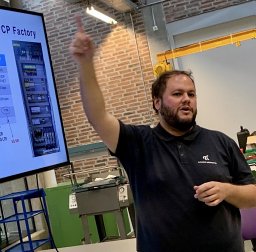 Ignacio Rodriguez Larrad合作论文数Dept Elect Syst, Aalborg Univ6
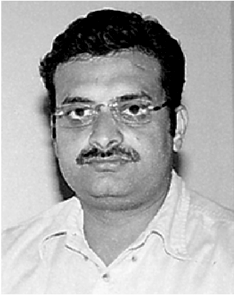 Rajeev K Agrawal合作论文数5ole kiel jensen合作论文数5Kroener, H.合作论文数5Anand S. Bedekar合作论文数5T. Larsen合作论文数4
 Andreas Fink合作论文数Wireless Commun Networks Sect, Aalborg Univ4
 Anders Karstensen合作论文数Aalborg University4
 Lars Torsten Berger合作论文数4
 Suresh Kalyanasundaram合作论文数The working group where he is active appear to be netlmm4Basuki Endah Priyanto合作论文数4
 Guillaume Monghal合作论文数4
 Gilberto Berardinelli合作论文数Department of Electronic Systems, Aalborg University4
 Mads Lauridsen合作论文数Dept Elect Syst, Aalborg Univ4
 Esa Tiirola合作论文数Nokia Networks4Michael Bohl Jenner合作论文数4woonhee hwang合作论文数3christian rye iversen合作论文数3
 Vishnu Ram Ov合作论文数3Reynisson, R.V.合作论文数3Pawel Ochal合作论文数3
 Laurent Schumacher合作论文数University of Namur;Computer Science Institute;Computer Science Institute, University of Namur3
 Mika Rinne合作论文数Nokia Research Center3
 Harri Holma合作论文数3Søren Laursen合作论文数3
 Pasi Kinnunen合作论文数3
 Jacek Gora合作论文数3C. Rosa合作论文数2Preben Elgaard合作论文数2benoist pierre sebire合作论文数2Roberto Maldonado合作论文数2Simone Barbera合作论文数2




