The next years will put more and more focus on the application of service robots in elderly care, especially nursing homes, to meet the “elderly wave” and at the same time be able to provide high-level, individual care of the residents. However, new challenges appear when introducing service robots in an environment where residents with impaired cognitive skills, like dementia, coexist with the service robots. This, especially, due to the fact that the residents mostly cannot, and formally, are not responsible for themselves. Thus, any accident will per definition, be the robot's responsibility. Unfortunately, there is a lack of standards and best practice about how to establish a safe and harmonic environment where dementia people and service robots coexist and collaborate. Unlike industrial robot installations, both the physical and interperceptual risks must be assessed when introducing service robots to nursing homes. This, because fear can cause unwanted reactions from residents, which in turn can create new risks. This paper addresses the complexity of performing risk assessment for service robots operating in coexistence with dementia residents in nursing homes. Both physical and interperceptual risks are included. Based upon the traditional ISO analysis, an extended method is suggested to minimize the unavoidable, residual safety risk.
This paper presents a modeling method of weld bead profiles deposited on uneven base metal surfaces and its application in multi-pass welding. The robotized multi-pass tungsten inert gas welding requires precise positioning of the weld beads to avoid welding defects and achieve the desirable welding join since the weld bead shapes depend on the surface of the previously deposited beads. The proposed model consists of fuzzy systems to estimate the coefficients of the profile function. The characteristic points of the trapezoidal membership functions in the rule bases are tuned by the Bacterial Memetic Algorithm during supervised training. The fuzzy systems are structured as multiple-input-single-output systems, where the inputs are the welding process variables and the coefficients of the shape functions of the segments underlying the modeled bead; the outputs are the coefficients of the bead shape function. Each segment surface is approximated by a second-order polynomial function defined in the weld bead's local coordinate system. The model is developed from empirical data collected from single and multi-pass welding. The performance of the proposed model is compared with a multiple linear regression model. During the experimental validation, first, the individual beads are evaluated by comparing the estimated coefficients of the profile function and other bead characteristics (bead area, width, contact angles, and position of the toe points) with the measurements, and the estimations of a multiple linear regression model. Second, the sequential placement of the weld beads is evaluated while filling a straight V-groove by comparing the estimated bead characteristics with the measurements and calculating the accumulated error of the filled groove cross-section. The results show that the proposed model provides a good estimation of the bead shapes during deposition on uneven base metal surfaces and outperforms the regression model with low error in both validation cases. Furthermore, it is experimentally validated that the derived bead characteristics provide a suitable measure to identify locations sensitive to welding defects.
In this paper we present the findings of a usability study for a monitoring robotic unit tele-operated via a virtual fixtures (VF) based control framework. The study aims at investigating the impact of VF on the robot navigation as well as the impact of multimodal feedback on the user performance in a static inspection task. The findings will help in the design of the monitoring control framework to inspect a robotised welding process, as it has been researched in previous work. The study has been conducted with untrained participants, involved in four different test scenarios. The experiments treated a static case in which users were asked to navigate the monitoring robot in the workspace to find a lit LED of a test-piece. The statistical analysis of the experiment metrics showed a positive impact of the VF control on the navigation of the monitoring robot even for users with no previous experience. Moreover, from the analysis of the task load index forms (TLX) it emerged that the combination of VF control and additional multimodal feedback improved the user performance without negatively impacting the effort required to accomplish the task.
This article presents a fuzzy system-based modeling approach to estimate the weld bead geometry (WBG) from the welding process variables (WPVs) and to achieve a specific weld bead shape. The bacterial memetic algorithm (BMA) is applied to solve these problems in two different roles, as a supervised trainer, and as an optimizer. As a supervised trainer, the BMA is applied to tune two different WBG models. The bead geometry properties (BGP) model follows a traditional approach providing the WBG properties as outputs. The direct profile measurement (DPM) model describes the bead profiles points by a non-linear function realized in the form of fuzzy rules. As an optimizer, the BMA utilizes the developed fuzzy systems to find the solution sets of WPVs to acquire the desired WBG. The best performance is achieved by applying six rules in the BGP model and eleven rules in the DPM model. The results indicate that the normalized root means square error for the validation data set lies in the range of 0.40 - 1.56% for the BGP model and 4.49 - 7.52% for the DPM model. The comparative analysis suggests that the BGP model estimates the BWG in a superior manner when several WPVs are altered. The developed fuzzy systems provide a tool for interpreting the effects of the WPVs. The developed optimizer provides multiple valid set of WPVs to produce the desired WBG, thus supporting the selection of those process variables in applications.
In this paper, the use of a monitoring companion is proposed to more efficiently collect the process information during the tuning of industrial systems, and therefore to assist the system integrator in the optimization process for complex robotic installations. The monitoring companion consists of an industrial manipulator (monitoring robot) and a Unity-ROS framework for controlling it. We discuss in this paper the features that allow the solution to be re-used in different industrial application thanks to its compatibility with ROS. In particular, we present the approach based on admittance virtual fixtures and how we use such abstraction to track a moving target (it could be the end-effector of another robot for example). Moreover, the concept of varying compliance is introduced as a way to influence the motion of the monitoring robot on the virtual fixtures in the presence of obstacles. The experiments have been conducted in simulation as well as on real hardware to test the accuracy of the system at respecting the virtual fixtures with both a static and a moving monitoring target, although in the current implementation the varying compliance was not included in the experiments.
The recent progress made in the field of Augmented Reality/Mixed Reality (AR/MR) has opened new possibilities and approaches to research areas that can benefit from 3D visualization of digital content in the real world. In fact, human-robot interaction design and the design of user interfaces have very much to gain from MR technologies. Nonetheless, designing the user-robot interaction and processing multimodal feedbacks are very challenging tasks. In this paper we focus in particular on interactions in mixed reality.
Planning and monitoring the manufacturing of high quality one-of-a-kind products are challenging tasks. In the implementation of an industrial system, the commissioning phase is typically comprised of a programming phase and an optimization phase. Most of the resources are commonly invested in the optimization of the process. The time and cost of the implementation can be reduced if the monitoring system is not embedded in the industrial process, but kept instead as a decoupled task. In this paper we present a framework to simulate and execute the monitoring task of an industrial process in Unity3D, without interfering with the original system. The monitoring system is made of external additional equipment and is decoupled from the industrial task. The monitoring robot's path is subject to multiple constraints to track the original process without affecting its execution. Moreover, the framework is flexible thanks to the Unity-ROS communication so that the monitoring task can be carried on by any ROS-compatible device. The monitoring system has been applied to a robotic system for heavy, multi-pass TIG welding of voluminous work-pieces. The results of the implementation show that the constraints for monitoring were satisfactory in the 3D environment and capable for real robot application.
The recent progress made in the field of Augmented Reality/Mixed Reality (AR/MR) has opened new possibilities and approaches to research areas that can benefit from 3D visualization of digital content in the real world. In fact, human-robot interaction design and the design of user interfaces have very much to gain from MR technologies. Nonetheless, designing the user-robot interaction and processing multimodal feedbacks are very challenging tasks. In this paper we focus in particular on interactions in mixed reality. The main contribution of this paper is the implementation of a control system for an industrial manipulator through the user's interactions with MR content displayed with the Microsoft HoloLens. The system is based on the communication between Unity3D (used to design the user experience) and ROS, therefore extendible to any ROS-compatible robotic hardware.
Using robots for heavy welding application is a growing field of automation; numerous development project carried out for the ship manufacturing or the offshore industry. However, most of the largest size Francis hydro power turbine are still welded manually due to their unique and complex design, and the high-quality requirements. This paper presents an application of a Tungsten Inner Gas robot welding system for heavy multi-pass welding, what emphasizes the synergy of advanced CAD - CAM programming and human-in-the-loop control. The concept consists three separated phase: the off-line planning of the whole process, the plan update based on the previous activities, and the on-line welding operation. The proposed system was verified through experiments.
Recently industrial robot systems are introduced widely even in the small and medium size enterprises. However, it is difficult for them to employ professional engineers permanently. Then, they need to depend on outside to maintain industrial robots. Therefore a remote operation support system for industrial robots is proposed. Visual and auditory feedback is often used. However, a perception of the information might be limited if different kinds of information in particular sense modality is delivered at the same time. To solve the problem, we proposed a tactile interface which uses tactile information. This paper evaluates the usefulness of the vibrotactile information using the glove-type interface. The experimental results showed that vibrotactile information could not improve work efficiency. However it enable an operator to concentrate other information without increasing a workload. Therefore vibrotactile information is useful.
The installation of industrial robot systems requires considerable human effort both related to the mechanical and electromechanical setup. However, the task of programming a robot is of particular importance to satisfy given process requirements. Typically, only 20% of the entire programming time is needed to define the path and logics while the remaining 80% is related to process optimization. This causes considerable costs due to the need for human presence. With a remote assistance system and a process monitoring robot, expert assistance could be decoupled from the physical presence. An important challenge is to solve the tracking between the monitoring robot and the robot performing the process. In this paper we propose a controllable sensor system for enhanced process monitoring. The system is decoupled from the process tool and can therefore be controlled independently. It provides the machine operator with adaptive process information and enhances the capabilities to qualify complex processes. We apply the concept to an autonomous sensor robot monitoring an industrial robot system for heavy, multipass TIG welding of voluminous workpieces.
This paper evaluates a wristband-type tactile interface as a user interface for controlling an industrial robot remotely. When operating a remote monitoring system, information delivery from a local site to an operator at a remote site is important. Visual and auditory feedback is often used. However, perception of the information might be limited if different kinds of information in particular sense modality is delivered at the same time. To solve the problem, we proposed a tactile interface which uses tactile information and we evaluate it. First, we explain the remote operation system for industrial robot and interface, then after that, we present an experiment of vibrotactile information of industrial robot.
With the trend of increasing human robot collaboration, the need for more advanced safety systems arises. To create safe robots that act proactive to dangers, a safety system based on risk analysis has been developed. This paper presents a vital part of the risk analysis, the likelihood analysis,. In this likelihood analysis, data about human activity is recorded based on its occupied space. The times of an occupation are recorded in absolute and relative time. A multi-peak probability distribution is fitted to the data using a hidden genes genetic algorithm. This algorithm enabled the system to also optimize the number of peaks in the distribution. The system is implemented and simulated for a simple assembly task. Plots from the simulations show the system's ability to predict active and inactive periods of time in a given area. This information can later be used in a risk analysis based scheduling problem.
The global industry is developing towards smaller and smaller batch sizes in production due to the high pressure on Just-in-time production. This has led to the need for providing cost efficient support to robot users, especially SMEs having limited internal resources and competence to setup, maintain and reconfigure their industrial robot systems. In this study, a new method for the remote operation of industrial robot systems is presented. The method is based upon multi-modal man-machine communication and sensor bridging to transfer huge amounts of information from the industrial robot cell to the brain of the remote operator. The general methodology is explained, however, a special focus is put on gripping and stick-slip detecting in order to provide optimal grasping conditions during robot operations; especially during remote operation.
Worldwide, the focus on industrial development is on achieving smaller and smaller batch sizes in production. This has led to the need for providing cost efficient support to robot users. In this study, a new method for the remote operation of industrial robot systems is introduced. The method is based upon multi-modal man-machine communication and sensor bridging to transfer huge amounts of information from the industrial robot cell to the brain of the remote operator.
Development of the international industry is towards smaller and smaller batch sizes in the production. This has riced a need for cost efficient support of robot users. In this paper, new methodology for remote operation of industrial robot systems is introduced. The method is based upon multi-modal man-machine communication and sensor bridging to transfer the huge amount of information from the industrial robot cell to the brain of the remote operator.
A new approach for industrial robot user interfaces is necessary due to the fact that small and medium sized enterprises are more interested in automation.The increasing number of robot applications in small volume production requires new techniques to ease the use of these sophisticated systems.In this paper shop floor operation is in the focus.A Flexible Graphical User Interface is presented which is based on cognitive infocommunication (CogInfoCom) and implements the Service Oriented Robot Operation concept.The definition of CogInfoCom icons is extended by the introduction of identification, interaction and feedback roles.The user interface is evaluated with experiments.Results show that a significant reduction in task execution time and a lower number of required interactions is achieved because of the intuitiveness of the system with human centered design.
 Mihoko Niitsuma合作论文数Institute of Industrial Science;University of Tokyo;Institute of Industrial Science, University of Tokyo11
 Peter Korondi合作论文数University of Debrecen, Department of Mechatronics11
 Csongor Mark Horvath合作论文数Budapest Univ Technol & Econ, Dept Mechatron Opt & Mech Engn Informat, H-1111 Budapest, Hungary9
 Enrico Sita合作论文数Engineering Design and Mathematics, University of the West of England6
 Balazs Daniel合作论文数5
 Farid Dailami合作论文数5
 Gabor Sziebig合作论文数Department of Industrial Engineering, Narvik University College5
 Matthew Studley合作论文数Faculty of Computing;Engineering and Mathematics;University of the West of England;Faculty of Computing, University of the West of England5
 Anthony Pipe合作论文数Department of Robotics and Autonomous Systems, Faculty of Environment and Technology, University of the West of England;Bristol Robotics Laboratory, University of the West of England5
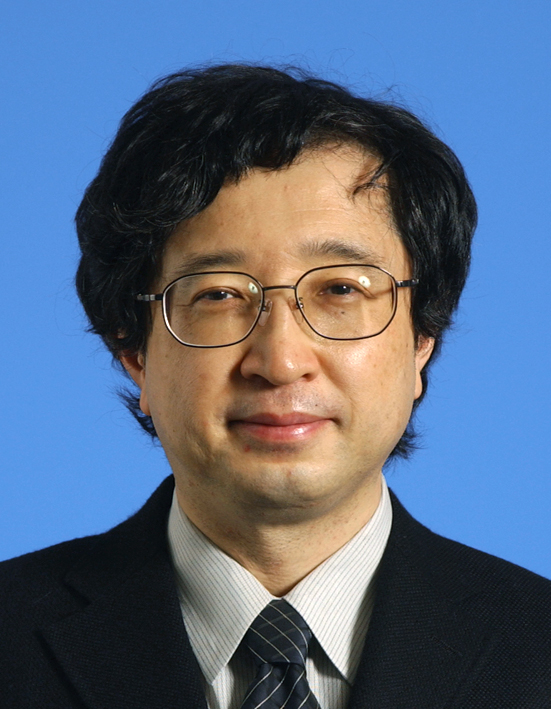 Hideki Hashimoto (橋本秀紀)合作论文数Department of Electrical Electronic and Communication Engineering, Chuo University4
 Keita Suzuki合作论文数Department of Applied Chemistry, Nagoya Institute of Technology4
 Resko Barna合作论文数4T.K. Lien合作论文数3andor gaudia合作论文数3takashi hatano合作论文数3Sanderud, A.R.合作论文数Dept. of Precision Mech., Chuo Univ.;c;Dept. of Precision Mech., Chuo Univ.3
 Jörg Ernst Franke合作论文数Department Maschinenbau, Technische Fakultät, Friedrich-Alexander-Universität Erlangen-Nürnberg2peter kis合作论文数2
 Rafael K Jardan合作论文数2Muramatsu, Y.合作论文数2Zoltan Suto合作论文数Dept. of Autom. & Appl. Inf., Budapest Univ. of Technol. & Econ.;c;Dept. of Autom. & Appl. Inf., Budapest Univ. of Technol. & Econ.2
 Zoltán Petres合作论文数2Tomasz Kosicki合作论文数2
 I. Nagy合作论文数2
 Janos Botzheim合作论文数Grad Sch Syst Design, Tokyo Metropolitan Univ2
 Bela Takarics合作论文数Budapest University of Technology and Economics2
 Peter Tamas Szemes合作论文数2D Frentiu合作论文数1Marita, T.合作论文数1
 Sebastian Hoose合作论文数1Jingzhou Ji合作论文数1
 Sergey Kopylov合作论文数1Max Paul Bauer合作论文数1Mingqian Wang合作论文数1Fredrik Reme合作论文数1
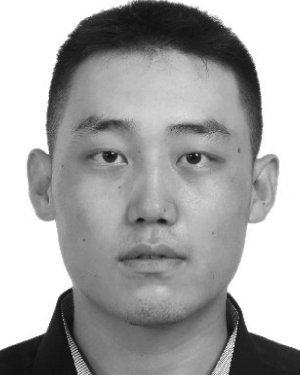 Zepeng Hao合作论文数1
 Oluwatosin Ogundare合作论文数1
 Anthony Ngo合作论文数Automated Driving, Robert Bosch GmbH1
 Ole Jakob Elle合作论文数1
 Geesara Kulathunga合作论文数Innopolis University1Ahmad Reza Cheraghi合作论文数Technology of Social Networks, Heinrich Heine University1Jana Jost合作论文数Robotics and Cognitive Systems, Fraunhofer Institute for Material Flow and Logistics1
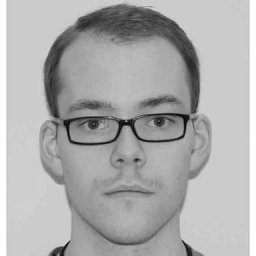 Lars Tingelstad合作论文数Department of Mechanical and Industrial Engineering, Faculty of Engineering,NTNU, Norwegian University of Science and Technology,Trondheim,Norway1Azin Aryania合作论文数1Alvaro Capellan合作论文数1Zimber Fabian合作论文数1
 Sergiu Nedevschi合作论文数Department of Computer Science, Faculty of Automation and Computer Science, Technical University of Cluj-Napoca1
 Bin Xue (薛斌)合作论文数1
 Michael M. Resch合作论文数High Performance Computing Center Stuttgart1




