The low solubility of fullerenes in aqueous solution limits their applications in biology. By appropriate substitution, the fullerenes can be transformed into stabilized anions that are water soluble and can form large aggregated structures. A laser light scattering study of the association behavior of the potassium salt of pentaphenyl fullerene (Ph5C60K) in water revealed that the hydrocarbon anions Ph5C60- associate into bilayers, forming stable spherical vesicles with an average hydrodynamic radius and a radius of gyration of about 17 nanometers at a very low critical aggregation concentration of less than 10(-7) moles per liter. The average aggregation number of associated particles in these large spherical vesicles is about 1.2 x 10(4).
A new class of hydrocarbon anions, pentaaryl- and penta-methylfullerene anions R5C60- (R = Ph, 4-BuC6H4, 4-PhC6H4, Me) was found to be stable and soluble in water. Atomic force microscopic observation and dynamic light scattering measurements indicated that the potassium salt Ph5C60K in water forms spherical aggregates with an averaged radius of about 17 nm.
The reaction of an organocopper reagent (ArMgBr/CuBr·SMe2) with C60 was optimized for the fivefold addition forming a novel Cp-type ligand precursor 1,4,11,15,30-pentaaryl-2-hydro[60]fullerene (C60Ar5H, 1), where Ar stands for Ph, 4-CF3C6H4, 4-MeOC6H4, 4-ClC6H4, 4-BuC6H4, 4-PhC6H4, and 1-naphthyl groups. Under the optimized conditions, a large quantity (8.90 g) of C60Ph5H has been synthesized in a single operation.
The observation of practically identical activation parameters for the Cope rearrangement 2-->6 and its "frustrated" counterpart 1-->5 indicates a two-step mechanism for the reaction 2-->6. Direct proof of this interpretation comes from trapping experiments, which demonstrate the intermediate formation of the diradicals 5 and 9. From the temperature and oxygen dependences of the trapping rates, recombination barriers of Delta H-not equal = 11.5 and 6.5 kcal.mol(-1) have been derived for 5-->1 and 9-->6, respectively. These results agree well with ab initio calculations (CASPT2).
Moenomycin A was degraded by enzymatic cleavage of the bond between the moenuronic acid moiety and the phosphate group. The phosphoric acid monoester 4a could be dephosphorylated further to yield 3a. Compound 3a was used to confirm the previous configurational assignment at C-2 of the glycerate part of moenomycin A and to prepare ent-4a. 4a and ent-4a are antibiotically inactive.
 Masaya Sawamura (澤村正也)合作论文数Organometallic Chemistry Lab, Division of Chemistry, Graduate School of Science, Hokkaido University3
 Eiichi Nakamura (中村荣一)合作论文数College of Chemistry, Nankai University;Department of Chemistry, Graduate School of Science, University of Tokyo3
 Hiroyuki Isobe合作论文数2Motoki Toganoh合作论文数2
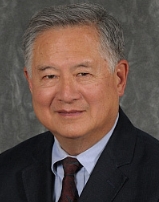 Benjamin Chu合作论文数Department of Chemistry, College of Arts & Sciences, Stony Brook University;Department of Materials Science & Engineering, Stony Brook University;Department of Biomedical Engineering, Stony Brook University;Brookhaven National Laboratory, Stony Brook University2
 Shuiqin Zhou合作论文数College of Staten Island, City University of New York2Noriaki Nagahama合作论文数2Uwe Heinz合作论文数1Wr Roth合作论文数1Holger Lange合作论文数1Christian Burger合作论文数1Iikura Hitoshi合作论文数1Peter Welzel合作论文数1
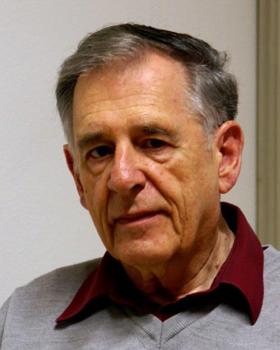 R. Gleiter合作论文数Institute of Organic Chemistry, Fakultät für Chemie und Geowissenschaften, Universität Heidelberg1Susanne Marzian合作论文数1Gerd Fritzsche合作论文数1Kurt Hobert合作论文数1Takayuki Ohama合作论文数1




