The outbreak of COVID-19 is a global public health challenge and has affected many countries, including India. The nationwide lockdown was imposed in India from March 25 to May 31, 2020 to prevent the transmission of COVID-19. The study intends to assess the impact of the absence of major anthropogenic activities during the various phases of the COVID-19 lockdown (LDN) period on the daily mean concentrations of PM 2.5 and PM 10 in six populated cities of Jaipur, Jodhpur, Kota, Udaipur, Ajmer, and Alwar in the state of Rajasthan. Investigation has been done for the different periods, including the pre-lockdown—PRELD (January 1–March 4, 2020), partial lockdown—PLDN (March 5–24, 2020), COVID-19 lockdown—LDN (March 25–May 31, 2020), and unlocking—ULC (June 1–August 31, 2020) phases. We have also compared the mean concentrations of PM 2.5 and PM 10 with the same period of the year 2019. A significant improvement in air quality during the COVID-19 LDN period was noticed in all cities compared to 2019 and for the same period of the year 2020. However, the levels of PM 2.5 and PM 10 were seen to rise during the second, third, and fourth LDN phases compared to the first LDN, indicating that the subsequent lockdowns started with some relaxations and dusty conditions. On the other hand, wind-blown dust is another vital source of PM 10 , resulting in high concentrations in the summer months (April–May). Significant reductions in PM 2.5 (~25–50%) and PM 10 (20–37%) in all six cities during the LDN period compared with PRELD were estimated. However, with significant variations from city to city, the lowest reductions in PM 2.5 (~25%) and PM 10 (~20%) were measured in Jodhpur and Ajmer, respectively. It was noticed that the episodes of rainfall and transport of oceanic air masses resulted in a reduction of particles during the ULC period compared to the LDN period. The air quality index was, more or less, in the “good to satisfactory” category during the first 3 LDN periods, whereas it was moderate for Jodhpur, Jaipur, and Ajmer during the last LDN period. The study will be helpful to determine mitigation policies to minimize air pollution, especially in developing regions.
We analyse z source ‘GX 5-1’ observations for the lower kilohertz QPO of GX 5-1 for 2002 by the instrument of PCA (1.5-12keV) on board RXTE. We report the high QPO to low QPO for frequency ( 20HZ) analysis for QPO horizontal branch oscillations model and relate it to observations of source GX 5-1. During the 7 years data RXTE detected many x-ray intensity variations but in our analysis, we select data for 15/07/2002 the highest x-ray intensity to lowest x-ray intensity in 2002 of GX 5-1. Our analysis is about QPO, frequency, time period of high peak to low peak for 70018-02-03-00 observation id
We present high spatial resolution observations of short lived transients, ribbon and jets like events above a pore in Ca II H images where fine structure like umbral dots, lightbridge and penumbral micro filaments are present in the underlying photosphere. We found that current layers are formed at the edges of convective fine structure due to the shear between their horizontal field and the ambient vertical field. High vertical electric current density patches are observed in the photosphere around these events which indicates the formation of a current sheet at the reconnection site. In the framework of past studies, low altitude reconnection could be the mechanism that produces such events. The reconnection is caused by an opposite polarity field produced by the bending of field lines by convective downflows at the edge of the pore fine structures.
 S. N. A. Jaaffrey合作论文数2
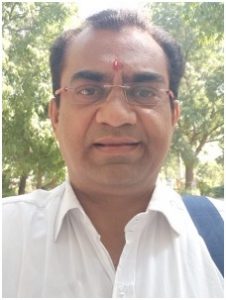 Pragneshkumar Niranjanbhai Dave合作论文数Department of Chemistry, Sardar Patel University1
 Mansi Gupta合作论文数1Praveen Kumar合作论文数1
 Ravi Yadav合作论文数Ministry of Earth SciencesGovernment of India, Indian Institute of Tropical Meteorology1Vikram Singh合作论文数Department of Chemical Engineering, Indian Institute of Technology Delhi1
 C. Quintero Noda合作论文数1
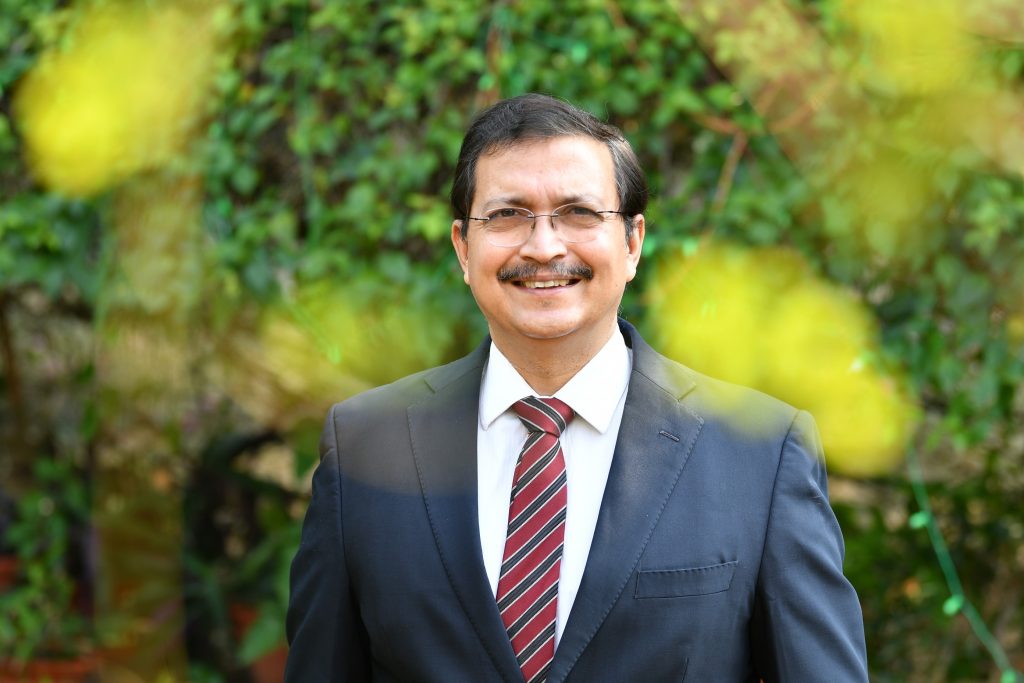 Sachchida N. Tripathi合作论文数Dept Civil Engn, Indian Inst Technol1
 Lokesh Bharti合作论文数Physical Research Laboratory1
 Devendra Singh Rathore合作论文数National Institute of Hydrology1
 G. Beig合作论文数Indian Institute of Tropical Meteorology1
 Chandan Joshi合作论文数Mohanlal Sukhadia University, University College of Science Udaipur1
 Lokesh Kumar Sahu合作论文数University of Tokyo Research Center for Advanced Science and Technology1




