Sodium and water turnover rates were measured in young turkeys fed diets with three concentrations of NaCl and kept at 12, 18 or 30 degrees C. Sodium absorption averaged approximately 60% and was unaffected by temperature. Water and sodium pools were affected by temperature and sodium intake. Water turnover was linear to sodium turnover at the lower two temperatures. No significant relationship was apparent in birds kept at 30 degrees C. The reciprocal of the slope of the function of water turnover on sodium turnover was 125-170 mM, suggesting an increase in isotonic urine excretion with sodium intake and a corresponding increase in water intake. Dietary sodium and potassium stimulated water turnover similarly. Dietary chloride concentration did not affect water turnover. In the turkey plasma pH and pCO2 were unaffected by a wide range of the anion-cation balance. It is concluded that excess sodium or potassium intakes is handled effectively in the turkey by increased water intake and excretion.
A model has been formulated to calculate the protein and amino acid requirements for growing turkeys. A requirement was taken as the sum of the needs for maintenance, for gain in carcass weight without feathers, and for the feathers. Parameters used in the model were obtained from a study of carcass composition along the growth period and from two balance trials with adult turkeys. The maintenance requirement was considered to be the sum of the needs for replacing skin and intestinal protein losses and for the obligatory creatinine excretion in the urine. Nitrogen retention was determined at 2.3 g/day in protein-fed adult (17 kg) male turkeys as an estimate for the replacement needs for skin protein loss. Creatinine excretion in these birds was 123 mg/day. When fed an N-free diet, 16.5 kg adult turkeys excreted a total of 3.5 g/day amino acids as a result of intestinal losses. The protein requirement for maintenance was estimated at 32 mg/day/g2/3 of body weight by summing up the different needs and dividing by .85, the coefficient of protein absorption. Protein and amino acid analyses of nude carcass and feathers and the growth curve were used to calculate the requirements for growth. These were then related to energy intake predicted by equations, which included previously determined coefficients for maintenance and growth (Hurwitz et al., 1980a), and the results of carcass lipid analysis. The calculated amino acid requirements were similar to those of the National Research Council (1977).
Day-old turkeys fed vitamin D-deficient diets became rachitic within 17-24 days. The symptoms included reductions in body weight, plasma calcium and inorganic phosphorus, plasma and intestinal calcium-binding protein (CaBP), plasma 25-hydroxycholecalciferol [25(OH)D3], bone ash, and kidney 25(OH)D3-24-hydroxylase and a rise in kidney 25(OH)D3-1-hydroxylase activity. Supplementation of the diet with 12.5 micrograms cholecalciferol per kilogram was sufficient to promote maximal body weight and normal plasma calcium, Plasma calcium, plasma phosphorus and bone ash. Feeding diets containing 250 or 1250 micrograms cholecalciferol per kilogram resulted in a reduced body weight. An increased in the concentration of plasma 25(OH)D3 with increasing dietary cholecalciferol concentration was observed. Feeding vitamin D-deficient rachitic birds for 4 days a diet containing 50 micrograms cholecalciferol per kilogram restored plasma calcium and phosphorus and bone ash. Body weight remained lower than that of the control for an additional 6-day period. Additional cholecalciferol, 25(OH)D3 or 1 alpha-hydroxycholecalciferol in the diet, intramuscular injection of the vitamin D derivatives, or a high-calcium, high-phosphorus diet did not accelerate the recovery from the rachitic state.
The energy requirements for growth and maintenance were studied in male and female chicks and turkeys, kept in environmental chambers for 4 to 5 weeks following the brooding period. In both species and sexes, the maintenance requirement decreased with constant temperatures from 12 to 24 C, reaching a low between 24 and 28 C, followed by an increase as the temperature was raised further. At 12 C, the maintenance ranged between 2.45 and 2.70 kcal/g2/3, for chicks and turkeys, respectively. Requirements for weight gain averaged 1.87 kcal/g and .7 kcal/g in chicks and turkeys, respectively. This species difference was explained on the basis of carcass composition. Turkeys fed a high-protein diet had an apparently greater maintenance requirement than those fed a diet appropriate for their age. Weight gain decreased between 19 and 34 C in chicks and between 18 C and 32 C in turkeys. Feeding of a high protein diet tended to reduce but did not overcome the growth depression by temperature. In turkeys, weight gain at 12 C was inferior to that at 18 C for both sexes. The calculated amino acid per kilocalorie dietary requirements for 6-week-old chicks increased with temperature to a peak at 27 C, followed by a decrease as the temperature was raised further.
Starch digestion and glucose absorption were determined in vivo along the chick's (Gallus domesticus) intestine, using 91Y and 51Cr-EDTA as unabsorbed reference substances. About 65% of the ingested starch was digested up to the end of the duodenum, 85% up to the end of the jejunum and about 97% at the terminal ileum. A fraction of about 97% of the glucose, ingested or released from ingested starch, was absorbed. The duodenum was the major site of glucose absorption which continued at a decreased rate down the small intestine. Glucose absorption increased linearily with luminal concentration with no indication of saturation. The apparent permeability for glucose was similar for the jejunum and ileum.
1.1. The net absorption of protein, fatty acids, calcium and phosphate along the small intestine of the turkey (Meleagris gallopovo) was evaluated with the aid of 91Y as a reference substance.2.2. About 85% of the ingested protein was absorbed, with most of the absorption occurring in the duodenum and upper jejunum.3.3. The overall lipid absorption coefficient was around 90%, and was inversely related to the fatty acid chain length and saturation.4.4. Most of the lipid absorption occurred in the duodenum and jejunum.5.5. Calcium absorption also occurred in the duodenum and jejunum: its fractional rate decreased with calcium intake.6.6. Phosphate absorption occurred mostly in the duodenum and jejunum and its efficacy was only slightly affected by dietary phosphate intake.7.7. The high nutrient absorption in the turkey duodenum, relative to that of the chick (Gallus domesticus), was discussed.
Changes in intestinal calcium absorption, calcium deposition into egg shell, and intestinal, renal and uterine calcium-binding protein (CaBP) in laying hens were related to changes in 25 hydroxycholecalciferol-1-hydroxylase activity (1-hydroxylase), or to the supplementation of 1alpha-hydroxycholecalciferol (1alpha-OH-CC). The onset of egg production resulted in an increased kidney 1-hydroxylase activity and intestinal and uterine CaBP. Renal concentrations of CaBP remained unchanged. Intestinal calcium and phosphorus absorption, during the period of egg shell formation, and duodenal calcium-binding protein (CaBP), were higher in 1alpha-OH-CC-fed than in cholecalciferol-fed hens. Renal or uterine CaBP and calcium deposition into the egg shell did not fluctuate with the vitamin D source or concentration. 1alpha-OH-CC injection into non-laying Nicarbazinfed hens resulted in an increase in intestinal but not renal or uterine CaBP concentrations. It is suggested that (a) CaBP in various organs responded independently to the same stimuli; and (b) calcium deposition into egg shell and uterine CaBP level are not related to kidney 1-hydroxylase activity or concentration of 1,25 dihydroxycholecalciferol.
A study was conducted with laying hens to evaluate the effects of cholecalciferol (CC), 25-hydroxycholecalciferol (25-OH-CC) and 1α-hydroxycholecalciferol (1α-OH-CC) on calcium absorption, intestinal and uterine calcium-binding protein (CaBP), and egg shell quality. Calcium absorption was significantly higher in 1α-OH-CC-fed hens during periods of egg shell formation when compared with CC- or 25-OH-CC-fed hens. During periods of uterine inactivity there were no significant differences in calcium absorption between the groups. Intestinal CaBP was significantly higher in 1α-OH-CC fed hens as well. Uterine CaBP was not affected by vitamin D source.
Phosphorus absorption in the young turkey, measured with the aid of yttrium-91 as a reference substance, was linear with phosphorus intake. This observation suggested the lack of adaptation of the phosphorus transport mechanism to changes in the phosphorus needs. Phosphorus retention and bone ash initially increased with increased intake to plateau at a dietary phosphorus concentration of about 0.8%. The excess phosphorus absorbed from diets higher in phosphate, was eliminated in the urine. Plasma inorganic phosphate was linear with absorbed phosphate. The apparent phosphorus absorption from the basal vegetable diet was 45% of the intake and that of the inorganic supplement, sodium phosphate and calcium monophosphate, was about 100%, at low calcium intakes. Increasing the calcium intake above 440 mg/day progressively depressed the absorption of phosphate. This inhibitory action of calcium on phosphate absorption was resolved into a linear coefficient.
A computer-controlled data acquisition system was used to generate comparative data for thin-film anodic stripping voltammetry with staircase, differential pulse and squarewave waveforms. Each waveform was tested for its sensitivity and speed of analysis. The square-wave form is the most sensitive, whether square wave or differential pulse measurements are used. This waveform offers the advantages of fast analysis time and discrimination against charging currents.
A vitamin D3-dependent calcium-binding protein (CaBP) has been found in the intestinal mucosa of Japanese quail (Coturnix coturnix japonica). This protein is similar, if not identical to that of the chick (Gallus domesticus). A similar protein fraction appears also in uterine mucosa of laying quail. Both intestinal and uterine CaBP levels are higher in laying than in non-laying quails. Uterine CaBP was higher during egg shell formation than during uterine inactivity. The slight corresponding difference in the intestinal CaBP was not significant. Intestinal calcium absorption measured with 91Y as a reference substance was higher in birds during formation of egg shell than in those with inactive uteri. The possible role of CaBP in calcium translocation is discussed.
ADVERTISEMENT RETURN TO ISSUEPREVArticleNEXTStaircase voltammetric stripping analysis at thin film mercury electrodesUri. Eisner, John A. Turner, and R. A. OsteryoungCite this: Anal. Chem. 1976, 48, 11, 1608–1610Publication Date (Print):September 1, 1976Publication History Published online1 May 2002Published inissue 1 September 1976https://pubs.acs.org/doi/10.1021/ac50005a048https://doi.org/10.1021/ac50005a048research-articleACS PublicationsRequest reuse permissionsArticle Views67Altmetric-Citations19LEARN ABOUT THESE METRICSArticle Views are the COUNTER-compliant sum of full text article downloads since November 2008 (both PDF and HTML) across all institutions and individuals. These metrics are regularly updated to reflect usage leading up to the last few days.Citations are the number of other articles citing this article, calculated by Crossref and updated daily. Find more information about Crossref citation counts.The Altmetric Attention Score is a quantitative measure of the attention that a research article has received online. Clicking on the donut icon will load a page at altmetric.com with additional details about the score and the social media presence for the given article. Find more information on the Altmetric Attention Score and how the score is calculated. Share Add toView InAdd Full Text with ReferenceAdd Description ExportRISCitationCitation and abstractCitation and referencesMore Options Share onFacebookTwitterWechatLinked InRedditEmail Other access optionsGet e-Alertsclose Get e-Alerts
Two experiments were carried out with laying quail (Coturnix coturnix japonica) fed either cholecalciferol (40 mug/kg) or 1 alpha-hydroxycholecalciferol (8 mug/kg). Recovery following vitamin D depletion, as indicated by egg production and shell deposition, was faster in quail fed 1 alpha-hydroxycholecalciferol than in those fed cholecalciferol. Overall intestinal calcium absorption was higher in the 1 alpha-hydroxycholecalciferol-fed quail due to a higher absorption in the middle parts of the small intestine. This was associated with corresponding differences in the concentration of calcium binding protein. Intestinal calcium absorption was markedly higher during periods of shell formation than during periods of uterine inactivity in quail fed either cholecalciferol or 1 alpha-hydroxycholecalciferol. It is suggested, therefore, that the mechanism responsible for this difference is independent of vitamin D hydroxylation in the kidney.
The use of 91Y, 51Cr-EDTA, and 141Cr as nonabosrbed reference substances in the gastrointestinal tract of the chick was examined. In single oral dose experiments, more than 95% of the isotopes administered was recovered from the gastrointestinal tract 3 hours after dosing. 51Cr was higher in blood than the other isotopes tested. When the isotopes were fed continuously, the ratio of 91Y to 141Cr changed little throughout the gastrointestinal tract. However, the ratio of 91Y to 51Cr was higher in the crop and gizzard and lower in the duodenum than in the feed. Thus, passage time was shorter for 51Cr in the crop and gizzard and longer in the duodenum than that of 91Y. On the basis of distribution between solid and liquid phases in the intestinal contents, 91Y or 141Ce appears to be a suitable reference substance for studying the absorption of nitrogen and fatty acids, wheras 51Cr-EDTA would be preferable for bile acid absorption studies.
The characteristics of the anodic stripping curves obtained from 10−11–10−7 M Ag+ have been studied using pyrolytic graphite and wax impregnated spectrographic grade carbon electrodes. It was found that the stripping curves on pyrolytic graphite electrodes (PGE) had essentially only one sharp dissolution peak, while those for wax impregnated carbon (SGE) exhibited multiple dissolution peaks. The nature of the Ag deposits was studied by X-ray fluorescence employing an electron microprobe which showed that PGE had a few preferred sites for deposition but the SGE exhibited a uniform distribution of the deposit. The optimum solution conditions, electrode pretreatments, and procedure are described, as well as the results of the analyses of snow samples containing 10−8–4×10⁻¹¹ M Ag+.
ADVERTISEMENT RETURN TO ISSUEPREVArticleNEXTApplication of semipermeable ion exchange membranes to in situ determination of trace metal ions in aqueous systems by electrochemical and neutron activation techniques. Critical evaluation of techniquesHarry B. Mark, Jr., Uri Eisner, J. Mark Rottschafer, Frances J. Berlandi, and James S. MattsonCite this: Environ. Sci. Technol. 1969, 3, 2, 165–168Publication Date (Print):February 1, 1969Publication History Published online1 May 2002Published inissue 1 February 1969https://pubs.acs.org/doi/10.1021/es60025a001https://doi.org/10.1021/es60025a001research-articleACS PublicationsRequest reuse permissionsArticle Views31Altmetric-Citations7LEARN ABOUT THESE METRICSArticle Views are the COUNTER-compliant sum of full text article downloads since November 2008 (both PDF and HTML) across all institutions and individuals. These metrics are regularly updated to reflect usage leading up to the last few days.Citations are the number of other articles citing this article, calculated by Crossref and updated daily. Find more information about Crossref citation counts.The Altmetric Attention Score is a quantitative measure of the attention that a research article has received online. Clicking on the donut icon will load a page at altmetric.com with additional details about the score and the social media presence for the given article. Find more information on the Altmetric Attention Score and how the score is calculated. Share Add toView InAdd Full Text with ReferenceAdd Description ExportRISCitationCitation and abstractCitation and referencesMore Options Share onFacebookTwitterWechatLinked InRedditEmail Other access optionsGet e-Alertsclose Get e-Alerts
 Shmuel Hurwitz合作论文数13
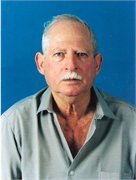 Barg Bar合作论文数Agricultural Research Organization of Israel9D. Dubrov合作论文数5David Sklan合作论文数4G Risenfeld合作论文数3i bengal合作论文数3G. Riesenfeld合作论文数3Ra Osteryoung合作论文数2
 Harry Berst Mark合作论文数Department of Chemistry, University of Cincinnati2
 John A. Turner合作论文数Solar Energy Research Institute2Anat Cohen合作论文数2I Bartov合作论文数1Js Mattson合作论文数1matitaho sharvit合作论文数1S Edelstein合作论文数1G Montecuccoli合作论文数1Isaak Plavnik合作论文数1J.Mark Rottschafer合作论文数1Francis J. Berlandi合作论文数1Mark Pines合作论文数1




