The various practices and uses of photographs and their effects in the nineteenth century are more clearly reflected in Sicily than in other parts of Italy and the rest of Europe. Photographs and their appearance in both popular and scholarly print media gave Sicily widespread visibility. This paper considers photographs of Norman monuments in Palermo and Monreale made for diverse purposes: they provided documentation and inventory for preservation and restoration; they served as an experimental instrument for architectural analysis: they offered new methods for the then-new disciplines of art and architectural history; they were tourist souvenirs depicting romantically transfigured sceneries; and they even played an important role in formation and promotion of the Italian nation-state.
The Authors present CENOBIUM, a web-based system designed to support the work of art historians. It provides access to multimedia content and related descriptive text on a specific topic: capitals in Romanesque cloisters. This paper discusses the motivation behind the decision to develop this web resource, taken more than ten years ago. It describes the initial design of the often system and how it evolved to keep pace with technological developments. In a context where the results of ICT & CH projects (digital tools, websites) have life span barely exceeding the timeframe of the actual project, CENOBIUM can be considered a success. It has been operating and steadily been updated with new content and latest technologies throughout its decade-long life.
Fluorescence LIDAR imaging has been already proposed in several studies as a valuable technique for the remote diagnostics and documentation of the monumental surfaces, with main applications referring to the detection and classification of biodeteriogens, the characterization of lithotypes, the detection and characterization protective coatings and also of some types of pigments. However, the conservation and documentation of the cultural heritage is an application field where a highly multi-disciplinary, integrated approach is typically required. In this respect, the fluorescence LIDAR technique can be particularly useful to provide an overall assessment of the whole investigated surface, which can be profitably used to identify those specific areas in which further analytical measurements or sampling for laboratory analysis are needed. This paper presents some representative examples of the research carried out in the frame of the PRIMARTE project, with particular reference to the LIDAR data and their significance in conjunction with the other applied techniques. One of the major objectives of the project, actually, was the development of an integrated methodology for the combined use of data by using diverse techniques: from fluorescence LIDAR remote sensing to UV fluorescence and IR imaging, from IR thermography, georadar, 3D electric tomography to microwave reflectometry, from analytical techniques (FORS, FT-IR, GC-MS) to high resolution photo-documentation and historical archive studies. This method was applied to a 'pilot site', a chapel dating back to the fourteenth century, situated at 'Le Campora' site in the vicinity of Florence. All data have been integrated in a multi-medial tool for archiving, management, exploitation and dissemination purposes.
With its vital character - growing, flowering, extending its roots into the ground, and its branches and leaves to the sky - the tree is a polyvalent metaphor, a suggestive symbol, and an allegorical subject. During the Middle Ages, a number of iconographic schemata were based on the image and structure of the tree, including the Tree of Jesse and the Tree of Virtues and Vices. From the late eleventh century onwards such formulae were increasingly used as devices for organizing knowledge and representing theoretical concepts. Despite the abstraction inherent in these schemata, however, the semantic qualities of trees persist in their usage.
This article is focused on the historical development of the classification system of the Photothek of the Kunsthistorisches Institut in Florenz (KHI) between the time of its establishment in 1897, with the typological-stylistic arrangement mainly by artists and locations, and the systematization of the subject cross-reference index (card catalog) in the 1920s to1930s. Specifically, these two incisive reorganizations of the Photothek were linked, on the one hand, to relocations and related extensions of space for the growing collection of books and images, and, on the other, to the scholars with their different research interests. The evolution of the categories that determined the thematic ordering of the images and their spatial configuration in open shelves for researchers, as well as the practical use of the typological-stylistic arrangement, shows the Photothek as an eloquent testimony of the constant variations in art history theories and methodologies.
When Ulrich Middeldorf departed Florence in November 1935 to teach art history at the University of Chicago, he left behind at the Kunsthistorisches Institut in Florenz the ‘Photo collection – the special pride of our Institute’ in the structure that has characterised it up to the present day. Middeldorf was 25 when he first came to the Institute as a scholar. In the following years he turned the Photothek into a modern research instrument, re-organising its classification system and its card indexes as the main finding aid. His contribution to the growth of the collection was enormous, not only thanks to his own donations, but also through the relationship he fostered with the main patron of the collection, Luigi Vittorio Fossati Bellani.
When Ulrich Middeldorf departed Florence in November 1935 to teach art history at the University of Chicago, he left behind at the Kunsthistorisches Institut in Florenz the ‘Photo collection – the special pride of our Institute’ in the structure that has characterised it up to the present day. Middeldorf was 25 when he first came to the Institute as a scholar. In the following years he turned the Photothek into a modern research instrument, re-organising its classification system and its card indexes as the main finding aid. His contribution to the growth of the collection was enormous, not only thanks to his own donations, but also through the relationship he fostered with the main patron of the collection, Luigi Vittorio Fossati Bellani.
 Roberto Scopigno合作论文数Institute for Computer Science and Technologies, National Research Council3
 almut goldhahn合作论文数2
 Federico Ponchio合作论文数CNR-ISTI2Clara Baracchini合作论文数1G. Tonini合作论文数1Annalisa Morelli合作论文数1Susanna Bracci合作论文数1sara penoni合作论文数1
 valentina raimondi合作论文数1costanza caraffa合作论文数Max Planck Inst, Kunsthist Inst Florenz1
 laura fenelli合作论文数max planck society1
 Gerhard Wolf合作论文数1
 Roberto Olmi合作论文数1barbara sacchi合作论文数CNR-ICVBC),, Institute for the Conservation and Valorization of Cultural Heritage - National Research Council of Italy1
 Maria Perla Colombini合作论文数Department of Chemistry and Industrial Chemistry, University of Pisa1
 Giovanni Bartolozzi合作论文数1C Belmonte合作论文数1
 Lorenzo Palombi合作论文数Institute of Applied Physics, National Research Council of Italy1
 Costanza Cucci合作论文数ISTITUTO DI FISICA1Daniela Pinna合作论文数1
 Emma Cantisani合作论文数Dipartimento di Restauro e Conservazione dei Beni Architettonici;Facoltà di Architettura;Università di Firenze;Facoltà di Architettura, Università di Firenze1
 Alessia Andreotti合作论文数Dipartimento di Chimica e Chimica Industriale, Università di Pisa1R. Sigismondi合作论文数1D. Keultjes合作论文数1Monica Galeotti合作论文数Dipartimento di Chimica, Università di Firenze1
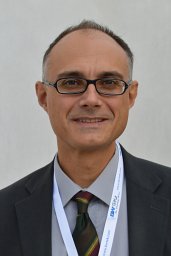 Marcello Picollo合作论文数Istituto di Fisica Applicata “Nello Carrara”,, CNR1
 Ilaria Bonaduce合作论文数Dipartimento di Chimica e Chimica Ind., Università di Pisa1
 Claudio Montani合作论文数Istituto Scienza e Tecnologie dell'Informazione, Consiglio Nazionale delle Ricerche1
 Cristiano Riminesi合作论文数Istituto di Fisica Applicata Nello Carrara, CNR1
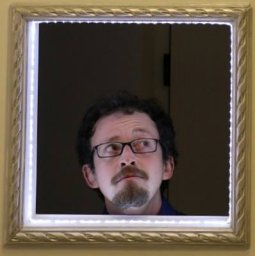 Matteo Dellepiane合作论文数ISTI-CNR1
 Marco Callieri合作论文数Visual Computing Lab, Institute of Science and Technologies of Information, National Research Council1
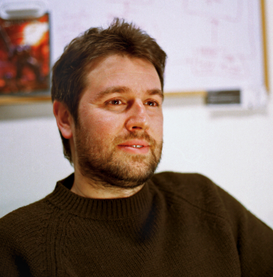 Massimiliano Corsini合作论文数Visual Computing Lab, Istituto Scienza e Tecnologia dell'Informazione-CNR1




