Leadership in materials science underpins future technologies in energy, security, and other applications that drive this nation’s economy. Neutron scattering is among the crucial characterization techniques necessary to ensure a world-leading position in materials science for the United States. The Second Target Station (STS) at the Spallation Neutron Source (SNS) will provide transformative new capabilities for the study of a broad range of materials using neutron scattering and will support users in many fields of research—materials science, physics, chemistry, geology, biology, and engineering, among others—and from academia, government laboratories, and industry.
Inelastic neutron scattering (spectroscopy) is in high demand to further our understanding of energy and condensed matter. This article highlights some of the developments, which may be anticipated for the coming decade and beyond, of the inelastic instrument suite at the Spallation Neutron Source in Oak Ridge.
Linear plasma generators are cost effective facilities to simulate divertor plasma conditions of present and future fusion reactors. They are used to address important R&D gaps in the science of plasma material interactions and towards viable plasma facing components for fusion reactors. Next generation plasma generators have to be able to access the plasma conditions expected on the divertor targets in ITER and future devices. The steady-state linear plasma device MPEX will address this regime with electron temperatures of 1-10 eV and electron densities of 10(21) -10(20) m(-3). The resulting heat fluxes are about 10 MW m(-2). MPEX is designed to deliver those plasma conditions with a novel Radio Frequency plasma source able to produce high density plasmas and heat electron and ions separately with electron Bernstein wave (EBW) heating and ion cyclotron resonance heating with a total installed power of 800 kW. The linear device Proto-MPEX, forerunner of MPEX consisting of 12 water-cooled copper coils, has been operational since May 2014. Its helicon antenna (100 kW, 13.56 MHz) and EC heating systems (200 kW, 28 GHz) have been commissioned and 14 MW m-2 was delivered on target. Furthermore, electron temperatures of about 20 eV have been achieved in combined helicon and ECH heating schemes at low electron densities. Overdense heating with EBW was achieved at low heating powers. The operational space of the density production by the helicon antenna was pushed up to 1.1 x 10(20) m(-3) at high magnetic fields of 1.0 T at the target. The experimental results from Proto-MPEX will be used for code validation to enable predictions of the source and heating performance for MPEX. MPEX, in its last phase, will be capable to expose neutron-irradiated samples. In this concept, targets will be irradiated in ORNL's High Flux Isotope Reactor and then subsequently exposed to fusion reactor relevant plasmas in MPEX.
The divertor-specific ITER Diagnostic Residual Gas Analyzer (DRGA) will provide essential information relating to DT fusion plasma performance. This includes pulse-resolving measurements of the fuel isotopic mix reaching the pumping ducts, as well as the concentration of the helium generated as the ash of the fusion reaction. In the present baseline design, the cluster of sensors attached to this diagnostic's differentially pumped analysis chamber assembly includes a radiation compatible version of a commercial quadrupole mass spectrometer, as well as an optical gas analyzer using a plasma-based light excitation source. This paper reports on a laboratory study intended to validate the performance of this sensor cluster, with emphasis on the detection limit of the isotopic measurement. This validation study was carried out in a laboratory set-up that closely prototyped the analysis chamber assembly configuration of the baseline design. This includes an ITER-specific placement of the optical gas measurement downstream from the first turbine of the chamber's turbo-molecular pump to provide sufficient light emission while preserving the gas dynamics conditions that allow for \textasciitilde 1 s response time from the sensor cluster [1].
One of the ITER diagnostics having reached an advanced design stage is a diagnostic RGA for the divertor, i.e. residual gas analysis system for the ITER divertor, which is intended to sample the divertor pumping duct region during the plasma pulse and to have a response time compatible with plasma particle and impurity lifetimes in the divertor region. Main emphasis is placed on helium (He) concentration in the ducts, as well as the relative concentration between the hydrogen isotopes (mainly in the form of diatomic molecules of H, D, and T). Measurement of the concentration of radiative gases, such as neon (Ne) and nitrogen (N-2), is also intended. Numerical modeling of the gas flow from the sampled region to the cluster of analysis sensors, through a long (similar to 8 m long, similar to 110 mm diameter) sampling pipe originating from a pressure reducing orifice, confirm that the desired response time (similar to 1 s for He or D-2) is achieved with the present design. (C) 2015 Published by Elsevier B.V.
The Target System and Pion Decay Channel for a Muon Collider/Neutrino Factory utilizes a string of solenoid magnets to capture and transport the low-energy pions whose decay provides the desired muon beams. The magnetic field strength at the target is 15-20 T, “tapering” down to 1.5-3 T in the Decay Channel. The superconducting coils which produce these fields must have substantial inner radius to accommodate internal shielding against radiation damage by secondary particles. A significant fraction of the primary beam energy is transported into the Decay Channel via protons, and the Decay Channel includes a magnetic chicane to provide a beam dump for these. The design of the various coils in this scenario is reported.
Much of the energy of the primary proton beam of Muon Collider/Neutrino Factory would be deposited in the superconducting coils that provide a solenoid-magnet transport channel for secondary particles, unless those coils are protected by massive internal shielding. Studies are reported of energy deposition in such shielding, with the goal of permitting 10 years operational life at 4-MW beam power. The graphite target should be able to withstand the “thermal shock” induced by the pulsed beam; further study is needed to confirm this.
A concept is presented for a Target System in a staged scenario for a Neutrino Factory and eventual Muon Collider, with emphasis on initial operation with a 6.75-GeV proton beam of 1-MW power, and 50 Hz of pulses 3-ns long. A radiation-cooled graphite target will be used in the initial configuration, with an option to replace this with a free-liquid-metal-jet target should 4-MW beam power become available at a later stage.
This report, prepared for the Community Planning Study - Snowmass 2013 - summarizes the theoretical motivations and the experimental efforts to search for baryon number violation, focussing on nucleon decay and neutron-antineutron oscillations. Present and future nucleon decay search experiments using large underground detectors, as well as planned neutron-antineutron oscillation search experiments with free neutron beams are highlighted.
U. Al-Binni, S. Banerjee, D. V. Baxter, Z. Berezhiani, M. Bergevin, S. Bhattacharya, S. Brice, R. Brock, T. W. Burgess, L. Castellanos, S. Chattopadhyay, M.-C. Chen, E. Church, C. E. Coppola, D. F. Cowen, R. Cowsik, J. A. Crabtree, H. Davoudiasl, R. Dermisek, A. Dolgov, B. Dutta, G. Dvali, P. Ferguson, P. Fileviez Perez, T. Gabriel, A. Gal, F. Gallmeier, K. S. Ganezer, I. Gogoladze, E. S. Golubeva, V. B. Graves, G. Greene, T. Handler, B. Hartfiel, A. Hawari, L. Heilbronn, J. Hill, D. Jaffe, C. Johnson, C. K. Jung, Y. Kamyshkov, B. Kerbikov, B. Z. Kopeliovich, V. B. Kopeliovich, W. Korsch, T. Lachenmaier, P. Langacker, C.-Y. Liu, W. J. Marciano, M. Mocko, R. N. Mohapatra, N. Mokhov, G. Muhrer, P. Mumm, P. Nath, Y. Obayashi, L. Okun, J. C. Pati, R. W. Pattie, Jr., D. G. Phillips II, C. Quigg, J. L. Raaf, S. Raby, E. Ramberg, A. Ray, A. Roy, A. Ruggles, U. Sarkar, A. Saunders, A. Serebrov, Q. Shafi, H. Shimizu, M. Shiozawa, R. Shrock, A. K. Sikdar, W. M. Snow, A. Soha, S. Spanier, G.C. Stavenga, S. Striganov, R. Svoboda, Z. Tang, Z. Tavartkiladze, L. Townsend, S. Tulin, A. Vainshtein, R. Van Kooten, C. E. M. Wagner, Z. Wang, B. Wehring, R. J. Wilson, M. Wise, M. Yokoyama, A. R. Young
Part 2 of "Project X: Accelerator Reference Design, Physics Opportunities, Broader Impacts". In this Part, we outline the particle-physics program that can be achieved with Project X, a staged superconducting linac for intensity-frontier particle physics. Topics include neutrino physics, kaon physics, muon physics, electric dipole moments, neutron-antineutron oscillations, new light particles, hadron structure, hadron spectroscopy, and lattice-QCD calculations. Part 1 is available as arXiv:1306.5022 [physics.acc-ph] and Part 3 is available as arXiv:1306.5024 [physics.acc-ph].
The Facility for Rare Isotopes Beams (FRIB) at Michigan State University will use projectile fragmentation and induced in-flight fission of heavy-ion primary beams at energies of 200MeV/u and higher and at a beam power of 400kW to generate rare isotope beams for experiments in nuclear physics, nuclear astrophysics, and fundamental symmetries, as well as for societal needs. The Advanced Rare Isotope Separator (ARIS) has been designed as a three-stage fragment separator for the efficient collection and purification of the rare isotope beams of interest. A vertically bending preseparator (first stage) with production target and beam dump is fully integrated into a production target facility hot cell with remote handling. The new separator compresses the accepted momentum width of up to ±5% of the beam by a factor of three in the standard operational mode. Provisions for alternate operational modes for specific cases are included in the design. This preseparator is followed by two, horizontally-bending separator stages (second and third stages) utilizing the magnets from the existing A1900 fragment separator at the National Superconducting Cyclotron Laboratory (NSCL). These stages can alternatively be coupled to a single high-resolution separator stage, resulting in the flexibility to optimize the operation for different experiments, including momentum tagging and in-flight particle identification of rare isotope beams. The design of ARIS will be presented with an emphasis on beam physics characteristics, and anticipated operational modes will be described.
This paper summarizes discussions of the theoretical developments and the studies performed by the NNbarX collaboration for the 2013 Snowmass Community Summer Study.
This report, prepared for the Community Planning Study - Snowmass 2013 - summarizes the theoretical motivations and the experimental efforts to search for baryon number violation, focussing on nucleon decay and neutron-antineutron oscillations. Present and future nucleon decay search experiments using large underground detectors, as well as planned neutron-antineutron oscillation search experiments with free neutron beams are highlighted.
The design of the target station for a 4-MW Muon Col- lider or a Neutrino Factory is evolving to include more space for services to the magnets and internal tungsten shielding, as well as consideration of removing the 5-T re- sistive copper coils, thereby reducing the peakeld from 20 to 15 T. Simulations with MARS15 have been performed to verify that these revisions preserve sufcient shielding that the peak power deposition everywhere in the superconduct- ing magnets will be less than 0.1 mW/g, permitting at least a 10-year operational lifetime against radiation damage to the organic insulators.
The target system envisioned for a Muon Col- lider/Neutrino Factory (1) features a liquid Hg jet target immersed in a 20-T solenoidaleld. Field quality limits intercoil gaps to ≈ 40% of the O.D. of theanking coils. Longitudinal sag of the tungsten shielding vessels limits their length to ≈ 7 m. Support members adequate to resist intercryostat axial forces require an aggregate cross section of ≈ 0.1 m 2 ; the cryogenic heat leakage may be large. The innermost shielding vessel wall can be adequately cooled by helium gas only if its pressure is ≈ 10 atm and its veloc- ity is ≈ 200 m/s. However, the analysis in this paper found none of these engineering challenges to be insurmountable.
We consider the potential for a free-gallium-jet as an option for the pion-production target at a Muon Collider or NeutrinoFactory. Advantagesofsuch a targetchoiceare its liquid state at relatively low temperature, its relatively efficient meson production,and its lower activation (compared to mercury). Using the MARS15 code, we have simulated particle production initiated by incoming protons with kinetic energies (KE) between 2 and 16 GeV. For each proton beam energy, we optimized the geometric parameters of the target: the radius of the liquid jet, the incoming proton beam angle, and the crossing angle between the jet and the proton beam. We compare the quantity of generated muons using a Ga target to that from a mercury jet target.
 Kirk T. Mcdonald合作论文数Department of Physics, Princeton University20
 H. Kirk合作论文数18P. T. Spampinato合作论文数13n souchlas合作论文数9S. Striganov合作论文数8Nikolai Mokhov合作论文数Theory and Modeling Group, Fermi National Accelerator Laboratory8
 R.J. Weggel合作论文数8T. W. Burgess合作论文数8Carroll A J合作论文数7Franz X. Gallmeier合作论文数Oak Ridge National Laboratory7
 h sayed合作论文数Radiation Oncology, Mayo Clinic6J. Lettry合作论文数6x ding合作论文数6Adrian Fabich合作论文数6
 Luis A. Castellanos合作论文数5Christopher Coppola合作论文数Univ Tennessee5
 Peter Loveridge合作论文数5
 Ilias Efthymiopoulos合作论文数5
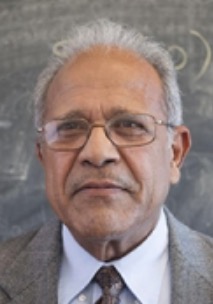 Rabindra Mohapatra合作论文数Maryland Center for Fundamental Physics, Department of Physics, College of Computer, Mathematical, and Natural Sciences, University of Maryland5
 Lev Okun合作论文数Moscow Institute of Physics and Technology5
 Chris Quigg合作论文数Fermi National Accelerator Laboratory5T. Handler合作论文数5
 Wolfgang Korsch合作论文数Radiation Lab;California Institute of Technology;Radiation Lab, California Institute of Technology5
 M. Bergevin合作论文数5G. Muhrer合作论文数Los Alamos National Laboratory5
 Tony Tsang合作论文数5
 Roman Samulyak合作论文数Computational Science Center;Brookhaven National Laboratory;Computational Science Center, Brookhaven National Laboratory5
 Phillip D Ferguson合作论文数5
 Mu-Chun Chen合作论文数Department of Physics and Astronomy, University of California, Irvine;School of Physical Sciences, University of California, Irvine5
 Steve Brice合作论文数Fermilab5
 Ramanath Cowsik合作论文数Tata Institute of Fundamental Research Homi Bhabha Road 400005 Colaba, Bombay5Michal Mocko合作论文数5
 Theodore Biewer合作论文数Oak Ridge National Laboratory;Bredesen Center, University of Tennessee5Avraham Gal合作论文数5Hans Pieter Mumm合作论文数National Institute of Standards and Technology5
 David Baxter合作论文数Department of Physics, The College of Arts & Sciences, Indiana University Bloomington;Quantum Science and Engineering Center, Indiana University Bloomington5
 Robert Pattie合作论文数North Carolina State University5j r j bennett合作论文数5
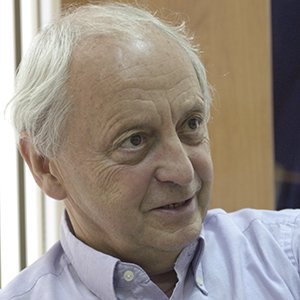 Alexander Dolgov合作论文数Laboratory of Cosmology and Elementary Particle Physics, Novosibirsk State University5
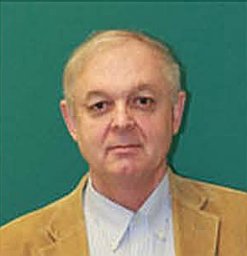 Yu. Kamyshkov合作论文数Oak Ridge National Laboratory5A. K. Sikdar合作论文数4
 Christopher Klepper合作论文数4J. A. Crabtree合作论文数4C. Densham合作论文数4A. Soha合作论文数4K. S. Ganezer合作论文数4A. R. Young合作论文数4
 Lawrence W. Townsend合作论文数Department of Nuclear Engineering, The University of Tennessee, Knoxville4
 Erik Ramberg合作论文数4




