We report the unique properties of cosmic phosphorus (P), chlorine (Cl), argon (Ar), potassium (K), and calcium (Ca) fluxes in the GV to TV rigidity range collected by the Alpha Magnetic Spectrometer (AMS) on the International Space Station. With a total of one million events collected over 13.5 years, we observed that the rigidity dependencies of the five fluxes are well described by the sums of a primary cosmic ray component and a secondary cosmic ray component. The abundance ratios of all five elements to Si at the source are accurately determined independent of cosmic ray propagation. The source abundance of Ar and Ca (even-Z elements) is larger than P, Cl, and K (odd-Z elements). The secondary components of the P and the Cl fluxes are each ∼1/3 of the F flux, and the secondary components of the Ar, K, and Ca fluxes are each ∼1/2 of the F flux. The twenty elements measured by AMS, from He to Ca and Fe, can be categorized into four classes, two primary and two secondary, based on their rigidity dependence.
A very strong solar energetic particle event took place on 11-Nov-2025. It was registered by the worldwide network of neutron monitors as a ground-level enhancement (GLE) #77, which appeared to be one of the strongest registered GLEs. The peak and integral intensities of GLE #77 reached about 125 (165) % and 600 (800) % hr, respectively, for standard (bare) neutron monitors. It had a complicated, multi-component anisotropic structure caused by the complexity of the solar coronal and heliospheric conditions. In this work, verified datasets related to this event are provided along with general analyses. The solar and heliospheric conditions are over-viewed, including the analysis of solar radio-emission and the location of the primary particle acceleration. Measurements of solar energetic particles in space, near the first Sun-Earth Lagrange point (L1) onboard the SOHO spacecraft, and in geostationary orbit onboard the GOES-19 spacecraft, are presented, revealing a long-duration, hard-spectrum intense solar particle event. The analysed event produced radiation hazards at high-latitude flight-altitude regions and triggered multiple GLE alarms in the monitoring systems. This work presents a solid, verified basis fora comprehensive, detailed analysis of GLE #77 produced by a strong eruptive event on the Sun. (c) 2026 The Author(s). Published by Elsevier B.V. on behalf of COSPAR. This is an open access article under the CC BY license (http:// creativecommons.org/licenses/by/4.0/).
We present results over an 11-year Solar cycle of cosmic antiprotons based on 1.1×10^{6} events in the rigidity range from 1.00 to 41.9 GV. The p[over ¯] fluxes exhibit distinct properties. The magnitude of the p[over ¯] flux temporal variation is significantly smaller than those of p, e^{-}, and e^{+}. A hysteresis between the p[over ¯] fluxes and the p fluxes is observed, whereas the p[over ¯] and e^{-} fluxes show a linear correlation. With a model-independent analysis, we found a universal relation between the shape of the rigidity spectrum and the magnitude of flux temporal variation over an 11-year Solar cycle for both positively and negatively charged particles. The simultaneous results on p[over ¯] and p, e^{-}, and e^{+} provide unique information for understanding particle transport in the Solar System as a function of mass, charge, and spectral shape.
We present the first measurement of cosmic-ray fluxes of Li6 and Li7 isotopes in the rigidity range from 1.9 to 25 GV. The measurements are based on 9.7×10⁵ Li6 and 1.04×10⁶ Li7 nuclei collected by the Alpha Magnetic Spectrometer on the International Space Station from May 2011 to October 2023. We observe that over the entire rigidity range the Li6 and Li7 fluxes exhibit nearly identical time variations and, above ∼4 GV, the time variations of Li6, Li7, He, Be, B, C, N, and O fluxes are identical. Above ∼7 GV, we find an identical rigidity dependence of the Li6 and Li7 fluxes. This shows that they are both produced by collisions of heavier cosmic-ray nuclei with the interstellar medium and, in particular, excludes the existence of a sizable primary component in the Li7 flux.
We report the properties of precision time structures of cosmic nuclei He, Li, Be, B, C, N, and O fluxes over an 11-year solar cycle from May 2011 to November 2022 in the rigidity range from 1.92 to 60.3 GV. The nuclei fluxes show similar but not identical time variations with amplitudes decreasing with increasing rigidity. In particular, below 3.64 GV the Li, Be, and B fluxes, and below 2.15 GV the C, N, and O fluxes, are significantly less affected by solar modulation than the He flux. We observe that these differences in solar modulation are linearly correlated with the differences in the spectral indices of the cosmic nuclei fluxes. This shows, in a model-independent way, that solar modulation of galactic cosmic nuclei depends on their spectral shape. In addition, solar modulation differences due to nuclei velocity dependence on the mass-to-charge ratio (A/Z) are not observed.
Precision measurements by the Alpha Magnetic Spectrometer (AMS) on the International Space Station of the deuteron (D) flux are presented. The measurements are based on 21×106 D nuclei in the rigidity range from 1.9 to 21 GV collected from May 2011 to April 2021. We observe that over the entire rigidity range the D flux exhibits nearly identical time variations with the p, He3, and He4 fluxes. Above 4.5 GV, the D/He4 flux ratio is time independent and its rigidity dependence is well described by a single power law ∝RΔ with ΔD/He4=−0.108±0.005. This is in contrast with the He3/He4 flux ratio for which we find ΔHe3/He4=−0.289±0.003. Above ∼13 GV we find a nearly identical rigidity dependence of the D and p fluxes with a D/p flux ratio of 0.027±0.001. These unexpected observations indicate that cosmic deuterons have a sizable primarylike component. With a method independent of cosmic ray propagation, we obtain the primary component of the D flux equal to 9.4±0.5% of the He4 flux and the secondary component of the D flux equal to 58±5% of the He3 flux. Published by the American Physical Society 2024
We present the precision measurements of 11 years of daily cosmic electron fluxes in the rigidity interval from 1.00 to 41.9 GV based on 2.0×10^{8} electrons collected with the Alpha Magnetic Spectrometer (AMS) aboard the International Space Station. The electron fluxes exhibit variations on multiple timescales. Recurrent electron flux variations with periods of 27 days, 13.5 days, and 9 days are observed. We find that the electron fluxes show distinctly different time variations from the proton fluxes. Remarkably, a hysteresis between the electron flux and the proton flux is observed with a significance of greater than 6σ at rigidities below 8.5 GV. Furthermore, significant structures in the electron-proton hysteresis are observed corresponding to sharp structures in both fluxes. This continuous daily electron data provide unique input to the understanding of the charge sign dependence of cosmic rays over an 11-year solar cycle.
We report the properties of primary cosmic-ray sulfur (S) in the rigidity range 2.15 GV to 3.0 TV based on 0.38×10^{6} sulfur nuclei collected by the Alpha Magnetic Spectrometer experiment (AMS). We observed that above 90 GV the rigidity dependence of the S flux is identical to the rigidity dependence of Ne-Mg-Si fluxes, which is different from the rigidity dependence of the He-C-O-Fe fluxes. We found that, similar to N, Na, and Al cosmic rays, over the entire rigidity range, the traditional primary cosmic rays S, Ne, Mg, and C all have sizeable secondary components, and the S, Ne, and Mg fluxes are well described by the weighted sum of the primary silicon flux and the secondary fluorine flux, and the C flux is well described by the weighted sum of the primary oxygen flux and the secondary boron flux. The primary and secondary contributions of the traditional primary cosmic-ray fluxes of C, Ne, Mg, and S (even Z elements) are distinctly different from the primary and secondary contributions of the N, Na, and Al (odd Z elements) fluxes. The abundance ratio at the source for S/Si is 0.167±0.006, for Ne/Si is 0.833±0.025, for Mg/Si is 0.994±0.029, and for C/O is 0.836±0.025. These values are determined independent of cosmic-ray propagation.
We present the precision measurement of 2824 daily helium fluxes in cosmic rays from May 20, 2011 to October 29, 2019 in the rigidity interval from 1.71 to 100 GV based on 7.6×10^{8} helium nuclei collected with the Alpha Magnetic Spectrometer (AMS) aboard the International Space Station. The helium flux and the helium to proton flux ratio exhibit variations on multiple timescales. In nearly all the time intervals from 2014 to 2018, we observed recurrent helium flux variations with a period of 27 days. Shorter periods of 9 days and 13.5 days are observed in 2016. The strength of all three periodicities changes with time and rigidity. In the entire time period, we found that below ∼7 GV the helium flux exhibits larger time variations than the proton flux, and above ∼7 GV the helium to proton flux ratio is time independent. Remarkably, below 2.4 GV a hysteresis between the helium to proton flux ratio and the helium flux was observed at greater than the 7σ level. This shows that at low rigidity the modulation of the helium to proton flux ratio is different before and after the solar maximum in 2014.
We present the precision measurement of the daily proton fluxes in cosmic rays from May 20, 2011 to October 29, 2019 (a total of 2824 days or 114 Bartels rotations) in the rigidity interval from 1 to 100 GV based on 5.5×10^{9} protons collected with the Alpha Magnetic Spectrometer aboard the International Space Station. The proton fluxes exhibit variations on multiple timescales. From 2014 to 2018, we observed recurrent flux variations with a period of 27 days. Shorter periods of 9 days and 13.5 days are observed in 2016. The strength of all three periodicities changes with time and rigidity. The rigidity dependence of the 27-day periodicity is different from the rigidity dependences of 9-day and 13.5-day periods. Unexpectedly, the strength of 9-day and 13.5-day periodicities increases with increasing rigidities up to ∼10 GV and ∼20 GV, respectively. Then the strength of the periodicities decreases with increasing rigidity up to 100 GV.
We report the observation of new properties of primary iron (Fe) cosmic rays in the rigidity range 2.65 GV to 3.0 TV with 0.62×10^{6} iron nuclei collected by the Alpha Magnetic Spectrometer experiment on the International Space Station. Above 80.5 GV the rigidity dependence of the cosmic ray Fe flux is identical to the rigidity dependence of the primary cosmic ray He, C, and O fluxes, with the Fe/O flux ratio being constant at 0.155±0.006. This shows that unexpectedly Fe and He, C, and O belong to the same class of primary cosmic rays which is different from the primary cosmic rays Ne, Mg, and Si class.
This corrects the article DOI: 10.1103/PhysRevLett.127.021101.
The Alpha Magnetic Spectrometer (AMS) is a precision particle physics detector on the International Space Station (ISS) conducting a unique, long-duration mission of fundamental physics research in space. The physics objectives include the precise studies of the origin of dark matter, antimatter, and cosmic rays as well as the exploration of new phenomena. Following a 16-year period of construction and testing, and a precursor flight on the Space Shuttle, AMS was installed on the ISS on May 19, 2011. In this report we present results based on 120 billion charged cosmic ray events up to multi-TeV energies. This includes the fluxes of positrons, electrons, antiprotons, protons, and nuclei. These results provide unexpected information, which cannot be explained by the current theoretical models. The accuracy and characteristics of the data, simultaneously from many different types of cosmic rays, provide unique input to the understanding of origins, acceleration, and propagation of cosmic rays.
We report the observation of new properties of primary cosmic rays, neon (Ne), magnesium (Mg), and silicon (Si), measured in the rigidity range 2.15 GV to 3.0 TV with 1.8×10^{6} Ne, 2.2×10^{6} Mg, and 1.6×10^{6} Si nuclei collected by the Alpha Magnetic Spectrometer experiment on the International Space Station. The Ne and Mg spectra have identical rigidity dependence above 3.65 GV. The three spectra have identical rigidity dependence above 86.5 GV, deviate from a single power law above 200 GV, and harden in an identical way. Unexpectedly, above 86.5 GV the rigidity dependence of primary cosmic rays Ne, Mg, and Si spectra is different from the rigidity dependence of primary cosmic rays He, C, and O. This shows that the Ne, Mg, and Si and He, C, and O are two different classes of primary cosmic rays.
 L. Quadrani合作论文数39
 Andrea Contin合作论文数36
 C. Consolandi合作论文数34F. Palmonari合作论文数33
 Guido Castellini合作论文数33
 Francesco Giovacchini合作论文数33S. Haino合作论文数32N. Masi合作论文数32F. Barao合作论文数32G. Laurenti合作论文数31H Jinchi合作论文数30S. Di Falco合作论文数30C. Mana合作论文数29
 Alberto Oliva合作论文数Lab Nazl Sud, Ist Nazl Fis Nucl28Della Torre S合作论文数INFN Sezione di Milano-Bicocca28
 Corti C合作论文数Physics and Astronomy Department, University of Hawaii28
 Mercedes Paniccia合作论文数27
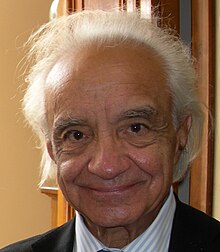 Antonino Zichichi合作论文数University of Bologna26
 Carlos Delgado合作论文数26Bruna Bertucci合作论文数25
 M. Aguilar合作论文数Hospital Universitario Virgen Macarena25A Kounine合作论文数25Emanuele Fiandrini合作论文数Humboldt University25
 Giovanni Ambrosi合作论文数Dipartimento di Fisica e Geologia, Università degli Studi di Perugia;Istituto Nazionale di Fisica Nucleare Sezione di Perugia25M. Capell合作论文数25
 Philip von Doetinchem合作论文数Department of Physics & Astronomy, University of Hawaii at Manoa25J. Casaus合作论文数25
 L. Arruda合作论文数School of Medicine, Ribeirão Preto-University of São Paulo25
 Boschini Matteo J.合作论文数Istituto Nazionale di Fisica Nucleare25
 Grandi Davide合作论文数Istituto Nazionale di Fisica Nucleare25
 Giuseppe La Vacca合作论文数Milano-Bicocca University25V Choutko合作论文数MIT24Vladimir Koutsenko合作论文数24Maurice H. Bourquin合作论文数24
 Stefan Schael合作论文数I. Physics Institute and JARA-FAME, RWTH Aachen University24M. Duranti合作论文数23G. Schwering合作论文数23A. Eline合作论文数23L. Derome合作论文数23K. Bollweg合作论文数23L. Barrin合作论文数23Z Cui合作论文数23J Gong合作论文数23Graziani M合作论文数23
 Arturo Alejandro Menchaca Rocha合作论文数Instituto de Fisica, Universidad Nacional Autonoma de Mexico23M. Pauluzzi合作论文数23D. Rapin合作论文数23
 Eun-Suk Seo合作论文数Department of Physics, College of Computer, Mathematical & Natural Sciences, University of Maryland23
 Massimo Gervasi合作论文数Dipartimento di Fisica G. Occhialini, University of Milano Bicocca23




