Using local or non-local features has proven to be a competent approach for denoising images. As noise and edges have similar effect of changes in gradient in many cases, noise allocation for denoising is still significant challenge. This work addresses the classic problem but introducing the combination concept of local and non-local factors with deviation refinement procedure. A new algorithm of the concept is proposed to ameliorate noise reduction. Sensitivity of noise detection is examined by iterative non-local mean and bilateral filter with refinement of range deviation. The final methodology is tested with Gaussian noise and compared with both non-local mean, bilateral filter. Experiment demonstrates improvement of denoising level in the new algorithm.
L’accès aux archives de la revue « Annales de la faculté des sciences de Toulouse » (http://picard.ups-tlse.fr/~annales/) implique l’accord avec les conditions générales d’utilisation (http://www.numdam.org/conditions). Toute utilisation commerciale ou impression systématique est constitutive d’une infraction pénale. Toute copie ou impression de ce fichier doit contenir la présente mention de copyright.
This paper is devoted to the analysis of qualitative properties of flux-saturated type operators in dimension one. Specifically, we study regularity properties and smoothing effects, discontinuous interfaces, the existence of traveling wave profiles, sub- and super-solutions and waiting time features. The aim of the paper is to better understand these kind of phenomena throughout two prototypic operators: The relativistic heat equation and the porous media flux-limited equation. As an important consequence of our results we deduce that solutions to the one-dimensional relativistic heat equation become smooth inside their support on the long time run.
The aim of this paper is to compute the explicit solution of the total variation denoising problem corresponding to the characteristic function of a set which is the union of two planar disjoint balls with different radii.
A non-linear PDE featuring flux limitation effects together with those of the porous media equation (non-linear Fokker–Planck) is presented in this paper. We analyze the balance of such diverse effects through the study of the existence and qualitative behavior of some admissible patterns, namely traveling wave solutions, to this singular reaction–diffusion equation. We show the existence and qualitative behavior of different types of traveling waves: classical profiles for wave speeds high enough, and discontinuous waves that are reminiscent of hyperbolic shock waves when the wave speed lowers below a certain threshold. Some of these solutions are of particular relevance as they provide models by which the whole solution (and not just the bulk of it, as it is the case with classical traveling waves) spreads through the medium with finite speed.
We prove the convergence of a porous medium type flux-limited diffusion equation to the classical porous medium equation as the parameter c representing the maximum speed of propagation tends to infinity.
The aim of this paper is to review the main recent results about the dynamics of nonlinear partial differential equations describing flux-saturated transport mechanisms, eventually in combination with porous media flow and/or reactions terms. The result is a system characterized by the presence of wave fronts which move defining an interface. This can be used to model different process in applications in a variety of areas as Developmental Biology or Astrophysics. The concept of solution and its properties (well-posedness in a Bounded Variation scenario, Rankine–Hugoniot and geometric conditions for jumps, regularity results, finite speed of propagation, …), qualitative study of these fronts (traveling waves in particular) and application in morphogenesis cover the panorama of this review.
In this paper we study the problem of comparing two patches of an image defined on a Riemannian manifold, which can be defined by the image domain with a suitable metric depending on the image. The size of the patch will not be determined a priori, and we identify it with a variable scale. Our approach can be considered as a nonlocal extension (comparing two points) of the multiscale analyses defined using the axiomatic approach by Álvarez et al. [Arch. Ration. Mech. Anal., 123 (1993), pp. 199–257]. Following this axiomatic approach, we can define a set of similarity measures that appear as solutions of a degenerate partial differential equation. This equation can be further specified in the linear case, and we observe that it contains as a particular instance the case of using weighted Euclidean distances as comparison measures. Finally, we discuss the case of some morphological scale spaces that exhibit a higher complexity.
The issue of perceptually-inspired correction of color and contrast in digital images has been recently analyzed with the help of variational principles. These techniques allowed building a general framework in which the action of many already existing algorithms can be more easily understood and compared in terms of intensification of local contrast and control of dispersion around the average intensity value. In this paper we analyze this issue from the dual perspective of wavelet theory, showing that it is possible to build energy functionals of wavelet coefficients that lead to a multilevel perceptually-inspired color correction. By computing the Euler–Lagrange equations associated to the wavelet-based functionals we were able to find an analytical formula for the modification of wavelet detail coefficients that overcomes the problem of an ad-hoc selection based on empirical considerations. Besides these theoretical results, the wavelet perspective provides the computational advantage of generating much faster algorithms in comparison with the spatial variational framework.
In this paper we study the problem of comparing two patches of an image defined on a Riemannian manifold, which can be defined by the image domain with a suitable metric depending on the image. The size of the patch will not be determined a priori, and we identify it with a variable scale. Our approach can be considered as a nonlocal extension (comparing two points) of the multiscale analyses defined using the axiomatic approach by Alvarez et al. [Arch. Ration. Mech. Anal., 123 (1993), pp. 199--257]. Following this axiomatic approach, we can define a set of similarity measures that appear as solutions of a degenerate partial differential equation. This equation can be further specified in the linear case, and we observe that it contains as a particular instance the case of using weighted Euclidean distances as comparison measures. Finally, we discuss the case of some morphological scale spaces that exhibit a higher complexity.
In this paper we study multiscale analyses for images defined on Riemannian manifoldsand extend the axiomatic approach proposed by Álvarez, Guichard, Lions, and Morel to thisgeneral case. This covers the case of two- and three-dimensional images and video sequences. Afterobtaining the general classification, we consider the case of morphological scale spaces,which are given in terms of geometric equations, and the linear case given by theLaplace--Beltrami flow. We consider in some detail the case of image metrics given interms of the structure tensor and compute some cases of such a tensor for video. Then wecomment on the connections with variational formulations of image diffusion comparing theanisotropies that appear. Finally, we include numerical experiments illustrating some ofthe models. Namely, we compare some examples for still images using the Laplace--Beltramiflow and some variational models. We also consider several examples in video: the meancurvature motion and the extension of the morphological and Galilean invariant scalespaces to the video manifold case, and the Laplace--Beltrami flow. We point out that thenumber of models that appear is huge, and we have restricted ourselves to such cases for the sakeof brevity and illustration.
In sport scenarios like football or basketball, we often deal with central views where only the central circle and some additional primitives like the central line and the central point or a touch line are visible. In this paper we first characterize, from a mathematical point of view, the set of homographies that project a given ellipse into the unit circle, next, using some extra minimal additional information like the knowledge of the position in the image of the central line and central point or a touch line we show a method to fully determine the plane homography. We present some experiments in sport scenarios to show the ability of the proposed method to properly recover the plane homography.
This work presents a novel computational model for relative depth order estimation from a single image based on low-level local features that encode perceptual depth cues such as convexity/concavity, inclusion, and T-junctions in a quantitative manner, considering information at different scales. These multi-scale features are based on a measure of how likely is a pixel to belong simultaneously to different objects (interpreted as connected components of level sets) and, hence, to be occluded in some of them, providing a hint on the local depth order relationships. They are directly computed on the discrete image data in an efficient manner, without requiring the detection and interpretation of edges or junctions. Its behavior is clarified and illustrated for some simple images. Then the recovery of the relative depth order on the image is achieved by global integration of these local features applying a non-linear diffusion filtering of bilateral type. The validity of the proposed features and the integration approach is demonstrated by experiments on real images and comparison with state-of-the-art monocular depth estimation techniques.
We show that the jump set of the solution of the minimizing Total Variation flow decreases with time for any initial condition in $BV({\Omega} )\cap L^N({\Omega} )$. We prove that the size of the jump also decreases with time.
We prove some regularity results for solutions of some flux limited diffusion equations of porous media type for Lipschitz initial data (or assuming a uniform gradient bound on some power of the data), including the fast diffusion case in which the results are global in time. We also develop the existence and uniqueness theory for solutions of the fast diffusion case, which was not covered in the current literature.
We study the relativistic heat equation in one space dimension. We prove a local regularity result when the initial datum is locally Lipschitz in its support. We propose a numerical scheme that captures the known features of the solutions and allows for analysing further properties of their qualitative behaviour.
 Jean-Michel Morel合作论文数City University of Hong Kong32
 José M. Mazón合作论文数Department of Analysis, University of València28
 Marcelo Bertalmío合作论文数Instituto de Óptica, Spanish National Research Council27
 F. Andreu合作论文数25
 Guillermo Sapiro合作论文数Department of Electrical and Computer Engineering, Duke University25
 Coloma Ballester合作论文数The Image Processing and Computer Vision group at the Department of Information and Communication Technologies of the Universitat Pompeu Fabra in Barcelona.22Marc Bernot合作论文数17
 Matteo Novaga合作论文数Dipartimento di Matematica Pura e Applicata, Università di Padova17
 Gabriele Facciolo合作论文数Ecole Normale Superieure Paris-Saclay15
 Antonin Chambolle合作论文数Paris-Dauphine (PSL) et CNRS14
 Edoardo Provenzi合作论文数Departament de Tecnologies de la Informació i les Comunicacions, Universitat Pompeu Fabra14G Sapiro合作论文数11
 Enric Valor合作论文数Faculty of Physics, University of Valencia11
 Bartomeu Coll合作论文数11
 Nicolas Papadakis合作论文数UMR 5251, Univ Bordeaux10
 Ron Kimmel合作论文数Henry and Marilyn Taub Faculty of Computer Science, Technion–Israel Institute of Technology;Geometric Image Processing Lab, Technion–Israel Institute of Technology;Department of Computer Science, Technion–Israel Institute of Technology10Luis Garrido合作论文数Departament de Tecnologia
Passeig Circumval·lacio 89
Ron Kimmel合作论文数Henry and Marilyn Taub Faculty of Computer Science, Technion–Israel Institute of Technology;Geometric Image Processing Lab, Technion–Israel Institute of Technology;Department of Computer Science, Technion–Israel Institute of Technology10Luis Garrido合作论文数Departament de Tecnologia
Passeig Circumval·lacio 89 Pablo Arias合作论文数École normale supérieure de Cachan7
 Catalina Sbert合作论文数Dept Matemat & Informat, Univ Illes Balears7
 Pascal Monasse合作论文数Ecole Ponts, LIGM7
 Sira Ferradans合作论文数Universitat Pompeu Fabra7
 Raquel Niclos合作论文数Earth Phys & Thermodynam Dept, Univ Valencia7
 Aurélie Bugeau合作论文数LaBRI, Univ Bordeaux7
 Laura Igual合作论文数Department of Mathematics and Computer Science, Universitat de Barcelona6Salvador Moll合作论文数Departament d’Anàlisi Matemàtica Burjassot, Universitat de València6
 Yunqiang Liu合作论文数Barcelona Media - Innovation Center6
 Cesar Coll合作论文数5
 Pau Gargallo i Piracés合作论文数5
 Andrés Almansa合作论文数Télécom ParisTech - LTCI CNRS5Giovanni Bellettini合作论文数5
 Bernard Rougé合作论文数5Enric Meinhardt合作论文数5Rida Sadek合作论文数DTIC, Universitat Pompeu Fabra5Juan Calvo合作论文数4E. Rubio合作论文数4
 Olivier D'Hondt合作论文数IETR Laboratory;Image and Remote Sensing Group;University of Rennes;IETR Laboratory, University of Rennes4
 Joan Verdera合作论文数Departament de Matemàtiques, Universitat Autònoma de Barcelona4
 Gloria Haro合作论文数Department of Information and Communications Technologies, Universitat Pompeu Fabra4
 Vanel Lazcano合作论文数Department of Electrical Engineering, University of Chile4
 Felipe Calderero合作论文数Department of Signal Theory and Communications, Technical University of Catalonia (UPC),4
 Juan Campos合作论文数3J Verdera合作论文数3
 Alvaro Pardo合作论文数Department of Engineering, Universidad Católica del Uruguay3Alter, F.合作论文数3
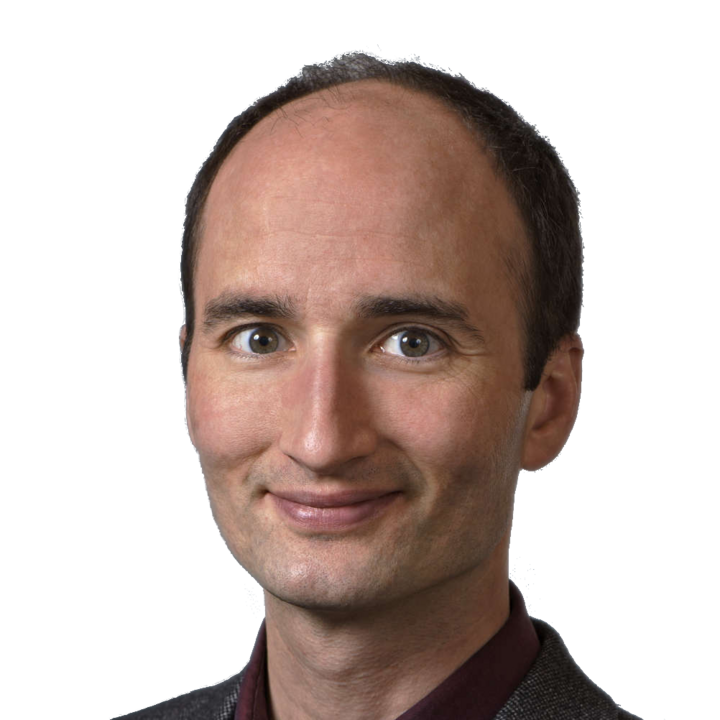 Daniel Cremers合作论文数Departments of Informatics and Mathematics, School of Computation, Information and Technology, Technical University of Munich3
 Antonio Baeza合作论文数3Do Hyun Chung合作论文数3
 Francesc Aràndiga合作论文数Dept. Matemática Aplicada, Universitat de València3
 Jose M Soler Torroja合作论文数Dep. Fisica de la Materia Condensada, Universidad Autonoma de Madrid3