The mathematical model of decomposition of a spherical gas hydrate particle in water behind a 1D wave of the stepped profile (rarefaction wave) is suggested. Contribution of the outer and inner heat flux in a particle to the process of hydrate decomposition is studied. The effect of the gas hydrate particle size, pressure and temperature jumps in liquid on gas hydrate decomposition is investigated.
Process of dilution and hydrate forming beyond the front of the shock wave with moderate amplitude (moderate shock wave front) in water with carbonic gas bubbles at varying initial static pressures has been experimentally observed and studied. Influence of surfactants on dilution and hydrate forming process beyond the shock wave occurring in the medium has been scrutinized. It has been proved that beyond the moderate shock wave in fluid with carbonic gas bubbles intense process of dilution and hydrate forming occurs resulting in complete loss of gas phase for several milliseconds. Surfactants present in the medium proved to be insignificant for dilution and hydrate forming process in the studied time range. Dependence of dilution and hydrate forming process beyond the shock wave from wave and medium parameters has been revealed. Theoretical model of dilution and hydrate forming process beyond the shock wave in gas and fluid medium taking into account convective and molecular gas diffusion in fluid, convective and conductive heat exchange caused by heat release in interphase boundary resulted from dilution and hydrate forming has been offered. Close fit of experimental data and calculations has been achieved.
A theoretical model for the processes of dissolution and hydrate formation behind a shock wave in a gas-liquid medium with allowance for convective and molecular gas diffusion in the liquid and convective and conductive heat transfer caused by heat release at the interphase boundary due to dissolution and hydrate formation is proposed. A comparison of the model calculations with experimental data is made.
The processes of dissolution and hydrate formation behind the front of a shock wave of moderate amplitude in water with carbon dioxide bubbles are studied experimentally at various initial static pressures. The influence of a surface-active substance (SAS) in the medium on the processes of dissolution and hydrate formation behind the shock wave is investigated. It is demonstrated that behind a shock wave of moderate amplitude in a liquid with carbon dioxide bubbles an intensive process of dissolution and hydrate formation takes place, resulting in complete disappearance of the gas phase in a matter of a few milliseconds. The presence of an SAS in the medium does not significantly influence the processes of dissolution and hydrate formation within the investigated periods of time.
The processes of dissolution and hydrate formation after a shock wave of moderate amplitude in a liquid with bubbles of a homogeneous gas and a mixture of gases. It is shown that these processes due to the fragmentation of gas bubbles, leading to a sharp increase the interfacial surface and the decrease in the size of gas inclusions. Mechanisms of hydrate formation behind the wave front are studied. A theoretical analysis of the process of hydrate formation behind a shock wave of a step profile.
The evolution of a shock wave and its reflection from a wall in a gas-liquid medium with dissolution and hydration are experimentally investigated. Dissolution and hydration behind the front of a moderate-amplitude shock wave are demonstrated to be caused by fragmentation of gas bubbles, resulting in a drastic increase in the area of the interphase surface and in a decrease in size of gas inclusions. The mechanisms of hydration behind the wave front are examined. Hydration behind the front of a shock wave with a stepwise profile is theoretically analyzed.
The processes of breaking, solution, and formation of hydrates behind a shock wave of moderate amplitude were studied experimentally in water with carbon dioxide bubbles under different initial static pressures. It is shown that an increase in the static pressure in a gas-liquid medium leads to reduction of critical relative amplitude of the shock wave, corresponding to starting development of Kelvin — Helmholtz instability and bubble splitting into small gas inclusions behind the shock wave front. It is shown that the rates of carbon dioxide solution and hydrate formation behind the shock wave front are close by the value; their dependences on medium and wave parameters are determined. Calculations by the model of gas hydration behind the shock wave are presented.
The propagation of a step-shaped shock wave in a liquid is investigated experimentally. The liquid contains spherical three-phase clusters (liquid, solid balls, gas bubbles). A comparison of the experimental data on the velocity and wave structure with calculations with the use of the Boussinesq equation for a three-phase cluster medium is made. It is shown that the sound speed in a three-phase medium of cluster structure is higher than in a homogeneous three-phase medium.
Propagation of a stepwise shock wave in a liquid containing spherical gas-liquid clusters is experimentally studied. Measured results are compared with available theoretical models. It is shown that resonant interaction of gas-liquid clusters in the wave can increase the amplitude of oscillations in the shock wave.
Theoretical analyses on nonlinear pressure waves evolution in porous medium saturated with a liquid containing gas bubbles is carried out. The evolution equations for fast and slow longitudinal modes are derived for slightly nonlinear, disperse, and dissipation processes. The pressure wave distribution in gas bubble liquid-saturated porous media was investigated experimentally. It was revealed that both modes might have oscillating structure induced by bubble oscillation in the wave. It is shown that the wave damping is determined by a combined impact of heat losses due to gas cooling in the bubbles and dissipation due to longitudinal displacement of liquid and porous skeleton, both influenced by the wave. Experimental data on the velocity and structure of fast and slow modes are compared with results of theoretical modeling.
Evolution and decay of pressure waves of moderate amplitude in a vertical shock tube filled by a gas–liquid medium with a nonuniform (stepwise) distribution of bubbles over the tube cross section are studied experimentally. The gas–liquid layer has the form of a ring located near the tube wall or the form of a gas–liquid column located in the center of the tube. It is shown that the nonuniformity of bubble distribution over the tube cross section increases the attenuation rate of pressure waves.
Experimental studies were performed of the interaction of a plane shock wave with a spherical gas–liquid cluster (polyurethane foam ball saturated with a bubbly liquid) in a vertical shock tunnel filled with a liquid. The cluster was shown to generate a solitary pressure wave of large amplitude.
The structure and dissipation of moderate‐amplitude pressure waves in a liquid with bubbles of two dissimilar gases (freon and helium) are experimentally studied. It is shown that introduction of a small (by volume) quantity of helium bubbles with a high thermal conductivity into a liquid with poorly heat‐conducting freon bubbles, sharply increases the rate of damping of solitary pressure waves.
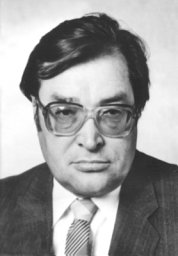 V. E. Nakoryakov合作论文数Novosibirsk27
 P. G. Markov合作论文数7
 Alex Chernov合作论文数Physical and Life Sciences Directorate, Lawrence Livermore National Laboratory5B. G. Pokusaev合作论文数5
 Valerij. Vladimirovich. Kuznetsov合作论文数3V. G. Gasenko合作论文数2
 Semeon Dmitrievich Sleptsov合作论文数2V. V. Kuznetsov合作论文数1
 Vsevolod Maslov合作论文数Institute for Geology and Mineral Resources of the World Ocean, The All-Russia Scientific Research Institute for Geology and Mineral Resources of the Ocean1




