We carry out the asymptotic analysis of repulsive ensembles of N particles which are discrete analogues of continuous 1d log-gases or beta-ensembles of random matrix theory. The ensembles that we study have several groups of particles which can have different intensities of repulsion. They appear naturally in models of random domino and lozenge tilings, random partitions, supersymmetric gauge theory, asymptotic representation theory, discrete orthogonal polynomial ensembles, etc. We allow filling fractions to be either fixed, or free, or to vary while respecting affine constraints. We are interested in the macroscopic behavior of the distribution of particles, captured by linear statistics, partition functions, and their finite-size corrections as N is large. We prove the law of large numbers and large deviations for the empirical measure around the equilibrium measure. To reach finite-size correction we assume off-criticality. For fixed filling fractions, we prove an asymptotic expansion for the partition function and for the cumulants of linear statistics, in particular establishing a central limit theorem. For varying filling fractions, we prove that the central limit theorem is perturbed by an additional discrete Gaussian component oscillating with N. We apply our general results to the study of uniformly random lozenge tilings on a large class of domains – not necessarily planar, simply-connected, nor orientable. When the analogues of filling fractions are fixed and this domain is orientable, we show that the Gaussian fluctuations on the vertical extend to the whole liquid region and are governed there by the Gaussian free field, as predicted by the Kenyon-Okounkov conjecture. We also establish a modification of the Kenyon-Okounkov conjecture in the non-orientable case. Complementarily, we prove discrete Gaussian fluctuations for filling fractions, when they are not fixed.
We survey the connections between the six-vertex (square ice) model of 2d statistical mechanics and random matrix theory. We highlight the same universal probability distributions appearing on both sides, and also indicate related open questions and conjectures. We present full proofs of two asymptotic theorems for the six-vertex model: in the first one the Gaussian Unitary Ensemble and GUE-corners process appear; the second one leads to the Tracy-Widom distribution F_2. While both results are not new, we found shorter transparent proofs for this text. On our way we introduce the key tools in the study of the six-vertex model, including the Yang-Baxter equation and the Izergin-Korepin formula.
Cointegration is a property of multivariate time series that determines whether its non-stationary, growing components have a stationary linear combination. Largevars R package conducts a cointegration test for high-dimensional vector autoregressions of order k based on the large N, T asymptotics of Bykhovskaya and Gorin (2022, 2025). The implemented test is a modification of the Johansen likelihood ratio test. In the absence of cointegration the test converges to the partial sum of the Airy_1 point process, an object arising in random matrix theory. The package and this article contain simulated quantiles of the first ten partial sums of the Airy_1 point process that are precise up to the first 3 digits. We also include two examples using Largevars: an empirical example on S P100 stocks and a simulated VAR(2) example.
We study a problem with three equivalent formulations: describing Gibbs measures for five-vertex model in quadrant; classifying coherent systems on a p-deformation of the Gelfand-Tsetlin graph related to Grothendieck polynomials; finding the Martin boundary for discrete time TASEP with p-geometric jumps. We find a wide family of the Gibbs measures, parameterized by certain analytic functions. A subset of our measures have probabilistic interpretation as interacting particle systems with fixed particles speeds. In contrast to previous related boundary problems, we find that admissible speeds are not arbitrary, but must be larger than p/1-p. For this subset we further establish Law of Large Numbers and Central Limit Theorem, connecting the fluctuations to families of independent GUE eigenvalues. As a consequence, the measures from the subset are extreme points of the Martin boundary. It remains open whether our list of measures is exhaustive.
We study the behavior of configurations in the symmetric six-vertex model with $a,b,c$ weights in the $n\times n$ square with Domain Wall Boundary Conditions as $n\to\infty$. We prove that when $\Delta=\frac{a^2+b^2-c^2}{2ab}<1$, configurations near the boundary have fluctuations of order $n^{1/2}$ and are asymptotically described by the GUE-corners process of the random matrix theory. On the other hand, when $\Delta>1$, the fluctuations are of finite order and configurations are asymptotically described by the stochastic six-vertex model in a quadrant. In the special case $c=0$ (which implies $\Delta>1$), the limit is expressed as the $q$-exchangeable random permutation of infinitely many letters, distributed according to the infinite Mallows measure.
The paper analyzes four classical signal-plus-noise models: the factor model, spiked sample covariance matrices, the sum of a Wigner matrix and a low-rank perturbation, and canonical correlation analysis with low-rank dependencies. The objective is to construct confidence intervals for the signal strength that are uniformly valid across all regimes - strong, weak, and critical signals. We demonstrate that traditional Gaussian approximations fail in the critical regime. Instead, we introduce a universal transitional distribution that enables valid inference across the entire spectrum of signal strengths. The approach is illustrated through applications in macroeconomics and finance.
We study limit shapes in two equivalent models: the six-vertex model in the c→0 limit and the random Mallows permutation with restricted permutation matrix. We give the Euler-Lagrange equation for the limit shape and show how to solve it for a class of rectilinear polygonal domains. Its solutions are given by piecewise-algebraic functions with lines of discontinuities.
The paper studies nonstationary high-dimensional vector autoregressions of order $k$, VAR($k$). Additional deterministic terms such as trend or seasonality are allowed. The number of time periods, $T$, and the number of coordinates, $N$, are assumed to be large and of the same order. Under this regime the first-order asymptotics of the Johansen likelihood ratio (LR), Pillai-Bartlett, and Hotelling-Lawley tests for cointegration are derived: the test statistics converge to nonrandom integrals. For more refined analysis, the paper proposes and analyzes a modification of the Johansen test. The new test for the absence of cointegration converges to the partial sum of the Airy$_1$ point process. Supporting Monte Carlo simulations indicate that the same behavior persists universally in many situations beyond those considered in our theorems. The paper presents empirical implementations of the approach for the analysis of S$\&$P$100$ stocks and of cryptocurrencies. The latter example has a strong presence of multiple cointegrating relationships, while the results for the former are consistent with the null of no cointegration.
A sorting network is a shortest path from $12\dots n$ to $n\dots 21$ in the Cayley graph of the symmetric group $\mathfrak S_n$ spanned by adjacent transpositions. The paper computes the edge local limit of the uniformly random sorting networks as $n\to\infty$. We find the asymptotic distribution of the first occurrence of a given swap $(k,k+1)$ and identify it with the law of the smallest positive eigenvalue of a $2k\times 2k$ aGUE (an aGUE matrix has purely imaginary Gaussian entries that are independently distributed subject to skew-symmetry). Next, we give two different formal definitions of a spacing -- the time distance between the occurrence of a given swap $(k,k+1)$ in a uniformly random sorting network. Two definitions lead to two different expressions for the asymptotic laws expressed in terms of derivatives of Fredholm determinants.
For over a century canonical correlations, variables, and related concepts have been studied across various fields, with contributions dating back to Jordan [1875] and Hotelling [1936]. This text surveys the evolution of canonical correlation analysis, a fundamental statistical tool, beginning with its foundational theorems and progressing to recent developments and open research problems. Along the way we introduce and review methods, notions, and fundamental concepts from linear algebra, random matrix theory, and high-dimensional statistics, placing particular emphasis on rigorous mathematical treatment. The survey is intended for technically proficient graduate students and other researchers with an interest in this area. The content is organized into five chapters, supplemented by six sets of exercises found in Chapter 6. These exercises introduce additional material, reinforce key concepts, and serve to bridge ideas across chapters. We recommend the following sequence: first, solve Problem Set 0, then proceed with Chapter 1, solve Problem Set 1, and so on through the text.
We develop a theory of multilevel distributions of eigenvalues which complements the Dyson's threefold $\beta=1,2,4$ approach corresponding to real/complex/quaternion matrices by $\beta=\infty$ point. Our central objects are G$\infty$E ensemble, which is a counterpart of classical Gaussian Orthogonal/Unitary/Symplectic ensembles, and Airy$_{\infty}$ line ensemble, which is a collection of continuous curves serving as a scaling limit for largest eigenvalues at $\beta=\infty$. We develop two points of views on these objects. Probabilistic one treats them as partition functions of certain additive polymers collecting white noise. Integrable point of view expresses their distributions through the so-called associated Hermite polynomials and integrals of Airy function. We also outline universal appearances of our ensembles as scaling limits.
The Airy_β line ensemble is a random collection of continuous curves, which should serve as a universal edge scaling limit in problems related to eigenvalues of random matrices and models of 2d statistical mechanics. This line ensemble unifies many existing universal objects including Tracy-Widom distributions, eigenvalues of the Stochastic Airy Operator, Airy_2 process from the KPZ theory. Here β>0 is a real parameter governing the strength of the repulsion between the curves. We introduce and characterize the Airy_β line ensemble in terms of the Laplace transform, by producing integral formulas for its joint multi-time moments. We prove two asymptotic theorems for each β>0: the trajectories of the largest eigenvalues in the Dyson Brownian Motion converge to the Airy_β line ensemble; the extreme particles in the GβE corners process converge to the same limit. The proofs are based on the convergence of random walk expansions for the multi-time moments of prelimit objects towards their Brownian counterparts. The expansions are produced through Dunkl differential-difference operators acting on multivariate Bessel generating functions.
We introduce dynamical versions of loop (or Dyson-Schwinger) equations for large families of two--dimensional interacting particle systems, including Dyson Brownian motion, Nonintersecting Bernoulli/Poisson random walks, $\beta$--corners processes, uniform and Jack-deformed measures on Gelfand-Tsetlin patterns, Macdonald processes, and $(q,\kappa)$-distributions on lozenge tilings. Under technical assumptions, we show that the dynamical loop equations lead to Gaussian field type fluctuations. As an application, we compute the limit shape for $(q,\kappa)$--distributions on lozenge tilings and prove that their height fluctuations converge to the Gaussian Free Field in an appropriate complex structure.
This paper studies high-dimensional canonical correlation analysis (CCA) with an emphasis on the vectors that define canonical variables. The paper shows that when two dimensions of data grow to infinity jointly and proportionally, the classical CCA procedure for estimating those vectors fails to deliver a consistent estimate. This provides the first result on the impossibility of identification of canonical variables in the CCA procedure when all dimensions are large. As a countermeasure, the paper derives the magnitude of the estimation error, which can be used in practice to assess the precision of CCA estimates. Applications of the results to cyclical vs. non-cyclical stocks and to a limestone grassland data set are provided.
We establish a symmetry in a variety of integrable stochastic systems: certain multi-point distributions of natural observables are unchanged under a shift of a subset of observation points. The property holds for stochastic vertex models, (1+1)d directed polymers in random media, last passage percolation, the Kardar-Parisi-Zhang equation, and the Airy sheet. In each instance it leads to computations of previously inaccessible joint distributions. The proofs rely on a combination of the Yang-Baxter integrability of the inhomogeneous colored stochastic six-vertex model and Lagrange interpolation. We also show that a simplified (Gaussian) version of our theorems is related to the invariance in law of the local time of the Brownian bridge under the shift of the observation level.
The oriented swap process is a natural directed random walk on the symmetric group that can be interpreted as a multi-species version of the Totally Asymmetric Simple Exclusion Process (TASEP) on a finite interval. An open problem from a 2008 paper of Angel, Holroyd, and Romik asks for the limiting distribution of the absorbing time of the process. We resolve this question by proving that this random variable satisfies GOE Tracy-Widom asymptotics. Our starting point is a distributional identity relating the behavior of the oriented swap process to last passage percolation, conjectured in a recent paper of Bisi, Cunden, Gibbons, and Romik. The main technical tool is a shift-invariance principle for multi-species TASEPs, obtained by exploiting recent results of Borodin, Gorin, and Wheeler for the stochastic colored six-vertex model.
The paper analyses cointegration in vector autoregressive processes (VARs) for the cases when both the number of coordinates, $N$, and the number of time periods, $T$, are large and of the same order. We propose a way to examine a VAR for the presence of cointegration based on a modification of the Johansen likelihood ratio test. The advantage of our procedure over the original Johansen test and its finite sample corrections is that our test does not suffer from over-rejection. This is achieved through novel asymptotic theorems for eigenvalues of matrices in the test statistic in the regime of proportionally growing $N$ and $T$. Our theoretical findings are supported by Monte Carlo simulations and an empirical illustration. Moreover, we find a surprising connection with multivariate analysis of variance (MANOVA) and explain why it emerges.
We develop a framework for establishing the Law of Large Numbers for the eigenvalues in the random matrix ensembles as the size of the matrix goes to infinity simultaneously with the beta (inverse temperature) parameter going to zero. Our approach is based on the analysis of the (symmetric) Dunkl transform in this regime. As an application we obtain the LLN for the sums of random matrices as the inverse temperature goes to 0. This results in a one-parameter family of binary operations which interpolates between classical and free convolutions of the probability measures. We also introduce and study a family of deformed cumulants, which linearize this operation.
 Alexei Borodin合作论文数Department of Mathematics, Massachusetts Institute of Technology13
 Anna Bykhovskaya合作论文数Dept Econ, Univ Wisconsin6
 Alexey Bufetov合作论文数Inst Math, Univ Leipzig5Leonid Petrov合作论文数4
 Mykhaylo Shkolnikov合作论文数Department of Operations Research and Financial Engineering, Princeton University4
 Cesar Cuenca合作论文数Department of Mathematics, College of Arts and Sciences, The Ohio State University3Grigori Olshanski合作论文数Dobrushin Mathematics Laboratory, Institute for Information Transmission Problems, Bolshoy Karetny 19, 101447 Moscow GSP-4, Russia3N. I. Nessonov合作论文数Institute For Low Temperature Physics and Engineering3Alexander Gnedin合作论文数3Rais Sal'manovich Ismagilov合作论文数2Владимир Федорович Молчанов合作论文数2Александр Александрович Кириллов合作论文数2Yurii Aleksandrovich Neretin合作论文数2Анатолий Моисеевич Вершик合作论文数2Andrei Yur'evich Okounkov合作论文数2Александр Игоревич Буфетов合作论文数2
 Alexander Molev合作论文数Faculty of Science, University of Sydney2Буфетов Алексей Игоревич合作论文数2Сергей Михайлович Хорошкин合作论文数2
 Alice Guionnet合作论文数Mathematics Department, ENS Lyon;CNRS2
 Ivan Corwin合作论文数Courant Institute of Mathematical Sciences, New York University2
 Greta Panova合作论文数University of California, Los Angeles2Mustazee Rahman合作论文数1Eugene Strahov合作论文数1Alexander Ivanovich Molev合作论文数1
 Shamil Shakirov合作论文数1Mikhail Tsyrulnikov合作论文数1Matthew Nicoletti合作论文数1
 Lingfu Zhang (张灵夫)合作论文数The Division of Physics, Mathematics and Astronomy, Caltech1Amol Aggarwal合作论文数1
 Omer Angel合作论文数Department of Mathematics, The University of British Columbia1Michael Wheeler合作论文数School of Mathematics and Statistics, Faculty of Science, The University of Melbourne1Jan De Gier合作论文数School of Mathematics and Statistics, Faculty of Science, The University of Melbourne1
 Adam W. Marcus合作论文数Institute of Mathematics, School of Basic Sciences, École Polytechnique Fédérale de Lausanne1
 Jiaming Xu合作论文数Fuqua School of Business, Duke University1
 Yi Sun合作论文数Department of Statistics, The University of Chicago;Axiom1
 Andrei Okounkov合作论文数Center for Advanced Studies, Skolkovo Institute for Science and Technology;Department of Mathematics, Columbia University in the City of New York;International Laboratory of Representation Theory and Mathematical Physics, Higher School of Economics1
 Richard Kenyon合作论文数Department of Mathematics, Yale University;Department of Mathematics, Brown University1
 Filippo Colomo合作论文数Sezione di Firenze;Dipartimento di Fisica;Universita di Firenze;Sezione di Firenze, Universita di Firenze1
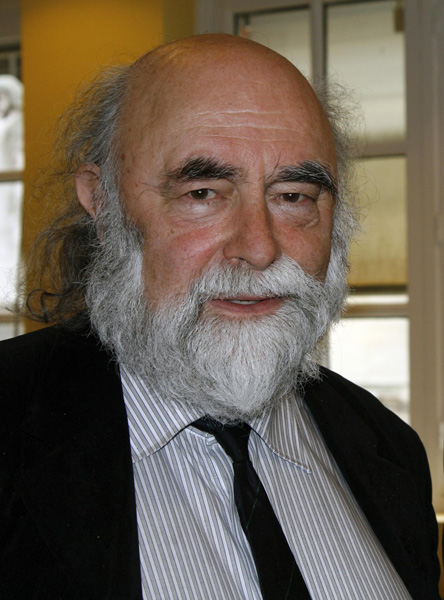 Anatoly M. Vershik合作论文数Leningrad/St.Petersburg State University;St.Petersburg Department of Steklov Institute of Mathematics;Laboratory of Representation Theory and Dynamical Systems1
 Alexander E. Holroyd合作论文数Department of Mathematics, College of Arts & Sciences, University of Washington;School of Mathematics, University of Bristol;Mathematics Department, Universities of British Columbia;Pacific Institute for Mathematical Sciences1Jiaoyang Huang合作论文数1Rais Salmanovich Ismagilov合作论文数1
 A. A. Kirillov合作论文数1
 Maxim Nazarov合作论文数Department of Mathematics;University of York;Department of Mathematics, University of York1
 Gaetan Borot合作论文数CEA Saclay1Dan Romik合作论文数The Hebrew University of Jerusalem1
 Sasha Sodin合作论文数1




