Inflammasomes are protein complexes assembled upon recognition of infection or cell damage signals, and serve as platforms for clustering and activation of procaspase-1. Oligomerisation of initiating proteins such as AIM2 (absent in melanoma-2) and NLRP3 (NOD-like receptor family, pyrin domain-containing-3) recruits procaspase-1 via the inflammasome adapter molecule ASC (apoptosis-associated speck-like protein containing a CARD). Active caspase-1 is responsible for rapid lytic cell death termed pyroptosis. Here we show that AIM2 and NLRP3 inflammasomes activate caspase-8 and -1, leading to both apoptotic and pyroptotic cell death. The AIM2 inflammasome is activated by cytosolic DNA. The balance between pyroptosis and apoptosis depended upon the amount of DNA, with apoptosis seen at lower transfected DNA concentrations. Pyroptosis had a higher threshold for activation, and dominated at high DNA concentrations because it happens more rapidly. Gene knockdown showed caspase-8 to be the apical caspase in the AIM2- and NLRP3-dependent apoptotic pathways, with little or no requirement for caspase-9. Procaspase-8 localised to ASC inflammasome ‘specks’ in cells, and bound directly to the pyrin domain of ASC. Thus caspase-8 is an integral part of the inflammasome, and this extends the relevance of the inflammasome to cell types that do not express caspase-1.
Several microRNA (miRNA) loci are found within genomic regions frequently deleted in primary neuroblastoma, including miR-885-5p at 3p25.3. In this study, we demonstrate that miR-885-5p is downregulated on loss of 3p25.3 region in neuroblastoma. Experimentally enforced miR-885-5p expression in neuroblastoma cell lines inhibits proliferation triggering cell cycle arrest, senescence and/or apoptosis. miR-885-5p leads to the accumulation of p53 protein and activates the p53 pathway, resulting in upregulation of p53 targets. Enforced miR-885-5p expression consistently leads to downregulation of cyclin-dependent kinase ( CDK2 ) and mini-chromosome maintenance protein ( MCM5 ). Both genes are targeted by miR-885-5p via predicted binding sites within the 3′-untranslated regions (UTRs) of CDK2 and MCM5 . Transcript profiling after miR-885-5p introduction in neuroblastoma cells reveals alterations in expression of multiple genes, including several p53 target genes and a number of factors involved in p53 pathway activity. Taken together, these data provide evidence that miR-885-5p has a tumor suppressive role in neuroblastoma interfering with cell cycle progression and cell survival.
ABSTRACT Agrobacterium tumefaciens transfers oncogenic T-DNA and effector proteins to plant cells via a type IV secretion pathway. This transfer system, assembled from the products of the virBoperon, is thought to consist of a transenvelope mating channel and the T pilus. When screened for the presence of VirB and VirE proteins, material sheared from the cell surface of octopine strain A348 was seen to possess detectable levels of VirB2 pilin, VirB5, and the VirB7 outer membrane lipoprotein. Material sheared from the cell surface of mostvirB gene deletion mutants also possessed VirB7, but not VirB2 or VirB5. During purification of the T pilus from wild-type cells, VirB2, VirB5, and VirB7 cofractionated through successive steps of gel filtration chromatography and sucrose density gradient centrifugation. A complex containing VirB2 and VirB7 was precipitated from a gel filtration fraction enriched for T pilus with both anti-VirB2 and anti-VirB7 antiserum. Both the exocellular and cellular forms of VirB7 migrated as disulfide-cross-linked dimers and monomers when samples were electrophoresed under nonreducing conditions. A mutant synthesizing VirB7 with a Ser substitution of the lipid-modified Cys15 residue failed to elaborate the T pilus, whereas a mutant synthesizing VirB7 with a Ser substitution for the disulfide-reactive Cys24 residue produced very low levels of T pilus. Together, these findings establish that the VirB7 lipoprotein localizes exocellularly, it associates with the T pilus, and both VirB7 lipid modification and disulfide cross-linking are important for T-pilus assembly. T-pilus-associated VirB2 migrated in nonreducing gels as a monomer and a disulfide-cross-linked homodimer, whereas cellular VirB2 migrated as a monomer. A strain synthesizing a VirB2 mutant with a Ser substitution for the reactive Cys64 residue elaborated T pilus but exhibited an attenuated virulence phenotype. Dithiothreitol-treated T pilus composed of native VirB2 pilin and untreated T pilus composed of the VirB2C64S mutant pilin distributed in sucrose gradients more predominantly in regions of lower sucrose density than untreated, native T pili. These findings indicate that intermolecular cross-linking of pilin monomers is not required for T-pilus production, but cross-linking does contribute to T-pilus stabilization.
 Kate Stacey合作论文数School of Chemistry and Molecular Biosciences, Faculty of Science, The University of Queensland4
 Sester David P合作论文数Sch Chem & Mol Biosci, Univ Queensland3S.J. Thygesen合作论文数2
 Kate Schroder合作论文数School of Chemistry and Molecular Biosciences, Faculty of Science, The University of Queensland;Centre for Cell Biology of Chronic Disease, The University of Queensland;Institute for Molecular Bioscience, The University of Queensland;Australian Infectious Diseases Research Centre;Inflammasome Lab, The University of Queensland2Vajjhala Parimala R合作论文数2Simon J. Jakubowski合作论文数1
 Marc Zapatka合作论文数German Canc Res Ctr, Div Mol Genet, Heidelberg, Germany1
 Matthias G Fischer合作论文数1
 Jennifer Stow合作论文数Inflammation research laboratory, Institute for Molecular Bioscience, The University of Queensland;School of Biomedical Science, The University of Queensland1
 Sagulenko Evgeny合作论文数School of Chemistry and Molecular Biosciences, The University of Queensland1Kumps Candy合作论文数1
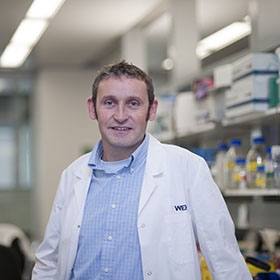 John Silke合作论文数La Trobe University;The Walter and Eliza Hall Institute;WEHI;Faculty of Medicine, Dentistry and Health Sciences, University of Melbourne1Theissen Jessica合作论文数1
 Idris Adi合作论文数1
 Vitak Nazarii合作论文数School of Chemistry and Molecular Biosciences, University of Queensland1Cridland Jasmyn A合作论文数1Thygesen Sara J合作论文数1
 Alvin Lu合作论文数1
 Peter Christie合作论文数Department of Microbiology and Molecular Genetics, McGovern Medical School, The University of Texas Health Science Center at Houston1
 Benedikt Brors合作论文数Div Appl Bioinformat, German Canc Res Ctr1
 Matthias Schwab合作论文数Faculty of Medicine, University of Tübingen;Dr. Margarete Fischer-Bosch Institute of Clinical Pharmacology1
 Frank Westermann合作论文数German Cancer Research Center1
 Frank Speleman合作论文数Pediatric Precision Oncology Lab, Department of Biomolecular Medicine, Faculty of Medicine and Health Sciences, Ghent University Hospital;CRIG1
 Justine M. Hill合作论文数Centre for Drug Design and Development, The University of Queensland1
 Tara Roberts合作论文数1
 Pieter Mestdagh合作论文数Department of Biomolecular Medicine, Faculty of Medicine and Health Sciences, Ghent University;Cancer Research Institute Ghent, Ghent University;Biogazelle1Volker Ehemann合作论文数1
 Dennis T. Brown合作论文数The Cell Research Institute and Department of Microbiology, The University of Texas at Austin1James E. Vince合作论文数Department of Biochemistry, La Trobe University1
 Jo Vandesompele合作论文数OncoRNALab, Ghent University;Department of Biomolecular Medicine, Faculty of Medicine and Health Sciences, Ghent University;Pxlence;InActiv Blue1Larissa Savelyeva合作论文数1




