2-Propanol is a common solvent in academic and industrial research laboratories, yet awareness around its classification as a Group B peroxide-forming solvent is lacking. Because of this deficiency, there have been several reports of explosions occurring during the distillation of 2-propanol that have resulted in injury to researchers. This Perspective discusses the historical literature around 2-propanol as a peroxide former and the potential for quality and safety hazard issues that come from trace peroxides in the solvent. Furthermore, the likelihood of peroxide formation in laboratory samples of 2-propanol is discussed with emphasis on the type of storage conditions.
Transition-metal-catalyzed cross-coupling reactions are among the most important processes in organic chemistry. For years, the fine chemical industry has looked for a variety of ways to reduce the amounts of transition metals employed in their transformations, particularly in cross-coupling reactions. One interesting alternative to consider is the use of heterogeneous catalysis because of its potential benefits of low metal levels postreaction and reusability. Numerous examples of the use of heterogeneous catalysis will be described in this review that highlight its advantages over more commonly employed homogeneous catalysts. Despite their great potential, the past decade has seen a decrease in the use of heterogeneous catalysts for cross-coupling reactions in the fine chemical industry, fueled by the perception of difficult reaction understanding and reproducibility. With the emergence of a new generation of supported metal catalysts, first-row transition metal catalysis, and continuous flow technology, a variety of tools have been developed to change this reluctance toward heterogeneous catalysis for cross-coupling reactions in the fine chemical industry. We hope that this review captures the attention of the participants in the fine chemical field to consider and implement heterogeneous catalysis for cross-coupling reactions.
Dimethyl sulfoxide (DMSO) is widely used as a solvent for chemical reactions, as a cosolvent for crop protection formulations, and in medicines for topical administration of drugs. The potential explosion hazards associated with thermal decomposition of DMSO have been well-documented, with early reports dating back to the late 1950s. However, these explosion hazards are still underappreciated and inadequately communicated, as indicated by the fact that numerous severe accidents have occurred on both laboratory and industrial scales over the years. Differential scanning calorimetry studies show that decomposition of pure DMSO is detected at ca. 278 degrees C, while accelerating rate calorimetry analysis indicates that thermal decomposition of DMSO occurs at temperatures around its boiling point of 189 degrees C. Studies also show that the presence of certain substances can significantly lower the onset temperature of DMSO decomposition and also potentially increase the severity of the decomposition reaction through autocatalytic behavior. Further analysis of literature information indicates that there is a wide range of substances that exacerbate the thermal decomposition of DMSO, including acids, bases, halides, metals, electrophiles, oxidants, and reductants. This comprehensive review of explosion hazards associated with the thermal decomposition of DMSO and its mixtures will serve as an educational resource to alert researchers about the need to mitigate these hazards and to incentivize research toward its replacement with safer and greener solvents in the broader chemistry community.
Catalysis by defined transition-metal complexes has captivated the attention of the scientific community over the last decades. The well-documented utility of Rh(III) complexes in C-H activation reactions have enabled the development of a plethora of new catalytic methods. High-valent transition-metal species in C-H activation reactions were first predicted in palladium-based transformations. From those early studies, it was apparent that differences in reactivity and selectivity could be expected. By analogy, higher valent Rh(V) complexes could represent a new approach in C-H activation reactions and offer different opportunities to improve and broaden the current state-of-the-art in the field.
Alkene hydroarylation forms carbon-carbon bonds between two foundational building blocks of organic chemistry: olefins and aromatic rings. In the absence of electronic bias or directing groups, only the Friedel-Crafts reaction allows arenes to engage alkenes with Markovnikov selectivity to generate quaternary carbons. However, the intermediacy of carbocations precludes the use of electron-deficient arenes, including Lewis basic heterocycles. Here we report a highly Markovnikov-selective, dual-catalytic olefin hydroarylation that tolerates arenes and heteroarenes of any electronic character. Hydrogen atom transfer controls the formation of branched products and arene halogenation specifies attachment points on the aromatic ring. Mono-, di-, tri-, and tetra-substituted alkenes yield Markovnikov products including quaternary carbons within nonstrained rings.
The implementation of any chemical reaction in a structurally complex setting ( King , S. M. J. Org. Chem. 2014 , 79 , 8937 ) confronts structurally defined barriers: steric environment, functional group reactivity, product instability, and through-bond electronics. However, there are also practical barriers. Late-stage reactions conducted on small quantities of material are run inevitably at lower than optimal concentrations. Access to late-stage material limits extensive optimization. Impurities from past reactions can interfere, especially with catalytic reactions. Therefore, chemical reactions on which one can rely at the front lines of a complex synthesis campaign emerge from the crucible of total synthesis as robust, dependable, and widely applied. Trost conceptualized "chemoselectivity" as a reagent's selective reaction of one functional group or reactive site in preference to others ( Trost , B. M. Science 1983 , 219 , 245 ). Chemoselectivity and functional group tolerance can be evaluated quickly using robustness screens ( Collins , K. D. Nat. Chem. 2013 , 5 , 597 ). A reaction may also be characterized by its "chemofidelity", that is, its reliable reaction with a functional group in any molecular context. For example, ketone reduction by an electride (dissolving metal conditions) exhibits high chemofidelity but low chemoselectivity: it usually works, but many other functional groups are reduced at similar rates. Conversely, alkene coordination chemistry effected by π Lewis acids can exhibit high chemoselectivity ( Trost , B. M. Science 1983 , 219 , 245 ) but low chemofidelity: it can be highly selective for alkenes but sensitive to the substitution pattern ( Larionov , E. Chem. Commun. 2014 , 50 , 9816 ). In contrast, alkenes undergo reliable, robust, and diverse hydrogen atom transfer reactions from metal hydrides to generate carbon-centered radicals. Although there are many potential applications of this chemistry, its functional group tolerance, high rates, and ease of execution have led to its rapid deployment in complex synthesis campaigns. Its success derives from high chemofidelity, that is, its dependable reactivity in many molecular environments and with many alkene substitution patterns. Metal hydride H atom transfer (MHAT) reactions convert diverse, simple building blocks to more stereochemically and functionally dense products ( Crossley , S. W. M. Chem. Rev. 2016 , 116 , 8912 ). When hydrogen is returned to the metal, MHAT can be considered the radical equivalent of Brønsted acid catalysis-itself a broad reactivity paradigm. This Account summarizes our group's contributions to method development, reagent discovery, and mechanistic interrogation. Our earliest contribution to this area-a stepwise hydrogenation with high chemoselectivity and high chemofidelity-has found application to many problems. More recently, we reported the first examples of dual-catalytic cross-couplings that rely on the merger of MHAT cycles and nickel catalysis. With time, we anticipate that MHAT will become a staple of chemical synthesis.
Radical hydrofunctionalization occurs with ease using met-al-hydride atom transfer (MHAT) catalysis to couple alkenes and competent radicalophilic electrophiles. Traditional two-electron electrophiles have remained unreactive. Herein we report the addition of electronically-unbiased olefins into imines and aldehydes. Iron-catalysis allows addition of alkyl-substituted olefins into imines through the intermediacy of free-radicals, whereas a combination of catalytic Co(Salt-Bu,t-Bu) and chromium salts enable a branch-selective coupling of olefins and aldehydes through the formation of a putative alkyl chromium intermediate.
We report a general, direct C–H arylation of anilide derivatives using reusable palladium or copper oxide on magnetite as heterogeneous precatalysts. Highly selective ortho and meta arylations are achieved using electronically and sterically diverse diaryliodonium salts. Catalytically active soluble species from the heterogeneous precursors were detected by experimental techniques. Preliminary mechanistic investigation suggests different reaction pathways for each of the catalysts.
AbstractEine redoxneutrale Cobalt(III)‐katalysierte direkte Synthese von freien Indolen wird durch eine N‐N‐Bindungsspaltung ermöglicht. Die neu eingeführten Boc‐geschützten Hydrazine eröffnen eine nützliche Erweiterung der begrenzten Auswahl an internen oxidierenden dirigierenden Gruppen in der Cobalt(III)‐Katalyse. Der Ansatz ist gut mit funktionellen Gruppen verträglich.
A reusable copper-based catalyst system was employed for the direct arylation of electron-rich heteroarenes. Under mild and operationally simple reaction conditions good yields and selectivities were obtained using diaryliodonium salts as coupling partners. A combination of experimental methods including kinetic studies, filtration tests, and a series of analytical tools (TXRF, ICP-MS, SEM, XPS, TEM, EFTEM) provide evidence for catalytically active soluble nanoparticles formed from an amorphous heterogeneous precursor. Mechanistic studies hint at a redox-neutral process which promotes counterion dissociation from the diaryliodonium salt by a copper(II) oxide species.
Achieving controllable CH functionalization to elaborate valuable compounds from simple chemicals is attractive and highly desirable, especially if nonprecious transition metal catalysts can be used. However, controlling selectivity in these transformations remains a continuous challenge to synthetic chemists. Herein, we show for the first time that control over the reactive organometallic intermediate enables the switchable synthesis of quinoline and indole from amides and alkynes through CH activation using Cp*Co(III). The keys to this strategy are (1) introducing a Lewis acid to greatly accelerate the dehydrative cyclization, which can outcompete dehydrogenative cyclization, and (2) tuning the directing group to facilitate the dehydrogenative cyclization and inhibit dehydrative cyclization.
A redox-neutral cobalt(III)-catalyzed synthetic approach for the direct synthesis of unprotected indoles showcasing an N-N bond cleavage is reported. The herein newly introduced Boc-protected hydrazines establish a beneficial addition to the limited portfolio of oxidizing directing groups for cobalt(III) catalysis. Moreover, the developed catalytic methodology tolerates a good variety of functional groups.
AbstractN‐Pyrimidine‐protected indole, arenes and hetarenes equipped with an amide directing group as well as acrylamides are efficiently allylated using various allyl methyl carbonates.
A highly selective arylation of a number of polyaromatic hydrocarbons (PAHs) with aryliodonium salts and Pd/C as the only reagent is reported.
AbstractDie erste generelle Methode zur direkten Thiolierung elektronenreicher Heteroarene wird vorgestellt. Sie nutzt den kommerziell erhältlichen Heterogenkatalysator Pd/Al2O3 und CuCl2. Die Methode eröffnet einen einfachen Zugang zu solchen wertvollen Verbindungen. Mechanistische Experimente deuten auf ein heterogenkatalytisches System hin, in dem beide Metalle eine komplementäre Rolle bei der Bildung der thiolierten Produkte spielen.
The first general methodology for the direct thiolation of electron-rich heteroarenes was developed by employing Pd/Al2 O3 , a recoverable and commercially available heterogeneous catalyst, and CuCl2 . This method represents an operationally simple approach for the synthesis of these valuable compounds. Preliminary mechanistic studies indicate a heterogeneous catalytic system, in which both metals play a complementary role in the formation of the thiolated products.
AbstractAn operationally simple general methodology for the arylthiolation of heteroarenes including thiophene, benzothiophene, benzofuran, and indole derivatives is elaborated.
AbstractThe synthesis of 1‐aminoindolines by reaction of aryl‐substituted diazene carboxylates with alkenes is developed using a mixed Rh/Ag‐catalyst system.
The cobalt(III)-catalyzed allylation was developed for amide-directed C-H activation of arenes, heteroarenes, and olefins. A variety of allyl sources can be employed to introduce this useful functional group.
Controlled dilithiation of propargyl bromide with two equivalents of n-butyllithium, in the presence of TMEDA, produces the operational equivalent of the dianion 1,3-dilithiopropyne. The latter reacts efficiently with acid chlorides to produce bishomopropargylic alcohols in a single step route and with high regioselectivity and moderate yields.
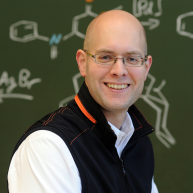 Frank Glorius合作论文数Organisch-Chemisches Institut, University of Münster16
 Tobias Gensch合作论文数4
 Candish Lisa合作论文数3
 Angelique Ferry合作论文数Institut de Chimie des Substances Naturelles, CNRS3
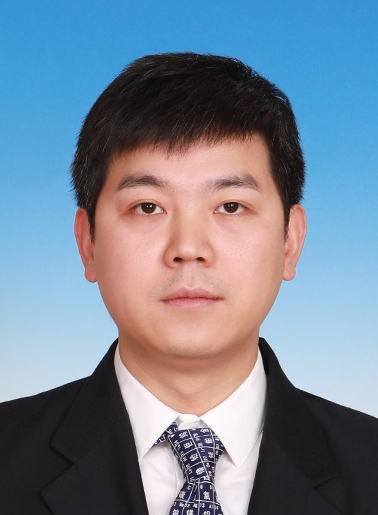 Dongbing Zhao (赵东兵)合作论文数College of Chemistry, Nankai University3
 Dagang Yu (余达刚)合作论文数College of Chemistry, Sichuan University3
 Ryan Shenvi合作论文数Department of Chemistry, The Scripps Research Institute3Jeishla L M Matos合作论文数2Andreas Lerchen合作论文数2Yang Qiang合作论文数2Green Samantha A合作论文数2
 Megan A. Cismesia合作论文数Department of Chemistry, University of Wisconsin-Madison2Nadja Möller合作论文数1Michael Holtkamp合作论文数1
 Xiaoming Wang (王晓明)合作论文数Shanghai institute of Organic Chemistry, Chinese Academy of Sciences;University of Chinese Academy of Sciences1
 Jing Yu合作论文数1Andreas Schäfer合作论文数1
 Rick C. Betori合作论文数1Jieyu Gu合作论文数1Sophia L Shevick合作论文数Skaggs Graduate School of Chemical and Biological Sciences, Scripps Research1Craig Tucker合作论文数1
 Takuya Oguma合作论文数1
 Jorge Cabezas合作论文数Correspondence1Crossley Steven W M合作论文数1Honeker Roman合作论文数1Chepiga Kathryn M合作论文数1
 Qingquan Lu (陆庆全)合作论文数The Institute for Advanced Studies, Wuhan University1XiaoYong Li (李小勇)合作论文数国防科学技术大学计算机学院软件研究所1Min Sheng合作论文数School of Chemical Engineering and Technology, Tianjin University1
 Nicola Webb合作论文数Department of Chemistry, AstraZeneca R&D Charnwood1
 Uwe Karst合作论文数Institute of Inorganic and Analytical Chemistry, University of Munster1
 Francisco de Azambuja合作论文数Instituto de Química e Geociências, Universidade Federal de Pelotas1
 Karl Daniel Collins合作论文数1Gregory T. Whiteker合作论文数Dow AgroSciences1




