Manipulating tangled hoses, cables, or ropes can be challenging for both robots and humans. Humans often approach these perceptually demanding tasks by pushing or pulling tangled cables and observing the resulting motions. We follow a similar idea to aid robotic cable manipulation. In this letter, we integrate visual and proprioceptive perception to segment a grasped cable by moving it even when the robot or the grasped cable sometimes perturb neighboring cables. We formulate the cable interactive segmentation problem in such a way that our methods do not require robot arm segmentation masks. Furthermore, a novel grasp sampling method can propose new cable grasp points given a partial cable segmentation to improve the segmentation via additional cable-robot interaction. We evaluate the proposed motion correlation (MCor) method on data sequences recorded by our physical robotic setup and show that the method outperforms an earlier motion segmentation (MSeg) baseline.
Programming robots by demonstration (PbD) is an intuitive concept, but scaling it to real-world variability remains a challenge for most current teaching frameworks. Conditional task graphs are very expressive and can be defined incrementally, which fits very well with the PbD idea. However, acting using conditional task graphs requires reliable perception-grounded online branch selection. In this paper, we present See Switch, an interactive teaching-and-execution framework that represents tasks as user-extendable graphs of skill parts connected via decision states (DS), enabling conditional branching during replay. Unlike prior approaches that rely on manual branching or low-dimensional signals (e.g., proprioception), our vision-based Switcher uses eye-in-hand images (high-dimensional) to select among competing successor skill parts and to detect out-of-distribution contexts that require new demonstrations. We integrate kinesthetic teaching, joystick control, and hand gestures via an input-modality-abstraction layer and demonstrate that our proposed method is teaching modality-independent, enabling efficient in-situ recovery demonstrations. The system is validated in experiments on three challenging dexterous manipulation tasks. We evaluate our method under diverse conditions and furthermore conduct user studies with 8 participants. We show that the proposed method reliably performs branch selection and anomaly detection for novice users, achieving 90.7
This study aims to integrate and evaluate digital twin technology with robotic multi-axis additive manufacturing to bridge the gap between virtual planning and physical execution, enhancing the precision and efficiency of manufacturing processes. A laser tracker is employed to calibrate the machine workspace and tools and introduce a comprehensive system involving an industrial robot with a filament extruder head and a rotary-tilt positioner. The digital twin not only encapsulates the geometric and operational intricacies of the multi-axis additive manufacturing process but also automates code generation for robotic operations. The application of this methodology is demonstrated through the production of two complex parts, where their dimensional fidelity is assessed to evaluate the precision limits and potential of digital twin technology in multi-axis additive manufacturing. The findings reveal significant advancements in the alignment of virtual models and physical objects, confirming the potential of digital twins to minimize deviations common in traditional manufacturing setups.
Human-Robot collaboration in home and industrial workspaces is on the rise. However, the communication between robots and humans is a bottleneck. Although people use a combination of different types of gestures to complement speech, only a few robotic systems utilize gestures for communication. In this paper, we propose a gesture pseudo-language and show how multiple types of gestures can be combined to express human intent to a robot (i.e., expressing both the desired action and its parameters - e.g., pointing to an object and showing that the object should be emptied into a bowl). The demonstrated gestures and the perceived table-top scene (object poses detected by CosyPose) are processed in real-time) to extract the human's intent. We utilize behavior trees to generate reactive robot behavior that handles various possible states of the world (e.g., a drawer has to be opened before an object is placed into it) and recovers from errors (e.g., when the scene changes). Furthermore, our system enables switching between direct teleoperation of the end-effector and high-level operation using the proposed gesture sentences. The system is evaluated on increasingly complex tasks using a real 7-DoF Franka Emika Panda manipulator. Controlling the robot via action gestures lowered the execution time by up to 60%, compared to direct teleoperation.
With the advent of different electronic skins sensitive to touch and robots composed of soft materials, tactile or haptic human-robot interaction is gaining importance. We designed a highly realistic artificial hand aiming to reproduce human-to-human physical contact through a special morphology imitating flesh and bones and a heating system imitating human body temperature. The mechanical response properties of different finger designs were analyzed and the most mimetic one came very close to a human finger. We designed three experiments with participants using haptic exploration to evaluate the human-likeness of: (1) finger morphologies; (2) complete hands: real human vs. soft and warm artificial hand vs. rubber hand (3) the hand mounted on a manipulator with fixed vs. passive compliant wrist in a handshake scenario. First, participants find the mimetic finger morphology most humanlike. Second, people can reliably distinguish the real human hand, the artificial one, and a rubber hand. In terms of humanlikeness (Anthropomorphism, Animacy, and Likeability), the human hand scores better than the artificial hand which in turn clearly outperforms the rubber hand. The temperature, or "warmth", was rated as the most human-like feature of the artificial hand.
The problem with email image spam classification is known from the year 2005. There are several approaches to this task. Lately, those approaches use convolutional neural networks (CNN). We propose a novel approach to the image spam classification task. Our approach is based on CNN and transfer learning, namely Resnet v1 used for semantic feature extraction and one layer Feedforward Neural Network for classification. We have shown that this approach can achieve state-of-the-art performance on publicly available datasets. 99% F1score on two datasets (Dredze et al., 2007), Princeton and 96% F1-score on the combination of these datasets. Due to the availability of GPUs, this approach may be used for just-in-time classification in anti-spam systems handling huge amounts of emails. We have observed also that mentioned publicly available datasets are no longer representative. We overcame this limitation by using a much richer dataset from a one-week long real traffic of the freemail provider Email.cz. The training data annotation was created by user labeling of the emails. The image spam (and image ham even more) tackles privacy issues. We overcame it by publishing extracted feature vectors with associated classes (instead of images itself). This data does not violate privacy issues. We have published Email.cz image spam dataset v1 via the AcademicTorrents platform and propose a system, which achieves up to 96% F1-score with presented model architecture on this novel dataset. Providing our dataset to the community may help others with solving similar tasks.
This work evaluates two phishing detection algorithms, which are both based on named entity recognition (NER), on live traffic of Email.cz. The first algorithm was proposed in (Ramanathan and Wechsler, 2013). It is using NER and latent Dirichlet allocation (LDA) as feature extractors for random forest classifier. This algorithm achieved 100% F-measure on the publicly available testing dataset. We are using this algorithm as the baseline for our newly proposed solution. The newly proposed solution is using companies detected by the NER and it is comparing URLs present in the email content to the company URL profile (based on history). The company URL profile contains domains which are frequently mentioned in legitimate traffic from that domain. The advantage of the proposed solution is that it does not need phishing dataset, which is hard to get, especially for languages other than English. Our solution outperforms the baseline solution. Both solutions are able to detect previously undetected phishing attacks. Combination of the solutions achieves 100 % F-measure on the portion of live traffic.
In autonomous driving systems, one of the most crucial aspects is to anticipate the movements of other traffic participants. In this paper, several machine learning methods are used to train classifiers capable of estimating the intention of a pedestrian to cross a zebra crossing. Their results are compared to a Bayesian network-an approach commonly used in autonomous driving. The data used for the estimation contain only position and heading of the pedestrians. The best performing method achieved the F 2 score of 92.37%.
The presented work deals with classification of garment categories including pants, shorts, shirts, T-shirts and towels. The knowledge of the garment category is crucial for its robotic manipulation. Our work focuses particularly on garments being held in a hanging state by a robotic arm. The input of our method is a set of depth maps taken from different viewpoints around the garment. The depths are fused into a single 3D point cloud. The cloud is fed into a convolutional neural network that transforms it into a single global feature vector. The network utilizes a generalized convolution operation defined over the local neighborhood of a point. It can deal with permutations of the input points. It was trained on a large dataset of common 3D objects. The extracted feature vector is classified with SVM trained on smaller datasets of garments. The proposed method was evaluated on publicly available data and compared to the original methods, achieving competitive performance and better generalization capability.
The estimation of the fabric material property during the folding is presented. The available techniques for the accurate garment folding rely on known material properties. Currently, the properties are estimated by an operator in advance of folding. We propose an iterative strategy, which updates the property while the garment is folded. The estimation is formulated as an optimisation task. It is based on measurements from a laser range finder. The proposed algorithm improves the estimation iteratively and prevents the garment from slipping at the same time. We demonstrate the estimation procedure for 10 fabric strips of different materials.
The reported work contributes to the self-driving car efforts, more specifically to scenario understanding from the ego-car point of view. We focus on estimating the intentions of pedestrians near a zebra crossing. First, we predict the future motion of detected pedestrians in a three seconds time horizon. Second, we estimate the intention of each pedestrian to cross the street using a Bayesian network. Results indicate, that the dependence between the error rate of motion prediction and the intention estimation is sub-linear. Thus, despite the lower performance of motion prediction for the time scope larger than one second, the intention estimation remains
The proposed work deals with robotic unfolding of a garment that has been placed flat on a table and folded over a certain axis. The algorithm combines image and depth data to detect the bottom and top (folded) layer of the garment. The detection is formulated as a labeling of the garment surface and solved in an energy minimization framework. Once the garment pose is known, several candidate folding axes are generated and used to unfold the garment virtually. The correct folding axis is selected from these candidate axes. The method does not set any constraints on the garment shape; thus it can deal with various types of garments including jackets, pants, shorts, skirts or T-shirts of any sleeve lengths. The garment is unfolded by the dual-arm robot. One arm grasps boundary of the top layer and brings it over the estimated folding axis, while the second arm is holding the bottom layer to prevent the garment from slipping. The perception procedure was tested on the annotated dataset that we are making publicly available. The experimental evaluation of the robotic manipulation is also provided.
Sorting of old and mixed nuclear waste is an essential process in nuclear decommissioning operations. The main bottleneck is manual picking and separation of the materials using remotely operated arms, which is slow and error prone especially with small items. Automation of the process is therefore desirable. In the framework of the newly funded European project ECHORD++, experiment RadioRoSo, a pilot robotic cell is being developed and validated against industrial requirements on a range of sorting tasks. Industrial robots, custom gripper, vision feedback and new manipulation skills will be developed. This paper presents application context, cell layout and sorting approach.
 Tomáš Pajdla合作论文数Czech Institute of Informatics, Robotics and Cybernetics, Czech Technical University in Prague;Department of Applied Mathematics, Faculty of Information Technology, Czech Technical University in Prague17
 Vojtěch Franc合作论文数Center for Machine Perception, Department of Cybernetics, Faculty of Electrical Engineering, Czech Technical University;Eyedea Recognition Ltd13
 Daniel Průša合作论文数Czech Technical University12
 Vladimir Smutný合作论文数SKODA JS As Calculat Dept Orlik 266 15 Plzen 31600 Czech Republic11
 Pavel Krsek合作论文数Center for Machine Perception, FEE CTU9
 Boris Flach合作论文数Department of Cybernetics, Czech Technical University9
 Milan Sonka合作论文数Department of Ophthalmology and Visual Sciences, Carver College of Medicine, The University of Iowa;Department of Electrical and Computer Engineering, College of Engineering, The University of Iowa;Iowa Institute for Biomedical Imaging, The University of Iowa9
 Roger Boyle合作论文数9M. I. Schlesinger合作论文数8
 Tomás Werner合作论文数Center for Machine Perception (CMP);Department of Cybernetics, Faculty of Electrical Engineering, Czech Technical University8Zdenka Uhríková合作论文数8
 Vladimír Petrík合作论文数Czech Inst Informat Robot Cybernet, Czech Tech Univ7
 Jan Stria合作论文数6
 Tomas Svoboda合作论文数Czech Technical University in Prague, Fac. of Electrical Engineering, Dep. of Cybernetics Center for Machine Perception, Center for Robotics and Autonomous Systems6
 Martin Bresler合作论文数6
 Karel Zimmermann合作论文数Faculty of Mathematics and Physics, Charles University5
 Libor Wagner合作论文数4
 Evžen Růžička合作论文数Charles Univ Prague, Fac Med 1, Dept Neurol, Prague, Czech Republic4
 Michal Reinstein合作论文数czech technical university in prague4
 Jan Kybic合作论文数Center for Machine Perception4
 Josef Kittler合作论文数Centre for Vision, Speech and Signal Processing, School of Computer Science and Electronic Engineering, University of Surrey4
 Christopher Nugent合作论文数School of Computing, Ulster University4
 Alexander (Oleksandr) Shekhovtsov合作论文数Department of Cybernetics, Faculty of Electrical Engineering, Czech Technical University in Prague4
 Fiora Pirri合作论文数3Otakar Sprdlík合作论文数3
 Hartmut Surmann合作论文数Department of Computer Science, University of Applied Science3
 Pavel Krízek合作论文数3Czech Technical合作论文数3Kostiantyn Antoniuk合作论文数3
 Ales Leonardis合作论文数Intelligent Robotics Laboratory, Centre for Computational Neuroscience and Cognitive Robotics, School of Computer Science, University of Birmingham3Radoslav Skoviera合作论文数3
 Radim Sára合作论文数Czech Technical University;Center for Machine Perception3Vladimir Stepan合作论文数2Miroslav Uller合作论文数2Martin Urban合作论文数2Petr Vanc合作论文数2
 Vit Listik合作论文数2Júlia Skovierová合作论文数CIIRC, Czech Technical University in Prague2
 Jan Kristof Behrens合作论文数Robert Bosch GmbH2
 Tatjana Dostalova合作论文数2
 Roland Siegwart合作论文数Autonomous Systems Lab, ETH Zurich;Department of Mechanical and Process Engineering, ETH Zurich2
 Mark A. Neerincx合作论文数Faculty of Electrical Engineering, Mathematics and Computer Science, Delft University of Technology2
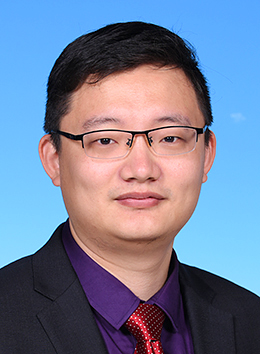 Ming Liu (刘明)合作论文数Shenzhen Unity-Drive Innovation Technology Co., Ltd.2
 Ivana Kruijff-Korbayová合作论文数Saarland University2
 Karla Stépánová合作论文数2Jiri Hulka合作论文数2
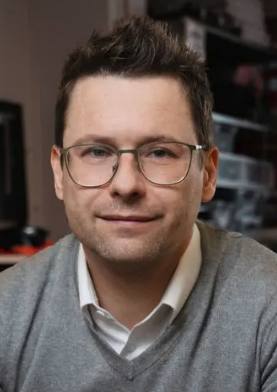 François Pomerleau合作论文数Institut intelligence et données, Université Laval;Department of Electrical and Computer Engineering, Faculty of Science and Engineering, Université Laval;Northern Robotics Laboratory, Norlab2
 Jan Sedivy合作论文数2Rainer Worst合作论文数Fraunhofer-Institut für Intelligente Analyse- und Informationssysteme2




