The aim of this note is: (a) to propose a generalization of tetrahedron equations from \cite{S} and of their solutions. Due to appearance of a larger number of parameters the $R$-matrices from \cite{S} will be replaced by "$R$-correspondences". (b) To rephrase these equations in terms of Wronskian evolutions in the spirit of \cite{SV}. (c) To discuss some elementary structures of cohomological flavour lying behind our considerations. We call them "quaternities", or "bibitorsors"; they might be not without an independent interest.
We consider the space Z(C,L) of 0-cycles on the complex line C with coefficients in a commutative monoid L subject to certain conditions. Such spaces include the symmetric products (for L=Z_+) and the Ran space (for L=T= True, False being the Boolean algebra of truth values). We describe the appropriately defined category of perverse sheaves on Z(C,L) in terms of the braided category (PROB) generated by the components of the universal L-graded bialgebra. We give another description in terms of so-called Janus sheaves which are objects of mixed functoriality (data covariant in one direction and contravariant in the other) on a category formed by certain matrices with entries in L. The matrices in question are analogs of contingency tables familiar in statistics.
Euler's continuants are universal polynomials expressing the numerator and denominator of a finite continued fraction whose entries are independent variables. We introduce their categorical lifts which are natural complexes (more precisely, coherently commutative cubes) of functors involving compositions of a given functor and its adjoints of various orders, with the differentials built out of units and counits of the adjunctions. In the stable infinity-categorical context these complexes/cubes can be assigned totalizations which are new functors serving as higher analogs of the spherical twist and cotwist. We define N-spherical functors by vanishing of the twist and cotwist of order N-1 in which case those of order N-2 are equivalences. The usual concept of a spherical functor corresponds to N=4. We characterize N-periodic semi-orthogonal decompositions of triangulated (stable infinity-) categories in terms of N-sphericity of their gluing functors. The procedure of forming iterated orthogonals turns out to be analogous to the procedure of forming a continued fraction.
We relate the Fourier transform of perverse sheaves smooth along the coordinate hyperplane configuration in a complex vector space to the Deligne-Lusztig duality of unipotent representations of a general linear group over a finite field. A similar relation is established for arbitrary finite Coxeter groups.
Algebraic structures involving both multiplications and comultiplications (such as, e.g., bialgebras or Hopf algebras) can be encoded using PROPs (categories with PROducts and Permutations) of Adams and MacLane. To encode such structures on objects of a braided monoidal category, we need PROBs (braided analogs of PROPs). Colored PROBs correspond to multi-sorted structures. In particular, we have a colored PROB B governing non-negatively graded bialgebras in braided categories. As a category, B splits into blocks B_n according to the grading. We relate B_n with the category P_n of perverse sheaves on the n-th symmetric product of the complex line, smooth with respect to the natural stratification by multiplicities. More precisely, we show that P_n is equivalent to the category of functors from B_n to vector spaces. This gives a natural quiver description of P_n.
For a complex reductive Lie algebra 𝔤 with Cartan subalgebra 𝔥 and Weyl group W we consider the category Perv(W \𝔥) of perverse sheaves on W \𝔥 smooth w.r.t. the natural stratification. We construct a category 𝒞 such that Perv(W\𝔥) is identified with the category of functors from 𝒞 to vector spaces. Objects of 𝒞 are labelled by standard parabolic subalgebras in 𝔤. It has morphisms analogous to the operations of parabolic induction (Eisenstein series) and restriction (constant term) of automorphic forms. In particular, the Langlands formula for the constant term of an Eisenstein series has a counterpart in the form of an identity in 𝒞. We define 𝒞 as the category of W-invariants (in an appropriate sense) in the category Q describing perverse sheaves on 𝔥 smooth w.r.t. the root arrangement. This matches, in an interesting way, the definition of W \𝔥 itself as the spectrum of the algebra of W-invariants.
In this paper we propose a de Rham-Witt version of the derived KZ equations and their hypergeometric realizations.
We develop the theory of semi-orthogonal decompositions and spherical functors in the framework of stable ∞ -categories. We study the relative Waldhausen S-construction S_∙ (F) of the spherical functor F and show that it has a natural paracyclic structure (“rotation symmetry”). This fulfills a part of the general program of perverse schobers which are conjectural categorical upgrades of perverse sheaves. If we view a spherical functor as defining a schober on a disk, then each component S_n(F) of the S-construction gives a categorification of the cohomology of a perverse sheaf on a disk with support in a union of (n+1) closed arcs in the boundary. In other words, S_n(F) can be interpreted as the Fukaya category of the disk with coefficients in the schober and with support (“stops”) at the boundary arcs. The importance of the paracyclic structure is that it allows us to naturally associate the above data to disks on oriented surfaces. The action of the paracyclic rotation is a categorical analog of the monodromy of a perverse sheaf.
For a complex reductive Lie algebra $\mathfrak{g}$ with Cartan subalgebra $\mathfrak{h}$ and Weyl group $W$ we consider the category $\text{Perv}(W \backslash \mathfrak{h})$ of perverse sheaves on $W \backslash \mathfrak{h}$ smooth w.r.t. the natural stratification. We construct a category $\boldsymbol{\mathcal{C}}$ such that $\text{Perv}(W\backslash \mathfrak{h})$ is identified with the category of functors from $\boldsymbol{\mathcal{C}}$ to vector spaces. Objects of $\boldsymbol{\mathcal{C}}$ are labelled by standard parabolic subalgebras in $\mathfrak{g}$. It has morphisms analogous to the operations of parabolic induction (Eisenstein series) and restriction (constant term) of automorphic forms. In particular, the Langlands formula for the constant term of an Eisenstein series has a counterpart in the form of an identity in $\boldsymbol{\mathcal{C}}$. We define $\boldsymbol{\mathcal{C}}$ as the category of $W$-invariants (in an appropriate sense) in the category $Q$ describing perverse sheaves on $\mathfrak{h}$ smooth w.r.t. the root arrangement. This matches, in an interesting way, the definition of $W \backslash \mathfrak{h}$ itself as the spectrum of the algebra of $W$-invariants.
We define a notion of a homotopy chiral algebra (HCA), which means a chiral algebra up to higher homotopies, and prove that the Cech complex of a sheaf of chiral algebras admits a structure of a HCA.
We study the Gauss-Manin connection on the chiral de Rham complex.
In this paper we strengthen the results of [SV] by presenting their derived version. Namely, we define a "derived Knizhnik - Zamolodchikov connection"\ and identify it with a "derived Gauss - Manin connection".
We propose chiral analogues of some infinite complexes appearing in the description of the coherent derived categories for projective spaces.
For a complex reductive Lie group G with Lie algebra g, Cartan subalgebra h and Weyl group W, we describe the category of perverse sheaves on h/W smooth w.r.t the natural stratification. The answer is given in terms of mixed Bruhat sheaves, which are certain mixed sheaf-cosheaf data on cells of a natural cell decomposition of h/W. Using the parabolic Bruhat decomposition, we relate mixed Bruhat sheaves with the properties of various procedures of parabolic induction and restriction that connect different Levi subgroups in G.
From now on we assume that X is complete, unless specified otherwise. The ”chiral Hodge — de Rham spectral sequence” degenerates not at E1 but at E2. Namely, the chiral de Rham differential d DR on Ω ch X induces a differential Q : H(X,Ω i ) −→ H q(X,Ω i ) and the cohomology of H(X,Ω) with respect to Q is equal to H(X,ΩX). Indeed, as in the proof of [MSV], Theorem 2.4, the operator G0 is a zero homotopy on the components of nonzero conformal weight. The ”chiral de Rham cohomology” coincides with the usual de Rham cohomology.
In the work of Mukhin and Varchenko from 2002 there was introduced a Wronskian map from the variety of full flags in a finite dimensional vector space into a product of projective spaces. We establish a precise relationship between this map and the Plucker map. This allows us to recover the result of Varchenko and Wright saying that the polynomials appearing in the image of the Wronsky map are the initial values of the tau-functions for the Kadomtsev-Petviashvili hierarchy.
We consider the category of perverse sheaves on a complex vector space smooth with respect to a stratification given by an arrangement of hyperplanes with real equations. As shown in an earlier wotk of two of the authors, this category can be described in terms of certain diagrams of vector spaces labelled by all the faces of the real arrangement (we call such diagrams hyperbolic sheaves). In this paper we calculate, in these terms, several fundamental operations of sheaf theory such as forming the space of vanishing cycles, specialization and the Fourier-Sato transform.
We reformulate the De Concini – Toledano Laredo conjecture about the monodromy of the Casimir connection in terms of a relation between Lusztig's symmetries of quantum group modules and the monodromy in the vanishing cycles of factorizable sheaves.
The rings of $p$-typical Witt vectors are interpreted as spaces of vanishing cycles for some perverse sheaves over a disc. This allows to "localize"\ an isomorphism emerging in Drinfeld's theory of prismatization [Dr], Prop. 3.5.1, namely to express it as "an integral"\ of a standard exact triangle on the disc.
 Fyodor Malikov合作论文数18Michael Finkelberg合作论文数Higher School of Economy Mathematics Department, IITP and State University17
 Alexander Nikolaevich Varchenko合作论文数Department of Mathematics, University of North Carolina at Chapel Hill16
 Mikhail Kapranov合作论文数Kavli Institute for the Physics and Mathematics of the Universe, University of Tokyo14Vassily Gorbounov合作论文数University of Aberdeen Aberdeen8
 Roman Bezrukavnikov合作论文数Department of Mathematics, Massachusetts Institute of Technology6O. V. Ogievetsky合作论文数Marseille5bui van binh合作论文数4Vitaly Tarasov合作论文数3Vladimir Hinich合作论文数Department of Mathematics, University of Haifa3H TERAO合作论文数2veronique cohenaptel合作论文数2laura brillon合作论文数2E. Mukhin合作论文数2Alexander Beilinson合作论文数2
 Michael Falk合作论文数2Tobias Dyckerhoff合作论文数2
 Rimanyi, Richard合作论文数Department of Mathematics, College of Arts and Sciences, The University of North Carolina at Chapel Hill2Sergey M Khoroshkin合作论文数Institute for Theoretical and Experimental Physics2
 Olivier Schiffmann合作论文数Faculté des Sciences d'Orsay, Université Paris Sud2
 Alexander Postnikov合作论文数Department of Mathematics, Massachusetts Institute of Technology1Boris Tsygan合作论文数Department of Mathematics, Weinberg College of Arts and Sciences, Northwestern University1
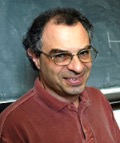 Victor Ginzburg合作论文数Department of Mathematics, The University of Chicago1
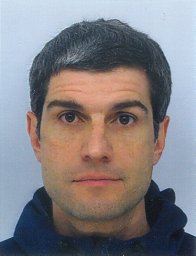 Revaz Ramazashvili合作论文数Universite Paris-Sud1
 Boris Lvovich Feigin合作论文数Faculty of Mathematics, HSE University1Arkady Vaintrob合作论文数1Maxime Rebout合作论文数1Yan Soibelman合作论文数1
 A I Bondal合作论文数1Yu. Manin合作论文数1




