Nowadays there is a growing need for user friendly workflow editors in all fields of scientific research. A special interest group is present at big physics research facilities where instrumentation is mostly controlled by a robust and reliable low level control software solution. Different types of specific experiments using predetermined automated protocols and on-line data processing with real-time feedback require a more flexible and abstract high level control system[1]. Beside flexibility and dynamism, easy usability is also required for researchers collaborating from several different fields. Tentatively, to test the ease and flexible usability, the Kepler workflowengine was integrated with TANGO[2]. It enables researchers to automate and document experiment protocols without any programming skill. The X-ray crystallography laboratory at the Biological Research Center of Hungarian Academy of Science (BRC) has implemented an example crystallographic workflow to test the integrated system. This development was performed in cooperation with ELI-ALPS.
In macromolecular crystallography, a great deal of effort has been invested in understanding radiation-damage progression. While the sensitivity of protein crystals has been well characterized, crystals of DNA and of DNA-protein complexes have not thus far been studied as thoroughly. Here, a systematic investigation of radiation damage to a crystal of a DNA 16-mer diffracting to 1.8 Å resolution and held at 100 K, up to an absorbed dose of 45 MGy, is reported. The RIDL (Radiation-Induced Density Loss) automated computational tool was used for electron-density analysis. Both the global and specific damage to the DNA crystal as a function of dose were monitored, following careful calibration of the X-ray flux and beam profile. The DNA crystal was found to be fairly radiation insensitive to both global and specific damage, with half of the initial diffraction intensity being lost at an absorbed average diffraction-weighted dose, D1/2, of 19 MGy, compared with 9 MGy for chicken egg-white lysozyme crystals under the same beam conditions but at the higher resolution of 1.4 Å. The coefficient of sensitivity of the DNA crystal was 0.014 Å2 MGy-1, which is similar to that observed for proteins. These results imply that the significantly greater radiation hardness of DNA and RNA compared with protein observed in a DNA-protein complex and an RNA-protein complex could be due to scavenging action by the protein, thereby protecting the DNA and RNA in these studies. In terms of specific damage, the regions of DNA that were found to be sensitive were those associated with some of the bound calcium ions sequestered from the crystallization buffer. In contrast, moieties farther from these sites showed only small changes even at higher doses.
The mayor tool to determine the 3D structure with atomic resolution of large molecules is X-ray crystallography.With X-ray data collection heavy atoms could be seen for 3D structure calculation, but the position of hydrogen atoms, which are biologically important could only be estimated due to the fact that such small atoms couldn't diffract high energy radiation and particle radiation.To locate these hydrogens the frequently used methods are 2Datoms that can produce cleaner neutron diffraction.With the combination of the listed methods, the complete biologically active macromolecular structure and function could be determined.In collaboration with European Spallation Source, we have developed a method to produce standard deuterated test crystals for instrument characterisation.The method can be extended to support hanging and sitting drop crystallisation experiments in deuterated environement.
The single-crystal structures of calcium D-gluconate and calcium α-D-isosaccharinate have been determined using X-ray diffraction at 100 K. Surprisingly, given its significance in industrial and medical applications, the structure of calcium D-gluconate has not previously been reported. Unexpectedly, the gluconate crystal structure comprises coordination polymers. Unusually, the calcium coordination number is nine. Adjacent metal centres are linked by three μ-oxo bridges, with a metal–metal separation of 3.7312 (2) Å. One of the gluconate ligands contradicts a suggestion from 1974 that a straight chain conformation is associated with an intramolecular hydrogen bond. This ligand binds to three adjacent metal centres. The use of synchrotron radiation provided an improved crystal structure with respect to that previously reported for the isosaccharinate complex, allowing the location of the hydroxy hydrogen sites to be elucidated. In contrast to the gluconate structure, there are no μ-oxo bridges in the isosaccharinate coordination polymer and the isosaccharinate bridging coordination is such that the distance between adjacent metal centres, each of which is eight-coordinate, is 6.7573 (4) Å. Complementing the crystal structure determinations, modelling studies of the geometries and coordination modes for the aqueous [CaGluc] + and [CaIsa] + complexes are presented and discussed.
The installation of multi-axis goniometers such as the ESRF/EMBL miniKappa goniometer system has allowed the increased use of sample reorientation in macromolecular crystallography. Old and newly appearing data collection methods require precision and accuracy in crystal reorientation. The proper use of such multi-axis systems has necessitated the development of rapid and easy to perform methods for establishing and evaluating device calibration. A new diffraction-based method meeting these criteria has been developed for the calibration of the motors responsible for rotational motion. This method takes advantage of crystal symmetry by comparing the orientations of a sample rotated about a given axis and checking that the magnitude of the real rotation fits the calculated angle between these two orientations. Hence, the accuracy and precision of rotational motion can be assessed. This rotation calibration procedure has been performed on several beamlines at the ESRF and other synchrotrons. Some resulting data are presented here for reference.
In spite of numerous investigations on the various processes of the thermal decomposition and rehydration of layered double hydroxides (LDHs) by a variety sophisticated experimental means, many details are still unexplored and some contradictions are still unresolved. In this work, our efforts were focussed on clarifying the composition, structure and properties of thermally decomposed metaphases originating from CaFe–LDH, heat treated in the 373–973K temperature range. The structure reconstruction ability of mixed metal oxide phases obtained after heat treatments was also investigated, mainly concentrating on the changes in the microenvironment of Fe(III), in the presence of controlled amount of water vapour (i.e., at different relative humidities). All samples were characterised by X-ray diffractometry, and the iron-containing phases were studied by 57Fe Mössbauer spectroscopy.
The temperature dependence of dielectric processes in humid titanate nanowires was investigated via broadband dielectric spectroscopy under quasi-isosteric conditions in the temperature range of 150-350 K. It was found that the dynamic parameters obtained from low-temperature measurements cannot describe the dielectric behavior of the system above 273 K, implying changes in the dynamics of the corresponding dielectric processes. The calculated activation energies and pre-exponential factors counterintuitively increase linearly with the amount of adsorbed water, and a compensation effect was also found to apply to all contributions in the TiONW spectra.
In this contribution the rehydration process of a dehydrated CaFe-LDH is described with the combination of thermogravimetric (TG), X-ray diffraction (XRD) and dielectric relaxation spectroscopic (DRS) measurements. Dehydration was followed by TG and the major steps were identified. For studying the rehydration procedure the dehydrated samples were treated in the 6–97% relative humidity range at several preset vapour contents at 298K. For equilibration 72h were allowed. Then, the XRD diffractograms and the DRS spectra were registered and the thermal behaviour of the partially rehydrated samples was also studied. From these measurements the various forms of water molecules interacting with the LDH were deduced and their relaxation behaviour in the rehydration procedure is described.
Heat-treated CaFe-layered double hydroxide samples were equilibrated under conditions of various relative humidities (11%, 43% and 75%). Measurements by FT-IR and dielectric relaxation spectroscopies revealed that partial to full reconstruction of the layered structure took place. Water types taking part in the reconstruction process were identified via dielectric relaxation measurements either at 298 K or on the flash-cooled (to 155 K) samples. The dynamics of water molecules at the various positions was also studied by this method, allowing the flash-cooled samples to warm up to 298 K.
Broadband dielectric spectroscopy (BDS) measurements have been carried out on a nanostructured hydrophilic model system to gain insight into the atomistic level mechanism of adsorption-induced dielectric changes. Titanate nanowires (TiONWs) were investigated between 10 mHz and 1 MHz under various humidity conditions. The processes contributing to the measured dielectric response were identified, and their dependence on water surface coverage was discussed in detail. Three relaxation processes and an imperfect ionic conduction were found in the investigated frequency window. Exponential relationships were found between the different dielectric quantities and the amount of adsorbed water. The conductivity variation originates from the exponentially increasing charge carrier concentration, while the relaxations in the middle frequency range have a common, interfacial origin. The high-frequency loss process arises from the orientation relaxation of a real dipolar moiety of the system.
 Brockhauser Sandor合作论文数European Molecular Biology Laboratory (EMBL), 6 Rue Jules Horowitz, 38042 Grenoble, France.11
 Ákos Kukovecz合作论文数Department of Applied and Environmental Chemistry, Faculty of Science and Informatics, University of Szeged11
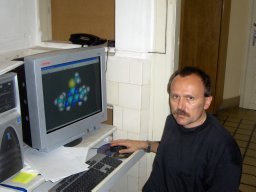 Istvan Palinko合作论文数Department of Organic Chemistry;University of Szeged;Department of Organic Chemistry, University of Szeged10
 Pál Sipos合作论文数Department of Inorganic and Analytical Chemistry, University of Szeged9
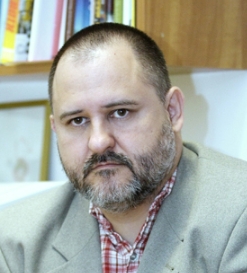 Zoltan Konya合作论文数Department of Applied and Environmental Chemistry, University of Szeged8
 Sipiczki Mónika合作论文数7
 Veronika Harmat合作论文数Institute of Chemistry, Eötvös Loránd University7
 Henrik Haspel合作论文数Department of Applied and Environmental Chemistry, University of Szeged6I. Carmichael合作论文数4G. Ferenc合作论文数4I. Pálinkó合作论文数3
 Dávid Ferenc Srankó合作论文数Bosch3Szilvia Mészáros合作论文数3
 Zita Csendes合作论文数3
 Krisztian Csanko合作论文数2Zsolt Filákovics合作论文数2
 Zsolt Ferencz合作论文数2
 Márton Szabados合作论文数Department of Organic Chemistry, University of Szeged2Sipos Pál Miklós合作论文数1Haase Dörte合作论文数1Srankó Dávid Ferenc合作论文数1viktor toth合作论文数1Gyorgyi Ferenc合作论文数Institute of Plant Biology, Eötvös Lóránd Research Network1Ria K. Balogh合作论文数1
 Kristopher Ian White合作论文数Stanford University1
 Raimond B G Ravelli合作论文数Leiden Univ, Med Ctr, Dept Mol Cell Biol, NL-2300 RC Leiden, Netherlands1Laufer Noémi合作论文数1
 Ildiko Lajter合作论文数1
 Agost Gyula Tasi合作论文数1
 Kutus Bence合作论文数1
 E. Kuzmann合作论文数1
 Ian Carmichael合作论文数Department of Chemistry & Biochemistry, University of Notre Dame1Peter Turner合作论文数1
 Elspeth Garman合作论文数Department of Biochemistry, University of Oxford1
 Attila Jancso合作论文数1
 Piroska Szabo-Revesz合作论文数1Robert Puskas合作论文数1
 Andrew A Mccarthy合作论文数1
 Rita Ambrus合作论文数Department of Pharmaceutical Technology, University of Szeged1
 J. Halasz合作论文数1Esko Oksanen合作论文数Laboratory of Organic Chemistry;University of Helsinki;Laboratory of Organic Chemistry, University of Helsinki1Alberto Cassetta合作论文数1Imre Labadi合作论文数1
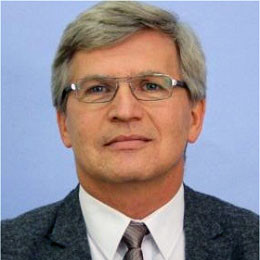 Zoltan Homonnay合作论文数Institute of Chemistry, Eötvös Loránd University;Department of Nuclear Chemistry, Eötvös Loránd University1Linda Lackó合作论文数1




