The purpose of this study is to contribute to the interest in arts-based learning as part of the growing literature on artistic initiatives in business contexts, by advancing the understanding of the potential of arts-based business learning that people can yet fail to benefit from. We draw on Weick’s framework for how people construct meaning in organized situations and on a qualitative study of an art seminar in business education to consider arts-based learning in the face of pitfalls that can prevent people from engaging in approaches that differ from their usual ones and from which they can learn. We show that people can benefit from the potential of arts-based business learning when collective meaning-construction processes such as sensemaking or sensegiving can unfold and work in an iterative, active and intense way, to take people towards new experiences. Our study also highlights the usefulness of taking a perspective centred on ongoing collective meaning-construction processes and of focusing on both learning activities and learning situations when studying business learning.
This chapter aims to contribute to management education by engaging with Jacques Ranciere’s philosophy. From this perspective, management education is less about training technical experts who put a set of techniques and skills validated by science into practice. Rather it positions itself as contributing to the creation of a more democratic society through the training of active citizens who have the potential to voice their opinions (Dehler 2009).
In contrast to Scandinavia and countries like the United Kingdom and Australia, the emergence of Critical Management Studies (CMS) in France is a relatively recent phenomenon. This rather delayed development is made all the more enigmatic by the fact that CMS is a field that has drawn on French critical theory, as is clear, for example, from the heavy reliance on the work of Bourdieu, Foucault, Deleuze, Lacan and Derrida in research from the English-speaking world.
ésumé La mobilisation d'une uvre artistique peut-elle élargir l'horizon des recherches sur les organisations et le travail ? Partant de l'analyse de la figure classique de Charlot au travail dans Les Temps modernes, cet article propose de renouveler le regard posé sur la question de la résistance au travail à travers un film de fiction. En nous appuyant sur la philosophie de Jacques Rancière consacrée au « régime esthétique » de l'art, nous suggérons que les gestes de détournement de Charlot au travail reviennent à ignorer une certaine forme de nécessité qui le forcerait à « rester à sa place », affirmant ainsi une égalité de principe plutôt qu'une rébellion « contre » un ordre dominant. Cette résistance-affirmation, à la fois minuscule et universelle, à l'image du personnage de Charlot lui-même, offre un nouveau regard sur les formes et enjeux de la résistance au travail.
The rise of modern corporations has been accompanied by an expansion of salaried executives who have replaced owner-managers. With this expansion, the new class of managers/executives came to regard themselves as stewards of large and complex corporations, and not principally or exclusively as agents for the owners. Emerging as a self- styled ‘profession’, there was a continuous debate around the necessity for the corporation to be responsible to the collective and to its stakeholders. During long parts of the twentieth century the professed intent was to balance and synthesize a plurality of interests in order to ensure the long term survival and success of the corporation, pursue national strategic interests, create employment, support networks of suppliers, develop new technology as well as create an adequate or satisfactory return for shareholders. The rise of agency theory in the late 1970s and early 1980s challenged this understanding of management. Arguing that markets rather than managers provide an efficient allocation of scarce resources, it pushed an agenda in which the corporation had to pursue one single goal – the maximization of shareholder value (MSV) and that managers should be incentivised to respond to (financial) market forces. This idea has today become a highly influential doctrine which infuses senior executive thinking, investors thinking, corporate governance theory and public policy and regulatory decision making. Backed by this belief, many managers now act on the basis of a folk wisdom that shareholders are the only important constituency, which leads them to deliver short-term strategic decisions, high executive remuneration, and offshoring strategies with regard to manufacturing and finance. This comes at the detriment of broader and longer-term perspectives on the purpose of the firm in modern societies and has created worse management and less competitive companies. It is ironic that the obsession with MSV has actually destroyed long-term shareholder value and that it has significantly decreased the average life span of corporations during the past 30 years. We provide this Summary of certain fundamentals of management in an effort to help prevent analytical errors which can have severe and damaging effects on corporations.
L’art est-il susceptible d’apporter un nouveau type de connaissance sur les restructurations d’entreprises ? C’est autour de cette question que s’est construit le projet de recherche européen qui est à la base de cet article. Nous rendons compte ici des premiers résultats de ce programme de recherche qui a réuni chercheurs, artistes et acteurs des restructurations autour de productions artistiques en nous efforçant d’identifier et de qualifier la nature spécifique des connaissances que le recours à la représentation artistique peut permettre de produire. Suivant l’invitation qui nous est faite par Becker (2007) de considérer la représentation artistique comme une représentation possible et potentiellement riche de la société, nous défendons l’idée que les représentations artistiques des restructurations d’entreprises sont susceptibles d’enrichir, voire de renouveler la nature et les modes de production des connaissances académiques sur ce phénomène, plus précisément par le recours à deux œuvres artistiques de natures différentes (un travail photographique et une pièce de théâtre). Cet article présente les œuvres d’art comme un matériau riche et complexe permettant le dévoilement de certaines dimensions, délibérément ou involontairement cachées ou occultées, des processus de restructuration. Par le biais d’une connaissance expérientielle, les œuvres d’art fournissent en effet un regard décalé, tantôt complémentaire, tantôt contradictoire, sur les représentations des restructurations majoritairement proposées par la recherche académique.
 Isabelle Huault合作论文数12
 Stephane Debenedetti合作论文数10
 Laurent Taskin合作论文数Louvain School of Management (IAG),, Université catholique de Louvain8
 Natalia Bobadilla合作论文数6
 Damien Mourey合作论文数6
 Geraldine Schmidt合作论文数6
 Francois Pichault合作论文数6
 Virginie Xhauflair合作论文数Université de Liège5
 Gwenaëlle Nogatchewsky合作论文数5
 rachel beaujolin合作论文数4
 Philippe Mairesse合作论文数4
 Florence Allard-Poesi合作论文数4Franck Tannery合作论文数4Jacques Lauriol合作论文数3
 Florence Palpacuer合作论文数University of Montpellier3
 Rachel Beaujolin-Bellet合作论文数2Sandra Charreire-Petit合作论文数2
 Christopher Grey合作论文数School of Business and Management, Royal Holloway, University of London2Ace Volkmann Simpson合作论文数1em lyon合作论文数1Jean-Pierre Chanteau合作论文数1
 Kamal Bouzinab合作论文数1Guillaume Flamand合作论文数1Chahira Mehouachi合作论文数1Oleg Komlik合作论文数1universite de geneve managing合作论文数1universite du luxembourg editor合作论文数1
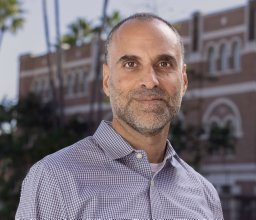 Hovig Tchalian合作论文数Claremont Grad Univ1
 Vivien Blanchet合作论文数ISG Business Sch Paris1ian towers合作论文数1Tyrone Pitsis合作论文数1
 Ruth Slater合作论文数1Olivier Germain合作论文数1
 Walter Jarvis合作论文数Univ Technol Sydney1
 Philip Hancock合作论文数University of Essex1
 Timothy Kuhn合作论文数Dept Commun, Univ Colorado1
 Thomas Clarke合作论文数Univ Technol Sydney1
 Charles Perrow合作论文数Department of Sociology, Yale University1
 Scott Taylor合作论文数Department of Management, Birmingham Business School, College of Social Sciences, University of Birmingham1
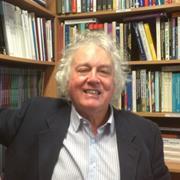 Stewart Clegg合作论文数Faculty of Business, University of Technology Sydney1Vlatka Hlupic合作论文数1Joanna Brewis合作论文数1
 Jonathan Murphy合作论文数1
 Emma Bell合作论文数Keele Management Sch, Keele Univ1
 Chris Rees合作论文数Sch Management, Royal Holloway Univ London1
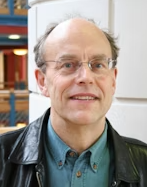 Hugh Willmott合作论文数Bayes Business School, Faculty of Management, City St George’s, University of London1Lorna Stevenson合作论文数University of St Andrews1
 Pasi Ahonen合作论文数1
 Jason Glynos合作论文数Department of Government;University of Essex;Department of Government, University of Essex1




