Bayesian inference in hidden Markov models (HMMs) can be challenging due to the presence of multimodality in the likelihood function, and consequently in the joint posterior distribution, even after correcting for label switching. The parallel tempering (PT) algorithm, a state-space augmentation method, is a widely used approach for dealing with multimodal distributions. Nevertheless, standard implementation of the PT algorithm may not always be sufficient to effectively explore the high-dimensional, complex multimodal posterior distributions that arise in HMMs. In this work, we demonstrate common pitfalls when implementing the PT algorithm for HMMs, approaches to remedy them, and introduce new non-informative prior distributions that facilitate effective posterior distribution exploration. We analyse time series of blue whale dive data with two 3-state HMMs in a Bayesian framework, one of which includes a categorical covariate in the transition probability matrix to account for the effect of sound stimuli on the whale's behavior. We demonstrate how effective implementation of the modified PT algorithm for Bayesian inference leads to effective exploration of the resultant multimodal posterior distribution and how that affects inference for the underlying movement patterns of the blue whales.
Gaussian Processes (GPs) are a powerful tool for Bayesian time-series modeling, yet their cubic computational cost remains a severe barrier for application to long, high-cadence datasets in astronomy. While specialized scalable solvers like Celerite elegantly reduce this scaling to linear time, repeatedly evaluating the exact likelihood during iterative Bayesian sampling is a bottleneck for developing more complex models, like hierarchical or additive models in which Celerite is only one component. To make this inference computationally tractable, we introduce a generative surrogate framework. By utilizing a Variational Autoencoder (VAE) to learn a compressed representation of the Celerite prior, we map highly correlated stochastic dependencies into a low-dimensional, isotropic manifold. This transition completely bypasses exact covariance operations, shifting the computational burden to a rapid neural network forward pass. Through an extensive simulation study, we show that the generative surrogate accurately reproduces the structural fidelity of exact physical kernels like Celerite. Finally, we demonstrate embedding our VAE approximation into an additive model that combines Celerite and a hidden Markov model (HMM) for stellar flare detection in time series data of stars. We evaluate the joint VAE+HMM architecture against the exact Celerite+HMM framework on empirical astrophysical time series and demonstrate that the proposed methodology achieves significant reductions in computational time, enabling the rigorous, large-scale characterization of stellar flares across massive data archives.
 Bürkner Paul-Christian合作论文数Psychology and Sport Sciences, Fliednerstr. 21, D-48149, Münster, Germany.21
 Yuling Yao合作论文数20
 Jonah Gabry合作论文数Applied Statistics Center and ISERP, Columbia University20
 Aki Vehtari合作论文数Department of Computer Science, School of Science, Aalto University20
 Lauren Kennedy合作论文数Department of Econometrics and Business Statistics, Business School, Monash University19
 Andrew Gelman合作论文数Department of Statistics, Columbia University;Department of Political Science, Columbia University19
 Daniel Simpson合作论文数.txt18
 Roland Langrock合作论文数Bielefeld University9
 Timo Adam合作论文数Bielefeld University6
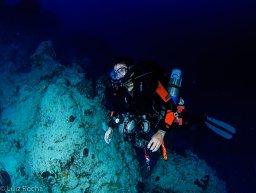 Yannis P. Papastamatiou合作论文数Department of Zoology;University of Hawaii at Manoa;Department of Zoology, University of Hawaii at Manoa6
 Eric J. Gangloff合作论文数Department of Biological Sciences, Ohio Wesleyan University4Juan M. Morales合作论文数Laboratorio Ecotono, Inibioma-Conicet, Universidad Nacional del Comahue4
 Chris Lowe合作论文数Division of Marine Biology, Department of Biological Sciences, College of Natural Sciences and Mathematics, California State University4
 Yuuki Watanabe合作论文数Graduate School of Science and Engineering, Yamagata University4
 James T Ketchum合作论文数3Ethan H. Livingston合作论文数2Tomáš Slisz合作论文数2Viktor Kubricht合作论文数2Daniel Suk合作论文数2Martin Jedlička合作论文数2Markéta Veverková合作论文数2Adriana Mifková合作论文数2
 Robin Sin合作论文数2Miroslav Kubiska合作论文数2Jana Váchalová合作论文数2Jan Táborský合作论文数2Tomáš Hyánek合作论文数2Luis Fernando Casas Mendez合作论文数2Jan Horejsek合作论文数2Ciara Pettit合作论文数2Wyatt Mcqueen合作论文数2Kristína Christozova合作论文数2Rebeka Pokrievková合作论文数2Julie Vohryzková合作论文数2Zbyšek Pospíšil合作论文数2Kristián Hrušák合作论文数2Grigorij Mesežnikov合作论文数2Sierra Spears合作论文数2P. L. Vaughn合作论文数2Adam Jaroš合作论文数2
 Edgar Mauricio Hoyos Padilla合作论文数2
 Sofia Ruiz-Suarez合作论文数Facultad de Ciencias Económicas, Universidad de Rosario2
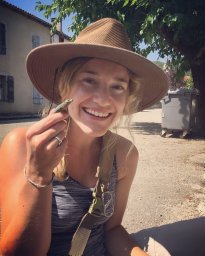 Brooke L Bodensteiner合作论文数2
 Carson Sievert合作论文数Iowa State Univ, Ames, IA 50011 USA2
 Lucy A Howey合作论文数Johns Hopkins Univ2
 J. Vajter合作论文数Charles University, Motol University Hospital2samantha tyner合作论文数2
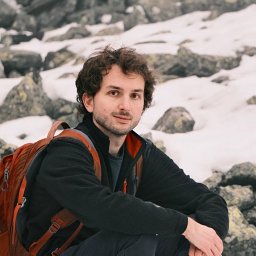 Theo Michelot合作论文数Ctr Res Ecol & Environm Modelling, Univ St Andrews2
 Martin Modrák合作论文数Czech Acad Sci, Inst Microbiol, Prague, Czech Republic2




