The evaluation of the time spent by a solute exclusively in the mobile phase (dead time) is of fundamental interest for the interpretation of the retention data and obtainment of thermodynamic parameters for the HPLC process. This parameter depends on the volume occupied by the mobile phase and on the volume of the effective stationary phase from the HPLC column, and the measurement of these volumes poses a real challenge. This review discusses the evaluation of volumes of various phases involved in the retention process of solutes, which are related to the dead time, and the phase ratio for the separation. This paper attempts to cover as many points of view as possible regarding this topic in liquid chromatography, which is of importance for almost all separation mechanisms.
This study is analyzing the chromatographic hydrophobicity index (denoted by HIV) inreversed-phase liquid chromatography based on the linear dependence of the logarithm of experimental retention factor (log k) on the content of the organic component from mobile phase (retention function).In the literature HI(V)is given by the ratio between the logarithm of the extrapolated retention factor for water as mobile phase (log kw) and the slope (S) of the linear equation describing the dependence of log kon the organic solvent fraction (Phi) from mobile phase composition. The paper demonstrates that the parameterHIVis related tothe extrapolated values of the retention factor for the extreme compositionsof the mobile phase, namely to 100% aqueous component (log kw) and 100% organic component(log korg), respectively. A new empirical hydrophobicity descriptor(denoted byHIL) is proposed as an alternative to HIV, which is related only to slope Sas a square root of (1 + S-2). Some examples and correlations are discussed and comparedusing retention data acquired fordifferent HPLC columns and mobile phase compositions, showing that HILcorrelates better than HIVwith octanol-water partition constant (log Kow) of studied solutes
Mobile phase composition remains the major experimental parameter influencing the separation process in reversed-phase high-performance liquid chromatography (RP-HPLC). Its influence on the retention of solutes is explained by the Hildebrand solubility parameter and solvophobic theory, which also considers molecular characteristics of the participants in a separation process. The main empirical dependences (linear and polynomial) between the retention factor and the composition of mobile phase (retention function) are discussed taking into consideration a wide range of mobile phase compositions. Two direct chromatographic indices are resulting from these equations: the extrapolated value of retention factor for zero organic content in mobile phase composition (log kw) and the solvent strength parameter (S), which for a linear retention function is its slope being constant over the entire mobile phase compositions. Another chromatographic index could result from the retention function for zero content of water in mobile phase, but this situation can be applied only for very hydrophobic solutes. For large domains of mobile phase composition, the retention function cannot be described by a single type of dependence. This explains the paradox of generating by extrapolation different logkwvalues for different organic components. For the mobile phase close to pure water the retention function is different from that at average water concentration.
A new hydrophobicity index has been previously developed and reported (Rev. Roum. Chim., 2024, 69, 183). The new indexis based only on the solvent strength parameter (S) that describes the linear dependences (logk= logkw-S Phi) between the logarithm of the retention factor (k) and volume fraction of the organic modifier in mobile phase (Phi) in an HPLC separation. The correlations between the new hydrophobicity index and octanol-water partition constant (logK(ow)) were evaluated and reported in present study for a set of 20 solutes by using seven C18 HPLC columns and two organic modifiers, typically utilized in reversed-phase HPLC applications (acetonitrile and methanol). All the correlations were good, showing values above 0.85. Correlations between the extrapolated values of retention factor to zero percent of the organic modifier in mobile phase, logk(w),and log K-ow showed also good determination coefficients R-2, unlike an older hydrophobicity index based on the ratio between log( )k(w )and S, which was generally characterized by lower R(2 )than 0.8 for acetonitrile and 0.7 for methanol.
The use of growth hormone-releasing hormones (GHRHs) is prohibited in sports according to the regulations of the World Anti-Doping Agency (WADA). Considering the complexity of urine samples and the low concentrations at which these analytes should be detected, analyzing GHRHs is a challenging task. In most of the studies, GHRHs are analyzed using UHPLC-HRMS with an orbitrap. The present developed and validated method for some GHRHs (tesamorelin, CJC-1295, sermorelin (GRF 1-29), sermorelin (3-29)-NH2, somatorelin) is based on the triple quadrupole UHPLC/MS-MS method with solid phase extraction (SPE) with weak cation exchange and is able to detect concentrations as low as 0.2 ng/mL (LOD), a limit of quantification (LOQ) at 0.6 ng/mL, and linearity across the range of 0.1 ng/mL to 1.2 ng/mL. The present method developed by our doping control laboratory was validated according to WADA technical documents for selectivity, limit of detection (LOD), carryover, reliability of detection, stability and recovery. The results show that the method has adequate recoveries and sensitivity, hence, it can be employed for routine screening in anti-doping laboratories.
In high-performance liquid chromatography, the dependence of retention factor k on volumetric fraction ϕ of organic phase is expressed by log k = F(ϕ) with F(ϕ) obtained by measuring log k at different ϕ values. From F(ϕ), a value kw is calculated by taking ϕ = 0. The equation log k = F(ϕ) is applied for predicting k, and kw is a descriptor of hydrophobic character of solutes and stationary phases. Calculated kw should not depend on the nature of organic component of mobile phase but extrapolation procedure leads to different kw for different organic components. The present study shows that the expression of F(ϕ) changes depending on the range of ϕ and the same function F(ϕ) cannot be used for the full range of ϕ from 0 to 1. Consequently, kw obtained by extrapolation of ϕ to zero is not correct because the expression of F(ϕ) was generated by fitting the data using ϕ with higher values. The present study shows the proper way to obtain the value of kw .
The retention behavior of six benzodiazepines (alprazolam, bromazepam, diazepam, flunitrazepam, medazepam, and nitrazepam) was studied using four different stationary phases, under reversed-phase mechanism in high-performance liquid chromatography. Four stationary phases were used for evaluating the retention of these compounds at fixed temperature. Functional dependences of the retention factor on the content of the organic modifier (methanol, or acetonitrile) in the composition of mobile phase were calculated. The extrapolated values of the retention factor for zero content of the organic modifier in mobile phase were higher for acetonitrile than for methanol for all studied compounds and for the four types of stationary phases.
Hydrophobic stationary phases that are used in RP-HPLC can also be successfully utilized in other types of HPLC. This chapter is dedicated to the description of such HPLC techniques that use RP-HPLC type stationary phases, but are different from conventional RP-HPLC. These techniques include non-aqueous RP-HPLC, ion pair liquid chromatography, hydrophobic interaction chromatography, micellar, and microemulsion chromatography. Each of these techniques has specific characteristics described in this chapter.
Details regarding different types of equilibria established between the molecules present in the mobile phase and those present in the stationary phase are given in this chapter. The types of equilibria include partition, adsorption, equilibria involving ions, and equilibria during the size-exclusion process. The chapter also discusses the influence of pH and temperature on different equilibria.
The present chapter is dedicated to the mobile phase in HPLC. It starts with a detailed presentation of properties of liquids that make them useful as participants in the retention/elution process in HPLC. The liquids are characterized according to their solvent properties based on thermodynamic and other physicochemical concepts. Information regarding topics such as solvent miscibility, partition constants for a solute between two solvents, and solvent “strength” are discussed in this chapter. Additional properties of solvents, such as viscosity, dielectric constant, dipole moment, polarizability, superficial tension, and their role in the separation process, are also discussed. Other properties of solvents of importance in HPLC, not necessarily related to the separation but to the detection mode, are also examined. Other problems related to the mobile phase, such as buffers and the pH of the mobile phase and the use of gradients, are also covered. Specific solvents used in RP-HPLC, HILIC, NPC, ion exchange, and so on, are described separately.
 Moldoveanu Serban C合作论文数RJ Reynolds Tobacco Co104
 Andrei Medvedovici合作论文数Faculty of Chemistry, University of Bucharest78
 Toma Galaon合作论文数National Research and Development Institute for Industrial Ecology – INCD-Ecoind26Florin Albu合作论文数25Elena Bacalum合作论文数17Mihaela Cheregi合作论文数Faculty of Chemistry, University of Bucharest12
 Iulia Gabriela David合作论文数Faculty of Chemistry, University of Bucharest12Stefan Udrescu合作论文数12
 Daniela Iuliana Sora合作论文数11
 Cristina Georgita合作论文数S.C. Labormed Pharma S.A.10Edvin Caiali合作论文数10Medeea Radulescu合作论文数9F Tache合作论文数7Andreia-Cristina Soare合作论文数Dept Phys Chem, Univ Bucharest7Alexandru Farca合作论文数7serban c moidoveanu合作论文数6Emilia Elena Iorgulescu合作论文数6
 Vasile I. Pârvulescu合作论文数Catalysts and Catalytic Processes Research Center, Faculty of Chemistry, University of Bucharest6
 Pat Sandra合作论文数6Petre Jana合作论文数5
 Frank David合作论文数Research Institute for Chromatography5
 Florentin Tache合作论文数Faculty of Chemistry, University of Bucharest5
 Gabriel Lucian Radu合作论文数Applied Chemistry and Materials Science Faculty 1-7, Polytechnica University of Bucharest5Iulia Sora合作论文数5Maria Antonia Tănase合作论文数4S Moldoveanu合作论文数4
 Monica Magureanu合作论文数Department of Plasma Physics and Nuclear Fusion, National Institute for Lasers, Plasma and Radiation Physics4
 Costel Sârbu合作论文数Department of Chemistry, Babeş-Bolyai University4
 Andrei Danet合作论文数4
 Constantin Mircioiu合作论文数University of Medicine and Pharmacy;Faculty of Pharmacy;University of Medicine and Pharmacy|Faculty of Pharmacy4
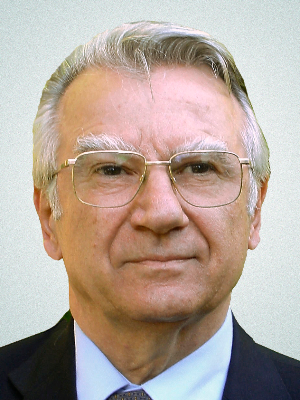 Victor Voicu合作论文数Department of Pharmacology, Toxicology and Clinical Psychopharmacology, Faculty of Medicine, University of Medicine and Pharmacy “Carol Davila” Bucharest3D Ciomartan合作论文数3n b mandache合作论文数3D. Piroi合作论文数3JVG MATEO合作论文数3Ge Baiulescu合作论文数3Hassan Y Aboul-Enein合作论文数3Vasile-Ion Iancu合作论文数Natl Res & Dev Inst Ind Ecol, ECOIND3
 Dana Elena Popa合作论文数Faculty of Chemistry, University of Bucharest3Ionescu Mihaela合作论文数3
 Mihaela Buleandra合作论文数Protezione Sanitaria e Sviluppo Sostenibile;Università di Bucharest;Facoltà di Chimica;Facoltà di Chimica, Università di Bucharest3
 Petruta-Madalina Bucur合作论文数3Florin Soponar合作论文数3Constantin Mihailciuc合作论文数Faculty of Chemistry, University of Bucharest3Bogdan Bucur合作论文数3J. Martínez Calatayud合作论文数3
 Mihaela Ionescu合作论文数Laboratoire de Chimie Structurale des Macromolécules, Institut Pasteur3Ing V Dumitrescu合作论文数3Dan-Florin Anghel合作论文数2




