Payment networks form the backbone of modern commerce, generating high volumes of transaction records from daily activities. Properly modeling this data can enable applications such as abnormal behavior detection and consumer-level insights for hyper-personalized experiences, ultimately improving people's lives. In this paper, we present TREASURE, TRansformer Engine As Scalable Universal transaction Representation Encoder, a multipurpose transformer-based foundation model specifically designed for transaction data. The model simultaneously captures both consumer behavior and payment network signals (such as response codes and system flags), providing comprehensive information necessary for applications like accurate recommendation systems and abnormal behavior detection. Verified with industry-grade datasets, TREASURE features three key capabilities: 1) an input module with dedicated sub-modules for static and dynamic attributes, enabling more efficient training and inference; 2) an efficient and effective training paradigm for predicting high-cardinality categorical attributes; and 3) demonstrated effectiveness as both a standalone model that increases abnormal behavior detection performance by 111% over production systems and an embedding provider that enhances recommendation models by 104%. We present key insights from extensive ablation studies, benchmarks against production models, and case studies, highlighting valuable knowledge gained from developing TREASURE.
As large language models (LLMs) are deployed in safety-critical settings, it is essential to ensure that their responses comply with safety standards. Prior research has revealed that LLMs often fail to grasp the notion of safe behaviors, resulting in either unjustified refusals to harmless prompts or the generation of harmful content. While substantial efforts have been made to improve their robustness, existing defenses often rely on costly fine-tuning of model parameters or employ suboptimal heuristic techniques. In this work, we take a novel approach to safeguard LLMs by learning to adapt the system prompts in instruction-tuned LLMs. While LLMs are typically pre-trained to follow a fixed system prompt, we investigate the impact of tailoring the system prompt to each specific user input on the safety of the responses. To this end, we propose Sysformer, a transformer model that updates an initial system prompt to a more robust system prompt in the LLM input embedding space while attending to the user prompt. While keeping the LLM parameters frozen, the Sysformer is trained to refuse to respond to a set of harmful prompts while responding ideally to a set of safe ones. Through extensive experiments on 5 LLMs from different families and 2 recent benchmarks, we demonstrate that Sysformer can significantly enhance the robustness of LLMs, leading to upto 80% gain in the refusal rate on harmful prompts while enhancing the compliance with the safe prompts by upto 90%. Results also generalize well to sophisticated jailbreaking attacks, making LLMs upto 100% more robust against different attack strategies. We hope our findings lead to cheaper safeguarding of LLMs and motivate future investigations into designing variable system prompts.
Retrieval-augmented Generation (RAG) extends large language models (LLMs) with external knowledge but faces key challenges: restricted effective context length and redundancy in retrieved documents. Pure compression-based approaches reduce input size but often discard fine-grained details essential for factual accuracy. We propose SARA, a unified RAG framework that balances local precision and global knowledge coverage under tight context budgets. SARA combines natural-language text snippets with semantic compression vectors to jointly enhance context efficiency and answer correctness. It represents contexts at two complementary levels: 1) fine-grained natural-language spans that preserve critical entities and numerical values, and 2) compact, interpretable vectors that summarize high-level semantics. An iterative evidence-selection module employs the compression vectors for dynamic reranking of contexts. Across 9 datasets and 5 open-source LLMs spanning 3 model families (Mistral, Llama, and Gemma), SARA consistently improves answer relevance (+17.71), answer correctness (+13.72), and semantic similarity (+15.53), demonstrating the importance of integrating textual and compressed representations for robust, context-efficient RAG.
Graph Neural Networks (GNNs) combine node attributes over a fixed granularity of the local graph structure around a node to predict its label. However, different nodes may relate to a node-level property with a different granularity of its local neighborhood, and using the same level of smoothing for all nodes can be detrimental to their classification. In this work, we challenge the common fact that a single GNN layer can classify all nodes of a graph by training GNNs with a distinct personalized layer for each node. Inspired by metric learning, we propose a novel algorithm, MetSelect1, to select the optimal representation layer to classify each node. In particular, we identify a prototype representation of each class in a transformed GNN layer and then, classify using the layer where the distance is smallest to a class prototype after normalizing with that layer's variance. Results on 10 datasets and 3 different GNNs show that we significantly improve the node classification accuracy of GNNs in a plug-and-play manner. We also find that using variable layers for prediction enables GNNs to be deeper and more robust to poisoning attacks. We hope this work can inspire future works to learn more adaptive and personalized graph representations.
Payment networks form the backbone of modern commerce, generating high volumes of transaction records from daily activities. Properly modeling this data can enable applications such as abnormal behavior detection and consumer-level insights for hyper-personalized experiences, ultimately improving people's lives. In this paper, we present TREASURE, TRansformer Engine As Scalable Universal transaction Representation Encoder, a multipurpose transformer-based foundation model specifically designed for transaction data. The model simultaneously captures both consumer behavior and payment network signals (such as response codes and system flags), providing comprehensive information necessary for applications like accurate recommendation systems and abnormal behavior detection. Verified with industry-grade datasets, TREASURE features three key capabilities: 1) an input module with dedicated sub-modules for static and dynamic attributes, enabling more efficient training and inference; 2) an efficient and effective training paradigm for predicting high-cardinality categorical attributes; and 3) demonstrated effectiveness as both a standalone model that increases abnormal behavior detection performance by 111
Large Language Models (LLMs) are becoming essential tools for various natural language processing tasks but often suffer from generating outdated or incorrect information. Retrieval-Augmented Generation (RAG) addresses this issue by incorporating external, real-time information retrieval to ground LLM responses. However, the existing RAG systems frequently struggle with the quality of retrieval documents, as irrelevant or noisy documents degrade performance, increase computational overhead, and undermine response reliability. To tackle this problem, we propose Multi-Agent Filtering Retrieval-Augmented Generation (MAIN-RAG), a training-free RAG framework that leverages multiple LLM agents to collaboratively filter and score retrieved documents. Specifically, MAIN-RAG introduces an adaptive filtering mechanism that dynamically adjusts the relevance filtering threshold based on score distributions, effectively minimizing noise while maintaining high recall of relevant documents. The proposed approach leverages inter-agent consensus to ensure robust document selection without requiring additional training data or fine-tuning. Experimental results across four QA benchmarks demonstrate that MAIN-RAG consistently outperforms traditional RAG approaches, achieving a 2-11 improvement in answer accuracy while reducing the number of irrelevant retrieved documents. Quantitative analysis further reveals that our approach achieves superior response consistency and answer accuracy over baseline methods, offering a competitive and practical alternative to training-based solutions.
We consider the problem of test-time adaptation of predictive models trained on tabular data. Effective solution of this problem requires adaptation of predictive models trained on the source domain to a target domain, using only unlabeled target domain data, without access to source domain data. Existing test-time adaptation methods for tabular data have difficulty coping with the heterogeneous features and their complex dependencies inherent in tabular data. To overcome these limitations, we consider test-time adaptation in the setting wherein the logical structure of the rules is assumed to remain invariant despite distribution shift between source and target domains whereas the numerical parameters associated with the rules and the weights assigned to them can vary to accommodate distribution shift. TabLog discretizes numerical features, models dependencies between heterogeneous features, introduces a novel contrastive loss for coping with distribution shift, and presents an end-to-end framework for efficient training and test-time adaptation by taking advantage of a logical neural network representation of a rule ensemble. We present results of experiments using several benchmark data sets that demonstrate TabLog is competitive with or improves upon the state-of-the-art methods for test-time adaptation of predictive models trained on tabular data. Our code is available at https://github.com/WeijieyingRen/TabLog.
Recent advances in the area of long document matching have primarily focused on using transformer-based models for long document encoding and matching. There are two primary challenges associated with these models. Firstly, the performance gain provided by transformer-based models comes at a steep cost - both in terms of the required training time and the resource (memory and energy) consumption. The second major limitation is their inability to handle more than a pre-defined input token length at a time. In this work, we empirically demonstrate the effectiveness of simple neural models (such as feed-forward networks, and CNNs) and simple embeddings (like GloVe, and Paragraph Vector) over transformer-based models on the task of document matching. We show that simple models outperform the more complex BERT-based models while taking significantly less training time, energy, and memory. The simple models are also more robust to variations in document length and text perturbations.
Recent advancements in deep learning techniques have transformed the area of semantic text matching (STM). However, most state-of-the-art models are designed to operate with short documents such as tweets, user reviews, comments, and so on. These models have fundamental limitations when applied to long-form documents such as scientific papers, legal documents, and patents. When handling such long documents, there are three primary challenges: (i) the presence of different contexts for the same word throughout the document, (ii) small sections of contextually similar text between two documents, but dissimilar text in the remaining parts (this defies the basic understanding of “similarity”), and (iii) the coarse nature of a single global similarity measure which fails to capture the heterogeneity of the document content. In this article, we describe CoLDE : Co ntrastive L ong D ocument E ncoder—a transformer-based framework that addresses these challenges and allows for interpretable comparisons of long documents. CoLDE uses unique positional embeddings and a multi-headed chunkwise attention layer in conjunction with a supervised contrastive learning framework to capture similarity at three different levels: (i) high-level similarity scores between a pair of documents, (ii) similarity scores between different sections within and across documents, and (iii) similarity scores between different chunks in the same document and across other documents. These fine-grained similarity scores aid in better interpretability. We evaluate CoLDE on three long document datasets namely, ACL Anthology publications, Wikipedia articles, and USPTO patents. Besides outperforming the state-of-the-art methods on the document matching task, CoLDE is also robust to changes in document length and text perturbations and provides interpretable results. The code for the proposed model is publicly available at https://github.com/InterDigitalInc/CoLDE .
Node embeddings obtained from information networks have been widely adopted for representing knowledge and driving various information retrieval and machine learning tasks. However, training node embeddings is computationally intensive, making it difficult to scale to larger graphs. Most existing works have addressed the scalability challenge by simply adding more hardware resources. For example, a common approach to speed up the training process is to distribute model computation across multiple machines and GPUs. This paper takes an orthogonal approach towards scalability by addressing the problem of computation complexity in training embeddings. We present bigg2vec for scaling up the embedding training process. bigg2vec introduces a novel polar coordinate-based system for internal representation and computation. It provides the following benefits: (a) It significantly reduces compute and memory requirements while improving embedding quality and (b) uses a novel graph organization to generate high-quality negative samples (this reduces the number of negative samples needed for training, which is especially beneficial f or skewed graphs). We have deployed bigg2vec to generate embeddings for multiple AI models within Visa. Our Global Personalized Restaurant Recommender System (GPR) is one such project that uses bigg2vec to periodically generate embeddings for over 450 million nodes connected by more than 3 billion edges. bigg2vec generates higher quality embeddings while training them faster than state-of-the-art methods on a single CPU-based machine.
Graph neural networks have achieved significant success in representation learning. However, the performance gains come at a cost; acquiring comprehensive labeled data for training can be prohibitively expensive. Active learning mitigates this issue by searching the unexplored data space and prioritizing the selection of data to maximize model's performance gain. In this paper, we propose a novel method SMARTQUERY, a framework to learn a graph neural network with very few labeled nodes using a hybrid uncertainty reduction function. This is achieved using two key steps: (a) design a multi-stage active graph learning framework by exploiting diverse explicit graph information and (b) introduce label propagation to efficiently exploit known labels to assess the implicit embedding information. Using a comprehensive set of experiments on three network datasets, we demonstrate the competitive performance of our method against state-of-the-arts on very few labeled data (up to 5 labeled nodes per class).
Obtaining labeled data for machine learning tasks can be prohibitively expensive. Active learning mitigates this issue by exploring the unlabeled data space and prioritizing the selection of data that can best improve the model performance. A common approach to active learning is to pick a small sample of data for which the model is most uncertain. In this paper, we explore the efficacy of Bayesian neural networks for active learning, which naturally models uncertainty by learning distribution over the weights of neural networks. By performing a comprehensive set of experiments, we show that Bayesian neural networks are more efficient than ensemble based techniques in capturing uncertainty. Our findings also reveal some key drawbacks of the ensemble techniques, which was recently shown to be more effective than Monte Carlo dropouts.
We address the problem of customer retention (churn) in applications installed on over the top (OTT) streaming devices. In the first part of our work, we analyze various behavioral characteristics of users that drive application usage. By examining a variety of statistical measures, we answer the following questions: (1) how do users allocate time across various applications?, (2) how consistently do users engage with their devices? and (3) how likely are dormant users liable to becoming active again? In the second part, we leverage these insights to design interpretable churn prediction models that learn the latent characteristics of users by prioritizing the specifications of the users. Specifically, we propose the following models: (1) Attention LSTM (ALSTM), where churn prediction is done using a single level of attention by weighting on individual time frames (temporal-level attention) and (2) Neural Churn Prediction Model (NCPM), a more comprehensive model that uses two levels of attentions, one for measuring the temporality of each feature and another to measure the influence across features (feature-level attention). Using a series of experiments, we show that our models provide good churn prediction accuracy with interpretable reasoning. We believe that the data analysis, feature engineering and modeling techniques presented in this work can help organizations better understand the reason behind user churn on OTT devices.
This chapter introduces some recent trends in generative and deep-learning (DL) models for hybrid recommendation systems that have proven to be extremely effective in integrating different modalities of data. It is organized into three main sections. The first section considers classic algorithms such as probabilistic matrix factorization and latent Dirichlet allocation and illustrates the generative principle of a hybrid recommendation model called collaborative topic regression that jointly models the latent interests of users and items. The second section presents recommendation models that are exclusively based on DL techniques. This includes models such as Restricted Boltzmann-machine-based CF, autoencoder (AE)-based recommendation, neural CF and recurrent recommender network. Finally, the third section explains models such as collaborative denoising AE and collaborative variational AE that integrates PGMs with DL to create a generative DL framework.
Recommendation in the modern world is not only about capturing the interaction between users and items, but also about understanding the relationship between items. Besides improving the quality of recommendation, it enables the generation of candidate items that can serve as substitutes and supplements of another item. For example, when recommending Xbox, PS4 could be a logical substitute and the supplements could be items such as game controllers, surround system, and travel case. Therefore, given a network of items, our objective is to learn their content features such that they explain the relationship between items in terms of substitutes and supplements. To achieve this, we propose a generative deep learning model that links two variational autoencoders using a connector neural network to create Linked Variational Autoencoder (LVA). LVA learns the latent features of items by conditioning on the observed relationship between items. Using a rigorous series of experiments, we show that LVA significantly outperforms other representative and state-of-the-art baseline methods in terms of prediction accuracy. We then extend LVA by incorporating collaborative filtering (CF) to create CLVA that captures the implicit relationship between users and items. By comparing CLVA with LVA we show that inducing CF-based features greatly improve the recommendation quality of substitutable and supplementary items on a user level.
Several complex tasks that arise in organizations can be simplified by mapping them into a matrix completion problem. In this paper, we address a key challenge faced by our company: predicting the efficiency of artists in rendering visual effects (VFX) in film shots. We tackle this challenge by using a two-fold approach: first, we transform this task into a constrained matrix completion problem with entries bounded in the unit interval [0,1]; second, we propose two novel matrix factorization models that leverage our knowledge of the VFX environment. Our first approach, expertise matrix factorization (EMF), is an interpretable method that structures the latent factors as weighted user-item interplay. The second one, survival matrix factorization (SMF), is instead a probabilistic model for the underlying process defining employees' efficiencies. We show the effectiveness of our proposed models by extensive numerical tests on our VFX dataset and two additional datasets with values that are also bounded in the [0,1] interval.
In the era of big data, online doctor review platforms, which enable patients to give feedback to their doctors, have become one of the most important components in healthcare systems. On one hand, they help patients to choose their doctors based on the experience of others. On the other hand, they help doctors to improve the quality of their service. Moreover, they provide important sources for us to discover common concerns of patients and existing problems in clinics, which potentially improve current healthcare systems. In this paper, we systematically investigate the dataset from one of such review platform, namely, ratemds.com, where each review for a doctor comes with an overall rating and ratings of four different aspects. A comprehensive statistical analysis is conducted first for reviews, ratings, and doctors. Then, we explore the content of reviews by extracting latent topics related to different aspects with unsupervised topic modeling techniques. As the core component of this paper, we propose a multi-task learning framework for the document-level multi-aspect sentiment classification. This task helps us to not only recover missing aspect-level ratings and detect inconsistent rating scores but also identify aspect-keywords for a given review based on ratings. The proposed model takes both features of doctors and aspect-keywords into consideration. Extensive experiments have been conducted on two subsets of ratemds dataset to demonstrate the effectiveness of the proposed model.
Online reviews have become an inevitable part of a consumer's decision making process, where the likelihood of purchase not only depends on the product's overall rating, but also on the description of its aspects. Therefore, e-commerce websites such as Amazon and Walmart constantly encourage users to write good quality re- views and categorically summarize different facets of the products. However, despite such attempts, it takes a significant effort to skim through thousands of reviews and look for answers that address the query of consumers. For example, a gamer might be interested in buying a monitor with fast refresh rates and support for Gsync and Freesync technologies, while a photographer might be interested in aspects such as color depth and accuracy. To address these chal- lenges, in this paper, we propose a generative aspect summarization model called APSUM that is capable of providing fine-grained sum- maries of online reviews. To overcome the inherent problem of aspect sparsity, we impose dual constraints: (a) a spike-and-slab prior over the document-topic distribution and (b) a linguistic su- pervision over the word-topic distribution. Using a rigorous set of experiments, we show that the proposed model is capable of out- performing the state-of-the-art aspect summarization model over a variety of datasets and deliver intuitive fine-grained summaries that could simplify the purchase decisions of consumers.
Modeling spillover effects from observational data is an important problem in economics, business, and other fields of research. It helps us infer the causality between two seemingly unrelated set of events. For example, if consumer spending in the United States declines, it has spillover effects on economies that depend on the U.S. as their largest export market. In this paper, we aim to infer the causation that results in spillover effects between pairs of entities (or units); we call this effect as paired spillover. To achieve this, we leverage the recent developments in variational inference and deep learning techniques to propose a generative model called Linked Causal Variational Autoencoder (LCVA). Similar to variational autoencoders (VAE), LCVA incorporates an encoder neural network to learn the latent attributes and a decoder network to reconstruct the inputs. However, unlike VAE, LCVA treats the latent attributes as confounders that are assumed to affect both the treatment and the outcome of units. Specifically, given a pair of units u and $\baru $, their individual treatment and outcomes, the encoder network of LCVA samples the confounders by conditioning on the observed covariates of u, the treatments of both u and $\baru $ and the outcome of u. Once inferred, the latent attributes (or confounders) of u captures the spillover effect of $\baru $ on u. Using a network of users from job training dataset (LaLonde (1986)) and co-purchase dataset from Amazon e-commerce domain, we show that LCVA is significantly more robust than existing methods in capturing spillover effects.
 Chandan Reddy合作论文数Department of Computer Science, College of Engineering, Virginia Polytechnic Institute and State University10
 Mahashweta Das合作论文数Hewlett Packard Labs6
 Menghai Pan合作论文数Visa5
 Huan Liu (刘欢)合作论文数School of Computing and Augmented Intelligence, Ira A. Fulton Schools of Engineering, Arizona State University5
 Yutong Deng (窦英通)合作论文数Visa Research4
 Yan Zheng合作论文数Visa Res, Palo Alto, CA 94306 USA3
 Kartik Sharma合作论文数Georgia Institute of Technology3
 Jaideep Chandrashekar合作论文数Intel Research3
 Suhang Wang合作论文数College of Information Sciences and Technology, Pennsylvania State University3
 Jiarui Sun合作论文数2
 Shubham Jain合作论文数2
 Yiqiao Jin (靳轶乔)合作论文数College of Computing, Georgia Institute of Technology2
 Liang Wang (王亮)合作论文数Visa Res, Palo Alto, CA USA2
 Akshita Jha合作论文数Virginia Tech2
 Adithya Samavedhi合作论文数Dept CS & IS, BITS Pilani2
 Srijan Kumar合作论文数School of Computational Science and Engineering, College of Computing, Georgia Institute of Technology;Lighthouz AI2
 Swayambhoo Jain合作论文数2
 Uday Saini合作论文数2
 Junpeng Wang合作论文数Visa Research2
 Hao Yang合作论文数Splunk2
 Yujie Fan合作论文数Visa Research2Xiran Fan合作论文数Visa Research2
 Xiaoting Li合作论文数College of Information Sciences and Technology, The Pennsylvania State University2
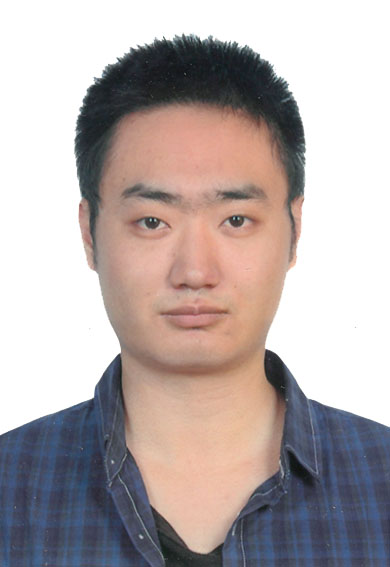 Xin Dai合作论文数Department of Computer Science, Worcester Polytechnic Institute2
 Fei Wang合作论文数IBM Almaden Research Center2
 Alexander Kotov合作论文数Department of Computer Science, Wayne State University2
 Dilpreet Singh合作论文数Wayne State University2Zhichao Xu合作论文数1Mingzhi Hu合作论文数1
 Chia-Yuan Chang合作论文数Amazon Rufus Team;Department of Computer Science and Engineering, Texas A&M University1
 Weijieying Ren合作论文数College of Information Sciences and Technology, Pennsylvania State University1
 Nur Shazwani Kamarudin合作论文数Universiti Malaysia Pahang1Mangesh Bendre合作论文数Visa Res, Palo Alto, CA USA1Ajith Pudiyavitil合作论文数1Niranjan Jadhav合作论文数Wayne State University, Detroit, MI, USA1
 Raha Moraffah合作论文数1
 Kevin Wang合作论文数University of Texas at Dallas1
 Aman Ahuja合作论文数Virginia Tech1
 Yuzhong Chen (陈羽中)合作论文数College of Computer and Data Science, Fuzhou University1
 Emanuele Bugliarello合作论文数Google DeepMind1Weicong Ding合作论文数1
 Rein (Yuhang) Wu合作论文数PredX.Ai;IndicatorLab1
 Kai Shu合作论文数Department of Computer Science, College of Arts and Sciences, Emory University1
 Yan Li合作论文数Apple1
 Yusan Lin合作论文数Mirror Mirror AI1
 Ghazaleh Beigi合作论文数Arizona State Univesity Tempe1
 Guanchu (Gary) Wang (王冠楚)合作论文数Department of Computer Science, Rice University1
 Huiyuan Chen合作论文数Amazon1
 Zhimeng (Stephen) Jiang合作论文数Visa Research1




