Contaminated industrial sites are important sources of pollution and may result in ecotoxicological effects on terrestrial, aquatic and groundwater ecosystems. An effect-based approach to evaluate and assess pollution-induced degradation due to contaminated groundwater was carried out in this study. The new concept, referred to as “Groundwater Quality TRIAD-like” (GwQT) approach, is adapted from classical TRIAD approaches. GwQT is based on measurements of chemical concentrations, laboratory toxicity tests and physico-chemical analyses. These components are combined in the GwQT using qualitative and quantitative (using zero to one subindices) integration approaches. The TRIAD approach is applied for the first time on groundwater from one former industrial site located in Belgium. This approach will allow the classification of sites into categories according to the degree of contaminant-induced degradation. This new concept is a starting point for groundwater characterization and is open for improvement and adjustment.
Among the different analytical tools proposed as an alternative to the very expensive gas chromatography high-resolution mass spectrometry (GC-HRMS) analyses of polychlorodibenzo-p-dioxin and polychlorodibenzofurans, Chemically Activated LUciferase gene eXpression (CALUX) in vitro cell bioassay is very promising. It allows the analyses of a high number of samples since it is relatively fast, inexpensive, and sensitive. However, this technique is not yet widely applied for screening or environmental monitoring. The main reasons are probably the lack of validation and the difficulty in interpreting the global biological response of the bioassay. In this paper, the strict quality control criteria set up for the validation of CALUX are described. The validation has shown good repeatability (relative standard deviation (RSD) = 9%) and good within-lab reproducibility (RSD = 15%) of the results. The quantification limit, in the conditions applied in this paper, is 1.25 pg CALUX-TEQ/g fat. Comparison of CALUX and GC-HRMS analysis was made forvarious marine matrixes (fishes, mussels, starfishes, sea birds, and marine mammals). Good correlations are usually observed, but there are systematic differences between the results. Attempts are made to identify the origin of the discrepancy between the two methods.
Introduction As apex predators, marine mammals are very important for the regulation of ecosystems. Their survival and diversity in the Northeast Atlantic Ocean is at risk due to past whaling activities, current overfishing of their prey as well as their own accidental capture in fishing nets. To this must be added an intoxication by anthropogenic pollutants which end up accumulating in marine mammal tissues due to their long life span and the long half-life of these contaminants (i.e. organohalogens, heavy metals). These animals are rather unique in their ability to accumulate fatty reserves (particularly in sub-cutaneous fat, or blubber). They are characterized by a growing exposure to pollutants with age, and their young are subject to lipophilic pollutants (via lactation or the placenta). High concentrations of contaminants (trace metals, organochlorines) have been observed in stranded animals, including harbour porpoises 2,3 . These observations have caught the scientific community’s attention on the possible relation between these pollutants and the decline of several populations such as that of the harbour porpoise Phocoena phocoena in the North and Baltic Seas.
Introduction The CALUX technique is often presented as a promising screening method for compulsory control of PCDD/F norms in food and feed. CALUX analyses can also be used for the measurement of dioxin-like toxicity in environmental samples, which are not subjected to normative values. For that purpose, severe quality control must be applied to avoid measurement biases. Combination of different clean-up steps can give valuable information on compounds responsible of the dioxinlike toxicity. Moreover, comparison of the CALUX and GC-MS measurements will give additional information. This paper discusses the validation of the CALUX technique for marine samples. Results obtained for mussels, starfishes and common porpoises are presented and compared with GC-HRMS results.
most toxic dioxin and furan congeners, a series of molecules recognized as highly detrimental. Levels of dioxin and furan congeners detected in the livers of the common guillemots are more specifically studied when considering the general body condition or robustness of the individuals. In addition, samples of guillemots collected after the Erika’s oil spill off the Brittany coasts (France) were available for toxicological analyses. Such a sample of robust individuals representative of the living population at sea provided a highly interesting toxicological comparison not only on the geographical level but also regarding the influence of robustness on polluants’tissue distribution. Materials and methods A total of 39 male guillemots were selected for the toxicological analysis. All were collected as dead stranded animals during the wintering seasons from 1993 to 2002. Twenty-one individuals washed ashore along the Belgian coast while the remaining 18 were sampled after the Erika’s oil spill in December 1999 off the Brittany coasts. The latter were completely covered with oil. All fresh carcasses were necropsied following a standardised protocol 13 . Emaciation (cachexia) was evaluated using visible signs - presence or not of subcutaneous fat, light to severe atrophy of the pectoral muscles- and given a range from 1 to 3 depending on its severity. Non cachectic and severely cachectic individuals of both geographic origins are considered. Livers were collected, weighed and kept frozen (-18° C) prior to toxicological analyses. All analyses were carried out in the Laboratory of Mass Spectrometry, Centre for the Analysis of Trace Residues (CART), University of Liege. Five to six grams of liver samples were weighed and lyophilised. Dry tissues were inserted in a steel extraction cell and placed in the Accelerated Solvent Extractor (ASE 200, Dionex). This machine using organic solvents operates under high pressure and temperature conditions (10 minutes at 125°C and 1500psi) and allows the extraction of the different organic compounds present in the biological matrice. After filtration on Na 2SO4
Marine primary productivity, mainly controlled by penetration of light, temperature, availability of nutrients and vertical stability of the water masses, displays an important vertical and horizontal heterogeneity. The distribution of marine mammals and seabirds is closely related to the areas of high primary and secondary productivity. Being K-selected species, they are likely to have the greatest effect in structuring the ecosystem they are living in. Some species compete with fisheries, while others obviously do not, and yet others partly compete but could be useful to fisheries to regulate the development of non-commercial species, thereby limiting excessive competition with the commercial ones.
 Jean-Marie Bouquegneau合作论文数16
 Sylvie Gobert合作论文数Institut de Chimie, Université de Liège9
 Krishna Das合作论文数Lab Oceanol, Univ Liege8
 Gauthier Eppe合作论文数Faculty of Sciences, University of Liege7
 Claude Joiris合作论文数6
 Thierry Jauniaux合作论文数Faculty of Veterinary Medicine, B43 Liège University6Anne-Cecile Massart合作论文数6
 Edwin De Pauw合作论文数Département de Chimie, Faculté des Sciences, Université de Liège5Céline Xhrouet合作论文数5Ludo Holsbeek合作论文数5Isabelle Windal合作论文数4sophie crevecoeur合作论文数3
 Jean-Pierre Thomé合作论文数Laboratory of Animal Ecology and Ecotoxicology, Université de Liège3
 Gilles Lepoint合作论文数MARE Centre, University of Liège3
 Bruno Danis合作论文数Laboratoire de Biologie Marine (CP 160/15), Université Libre de Bruxelles3Jean-Pierre Nellissen合作论文数3juliette dujardin合作论文数2Van Wouwe Nathalie合作论文数2
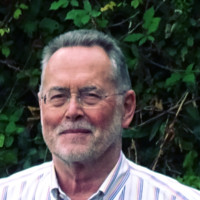 Leo Goeyens合作论文数Vrije Universiteit Brussel;Life and Chemistry Office2
 Cecile Herivaux合作论文数BRGM (French Geological Survey), Water Department, 1039 rue de Pinville, 34000 Montpellier, France. c.herivaux@brgm.fr2
 Alain Dassargues合作论文数Hydrogeology and Engineering Geology Group, Katholieke Universiteit Leuven2
 Okke Batelaan合作论文数Department of Hydrology and Hydraulic Engineering;Universiteit Brussel;Department of Hydrology and Hydraulic Engineering, Universiteit Brussel2Freddy Coignoul合作论文数2
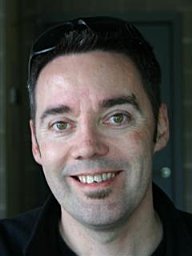 Frank Canters合作论文数GIS Research Unit;Department of Geography;Universiteit Brussel;Department of Geography, Universiteit Brussel2
 Willy Baeyens合作论文数Vrije Universiteit Brussel2
 Serge Brouyere合作论文数university of liege2nathalie antoine合作论文数1
 Patrick J. Martin合作论文数1Pillet Stéphane合作论文数1Joaquim-Justo Célia合作论文数1Patrick Roose合作论文数1Winnie Dejonghe合作论文数1Stéphane Havelange合作论文数1
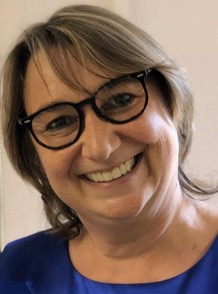 Marie-Louise Scippo合作论文数Département De Sciences Des Denrées Alimentaires, Faculté De Médecine Vétérinaire, University of Liege1Ishaque B. Ali合作论文数1
 Eric W. M. Stienen合作论文数Research Institute for Nature and Forest1
 Ilse P Van Overmeire合作论文数1
 Patrick Dauby合作论文数University of Liége Oceanology B6c, 3 allée de la Chimie Liége B-4000 Belgium1
 Jan Haelters合作论文数1
 Cristina Beans合作论文数1Sophie Carbonnelle合作论文数1Michele Bossicart合作论文数1
 German Tapia合作论文数Laboratory for Ecotoxicology and Polar Ecology, Free University of Brussels (VUB),1




