The results of 3-D computer modeling of the total scattering cross section (TSCS) and the extinction cross section (ECS) for various silver nanoparticle structures in the optical band are presented. For modeling an electrodynamic method based on solving the set of Müller boundary integral equations (IEs) was used. The developed calculation techniques involve calculation of the electromagnetic (EM) responses of nanoparticle groups while taking into account their EM interaction, and allow studying the optical properties of 3-D nanoparticle structures of various configurations. Such results are important at the stage of creating nanomaterials with specified properties.
A method is proposed to calculate the three-dimensional scattering of a plane electromagnetic (EM) wave by multiple nanoparticles in the optical band. The calculation method is based on the solution of a integral equation set. Ellipsoidal nanoparticles with the permittivity of silver and different electrical sizes are considered. The model of two nanoparticles with a fixed distance between them is studied at different angles of incidence and polarization of the sounding wave. The calculation results for total scattering crosssection (TSCS), extinction crosssection (ECS) and absorption crosssection (ACS) were obtained. Results of comparison with similar results for a single nanoparticle are demonstrated. The obtained computer simulation data confirm the availability of resonance effects (surface plasmons) in the studied nanostructures.
Using the methods of mathematical modeling, the values of the radar cross section (RCS) of the Su-27 aircraft model and trihedral corner reflectors in the high-frequency wavelength range were obtained. The scattering characteristics are estimated for trihedral corner reflectors that used as the main scattering element in the proposed model of an airborne radar decoy. The presented results show that in order to obtain sufficiently high values of the RCS of a radar decoy when probing from the front hemisphere, it is necessary to use a “quadruple” corner reflector. If it is necessary to simulate the exact median values of the RCS of a real object in a narrower range of irradiation angles, then it is better to use one tilted corner reflector. It is reasonable to use the obtained results at the developing aerial decoys to simulate the scattering of various complex aerodynamic objects, if corner reflectors are used as a reflective element.
For the extremely high frequency band, the analysis of the values of radar cross section for artificial dielectric toroidal vortices is carried out. Fast asymptotic method for calculating the scattering diagram of toroidal vortices of large electrical dimensions is developed. It is shown that the radar cross section growth for toroidal vortices decelerates with increasing frequency and the average radar cross section tends to some limiting values.
the method that allows to calculate the direction finding errors for radar objects with complex shape is proposed for case that direction-finder is placed in near zone of scatterer with huge electric sizes. It is shown that main reason for errors is amplitude-phase field distribution distortions in aperture of received antenna. For all that the angle distortions increase with reducing distance to object and can be significant. At the modern stage the radar equipment development is defined by general direction to increase accuracy of object parameters determination. In the case when object dimensions are bigger than sounding signal wavelength it is possibility to account the spatial greatness of complex shape real radar targets: aircrafts, ships, cars. Thus for series of radar problem it is necessary to have a priopi information about behavior of scattered electromagnetic field in the near zone of such objects.
Methods for modelling the radar scattering characteristics of resonance-size airborne objects containing metallic and dielectric design elements are discussed. The developed algorithms are based on solving Fredholm second-kind boundary integral equations (IEs) that place them within the context of the method of analytical regularisation. The magnetic field IE is used for metal elements, and the Müller IE set is used for dielectric elements. The proposed algorithms provide important novelties in calculating the radar scattering characteristics of objects with various curvature radii, including electrically thin scatterers. The description is accompanied by an analysis of developed algorithm convergence. For the validation, a comparison of results for model object obtained by different methods is presented. The results of modelling the radar scattering characteristics of an unmanned aerial vehicle and its separate metallic and dielectric elements within the VHF and S frequency bands are demonstrated and discussed.
One of the possible physical mechanisms of so-called “angel” echoes, not visually observed radar discrete reflections from objects, is considered. The vortex flows can be the cause of “angel” echoes. They take out some volume of air with certain radiophysical parameters into the region of space with other radiophysical parameters of the air. Toroidal vortices (vortex rings) have a fairly long lifetime and can move to considerable distances without destruction. The calculation of radio wave scattering diagrams by vortex rings by modern universal programs designed to solve electrodynamic problems and based on the method of moments requires significant computational and time resources. The asymptotic calculation method of the electromagnetic waves scattering by dielectric toroidal formations of large radius is developed. Simulation and comparison of its results with calculations in Altair Feko is carried out, and their well coincidence is shown. The monostatic and bistatic effective scattering areas of vortex rings are calculated for interesting cases in practice. The calculation results for the monostatic location good enough coincide with the results of known experimental works.
The inflatable dielectric lifting-turning device is considered for radar cross section ground measurement of aerial objects. The proposed calculation method is based on physical optics approach. The method is intended for electromagnetic scattering calculation of considered dielectric device. The device shell is formed from toruses with big electrical sizes. The calculation results for the device radar cross section are mentioned for centimeter wave range. The engineering solutions are discussed to reduce device backscattering.
We present and discuss a numerical method for the computation of radiation characteristics of the aperture antennas protected with various dielectric radomes. This method enables one to calculate the field, radiated from an aperture in a perfectly absorbing screen in the presence of a radome or some other scattering object. Using this method, we obtain the far-field radiation patterns for sample antennas with dielectric radomes of several shapes. The method allows selecting the thickness of radome that is optimal for minimizing the signal distortions caused by the protective radome. It can also be applied in the numerical design of two-layer radomes.
A combined electrodynamic method for calculating the scattering characteristics of radar objects with complex shape is proposed. Objects can contain structural elements of different electric sizes. The proposed algorithm is based on the joint use of the high-frequency method for calculation of scattering characteristics of electrically large structural elements and the method of integral equations for parts commensurate to the wavelength, including electrically thin ones. The combined method advantages are demonstrated with the calculation of helicopter rotor modulation spectra in the VHF band.
A method for evaluating the share of scattering component related to structural components of unmanned air vehicle (UAV) in the field scattered by the UAV is proposed. The method takes into account the scattering interaction of the UAV's dielectric hull with perfectly conducting elements under the hull as well as the scattering contribution of its dielectric components into the scattered field. The latter contributions are evaluated based on the methods of short-wave diffraction. The model of UAV has been designed that includes both metallic elements and dielectric hull. Scattering simulation results are obtained and the UAV model's scattering characteristics are analysed.
The high-frequency approximation of the pulse characteristic is calculated as a response of a radar object of complex shape to a short pulse, all the energy of which is concentrated near some frequency. The high-resolution range profiles are obtained with the convolution operation of the calculated high-frequency approximation of pulse characteristic and the sounding signal, all the energy of which is also concentrated near the same frequency. The calculated high-resolution range profiles are compared with the profiles obtained by inverse Fourier transform from the frequency response of considered object. The calculation time gain of the proposed approach in comparison with the classical one is estimated.
On the basis of the developed by the authors of [1,2] method for calculation of the secondary radiation from the ground-based objects (possibly with the radar absorbing coatings) it is created the algorithm of partial coating of the object with the radar absorbing material (the "camouflage") in a way that the value of the average effective scattering cross-section (ESCS) of the object within the given angular range of irradiation is maximally close to the average ESCS of the "shadowed" by the object section of the substrate (background) surface. Therefore, the developed method allows making the object maximally invisible ("non-contrast") for the means of radar survey. Relevant calculations for angular ranges of the irradiation and the substrate surface with different level of roughness are provided for the tank model.
The procedure of partly coating ("camouflage") is created for ground objects. The procedure is based on calculation method developed by authors earlier [1], [2], [3] for obtaining scattering characteristics of ground objects (possibly with radar absorbing coating). The procedure uses partly coating of object by radar absorbing material for changing (reducing) the mean radar cross-section in some aspect angle range. Selecting some object partly coating this mean value is made at most closer to mean radar cross-section of ground part which is shadowed by object. In this way the proposed method allows to make ground object at most inconspicuous (low-contrast) for radars. The numerical calculations for tank model are carried out for different angle ranges and ground surface with various roughness.
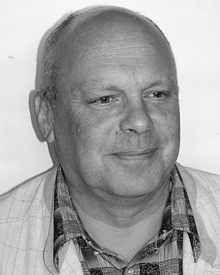 O. I. Sukharevsky合作论文数30
 Nechitaylo, S.合作论文数16
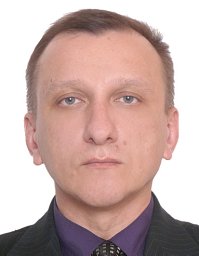 G. S. Zalevsky合作论文数Kharkiv Air Force University9Valery Orlenko合作论文数7Ryapolov, I.合作论文数7Stanislav Horielyshev合作论文数2Alexander Maslovskiy合作论文数Dept Theoret Radiophys, Kharkov Natl Univ2
 Misailov, V.L.合作论文数2a z sazonov合作论文数1Valerii Patalakha合作论文数1Sergey V. Nechitailo合作论文数1
 Kostiantyn Tkachuk合作论文数1А.Ф. Волков合作论文数Ivan Kozhedub Kharkiv National Air Force University1
 Valerii Orlenko合作论文数1
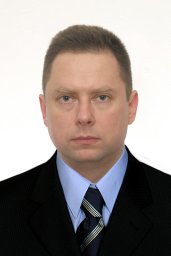 Pavlo Open’ko合作论文数Sci Res Lab, Ivan Cherniakhovskyi Natl Def Univ Ukraine1
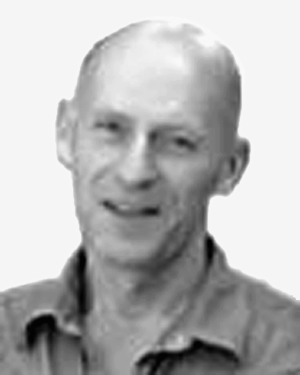 Khlopov, G.I.合作论文数1Brechka, M.M.合作论文数1A. V. Muzychenko合作论文数1




