This study investigates the feasibility of using electrodermal activity (EDA) and electrocardiographic (ECG) signals measured at the upper arm for assessing cognitive stress. The relatively small sample size (n = 10) was intentional, given the feasibility study scope aimed at evaluating the capability of the proposed system to detect changes across conditions. An arithmetic protocol with four consecutive phases (relaxation, mild, moderate, and high stress) was used to induce controlled levels of cognitive load. Physiological features, including tonic EDA level, tonic slope, number of phasic peaks, heart rate (HR), and heart rate variability (HRV), were analyzed, along with self-assessed stress ratings. The results showed significant effects of condition for all EDA-derived features and HR, indicating increased physiological activation with higher stress levels. In contrast, HRV did not exhibit significant changes across conditions. Post-hoc analyses revealed that the most pronounced differences occurred between relaxation and higher stress levels, while differences between moderate and high stress were less consistent. Subjective stress ratings increased significantly with task difficulty, confirming the effectiveness of the experimental protocol. Although the upper arm is not a standard measurement site for such measurements, the findings demonstrate that it can provide meaningful information about physiological changes. However, the results also suggest that combining multiple physiological signals may be necessary for more reliable and robust stress assessment.
This paper presents the development and validation of a novel stretchable dry hybrid electrode for electrotactile stimulation and EMG recording, designed for integration into prosthetic socket liners. Three electrode prototypes were compared: (1) dry stretchable electrode; (2) electrode with elevated pads via plastic layering beneath; (3) electrode with 3D-printed conductive plastic atop the pads. Six able-bodies subjects were recruited to assess the active stimulation range and subjective comfort and preference. Electrodes 1 and 3 showed comparable sensation and discomfort thresholds (1.1-4.1 mA), while electrode 2 exhibited a reduced dynamic range and higher pad failure rate. Four out of six participants preferred electrode 1. A prolonged 6-hour test with electrode 1 confirmed stable stimulation thresholds over time in a single subject. The initial results indicate the feasibility of novel dry textile-integrated electrodes for providing feedback in closed-loop applications.
Wearable sensors have enabled continuous cardiometabolic monitoring, revolutionizing the field. In this paper, we review the current state of the art and introduce a system based on textile-integrated printed electrode array that enables multimodal measurements. We aim to capture ECG-derived parameters, electrodermal activity, skin temperature and key electrochemical analytes from sweat (sodium and potassium ions). Integrated into garments for comfort and wearability, our system aims to advance wearable healthcare technologies and improves long-term monitoring solutions.
This paper presents results of the SIXTHSENSE project, a research and innovation action within the H2020 program, aiming to develop new methods for unobtrusive monitoring of first responders based on multimodal sensing. The goal is to determine Heart Rate signal from ECG recorded by a multi sensor smart patch in the specific conditions the first responders are facing on their deployments. In addition to the challenges commonly faced when processing ECG signals recorded by wearables in high intensity activities, the work presented tackles the issues of noise generated by active sensors collocated with the ECG electrodes. Furthermore, the ergonomic requirements of the targeted users, namely firefighters and mountain rescuers, imposed positioning the multi sensor smart patch on the user’s back, making the analysis of recorder ECG signal more challenging. Initial experiments were conducted to determine the optimal electrode position on the back for ECG recording, and the design of the patch that would allow robust measurement of the signals, while not impeding the user during intense physical activity.Analysis of different algorithms for ECG signal processing was performed, considering both the specific distortions for ECG signals recorded on the back, and the effects of active system modules on the acquisition, namely electrotactile stimulation and iontophoretic analyte extraction.The prosposed multi sensor patch design and processing algorithm are presented and demonstrated in experiments simulating relevant conditions for the application of interest.
This paper presents the first successful implementation of fully printed electronics for flexible and wearable smart multi-pad stimulation electrodes intended for use in medical, sports and lifestyle applications. The smart multi-pad electrodes with the electronic circuits based on organic electrochemical transistor (OECT)-based electronic circuits comprising the 3–8 decoder for active pad selection and high current throughput transistors for switching were produced by multi-layer screen printing. Devices with different architectures of switching transistors were tested in relevant conditions for electrical stimulation applications. An automated testbed with a configurable stimulation source and an adjustable human model equivalent circuit was developed for this purpose. Three of the proposed architectures successfully routed electrical currents of up to 15 mA at an output voltage of 30 V, while one was reliably performing even at 40 V. The presented results demonstrate feasibility of the concept in a range of conditions relevant to several applications of electrical stimulation.
We present a hand functions assessment system (BEAGLE) for kinematic tracking of hand and finger movements, envisioned as a technology-mediated rehabilitation tool.The system is custom-designed for fast and easy placement on an impaired hand (spastic or flaccid), featuring inertial sensors integrated into simple finger caps and a hand strap.An algorithm for a range of motion (ROM) estimation was implemented to provide an objective assessment of hand functions.The efficacy and feasibility of the BEAGLE system were examined in a pilot clinical study performed with ten stroke survivors in the subacute phase.Participants received therapy within two consecutive intensity-matched rehabilitation cycles.The first consisted of conventional therapy, while the second involved a combination of conventional therapy and advanced functional electrical stimulation.Assessments were performed before and after each phase.These included BEAGLE estimates of active voluntary ROM for wrist and various digits, as well as two referent clinical measures for hand functions assessment, Fugl-Meyer and Action Research Arm Test.The results indicate that the ROM assessments can detect change with sensitivity comparable to the standardized clinical scales.Statistically significant changes between the beginning and the end of the second cycle existed in all observed measures, whereas none of these measurements showed a statistically significant improvement in the first therapy cycle.The noted usability metrics indicate that the BEAGLE could be integrated into the rehabilitation workflow in a clinical environment.
The purpose of this paper is to emphasize the importance of in-air movement besides on-surface movement for handwriting analysis. The proposed method uses a classification of drawing healthy subjects and subjects with Parkinson's disease, according to their on-surface and in-air handwriting parameters during their writing on a graphical tablet. Experimental results on real data sets demonstrate that the highest accuracy of subject's classification was obtained by combining both on-surface and in-air kinematic parameters.
The goal of this study was to investigate surface motor activation zones and their temporal variability using an advanced multi-pad functional electrical stimulation system. With this system motor responses are elicited through concurrent activation of electrode matrix pads collectively termed "virtual electrodes" (VEs) with appropriate stimulation parameters. We observed VEs used to produce selective wrist, finger, and thumb extension movements in 20 therapy sessions of 12 hemiplegic stroke patients. The VEs which produce these three selective movements were created manually on the ergonomic multi-pad electrode by experienced clinicians based on visual inspection of the muscle responses. Individual results indicated that changes in VE configuration were required each session for all patients and that overlap in joint movements was evident between some VEs. However, by analyzing group data, we defined the probability distribution over the electrode surface for the three VEs of interest. Furthermore, through Bayesian logic we obtained preferred stimulation zones that are in accordance with our previously reported heuristically obtained results. We have also analyzed the number of active pads and stimulation amplitudes for these three VEs. Presented results provide a basis for an automated electrode calibration algorithm built on a priori knowledge or the starting point for manual selection of stimulation points.
Objective. The aim of the present work was to develop and test a flexible electrotactile stimulation system to provide real-time feedback to the prosthesis user. The system requirements were to accommodate the capabilities of advanced multi-DOF myoelectric hand prostheses and transmit the feedback variables (proprioception and force) using intuitive coding, with high resolution and after minimal training. Approach. We developed a fully-programmable and integrated electrotactile interface supporting time and space distributed stimulation over custom designed flexible array electrodes. The system implements low-level access to individual stimulation channels as well as a set of high-level mapping functions translating the state of a multi-DoF prosthesis (aperture, grasping force, wrist rotation) into a set of predefined dynamic stimulation profiles. The system was evaluated using discrimination tests employing spatial and frequency coding (10 able-bodied subjects) and dynamic patterns (10 able-bodied and 6 amputee subjects). The outcome measure was the success rate (SR) in discrimination. Main results. The more practical electrode with the common anode configuration performed similarly to the more usual concentric arrangement. The subjects could discriminate six spatial and four frequency levels with SR >90% after a few minutes of training, whereas the performance significantly deteriorated for more levels. The dynamic patterns were intuitive for the subjects, although amputees showed lower SR than able-bodied individuals (86% ± 10% versus 99% ± 3%). Significance. The tests demonstrated that the system was easy to setup and apply. The design and resolution of the multipad electrode was evaluated. Importantly, the novel dynamic patterns, which were successfully tested, can be superimposed to transmit multiple feedback variables intuitively and simultaneously. This is especially relevant for closing the loop in modern multifunction prostheses. Therefore, the proposed system is convenient for practical applications and can be used to implement sensory perception training and/or closed-loop control of myoelectric prostheses, providing grasping force and proprioceptive feedback.
Changes in the default mode network (DMN) activity are early features of Alzheimer’s disease (AD) and may be linked to AD-specific Aβ pathology.Cognitive profiles; DMN connectivity alterations; and cerebrospinal fluid (CSF) amyloid beta (Aβ)1–42, total tau, phosphorylated tau 181, and α-synuclein levels were studied in 21 patients with AD and 10 controls.DMN activity is altered in AD. Posterior cingulate cortex (PCC) functional connectivity with other parts of DMN was related to cognitive function scores. The reduction of connectivity of the dorsal PCC with the retrosplenial cortex on the right side was closely related to decreased CSF Aβ1–42 levels in patients with AD.The dorsal PCC and retrosplenial cortex may have special importance in the pathogenesis and cognitive findings of AD.
The purpose of this study was to examine surface motor activation zones for wrist, fingers and thumb extension movements and their temporal change during 20 therapy sessions using advanced multi-pad functional electrical stimulation system. Results from four hemiplegic patients indicate that certain zones have higher probability of eliciting each of the target movements. However, mutual overlap and variations of the zones are present not just between the subjects, but also on the intrasubject level, reflected through these session to session transformations of the selected virtual electrodes. The obtained results could be used as a priori knowledge for semiautomated optimization algorithm and could shorten the time required for calibration of the multi-pad electrode.
Providing somatosensory feedback to the user of a myoelectric prosthesis is an important goal since it can improve the utility as well as facilitate the embodiment of the assistive system. Most often, the grasping force was selected as the feedback variable and communicated through one or more individual single channel stimulation units (e.g., electrodes, vibration motors). In the present study, an integrated, compact, multichannel solution comprising an array electrode and a programmable stimulator was presented. Two coding schemes (15 levels), spatial and mixed (spatial and frequency) modulation, were tested in able-bodied subjects, psychometrically and in force control with routine grasping and force tracking using real and simulated prosthesis. The results demonstrated that mixed and spatial coding, although substantially different in psychometric tests, resulted in a similar performance during both force control tasks. Furthermore, the ideal, visual feedback was not better than the tactile feedback in routine grasping. To explain the observed results, a conceptual model was proposed emphasizing that the performance depends on multiple factors, including feedback uncertainty, nature of the task and the reliability of the feedforward control. The study outcomes, specific conclusions and the general model, are relevant for the design of closed-loop myoelectric prostheses utilizing tactile feedback.
The purpose of this study was to examine surface motor activation zones for wrist, fingers and thumb extension movements and their temporal change during 20 therapy sessions using advanced multi-pad functional electrical stimulation system. Results from four hemiplegic patients indicate that certain zones have higher probability of eliciting each of the target movements. However, mutual overlap and variations of the zones are present not just between the subjects, but also on the intrasubject level, reflected through these session to session transformations of the selected virtual electrodes. The obtained results could be used as a priori knowledge for semi-automated optimization algorithm and could shorten the time required for calibration of the multi-pad electrode.
In this paper, we present the methodology for evaluation of kinematic parameters obtained from on-surface and in-air handwriting movements by implementing the information theory and the multi-class linear discriminant analysis. The study included 41 healthy subjects which task was to write on the digitalized tablet. Results of handwriting the two words in Serbian Latin alphabet (Tia řolaj) suggest that kinematic features obtained from in-air trajectories is as important as handwriting features obtained from on-surface trajectories for handwriting classification.
We recorded H-reflex using 4 × 4 multi-pad EMG electrodes on muscle Soleus from 4 healthy subjects. The results indicate that the new proposed method of recording H-reflex provides more information than standard bipolar or unipolar EMG recording, since it enables spatial and temporal parameters assessment. We have developed an algorithm which can automatically select the H-reflex with maximum peak to peak amplitude. We also examined the H-reflex propagation by the use of EMG topography map based on the latency.
 Matija Strbac合作论文数11
 Miloš Kostić合作论文数7
 Thierry Keller合作论文数Fatronik Foundation7
 Konstantinović Ljubica合作论文数Clinic for Physical Medicine and Rehabilitation "dr M. Zotović", Belgrade, Serbia.;Clinic for Physical Medicine and Rehabilitation "dr M. Zotović"5
 Jovana Malešević合作论文数Elektrotehnicki Fakultet u Beogradu;c;Elektrotehnicki Fakultet u Beogradu5
 Milica Baljic合作论文数Tecnalia Serbia Ltd4
 Goran Bijelic合作论文数4
 Aleksandra Vidaković合作论文数3
 Vera Miler合作论文数Sch. of Electr. Eng., Univ. of Belgrade;c;Sch. of Electr. Eng., Univ. of Belgrade3
 Strahinja Dosen合作论文数Department of Health Science and Technology, Aalborg University3
 Mirjana B. Popovic合作论文数Department of Health Science and Technology, Aalborg University3Suzana Dedijer合作论文数2
 Minja Belic合作论文数Novelic2
 Marko Markovic合作论文数2
 Nadica Miljković合作论文数The Department of Signals and Systems, School of Electrical Engineering, University of Belgrade;Laboratory for Research of Individual Differences2
 Dario Farina合作论文数Department of Bioengineering, Faculty of Engineering, Imperial College London2Suzana Dedijer Dujovic合作论文数1Olivera C. Đorđević合作论文数1A. Lakic合作论文数1
 Igor Popović合作论文数1Tijana Djukić合作论文数1Nataša Dragašević Mišković合作论文数1
 Dejan Stevanovic合作论文数1
 Tanja Boljanic合作论文数1Savo D Icagic合作论文数1
 Nikola Ivancevic合作论文数Clinic of Neurology and Psychiatry for Children and Youth, Dr. Subotica 6a, 11000, Belgrade, Serbia1Jan Strandberg合作论文数1
 Blazo Nikolic合作论文数Clinic of Neurology and Psychiatry for Children and Youth, Dr. Subotica 6a, 11000, Belgrade, Serbia1
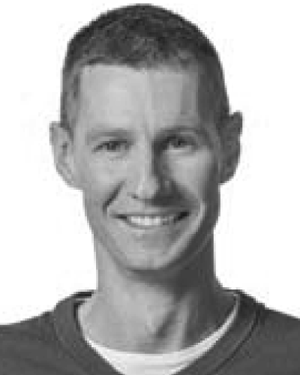 Peter Andersson Ersman合作论文数1
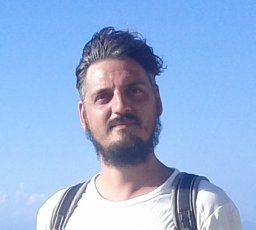 Nebojsa Malesevic合作论文数Fac. of Electr. Eng., Univ. of Belgrade;c;Fac. of Electr. Eng., Univ. of Belgrade1
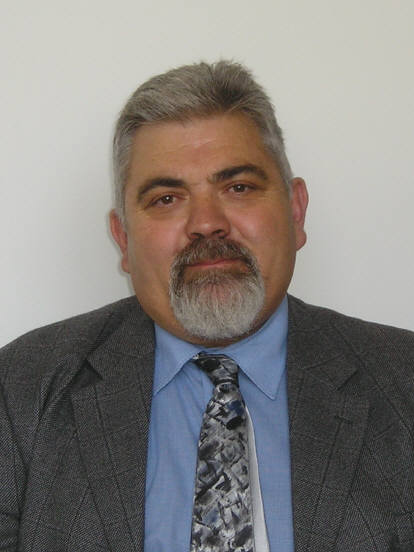 Dejan B. Popovic合作论文数Department of Health Science and Technology, The Faculty of Medicine Neurorehabilitation Systems, Aalborg Universitet1Mulla Mohammad Yusuf合作论文数Dipartimento Chim, Univ Bari Aldo Moro1Djordjevic Olivera合作论文数1
 Milutin Radotic合作论文数1
 Jasna Jancic合作论文数Clinic for Neurology and Psychiatry for Children and Youth, Faculty of Medicine, University of Belgrade1
 Vladimir S. Kostić合作论文数Institute of Neurology, School of Medicine, University of Belgrade;Department of Medical Sciences, Serbian Academy of Sciences and Arts1
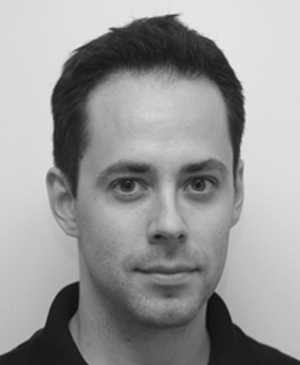 Lars Herlogsson合作论文数1




