A small library of bis- and tetraamides was synthesized by the Ugi reaction with α-ketoglutaric acid, tert-butyl isocyanide, aromatic aldehydes, and aromatic amines. When o-azidoanilines were used, azidated peptidomimetics were obtained, the post-cyclization of which by the aza-Wittig reaction yielded a series of substituted 3-(3-oxo-3,4-dihydroquinoxalin-2-yl)propanoic acids containing a pharmacophore quinoxalinone moiety. The tandem Ugi/aza-Wittig combination was also carried out in a one-pot procedure without isolation of the intermediate.
Novel peptidomimetics containing a pyrrolone fragment were synthesized by a tandem combination of Doebner and Ugi-type multicomponent reactions with controlled diastereoselectivity. This approach represents a convenient synthesis in the temperature range from 25 °C to 45 °C. In most cases, the new method allowed each diastereomer to be isolated separately.
The highly unstable 1-methylcyclopropene (1-MCP) is used as an agrochemical in the form of supramolecular complexes with various receptors to extend the shelf life of fruits and vegetables. To control the content of 1-MCP in the complex with cucurbit[6]uril, a new analytical method involving the release of 1-MCP from the complex, its chemical transformation into a more stable derivative, and subsequent HPLC analysis of the latter was developed in this study. The reaction of 1-MCP with dimethyl acetylenedicarboxylate leading to the formation of dimethyl 2-(2-methylcycloprop-2en-1-yl)maleate was adopted from the literature, but the reaction conditions were significantly improved, making it suitable for routine analyses. To make this reaction suitable for the quantitative determination of 1-MCP in complex with cucurbit[6]uril, a multistep procedure was developed that allows the release of the gas from the complex upon dissolution, extraction and derivatization of 1-MCP in a suitable organic solvent, separation, evaporation and drying of the organic layer, and analysis of the residue (crude dimethyl 2-(2-methylcycloprop-2en-1-yl)maleate) by high-performance liquid chromatography (HPLC). The elaborated methodology allows reliable quantitative determination of 1-MCP in a supramolecular complex with cucurbit[6]uril, involving a relatively simple synthesis procedure using commercially available reagents and subsequent HPLC analysis of the derivative, which is non-volatile and stable for at least 10 days under normal storage conditions.
Only few efficient methods for the preparation of polyazoles containing three or four nitrogen atoms in each azole cycle exist. We have developed a novel synthetic strategy that allows the sequential assembly of 1,2,3-triazole, 1,2,4-triazole, and tetrazole fragments into a new stable polyazole. Along the novel strategy, some known procedures have been optimized to achieve better conversion, selectivity, and, in general, overall efficiency.
The study is dedicated to the development of novel techniques for the synthesis and analysis of supramolecular complex of 1-methylcyclopropene and cucurbit[6]uril, with a view of further development of new agricultural products, e.g. Oberigpro and others, for fruit and vegetable treatment. Synthetic procedures were significantly improved at all stages allowing time and feedstock saving, as well as process efficacy and ecological aspect enhancement. Robust analytical procedure for 1-methylcyclopropene assaying was developed with the use of high performance liquid chromatography and chemical derivatization of 1-methylcyclopropene. Moreover, the release of the active compound from the complex was considerably increased, and high complex stability under various conditions was shown. In general, the study performed allowed making Oberigpro one of the most effective products for practical application among the existing analogs, and paved the way for further development of new agricultural products with controlled action.
Three‐component synthesis of 5‐substituted 6‐acetyl‐2‐amino‐7‐methyl‐5,8‐dihydropyrido[2,3‐d]pyrimidines was brought to facile energy‐efficient and environmental‐friendly conditions using multicomponent reaction, microwave field as an activation method and hot water as a solvent. A series of the target compounds was synthesized using the developed procedure.
Created are the sorbents based on Silica gel non-covolently modified with partially hydrogenated heterocyclic compounds (PHHC), containing nitrogen as donor atoms for purification of aqueous media from technogenic contaminants. The investigations show that the modified silica gel is characterized by a sorption capacity relatively higher than that of unmodified one. The sorption degree of metal ions is studied depending on their concentrations, total mineralization and pH value of the solutions. Conditions for selective sorption of microquantities of Eu3+ which has been used as chemically identical to Am-241 are described. Moreover it was shown that PHHC-modified silica gel was potential to use as the sorbent to concentrate the Eu3+ and Sr2+ metal ions with :initial concentrations near 1 mg.L-1 for the quantitative analysis. Also the possible mechanism of metal ion sorption on the developed sorbents was proposed.
Three-component reaction of 2-amino-4-arylimidazoles, aldehydes and dimedone or barbituric acid proceeds in an unusual direction and instead of imidazo[1,2-a]pyrimidine derivatives gives Knoevenagel-Michael adducts having abnormally low reactivity in heterocyclizations.
Multicomponent heterocyclization of 5-amino-N-arylpyrazole-4-carboxamides, 1,3-cyclohexanediones, and aromatic aldehydes was studied, and reaction conditions allowing selective switching between two directions were found. When the reaction was carried out under thermal heating or ultrasonication at room temperature, formation of linear pyrazoloquinoline-3-carboxamides was observed. Isomeric angular heterocycles were obtained by ultrasonic-assisted synthesis at ambient temperature in the presence of HCl catalyst. Treatment with 2 equiv. of 1,3-diketone in boiling N,N-dimethylformamide/HCl gave a mixture of pyrazoloquinoline-3-carboxamides and unusual acridin-10-yl-pyrazole-4-carboxamides, which showed hindered rotation of the pyrazole fragment around the CN bond.
Multi-component and domino reactions are efficient and effective methods in the sustainable and diversity-oriented synthesis of heterocycles. In particular, transition metal-catalyzed multi-component sequences have recently gained considerable interest. Based upon the Sonogashira entry to alkynones, alkenones, and intermediate allenes, we have opened new avenues to the one-pot synthesis of numerous classes of heterocyclic frameworks in an MCR fashion. This methodological approach has now found various applications in one-pot syntheses of functional chromophores, pharmaceutically active compounds, and marine alkaloids and derivatives.
Regio- and chemoselective multicomponent protocols for the synthesis of 1,4,6,7,8,9-hexahydro-1H-pyrazolo[3,4-b]quinolin-5-ones, 5,6,7,9-tetrahydropyrazolo[5,1-b]quinazolin-8-ones, and 5a-hydroxy-4,5,5a,6,7,8-hexahydropyrazolo[4,3-c]quinolizin-9-ones starting from 5-amino-3-phenylpyrazole, cyclic 1,3-dicarbonyl compounds and aromatic aldehydes are described. Whereas the three-component coupling in ethanol under reflux conditions provides mixtures of pyrazoloquinolinones and pyrazoloquinazolinones, the condensation can be successfully tuned toward the formation pyrazoloquinolinones (Hantzsch-type dihydropyridines) by performing the reaction at 150 degrees C in the presence of triethylamine base applying sealed vessel microwave or conventional heating. On the other hand, using sonication at room temperature under neutral conditions favors the formation of the isomeric pyrazoloquinazolinones (Biginelli-type dihydropyrimidines). These products are also obtained when the three-component condensation is executed in the presence of trimethylsilylchloride as reaction mediator at high temperatures. A third reaction pathway leading to pyrazoloquinolizinones in a ring-opening/recyclization sequence can be accessed by switching from triethylamine to a more nucleophilic base such as sodium ethoxide or potassium tert-butoxide. The reaction mechanism and intermediates leading to these three distinct tricyclic condensation products are discussed.
A microwave-assisted synthesis of pyrazoloquinolizinones by a 3-CR of aminopyrazoles, aldehydes and 1,3-diketones is described. The reaction, carried out under strongly basic conditions directly affords the pyrazoloquinolizinones with the stereogenic centers in trans relationship. The scope of the reaction was insufficiently explored.
An efficient synthesis of 5a-hydroxy-4,5,5a,6,7,8-hexahydropyrazolo[4,3-c]quinolizin-9-ones based on the three-component condensation of 5-aminopyrazoles, aromatic aldehydes, and cyclic 1,3-diketones is described. The multicomponent reaction is performed under strongly basic conditions applying controlled microwave heating in a sealed vessel and involves an unusual base-mediated ring-opening/recyclization of the cyclic 1,3-diketone moiety.
A number of 5,7-diaryl-5,8-dihydropyrido[2,3-d]pyrimidines and 5,7-diarylpyrido[2,3-d]- pyrimidines were obtained by the reaction of 6-aminouracil derivatives with α,β-unsaturated ketones. Basic catalysts decrease yields of the dihydro derivatives whereas acids increase it. In the reactions of ketones containing the dimethylamino group, elimination of the aryl substituent from position 5 of the pyridopyrimidine system was observed. Some aspects of oxidation of 5,8-dihydropyrido[2,3-d]pyrimidines and synthesis of pyrido[2,3-d]pyrimidines were also investigated.
Condensation of aromatic aldehydes with 5,5-dimethylcylohexane-1,3-dione and primary arylamines gave 9,10-diaryl-3,3,6,6-tetramethyl-1,2,3,4,5,6,7,8,9,10-decahydroacridine-1,8-diones. Several stereochemical features of the synthesized compounds are discussed. Dynamic NMR was used to determine the inversion barriers for the rotamers formed.
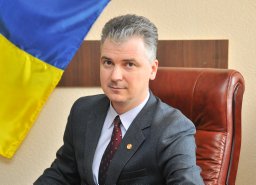 Valentin A. Chebanov合作论文数Department of Heterocyclic Compounds Chemistry, SSI “Institute for Single Crystals” NAS of Ukraine14
 Sergey M. Desenko合作论文数State Scientific Institution ‘Institute for Single Crystals’ of National Academy of Sciences of Ukraine7
 Vladimir I. Musatov合作论文数5Svitlana V. Shishkina合作论文数4Yuliia V. Shliapkina合作论文数4Oleg V. Shishkin合作论文数3Oleksandr I. Zbruyev合作论文数2
 Ievgen M. Zviagin合作论文数National Academy of Sciences of Ukraine (NAS),, State Scientific Institution “Institute for Single Crystals”,2Kiril M. Kobzar合作论文数2
 C. Oliver Kappe合作论文数Institut für Chemie, University of Graz;Center for Continuous Flow Synthesis and Processing, Research Center Pharmaceutical Engineering GmbH2Natalia A. Pinchukova合作论文数2
 Yana I. Sakhno合作论文数Fach M-720, University of Konstanz2
 Thomas J. J. Müller合作论文数Institute of Organic Chemistry, Faculty of Mathematics and Natural Sciences, Heinrich-Heine-Universität Düsseldorf2V. N. Chernenko合作论文数2K. Yu. Bryleva合作论文数1S. Shishkina合作论文数1M. N. Armisheva合作论文数1S. Desenko合作论文数1S. M. Desenko合作论文数1Yulia V. Sen'ko合作论文数1Reva S. Sagitullin合作论文数1Z. T. Niatshina合作论文数1E. B. Levandovskaya合作论文数1A. A. Zorina合作论文数1Victor V. Potapov合作论文数1Alexey P. Ilyn合作论文数1R. A. Vagapov合作论文数1C. Kappe合作论文数1
 Natalia Nailevna Murzakova合作论文数1I. N. Vladimirov合作论文数1
 Eugene Zviagin合作论文数1K. S. Ostras合作论文数1Oleksandr V. Radchenko合作论文数1Dmitry V. Kravchenko合作论文数1
 Ali Sharifi合作论文数1Mariia O Shyshkina合作论文数1O. V. Shishkin合作论文数1Maryna Mazur合作论文数1Oleksii Zhelavskyi合作论文数Chem Dept, Univ Michigan1Gevorg G. Danagulyan合作论文数1
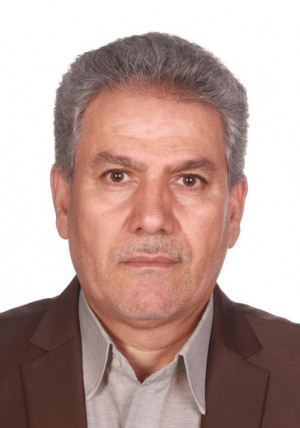 Ahmad Shaabani合作论文数Faculty of Chemistry and Petroleum Sciences, Shahid Beheshti University1
 Dmytro Sysoiev合作论文数1Valeriy D. Orlov合作论文数1
 Andrey Maslivets合作论文数1
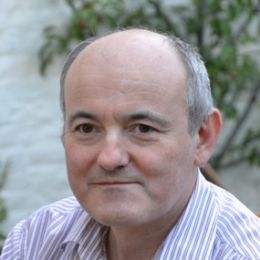 Luca Banfi合作论文数Dipartimento Di Chimica E Chimica Industriale, Università Degli Studi Di Genova1
 Maurizio Taddei合作论文数Dipartimento Biotecnologie, Chimica e Farmacia1Alexandre V. Ivachtchenko合作论文数1Olga V Fedorova合作论文数1Ulrich Groth合作论文数1




