The MUon Scattering Experiment (MUSE) was motivated by the proton radius puzzle arising from the discrepancy between muonic hydrogen spectroscopy and electron-proton measurements. The MUSE physics goals also include testing lepton universality, precisely measuring two-photon exchange contribution, and testing radiative corrections. MUSE addresses these physics goals through simultaneous measurement of high precision cross sections for electron-proton and muon-proton scattering using a mixed-species beam. The experiment will run at both positive and negative beam polarities. Measuring precise cross sections requires understanding both the incident beam energy and the radiative corrections. For this purpose, a lead-glass calorimeter was installed at the end of the beam line in the MUSE detector system. In this article we discuss the detector specifications, calibration and performance. We demonstrate that the detector performance is well reproduced by simulation, and meets experimental requirements.
The spin structure functions of the proton and the deuteron were measured during the EG4 experiment at Jefferson Lab in 2006. Data were collected for longitudinally polarized electron scattering off longitudinally polarized NH_3 and ND_3 targets, for Q^2 values as small as 0.012 and 0.02 GeV^2, respectively, using the CEBAF Large Acceptance Spectrometer (CLAS). This is the archival paper of the EG4 experiment that summaries the previously reported results of the polarized structure functions g_1, A_1F_1, and their moments Γ_1, γ_0, and I_TT, for both the proton and the deuteron. In addition, we report on new results on the neutron g_1 extracted by combining proton and deuteron data and correcting for Fermi smearing, and on the neutron moments Γ_1, γ_0, and I_TT formed directly from those of the proton and the deuteron. Our data are in good agreement with the Gerasimov-Drell-Hearn sum rule for the proton, deuteron, and neutron. Furthermore, the isovector combination was formed for g_1 and the Bjorken integral Γ_1^p-n, and compared to available theoretical predictions. All of our results provide for the first time extensive tests of spin observable predictions from chiral effective field theory (χEFT) in a Q^2 range commensurate with the pion mass. They motivate further improvement in χEFT calculations from other approaches such as the lattice gauge method.
The EIC Comprehensive Chromodynamics Experiment (ECCE) detector has been designed to address the full scope of the proposed Electron Ion Collider (EIC) physics program as presented by the National Academy of Science and provide a deeper understanding of the quark-gluon structure of matter. To accomplish this, the ECCE detector offers nearly acceptance and energy coverage along with excellent tracking and particle identification. The ECCE detector was designed to be built within the budget envelope set out by the EIC project while simultaneously managing cost and schedule risks. This detector concept has been selected to be the basis for the EIC project detector.
We measure the spin-density matrix elements (SDMEs) of the Delta(++)(1232) in the photoproduction reaction gamma p -> pi(-) Delta(++)(1232) with the GlueX experiment in Hall D at Jefferson Lab. The measurement uses a linearly-polarized photon beam with energies from 8.2 to 8.8GeV and the statistical precision of the SDMEs exceeds the previous measurement by three orders of magnitude for the momentum transfer squared region below 1.4GeV(2). The data are sensitive to the previously undetermined relative sign between couplings in existing Regge-exchange models. Linear combinations of the extracted SDMEs allow for a decomposition into natural and unnatural-exchange amplitudes. We find that the unnatural exchange plays an important role in the low momentum transfer region.
The CP violation problem has a long history emanating from its discovery 60 years ago in the decay of neutral kaons and subsequent experimental and theoretical studies over several decades. We review herein experimental data that observe indirect CP violation of the order of ∼ 10^-3 , as well as the discovery of direct CP violation of the order of ∼ 10^-6 . Despite improved experimental methods over the past half a century, the original CP violation numbers have remained the same. Verification of the CP violation in the decay of charged kaons was also observed. Data reflecting CP violation in the decays of B and D mesons have become very important and are also discussed in this review. The question of CP violation only with the participation of ss̅ , cc̅ , and bb̅ quarks in the framework of the Standard Model or beyond it and its small magnitude remains open.
We report on the first measurement of J/ψ photoproduction from nuclei in the photon energy range of 7 to 10.8 GeV, extending above and below the photoproduction threshold in the free proton of ∼8.2 GeV. The experiment used a tagged photon beam incident on deuterium, helium, and carbon, and the GlueX detector at Jefferson Lab to measure the semi-inclusive A(γ,e^{+}e^{-}p) reaction with a dilepton invariant mass M(e^{+}e^{-})∼m_{J/ψ}=3.1 GeV. The incoherent J/ψ photoproduction cross sections in the measured nuclei are extracted as a function of the incident photon energy, momentum transfer, and proton-reconstructed missing light-cone momentum fraction. Comparisons with theoretical predictions assuming a dipole form factor allow for extracting a gluonic radius for bound protons of sqrt[⟨r^{2}⟩]=0.85±0.14 fm. The data also suggest an excess of the measured cross section for subthreshold production and for interactions with high missing light-cone momentum fraction protons. The measured enhancement can be explained by modified gluon structure for high-virtuality bound protons.
Measuring deeply virtual Compton scattering (DVCS) on the neutron is one of the necessary steps to understand the structure of the nucleon in terms of generalized parton distributions (GPDs). Neutron targets play a complementary role to transversely polarized proton targets in the determination of the GPD E. This poorly known and poorly constrained GPD is essential to obtain the contribution of the quarks' angular momentum to the spin of the nucleon. DVCS on the neutron was measured for the first time selecting the exclusive final state by detecting the neutron, using the Jefferson Lab longitudinally polarized electron beam, with energies up to 10.6 GeV, and the CLAS12 detector. The extracted beam-spin asymmetries, combined with DVCS observables measured on the proton, allow a clean quark-flavor separation of the imaginary parts of the Compton form factors H and E.
This White Paper presents an overview of the current status and future perspective of QCD research, based on the community inputs and scientific conclusions from the 2022 Hot and Cold QCD Town Meeting. We present the progress made in the last decade toward a deep understanding of both the fundamental structure of the sub-atomic matter of nucleon and nucleus in cold QCD, and the hot QCD matter in heavy ion collisions. We identify key questions of QCD research and plausible paths to obtaining answers to those questions in the near future, hence defining priorities of our research over the coming decades.
We report the measurement of the helicity asymmetry E for the pπ^{0} and nπ^{+} final states using, for the first time, an elliptically polarized photon beam in combination with a longitudinally polarized target at the Crystal Ball experiment at MAMI. The results agree very well with data that were taken with a circularly polarized photon beam, showing that it is possible to simultaneously measure polarization observables that require linearly (e.g., G) and circularly polarized photons (e.g., E) and a longitudinally polarized target. The new data cover a photon energy range 270-1400 MeV for the pπ^{0} final state (230-842 MeV for the nπ^{+} final state) and the full range of pion polar angles, θ, providing the most precise measurement of the observable E. A moment analysis gives a clear observation of the pη cusp in the pπ^{0} final state.
The MUSE experiment at the Paul Scherrer Institute is measuring elastic lepton-proton scattering cross sections in a four-momentum transfer range from $Q^2$ of approximately 0.002 to 0.08 GeV$^2$ using positively and negatively charged electrons and muons. The extraction of the Born cross sections from the experimental data requires radiative corrections. Estimates of the instrumental uncertainties in those corrections have been made using the ESEPP event generator. The results depend in particular on the minimum lepton momentum that contributes to the experimental cross section and the fraction of events with hard initial-state radiation that is detected in the MUSE calorimeter and is excluded from the data. These results show that the angular-dependent instrumental uncertainties in radiative corrections to the electron cross section are better than 0.4 % and are negligible for the muon cross section.
This document presents the initial scientific case for upgrading the Continuous Electron Beam Accelerator Facility (CEBAF) at Jefferson Lab (JLab) to 22 GeV. It is the result of a community effort, incorporating insights from a series of workshops conducted between March 2022 and April 2023. With a track record of over 25 years in delivering the world's most intense and precise multi-GeV electron beams, CEBAF's potential for a higher energy upgrade presents a unique opportunity for an innovative nuclear physics program, which seamlessly integrates a rich historical background with a promising future. The proposed physics program encompass a diverse range of investigations centered around the nonperturbative dynamics inherent in hadron structure and the exploration of strongly interacting systems. It builds upon the exceptional capabilities of CEBAF in high-luminosity operations, the availability of existing or planned Hall equipment, and recent advancements in accelerator technology. The proposed program cover various scientific topics, including Hadron Spectroscopy, Partonic Structure and Spin, Hadronization and Transverse Momentum, Spatial Structure, Mechanical Properties, Form Factors and Emergent Hadron Mass, Hadron-Quark Transition, and Nuclear Dynamics at Extreme Conditions, as well as QCD Confinement and Fundamental Symmetries. Each topic highlights the key measurements achievable at a 22 GeV CEBAF accelerator. Furthermore, this document outlines the significant physics outcomes and unique aspects of these programs that distinguish them from other existing or planned facilities. In summary, this document provides an exciting rationale for the energy upgrade of CEBAF to 22 GeV, outlining the transformative scientific potential that lies within reach, and the remarkable opportunities it offers for advancing our understanding of hadron physics and related fundamental phenomena.
The ECCE detector has been recommended as the selected reference detector for the future Electron-Ion Collider (EIC). A series of simulation studies have been carried out to validate the physics feasibility of the ECCE detector. In this paper, detailed studies of heavy flavor hadron and jet reconstruction and physics projections with the ECCE detector performance and different magnet options will be presented. The ECCE detector has enabled precise EIC heavy flavor hadron and jet measurements with a broad kinematic coverage. These proposed heavy flavor measurements will help systematically study the hadronization process in vacuum and nuclear medium especially in the underexplored kinematic region.
A new data set for the helicity-dependent differential cross section of the single-meson photoproduction reaction gamma p -> p pi(0) was obtained for the photon energy interval 150-400 MeV. The experiment was performed at the A2 tagged photon facility of the Mainz Microtron MAMI using a circularly polarized photon beam and a longitudinally polarized proton target. The reaction products were detected with the large-acceptance Crystal Ball and TAPS calorimeters covering 97% of the full solid angle. These new results, obtained with a fine energy and polar angle binning, greatly increase both the existing quantity and quality of the data available for this observable. A moment analysis, based on a finite expansion in Legendre polynomials, was applied to these data by using a bootstrap-based fitting method to correctly account for their systematic uncertainties. From the resulting decomposition of the differential cross sections, the E2/M1 ratio for the N -> Delta(1232) transition was determined to be [-2.38 +/- 0.16(stat.+sys.) +/- 0.10 (model)]%. Combining this value with previous results also allowed us to evaluate the most precise available estimate of the E2/M1 ratio to be used for all further reference and model comparisons.
The spin-exotic hybrid meson π_{1}(1600) is predicted to have a large decay rate to the ωππ final state. Using 76.6 pb^{-1} of data collected with the GlueX detector, we measure the cross sections for the reactions γp→ωπ^{+}π^{-}p, γp→ωπ^{0}π^{0}p, and γp→ωπ^{-}π^{0}Δ^{++} in the range E_{γ}=8-10 GeV. Using isospin conservation, we set the first upper limits on the photoproduction cross sections of the π_{1}^{0}(1600) and π_{1}^{-}(1600). We combine these limits with lattice calculations of decay widths and find that photoproduction of η^{'}π is the most sensitive two-body system to search for the π_{1}(1600).
The new experimental measurements of beam spin asymmetry were performed for the deeply virtual exclusive π0 production in a wide kinematic region with the photon virtualities Q2 up to 6.6 GeV2 and the Bjorken scaling variable xB in the valence regime. The data were collected by the CEBAF Large Acceptance Spectrometer (CLAS12) at Jefferson Lab with longitudinally polarized 10.6 GeV electrons scattered on an unpolarized liquid-hydrogen target. Sizable asymmetry values indicate a substantial contribution from transverse virtual photon amplitudes to the polarized structure functions. The interpretation of these measurements in terms of the Generalized Parton Distributions (GPDs) demonstrates their sensitivity to the chiral-odd GPD E¯T, which contains information on quark transverse spin densities in unpolarized and polarized nucleons and provides access to the nucleon's transverse anomalous magnetic moment. Additionally, the data were compared to a theoretical model based on a Regge formalism that was extended to the high photon virtualities.
During the past several decades a large quantity of high-quality mesonic photo- and electro- production data have been measured at electromagnetic facilities worldwide. By contrast, meson-beam data for these same final states are mostly outdated, largely of poorer quality, or even non-existent, especially those involving spin asymmetries and polarizations. Thus existing meson beam results provide inadequate input to interpret, analyze, and exploit the potential of the new electromagnetic data. To achieve full benefit of these high-precision electromagnetic data, new high-statistics data from measurements with meson beams, with good angle and energy coverage for a wide range of reactions, are critically needed to advance our knowledge in baryon and meson spectroscopy and other related areas of hadron physics. To address this situation, new, state-of-the-art meson-beam facilities are needed. This presentation summarizes unresolved issues in hadron physics and outlines the opportunities and advances that are possible with such facilities.
The transition from the nucleon to the $\mathrm{\ensuremath{\Delta}}(1232)$ resonance is a sensitive test for models of the nucleon structure. A magnetic dipole ($M1$) quark spin-flip transition essentially dominates photoexcitation of the $\mathrm{\ensuremath{\Delta}}$, but smaller components in the nucleon and $\mathrm{\ensuremath{\Delta}}$ wave functions allow also electric quadrupole ($E2$) contributions. The ratio $E2/M1$ then provides fundamental information on both the spatial deformation of the nucleon or $\mathrm{\ensuremath{\Delta}}$, and on the corresponding $D$ states in their quark-model wave functions. The authors measured the $E2/M1$ ratio via single ${\ensuremath{\pi}}^{0}$ production from the proton with a circularly polarized photon beam and a longitudinally polarized proton target, exploiting the presence of interference terms between the measured amplitudes that enhance the effect of smaller contributions. This most precise experimental result to date for the $E2/M1$ ratio gives deep insight into the nucleon properties and provides a precision benchmark for all nonperturbative QCD models.
The evaluation of the measurement of double-spin asymmetries for charge-separated pions and kaons produced in deep-inelastic scattering from the proton using the ECCE detector design concept is presented, for the combinations of lepton and hadron beam energies of 5 x 41 GeV2 and 18 x 275 GeV2. The study uses unpolarised simulated data that are processed through a full GEANT simulation of the detector. These data are then reweighted at the parton level with DSSV helicity distributions and DSS fragmentation functions, in order to generate the relevant asymmetries, and subsequently analysed. The performed analysis shows that the ECCE detector concept provides the resolution and acceptance, with a broad coverage in kinematic phase space, needed for a robust extraction of asymmetries. This, in turn, allows for a precise extraction of sea-quark helicity distributions.
The electroexcitation amplitudes or ${\ensuremath{\gamma}}_{v}p{N}^{*}$ electrocouplings of the $N(1440)1/{2}^{+}$, $N(1520)3/{2}^{\ensuremath{-}}$, and $\mathrm{\ensuremath{\Delta}}(1600)3/{2}^{+}$ resonances were obtained for the first time from the $ep\ensuremath{\rightarrow}{e}^{\ensuremath{'}}{\ensuremath{\pi}}^{+}{\ensuremath{\pi}}^{\ensuremath{-}}{p}^{\ensuremath{'}}$ differential cross sections measured with the CLAS detector at Jefferson Lab within the range of invariant mass $W=1.4\text{--}1.7$ GeV of the final state hadrons, for photon virtualities ${Q}^{2}=2.0\text{--}5.0$ ${\mathrm{GeV}}^{2}$. A good description of the nine independent onefold differential ${\ensuremath{\gamma}}_{v}p\ensuremath{\rightarrow}{\ensuremath{\pi}}^{+}{\ensuremath{\pi}}^{\ensuremath{-}}{p}^{\ensuremath{'}}$ cross sections achieved within the data-driven Jefferson Lab-Moscow State University (JM) meson-baryon reaction model in each bin of ($W,{Q}^{2}$) allows for separation of the resonant and nonresonant contributions. The electrocouplings were determined in the fits of the ${\ensuremath{\pi}}^{+}{\ensuremath{\pi}}^{\ensuremath{-}}p$ cross sections within three overlapping $W$ intervals with a substantial contribution from each of the three resonances listed above. Consistent results on the electrocouplings extracted from the data in these $W$ intervals provide evidence for their reliable extraction. These studies extend information on the electrocouplings of the $N(1440)1/{2}^{+}$ and $N(1520)3/{2}^{\ensuremath{-}}$ available from this channel over a broader range of ${Q}^{2}$. The electrocouplings of the $\mathrm{\ensuremath{\Delta}}(1600)3/{2}^{+}$, which decays preferentially into $\ensuremath{\pi}\ensuremath{\pi}N$ final states, have been determined for the first time. The reliable extraction of the electrocouplings for these states is also supported by the description of the ${\ensuremath{\pi}}^{+}{\ensuremath{\pi}}^{\ensuremath{-}}p$ differential cross sections with ${Q}^{2}$-independent masses and total/partial hadronic decay widths into the $\ensuremath{\pi}\mathrm{\ensuremath{\Delta}}$ and $\ensuremath{\rho}p$ final states.
 Kenneth E Livingston合作论文数School of Physics & Astronomy University of Glasgow Glasgow430
 Igor Strakovsky合作论文数Department of Physics, Columbian College of Arts & Sciences, George Washington University;School of Physics and Astronomy, Glasgow University381
 J. W. Price合作论文数347
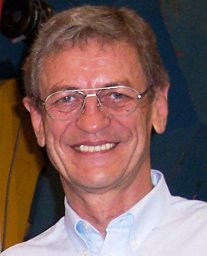 G. Rosner合作论文数Department of Physics and Astronomy;University of Glasgow;Department of Physics and Astronomy, University of Glasgow317
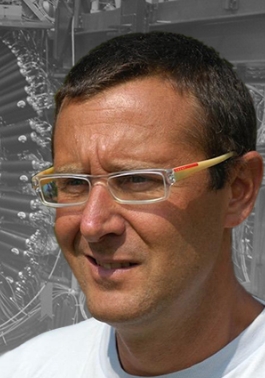 Marco Battaglieri合作论文数Istituto Nazionale di Fisica Nucleare308
 Ian James Douglas MacGregor合作论文数Department of Physics and Astronomy;University of Glasgow;Department of Physics and Astronomy, University of Glasgow305C. Djalali合作论文数302
 Reinhard A. Schumacher合作论文数Department of Physics, Mellon College of Science, Carnegie Mellon University297A. Biselli合作论文数295
 Volker Burkert合作论文数Jefferson Lab294Silvia Niccolai合作论文数289M Ripani合作论文数288
 Philip L Cole合作论文数284
 Alexandre Deur合作论文数Thomas Jefferson National Accelerator Facility280
 Mikhail Osipenko合作论文数279E. Pasyuk合作论文数Arizona State University279M. Khandaker合作论文数278
 Kenneth H. Hicks合作论文数Department of Physics and Astronomy, College of Arts and Sciences, Ohio University278
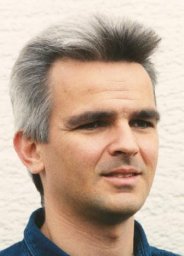 Ralf W. Gothe合作论文数University of South Carolina275Paul Eugenio合作论文数Florida State University273
 D. P. Watts合作论文数271M. Holtrop合作论文数271Y. Sharabian合作论文数270Bryan Mckinnon合作论文数University of Glasgow268M. Guidal合作论文数267F. Sabatié合作论文数265M. Ungaro合作论文数265Gerard P. Gilfoyle合作论文数265Daniel S. Carman合作论文数264
 Carlos Alberto Salgado Lopez合作论文数Department of Particle Physics, Universidade de Santiago de Compostela;Galician Institute of High Energy Physics, Universidade de Santiago de Compostela263
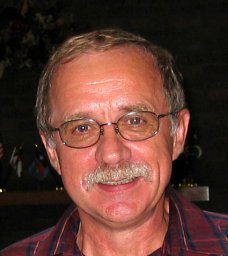 Valery Kubarovsky合作论文数Institute for High Energy Physics261Hovanes Egiyan合作论文数261
 Woochan Kim合作论文数260S. Strauch合作论文数259
 David G. Ireland合作论文数University of Glasgow259K. Joo合作论文数258G. Niculescu合作论文数252
 Will Brooks合作论文数Department of Physics, Universidad Técnica Federico Santa María245K. A. Griffioen合作论文数245Viktor Mokeev合作论文数245Di Sober合作论文数244I. Supek合作论文数Rudjer Boskovic Institute Zagreb Croatia244M. Wood合作论文数University of Pennsylvania243O. Pogorelko合作论文数242Volker Crede合作论文数241F. J. Klein合作论文数238F. X. Girod合作论文数Univ Glasgow237M. Mirazita合作论文数237Y. Ilieva合作论文数236




