Accelerator Mass Spectrometry (AMS) adds the techniques of higher energy charged particle acceleration to the basic principles of Isotope Ratio Mass Spectrometry (IRMS) to provide extremely low detection capability (below 1 femtogram) of rare isotopes in samples of natural materials as small as 1 mg. Depending on the element selected and the configuration of the equipment, rare isotope sensitivities can reach less than one part in 10(15). The advantages of this small sample size and high sensitivity for the detection of rare isotopes include a) the economic benefit of collecting, shipping and preparing much smaller samples, and b) the ability to analyse specific chemical compounds within the sample. For the latter advantage, the pathway taken by that compound through a complex system can be more precisely traced or, in the case of radioactive isotopes, more precise chronological information can be provided. The paper is an amplification of material which was presented at the IAEA International Conference on Accelerators for Research and Sustainable Development: novel concepts and technical innovation. It begins with a basic overview of AMS technology, with an emphasis on how the use of higher energy contributes to this enhanced sensitivity, and then provides several examples of new AMS technologies which reduce the energy and space requirements for such systems. Several examples of applications which contribute to the investigation of sustainability in other areas of environmental concern are then briefly described.
Pb-210 (T-1/2=22.2 y) is an important source of background in rare event searches, such as neutrinoless double-beta decay and dark matter direct detection experiments. In this paper, the capabilities of the A.E. Lalonde AMS Laboratory at the University of Ottawa for Pb-210 measurements are discussed. For fluoride targets, the blank Pb-210/Pb-206 ratio was in the 10(-14) to 10(-13) range, but (PbF3)(-) current output was lower and less stable. For oxide targets, (PbO2)(-) current output showed better stability, despite a significant difference in current output for commercial PbO and processed samples, and background studies suggested a background not much higher than that of the fluoride targets. Both target materials showed, therefore, good performance for Pb-210 Accelerator Mass Spectrometry assay. Measurements of Kapton ultra-thin films were performed. 90% C.L. upper limits for the Pb-210 specific activity in the range of 0.74-2.8 Bq/kg were established for several Kapton HN films.
Two-dimensional radiofrequency quadrupole (RFQ) ion guides are versatile tools that are used over a wide range of ion energies. Properly tuned, they can provide an ideal environment for ion-molecule chemistry to proceed by allowing thermalized ions to react on-line with gaseous reactants. We exploit this capability in the Ion Reaction Cell (IRC), an RFQ-based system designed to form radioactive molecules (RM) from radioactive ion beams (RIB). Functionally, the IRC accepts RIB produced upstream by the isotope separation on-line (ISOL) method, decelerates it to eV energies for production of the RM and then re-accelerates RM to their incident energy. This system promises to form a highly versatile source of complex inorganic or organic RM that can be used in fundamental symmetry studies or as precursors to new radiopharmaceuticals. We discuss the challenges of transferring ions from a RIB into a gas cell at room temperature while constraining ions within the RFQ energy well, and of reforming a beam from synthesized RM. Various factors influencing ion dynamics and reactivity in thermal and non-thermal zones inside the IRC are considered, using results obtained recently with the Isobar Separator for Anions, an analogous RFQ technique used in Accelerator Mass Spectrometry, to illustrate key points.
Accelerator Mass Spectrometry (AMS) of isotopes with abundant negative ion-forming isobars often requires the use of large accelerators to achieve high sensitivity measurements. The Isobar Separator for Anions (ISA) is a radio frequency quadrupole (RFQ) reaction cell system that can provide selective isobar suppression in the low energy system, prior to injection into an accelerator. A commercial version from Isobarex Corp. has been installed in a second injection line of the 3 MV tandem accelerator system at the A. E. Lalonde AMS Laboratory, University of Ottawa. Here, we present the characterization of the ISA for its optimization of S- suppression and Cl- transmission. He gas was selected as a cooling buffer gas, as it provided the best Cl- transmission of similar to 50 % through the ISA column. These tests use NO2 as a reaction gas due to its well-known exothermic reaction with S- but endothermic reaction with Cl-. More than six orders of magnitude reduction of S to Cl has been observed.
This study covers the preliminary assessment of a novel accelerator mass spectrometry technique for rapid quantitation of polonium-210 in water samples.
In this study, data from thirteen laboratories from around the world are presented for a successful certification of uranium isotope ratios in uranium ore concentrate (UOC) certified reference materials from the National Research Council Canada. Different mass spectrometric measurement principles (including SF‐ICP‐MS, quadruple ICP‐MS, TIMS, MC‐ICP‐MS, SIMS and AMS) and measurement procedures were employed. In general, data from all sources exhibit good consistency with TIMS and MC‐ICP‐MS showing superior performance. The three candidate UOC CRMs (UCLO‐1, UCHI‐1 and UPER‐1) have natural uranium isotope ratios with certified values of 0.5304(7) × 10−4, 0.5475(2) × 10−4 and 0.5361(4) × 10−4 for n(234U)/n(238U) and 0.007 2563(13), 0.007 2563(10) and 0.007 2542(11) for n(235U)/n(238U), respectively, with expanded uncertainty (k = 2) applicable to the last digit of the value given in the parentheses. Information values for n(236U)/n(238U) in these three CRMs, measured by AMS, are also provided: 10 × 10−12, 200 × 10−12 and 22 × 10−12. The uncertainties of the proposed certified values of uranium isotope ratios in UOC CRMs are superior to available reference materials, and the values of n(234U)/n(238U) and n(236U)/n(238U) show significant variation among the three CRMs.
Using a solid graphite sample the relative yields of trace-element-carbide molecular anions, containing between 1 and 8 carbon atoms (MC1__8), from a Cs+ sputter ion source were surveyed for elements (M) across the periodic table. Except for gaseous and radioactive atoms, all elements are present in the graphite at some trace levels, so this investigation could readily be done using AMS by counting unambiguously a selected Mq+ ion, with charge state q >= 3, from a MCn _ ion beam injected into the accelerator. MC1,2_ are found to be the most prolific carbide negative ions for the majority of elements, but Cs is clearly exceptional as CsC4,6,8_ are the dominant ones instead. These results are consistent with past observations. Based on the same MC1__8 survey data, the relative elemental abundances in the graphite sample were also assessed. These abundances demonstrated a means for evaluating the basic long-term ion source memory background for any rare atom searches by AMS.
To investigate the short- and long-term accumulated emissions from a nuclear facility, charcoal air filter cartridges were exposed at a reactor site for seven days. The short-lived 131I adsorbed in these filters was measured by gamma counting immediately after the samples were retrieved. The very long-lived 129I was analyzed later by AMS. For this purpose, two methodologies were developed: an extraction method and direct analysis, i.e., inserting an aliquot of the filter carbon directly into the target piece. The former method used a system designed to avoid sample loss resulting from the high I2 species volatility. Iodine-125 was used as a tracer to monitor the efficiency of this extraction process. The direct method was based on our experience with charcoal in the analysis of 14C in Cs sputter ion sources. In this direct analysis, charcoal samples were first spiked with a known quantity of stable iodine (127I), in an excess over the quantity naturally present in the filter, and then pressed into targets. In this way, 129I concentrations from all the charcoal samples were quickly determined. In both methods, it was found that the atom concentration of 129I in these samples exceeded that of the 131I by 2–3 orders of magnitude. These studies demonstrate the effectiveness of the charcoal capture method as a diagnostic tool for monitoring the emissions from nuclear facilities. This approach may be extended for the detection of other long-lived radioactive isotopes, which would further expand the scope of such monitoring studies.
The Lalonde 3MV-AMS system uses one large injection magnet and one large high energy magnet, providing both sufficient bending power and resolution in both the low and high energy mass and charge systems for all heavy elements. This allows two demanding AMS subjects to be investigated conclusively: one is the search for the elusive atomic negative ion Yb-, and the other is the use of (UF5-)-U-236 to achieve sub-10(-13) abundance sensitivities with a single analyzing magnet in the high energy system. Both studies require the AMS system to be capable of sufficiently removing intense E/q and EM/q(2) interferences to the rare signals. In the case of the Yb- search, the complication caused by the fragmenting ytterbium hydride beams must be well resolved; in the case of U-236 detection, its relative mass difference from the abundant U-235,U-238 is among the smallest of all cases in AMS. In carrying out these investigations, a generalized method of analyzing the potential E/q and EM/q(2) interferences in AMS is illustrated. The conclusions are: (1) With 12 kV ion source extraction voltage and 0.5 MV accelerator terminal voltage, which correspond to a maximum electric field gradient of 2.8 kV/cm along the ion trajectory from the sputter target surface to the entrance of the accelerator terminal, Yb- has not yet been observed by AMS using a Cs+ sputter ion source. (2) A best-possible abundance sensitivity of U-238/U similar to 4 x 10(-14) has been indicated using UF5- with just one large magnet in the high energy system.
ABSTRACTObservation of the ion source generated background has been an area of focus during our routine analytical work. It is noted that the results of very-low-ratio samples are dependent upon the particular procedures for measurement using the present-day Cs+ sputter ion sources. When measured without excessive Cs+ fluxes and without interleafing with other higher-ratio samples and references, the accelerator mass spectrometry (AMS) sensitivity can be somewhat improved. In some cases, it appears possible to assess old radiocarbon (14C) samples to beyond the long-standing 60 kyr limit. A number of observational studies are made for the sole purpose of minimizing the final contamination to the rare isotopes that is generated within the ion source.
Uranium ore concentrate (UOC) is an important nuclear material of interest for Canada. A large scale analytical program is being led by the Directorate of Security and Safeguards (DSS) of the Canadian Nuclear Safety Commission (CNSC) to establish a reference dataset of UOCs that have passed through and/or are currently under Canadian regulatory control. Isotopic ratios are among the signatures being captured under the reference dataset. Accelerator Mass Spectrometry (AMS) has been used for the measurement and assessment of U-236/U-238 and Os-187/Os-188, respectively. Furthermore, since UOCs have uranium typically concentrated to a >= 70% by weight, a direct-AMS assay method is possible wherein the samples can be measured without time consuming chemical digestion and processing. Using this direct-AMS approach, several related ratios (Pa-231/U-238, Th-230/U-238, Ra-226/U-238) were also assessed within the data acquisition sequence used for measuring the U-236/U-238 ratios, and Re-185, Re-187 and Os-187, Os-188, Ir-191 and Ir-193 in the sequence for the Os-187/Os-188 ratios. The sum of these results can be shown together in a "bar-code" pattern to strengthen the capability for UOC source identification. Unexpectedly large U-236/U-238 ratios (up to >= 1 x 10(-7)) have been found in several UOC samples. The Os-187/Os-188 ratio has also been shown for the first time to be a viable supplementary signature of UOCs. This work shows that the direct-AMS method has the potential to become an effective tool for nuclear forensics provenance assessment applications with UOCs. The implications of the results, and the need for further refinement of the sputter target preparation, as well as the Cs+ sputter ion source itself, are also discussed.
ABSTRACTSample preparation techniques for radiocarbon analysis of dissolved inorganic carbon (DIC) and dissolved organic carbon (DOC) in freshwater, as well as CO2 and CH4 in gas mixtures are presented. Focused efforts have been on developing a robust and low-background wet oxidation extraction method for DOC in freshwater, following routine methods developed for stable carbon isotope analysis and adapted for radiocarbon (14C) analysis. DIC (by acidification) and DOC (by wet oxidation) are converted to CO2 in pre-baked septum-fitted borosilicate bottles, where the resulting CO2 is extracted from the dissolved and headspace portions on a low-flow He-carrier flow-through system interfaced to a vacuum extraction line. A peripheral CH4 extraction line interfaces to the flow line to separate CH4 from environmental samples following the methods of Pack et al. 2015. High sample throughput and low blanks are achievable with this method. DIC and DOC blanks are consistently <0.7 pMC, while CO2 and CH4 blanks are typically <0.1 pMC.
A renewed study of Tc and Ru fluoride anion formation in a Cs sputter source has confirmed an earlier observation that the relative yields of RuFn- are dependent on the sputter target matrix composition. The yield of RuF5- can be suppressed relative to TcF5- with the presence in a PbF2-based sputter target of certain elements: some strongly as in the case of Nb and some modestly as in the case of Fe. This provides an opportunity for Tc-99 to be detected by low energy AMS using (TcF5-)-Tc-99 with the assistance of a carefully composed matrix to form the sputter target. Depending on the Ru content in a sample and the effort to reduce it during sample preparation, the best detection limit obtained so far was <= 5 in the unit of "fg Tc-99 per mg FeOxHy precipitate", using targets made of (Tc-99)FeOxHy + PbF2 (similar to 1:10 by weight). In several preliminary linearity tests with the detection of + 4 ions in the gas ionization detector, the determination of Tc-99 concentration within a FeOxHy precipitate was best shown with similar to 15% uncertainty. The quantification was made by the average count rate of Tc-99, subtracting that of Ru-99 (determined by multiplying the counts of the isobar-free Ru-101 by the ratio of their natural abundances 0.748), over an hour long time under steady-sputtering conditions. This quantification method is required due to the lack of a stable Tc isotope. This method shows promise for analyzing( 99)Tc in seawater samples using <= 2 L volumes.
UO- has so far been the ion of choice for U-236 measurement by AMS, but high and stable ionization efficiency for UO- production has been difficult to obtain with some models of Cs+ sputter ion sources. We have experienced considerable difficulties in producing sustainable UO- current even at 10 nA levels using the SO-110B source at A. E. Lalonde AMS Laboratory, University of Ottawa. This source is presently not configured for delivering Cs+ sputter beams at levels greater than 0.5 mA reliably, while similar to 1.5 mA is reported to be needed for producing steady UO- currents in the 150-300 nA range. Various tests were undertaken to increase and stabilize the UO- current using the SO-110B source in its present configuration. The test included the addition of several fine powders as binders, including Al, C, Ta, Si, and SiC, to uranium oxide to form the sputter target. Si and Ta + Si were found to provide a significant enhancement to the UO- current production, which enabled us to carry on the U-236 measurement using UO- with the existing ion source, although the achieved enhancement is still far short of the 150-300 nA UO- current reported elsewhere.
New computer-controlled, semi-automatic systems were designed and built for CO2 purification and graphitization at the A.E. Lalonde Accelerator Mass Spectrometry (AMS) Laboratory with consideration for user friendliness and high throughput. The stainless steel vacuum lines are orbitally welded to ensure clean seams with low memory. The insulated graphitization ovens with plug-in electrodes provide a hazard-free environment for operators. The closed-loop cooling system circulating low-viscosity Dynalene at -40 degrees C provides highly efficient water trapping. The LabVIEW(TM) software features (1) pressure and temperature recording for QA/QC; (2) safety interlocks to preclude operator errors resulting in sample loss, cross-contamination, or damaging a vacuum pump; and (3) automation for leak checking, iron conditioning, and running samples. Results from the first year of routinely measured standards, reference, and background materials are reproducible and within acceptance values. In the first year of operation (commissioned in spring 2014), over 1000 targets (similar to 60% unknowns) were produced. With new tube sealing and CO2 purification lines, and two more graphitization lines now operational, the Lalonde AMS Laboratory is able to provide routine radiocarbon analysis (>200 mu g carbon) at a capacity of more than 7000 targets per year. Most importantly, the equipment is safe and intuitive, making it ideal for education and training students to run their own samples.
The isotope Cs-135 is quoted as having a half-life of 2.3 Myr. However, there are three published values ranging from 1.8 to 3 Myr. This research reviews previous measurements and reports a new measurement of the half-life using newly developed accelerator mass spectrometry (AMS) and inductively coupled plasma mass spectrometry (ICPMS) techniques along with beta and gamma radiometric analysis. The half-life was determined to be (1.6 +/- 0.6) x 10(6) yr by AMS and (1.3 +/- 0.2) x 10(6) yr by ICPMS with 95% confidence. The two values agree with each other but differ from the accepted value by similar to 40%.
Received 3 February 2016DOI:https://doi.org/10.1103/PhysRevC.93.029901©2016 American Physical SocietyPhysics Subject Headings (PhySH)Research AreasBinding energy & massesLifetimes & widthsProperties90 ≤ A ≤ 149TechniquesSpectrometers & spectroscopic techniquesNuclear Physics
The long lived radioisotope (129)I is a uranium fission product, and an environmental contaminant of the nuclear age. Consequently, it can trace anthropogenic releases of (129)I in watersheds, and has been identified as a potential means to distinguish water sources in discharge (Nimz, 1998). The purpose of this work was to identify the sources and mass input of (129)I and trace the transport, partitioning and mass balance of (129)I over time in a remote watershed. We monitored (129)I and other geochemical and isotope tracers (e.g. δ(14)CDIC, δ(13)CDIC, δ(2)H, δ(18)O, etc.) in precipitation and discharge from the Wolf Creek Research Basin (WCRB), a discontinuous permafrost watershed in the Yukon Territory, Canada, and evaluated the use of (129)I as a water end-member tracer. Radiocarbon and geochemical tracers of weathering show that discharge is comprised of (i) groundwater baseflow that has recharged under open system conditions, (ii) spring freshet meltwater that has derived solutes through closed-system interaction with saturated soils, and (iii) active layer drainage. The abundance of (129)I and the (129)I/(127)I ratio correlated with geochemical tracers suggests varying contributions of these three water end-members to discharge. The (129)I concentration was highest at the onset of freshet, reaching 17.4×10(6) atoms/L, and likely reflects the lack of interaction between meltwater and organic matter at that time. This peak in (129)I was followed by a decline over the summer to its lowest value. Mass balance calculations of the (129)I budget show that the input to the watershed via precipitation is nearly one order of magnitude higher than the output suggesting that such arctic watersheds accumulate nearly 90% of the annual input, primarily in soil organic matter. Temporal variations in discharge (129)I concentrations correlated with changes in discharge water sources suggesting that (129)I is a promising hydrologic tracer, particularly when used in concert with other stable and radioisotopes.
RATIONALE:The measurement of (210) Pb provides an assessment of the risk an individual faces of developing lung cancer as a result of their exposure to radon and radon decay products. Existing radiometric techniques are not sensitive enough to detect (210) Pb in many exposures. This report describes the further development of a method of measuring (210) Pb using Accelerator Mass Spectrometry (AMS).METHODS:(204,205,208,) (210) Pb measurements were performed by AMS. Samples were prepared from stock solutions of (204) Pb, (205) Pb, (208) Pb and (210) Pb and measured by making PbF3 (-) ions at the IsoTrace AMS facility using a SIMS-type Cs(+) sputter source. Potential interferences in Pb(3) (+) isotope measurement and the overall efficiency of Pb beam production were determined experimentally.RESULTS:(204) Pb and (205) Pb suffer from molecular and atomic isobaric interferences that cannot be removed without sacrificing the efficiency of (210) Pb measurements whereas (208) Pb suffers from no interferences. The abundance sensitivity of (210) Pb/(208) Pb was 1.3 × 10(-12) . Keeping the (210) Pb/(208) Pb spike below this level resulted in a detection limit of 4.4 mBq of (210) Pb using the IsoTrace AMS facility.CONCLUSIONS:This study identified key interferences in the measurement of PbF3 (-) → Pb(3) (+) ions and demonstrated a new AMS method to measure (210) Pb. This new AMS technique is about five times more sensitive than gamma and beta spectroscopy measurements of (210) Pb and the measurement time is much shorter. Copyright © 2016 John Wiley & Sons, Ltd.
 Xiaolei Zhao合作论文数Faculty of Geographical Science, Beijing Normal University38
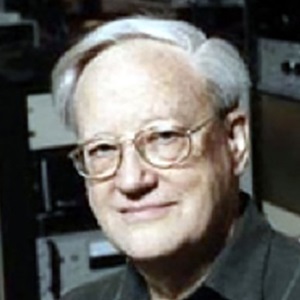 Albert Litherland合作论文数37
 Eliades J合作论文数17R.J. Cornett合作论文数14C. R. J. Charles合作论文数9lisa cousins合作论文数9Jack Cornett合作论文数9C. Rolfs合作论文数University of Munster;Department of Physics and Astronomy, University of Catania;Institut fur Experimentalphysik II, Faculty of Physics and Astronomy, Ruhr-Universitat Bochum;Department of Physics, University of Toronto8Hans-Werner Becker合作论文数8Re Azuma合作论文数7Hp Trautvetter合作论文数7
 Karl Ulrich Kettner合作论文数7Jw Hammer合作论文数6jeanfrancois alary合作论文数6L. Buchmann合作论文数6Roelf P. Beukens合作论文数6MacDonald C合作论文数Department of Physics, University of Ottawa5J. Görres合作论文数5
 Gilles St-Jean合作论文数Ottawa-Carleton Geosciences Centre, University of Ottawa5Gholamreza Javahery合作论文数5
 Carley A Crann合作论文数A.E. Lalonde AMS Laboratory, University of Ottawa4
 Pavel Povinec合作论文数Department of Nuclear Physics and Biophysics, Faculty of Mathematics, Physics and Informatics, Comenius University4
 Matthew N Herod合作论文数Department of Earth Sciences, University of Ottawa4
 Ian D. Clark合作论文数Department of Earth Sciences, University of Ottawa4William S. Rodney合作论文数4John C Rucklidge合作论文数4Graham Wilson合作论文数4h krawinkel合作论文数4A. Vlieks合作论文数4B.B.A. Francisco合作论文数3R. Santo合作论文数3P. Schmalbrock合作论文数3
 Sarah Murseli合作论文数3Petra Schmalbrock合作论文数3
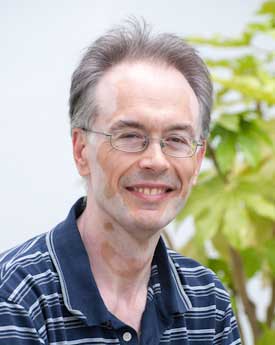 Ian Dodd合作论文数Lancaster Environment Centre, Lancaster University3Linus R Kilius合作论文数3B. Oregioni合作论文数2
 Mai Khanh Pham合作论文数2
 Erin L. Flannigan合作论文数2
 Adam Sookdeo合作论文数Lab Ion Beam Phys, Swiss Fed Inst Technol2
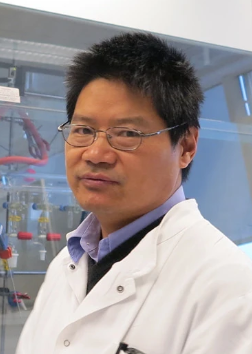 Xiaolin Hou (侯小琳)合作论文数School of Nuclear Science and Technology, Lanzhou University2
 Kenneth H. Purser合作论文数US AMS Corporation2
 Timothy Jull合作论文数Arizona Institute for Resilient Environments and Societies, The University of Arizona;Department of Geosciences, College of Science, The University of Arizona2
 Maria Grazia Betti合作论文数Dipartimento di Fisica, Università di Roma La Sapienza2
 Joan Albert Sánchez Cabeza合作论文数Instituto de Ciencias del Mar y Limnología, Universidad Nacional Autónoma de México2C. Soto合作论文数2T. Smick合作论文数2Ilia Tomski合作论文数2




