The experimental fusion excitation functions of the reactions Ti-48 + Fe-58 and Ni-58 + Fe-54, measured down to the low sub-barrier energies, are described within the quantum diffusion approach and the universal fusion function representation. For these systems, the s-wave capture probabilities are extracted from the experimental excitation functions and are also analyzed. An enhancement of the sub-barrier fusion cross section observed in the Ti-48 + Fe-58 reaction in comparison to the relatively close system Ni-58 + Fe-54 is explained.
In this work we examine the possibility to describe yrast positive- and negative-parity excitations of deformed even-even nuclei through a collective rotation model in which the nuclear surface is characterized by triaxial quadrupole and octupole deformations. The nuclear moments of inertia are expressed as sums of quadrupole and octupole parts. By assuming an adiabatic separation of rotation and vibration degrees of freedom we suppose that the structure of the positive- and negative- parity bands may be determined by the triaxial-rigid-rotor motion of the nucleus. By diagonalizing the Hamiltonian in a symmetrized rotor basis with embedded parity we obtain a model description for the yrast positive- and negative-parity bands in several actinide nuclei. We show that the energy displacement between the opposite-parity sequences can be explained as the result of the quadrupole-octupole triaxiality.
Summary We present examples for recent applications of the Semimicroscopic Algebraic Cluster Model and also discuss its prospective extensions in various directions. The examples considered here include core+α-particle-type cluster configurations and more complex cluster systems. The former ones are relatively simple in technical terms, so the basics of the model can be demonstrated by them in a transparent way, while the latter ones, though technically more involved, illustrate the ability of the model to handle in a unified way clustering phenomena that are usually treated in terms of essentially different approaches.
The cranked-shell model (CSM) with pairing correlations treated by a particle-number conserving (PNC) method is used to study the rotational properties of odd mass transfermium nuclei. In the PNC method, the particle number is conserved and the Pauli blocking effects are taken into account exactly. By fitting the experimental single-particle spectra in these nuclei, a new set of Nilsson parameters (κ and μ) are proposed. The experimental kinematic moments of inertia in these transfermium nuclei are reproduced quite well by the PNC-CSM calculations. The structures of the single-particle states, deformation, high-j intruder orbital and the rotational properties in these nuclei are investigated in detail.
A cluster approach is used to describe ground-state-based alternating-parity bands in even–even nuclei and to study the band-termination mechanism. A method is proposed for testing the cluster nature of alternating-parity bands.
In this paper, we study a phenomenological collective model for the calculation of the nuclear density and ground state binding energy of nuclei. The proton density is assumed proportional to the nuclear density. The total binding energy of the nuclear matter consists of the binding energy of infinite nuclear matter, of two Yukawa-potentials, of the Coulomb-energy and of the symmetry-energy. The parameters of the Yukawa-potential are fitted with the Bethe–Weizsäcker (BW) mass formula. The resulting binding energies and nuclear densities agree quite satisfying with known nuclear values.
Possible ways of production of superheavies are discussed. Impact of nuclear structure on the production of superheavy nuclei in complete fusion reactions is discussed. The proton shell closure at Z = 120 is discussed.
This paper describes the inversion of a scattering problem with coupled channels at fixed energy. The coupling potential matrix is obtained from the [Formula: see text]-matrix with the modified Newton–Sabatier method with a special expansion of the integral kernel and a determination of the potential matrix by using the coupled radial equations. The method is applied to problems restricted to two channels and with a monopole, dipole and quadrupole coupling ([Formula: see text]) between the channels. The inversion is shown to work quite satisfactorily and is useful for heavy ion scattering in nuclear physics.
The excitation functions were measured for the 28Si + 208Pb complete-fusion (capture) reaction at deep subbarrier energies. The results were compared with the cross sections predicted within the quantum diffusion approach. The role of neutron transfer in the case of positive Q values in the 28Si + 124Sn, 208Pb; 30Si + 124Sn, 208Pb; 20Ne + 208Pb; 40Ca + 96Zr; and 134Te + 40Ca complete-fusion (capture) reactions is discussed.
Impact of nuclear structure on the production of superheavy nuclei in complete fusion reactions is discussed. Possible proton shell closure at Z = 120 is considered
The sub-barrier capture (fusion) reactions S-32 + Zr-90,Zr-94,Zr-96, S-36 + Zr-90,Zr-96, Ca-40 + Zr-90,Zr-94,Zr-96, and Ca-48 + Zr-90,Zr-96 with positive and negative Q values for neutron transfer are studied with the quantum diffusion approach and the universal fusion function representation. For these systems, the s-wave capture probabilities are extracted from the experimental excitation functions and are also analyzed. Different effects of the positive Qxn-value neutron transfer in the fusion enhancement are revealed in the relatively close reactions S-32 + Zr-94,Zr-96 and Ca-40 + Zr-94,Zr-96.
The investigation of transfermium elements expands our knowledge of the single-particle structure, location of the shell closures, and decay modes of heaviest nuclei. The experiments on complete fusion reactions with 48Ca beam and various actinide targets were successfully carried out at FLNR (Dubna), GSI (Darmstadt), and LBNL (Berkeley) [1–7] in order to synthesize superheavy nuclei with Z = 112–118. The further extension of the superheavy region could be reached with complete fusion reactions with projectiles 50Ti and 54Cr, and actinide targets. New isotopes of heaviest nuclei could be produced either in complete fusion reactions with stable and radioactive beams or in the multinucleon transfer reactions. Each way has to be studied to choose the optimal one for certain new nucleus or isotope.
The sub-barrier capture (fusion) reactions $^{32}\mathrm{S}+^{90,94,96}\mathrm{Zr}$, $^{36}\mathrm{S}+^{90,96}\mathrm{Zr}$, ${}^{40}\mathrm{Ca}+^{90,94,96}\mathrm{Zr}$, and ${}^{48}\mathrm{Ca}+^{90,96}\mathrm{Zr}$ with positive and negative $Q$ values for neutron transfer are studied with the quantum diffusion approach and the universal fusion function representation. For these systems, the $s$-wave capture probabilities are extracted from the experimental excitation functions and are also analyzed. Different effects of the positive ${Q}_{xn}$-value neutron transfer in the fusion enhancement are revealed in the relatively close reactions $^{32}\mathrm{S}+^{94,96}\mathrm{Zr}$ and ${}^{40}\mathrm{Ca}+^{94,96}\mathrm{Zr}$.
The calculations performed with the modified two-center shell model reveal quite strong shell effects at Z = 120 - 126 and N = 184 as in the self-consistent mean-field treatments. If our prediction of the structure of heaviest nuclei is correct, than one can expect the production of evaporation residues Z = 120 in the reactions Ti-50+Cf-249 and Cr-54+Cm-248 in near future. The nuclear level densities were calculated for the nuclei of alpha-decay chains containing (296;298;300)120. The minima of the level density parameter clearly indicate the strong shell effect at Z = 120.
. The measured complete fusion (capture) excitation function is presented for the 28 Si + 208 Pb reaction at deep sub-barrier energies. This excitation function is compared with the one predicted with the quantum diffusion approach.
An open quantum system is studied consisting of a particle moving in a spherical space with an infinite wall. With the theory of Lindblad the system is described by a density matrix which gets affected by operators with diffusive and dissipative properties depending on the linear momentum and density matrix only. It is shown that an infinite number of basis states leads to an infinite energy because of the infinite unsteadiness of the potential energy at the infinite wall. Therefore only a solution with a finite number of basis states can be performed. A slight approximation is introduced into the equation of motion in order that the trace of the density matrix remains constant in time. The equation of motion is solved by the method of searching eigenvalues. As a side-product two sums over the zeros of spherical Bessel functions are found.
We suggest a simple and useful method to extract breakup probabilities from the experimental elastic backscattering probabilities in the reactions with toughly and weakly bound nuclei.
Within the quantum diffusion approach, the role of neutron transfer in fu- sion (capture) reactions with tightly and weakly bound nuclei is discussed. The breakup process is analyzed. New methods for the study of the breakup probability are suggested.
We consider the inverse quantum scattering problem with phase shifts of different discrete energies belonging to a real energy-independent radial potential for elastic scattering. The solution of this problem is essential for atomic and nuclear physics. The two procedures investigated are based on the modified Newton–Sabatier method. The first procedure leads to angular-momentum dependent potentials with poles. The second one carries out an inversion at a fixed energy by varying the phase shifts of the other energies and leads finally to the correct energy-independent potential.
 Nikolay V. Antonenko合作论文数Bogoliubov Laboratory of Theoretical Physics, Joint Institute for Nuclear Research139
 G. G. Adamian合作论文数128Norbert Grun合作论文数92
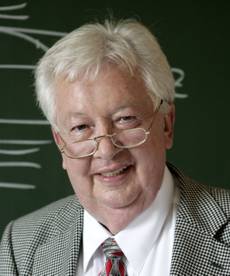 Walter Greiner合作论文数Frankfurt Institute for Advanced Studies72R. V. Jolos合作论文数Institut fur Kernphysik;Universitat zu Koln;Institut fur Kernphysik, Universitat zu Koln37Vazgen Sargsyan合作论文数36
 Aureliu Sandulescu合作论文数Department of Theoretical Physics, Institute of Atomic Physics27
 T. M. Shneidman合作论文数27Sp Ivanova合作论文数26Barnabas Apagyi合作论文数Institute of Physics;Budapest University of Technology and Economics24Nikolay Minkov合作论文数22
 Z. Harman合作论文数Max-Planck-Institut fur Kernphysik19
 Zhao En-Guang (赵恩广)合作论文数17
 P. O. Hess合作论文数Instituto de Ciencias Nucleares17S. B. Drenska合作论文数17
 Meenakshisundaram Balasubramaniam合作论文数IReS16Yu. V. Palchikov合作论文数16Jun-Qing Li (李君清)合作论文数16
 Heinrich Hora合作论文数16A. S. Zubov合作论文数16
 Christophor Kozhuharov合作论文数15J Cseh合作论文数15Carsten Brandau合作论文数Gesellschaft fuer Schwerionenforschung, GSI Helmholtzzentrum für Schwerionenforschung;ExtreMe Matter Institute, GSI Helmholtzzentrum für Schwerionenforschung14
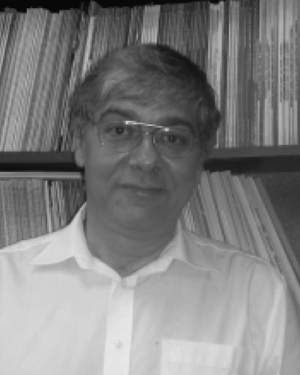 Alexandru Isar合作论文数Communications Department, Politehnica University of Timisoara14Martin Greiner合作论文数Corporate Technology, Information & Communications, Siemens AG14Jy Park合作论文数13
 Raj Kumar合作论文数Physics Department;Panjab University13
 Alexis Diaz-Torres合作论文数12Alexander B. Voitkiv合作论文数12
 R.K. Gupta合作论文数Tata Institute of Fundamental Research Bombay12F. Bosch合作论文数12
 Zbigniew Stachura合作论文数Instytut Fizyki Ja̧drowej12Ak Nasirov合作论文数11
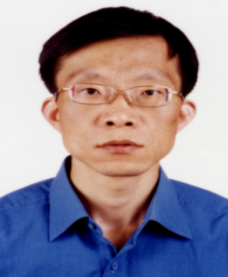 Wei Zuo (左维)合作论文数Institute of Modern Physics, Chinese Academy of Sciences;University of Chinese Academy of Sciences11
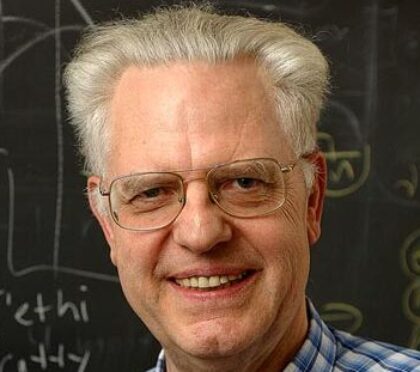 Ulrich Becker合作论文数Laboratory for Nuclear Science, Massachusetts Institute of Technology;Department of Physics, Massachusetts Institute of Technology11P. H. Mokler合作论文数11
 M. Steck合作论文数11
 Yew Kam Ho合作论文数Institute of Atomic and Molecular Sciences, Academia Sinica11Fritz Nolden合作论文数11
 Stefan Schippers合作论文数Institute of Experimental Physics I, Justus-Liebig-University Giessen11b franzke合作论文数10m strecker合作论文数10
 Shangui Zhou (周善贵)合作论文数Institute of Theoretical Physics, Chinese Academy of Sciences10
 Thomas Stöhlker合作论文数Institut für Optik und Quantenelektronik, Friedrich-Schiller-Universität Jena;Helmholtz-Instituts Jena;Atomic Physics Division, GSI Helmholtzzentrum für Schwerionenforschung GmbH9
 Huanqiao Zhang (张焕乔)合作论文数China Institute of Atomic Energy9
 Ning Wang (王宁)合作论文数Department of Physics, Guangxi Normal University9Artur Thiel合作论文数9P. Yotov合作论文数9
 K. Beckerta A. Muller合作论文数Gesellschaft fur Schwerionenforschung;cPhysics Department;Queen ' s University;cPhysics Department, Queen ' s University9




