Background: Digital interventions can help to overcome barriers to care, including stigma, geographical distance, and a lack of culturally appropriate treatment options. "We Can Do This" is a web-based app that was designed with input from cultural Objective: This study aimed to evaluate the effectiveness of the "We Can Do This" web-based app as a psychosocial treatment Methods: The web app was evaluated using a randomized waitlist controlled parallel group trial. Participants were Aboriginal and Torres Strait Islander people aged 16 years or older who self-identified as having used methamphetamine at least weekly for the past 3 months. Participants were randomized on a 1:1 ratio to receive either access to the web-based app for 6 weeks or a waitlist control group. Both groups received access to a website with harm minimization information. The primary outcome was help-seeking behavior, and days spent out of role due to methamphetamine use. Results: Participants (N=210) were randomized to receive either access to the web-based app (n=115) or the waitlist control condition (n=95). Follow-up was 63% at 1 month, 57% at 2 months, and 54% at 3 months. There were no significant differences in days of methamphetamine use in the past 4 weeks at 1 the month (mean difference 0.2 days, 95% CI-1.5 to 2 months (mean difference 0.6 days, 95% CI-1 to 2.4 days) or 3 months (mean difference 1.4 days, 95% CI-0.3 to 3.3 follow-up. There were no significant group differencesin K10 scores, SDS scores, days out of role, or help-seeking at any 3 follow-up timepoints. There was poor adherence to the web-based app, only 20% of participants in the intervention returned to the web-based app after their initial log-in. Participants cited personal issues and forgetting about the web-based as the most common reasons for nonadherence. Conclusions: We found poor engagement with this web-based app. The web-based app had no significant effects methamphetamine use or psychosocial well-being. Poor adherence and low follow-up hindered our ability to accurately evaluate the effectiveness of the web-based app. Future web-based apps for this population need to consider methods to increase participant engagement. Trial Registration: Australian New Zealand Clinical Trials Registry ACTRN12619000134123p; https://www.anzctr.org.au/Trial/Registration/TrialReview.aspx?id=376088 International Registered Report Identifier (IRRID): RR2-10.2196/14084
Background: Preventing and treating methamphetamine-related harm in Aboriginal and Torres Strait Islander populations is a significant challenge for health care services. Digital health care may offer opportunities to support individuals and families in ways that complement existing methamphetamine treatment options. This study responds to a community-identified priority as Aboriginal Community Controlled Health Services identified methamphetamine use as a key concern and sought support to respond to the needs of people who use methamphetamine and their families. Objective: This paper reports on a process evaluation of the web application's acceptability and feasibility when used by clients and clinicians in residential rehabilitation services and primary care. This study is part of a larger project entitled "Novel Interventions to address Methamphetamine use in Aboriginal and Torres Strait Islander Communities" (NIMAC), which seeks to develop culturally appropriate and strengths-based prevention and treatment interventions to reduce methamphetamine related harm. "We Can Do This" was a web application developed for Aboriginal and Torres Strait Islander people who are seeking to reduce or stop methamphetamine use. Methods: Clinicians and clients who had used the web application were recruited through Aboriginal Community Controlled Health Services and Aboriginal residential rehabilitation services in urban and regional Victoria and South Australia. Unidentified usage data was collected from all participants. After using the web application, those who indicated a willingness to be interviewed were contacted and interviewed by phone or in person and asked about the feasibility and acceptability of the web application. The framework method of analysis was used to structure and summarise the resulting qualitative data. Results: Interviews with 24 clients and 11 clinicians explored the acceptability and feasibility of the web application. Acceptability incorporated the following domains: affective attitude, burden, ethicality, cultural appropriateness, coherence, opportunity cost, perceived effectiveness, and self-efficacy. The evaluation of feasibility assessed barriers and facilitators to the implementation of the program, with a focus on demand, practicality, fidelity, and integration. Results indicated that both clients and clinicians found the web application content coherent, relatable, empowering, and culturally safe. Barriers to using the web application for clients included a lack of internet connectivity and personal issues such as scheduling. Conclusions: Process evaluation is often under-valued. However, as "We Can Do This" was new, innovative and targeted a hard-to-reach population, understanding its feasibility and acceptability as a clinical tool was essential to understanding its potential. "We Can Do This" is unique as the only evidence-based, culturally appropriate internet-based therapeutic program specifically designed for Aboriginal and Torres Strait Islander people who use methamphetamine. Findings suggest it was both acceptable and feasible as a low-cost adjunct to usual care in residential rehabilitation and primary care settings.
Objective Gatekeeper training programs are widely used with promising results for suicide prevention. However, studies have found that when delivered to Indigenous communities, outcomes can be variable or ineffective. This study is a feasibility trial of a gatekeeper program based on the standardised ‘Question, Persuade and Refer’ (QPR) approach, which was adapted to the cultural needs of local Aboriginal communities in the Shoalhaven region of New South Wales, Australia. The study aims to identify whether 1) knowledge of suicide and intentions to help increase over the course of completing the gatekeeper program; 2) participants of different educational backgrounds have similar outcomes in suicide literacy and intentions to help; and 3) Aboriginal people and non-Aboriginal people have similar outcomes. Methods One hundred individuals participated in the research, of which 50% identified as an Aboriginal person. Pre- and post-training questionnaires assessed whether participants experienced an increase in suicide literacy and intentions to support others at risk of suicide. Results Although pre-test scores for suicide literacy and intentions to help were high, these increased significantly from pre- to post-test. Those with no prior gatekeeper training showed larger changes in both suicide literacy and intentions to ask about suicide compared to those with prior training. Conclusion Overall, this study highlights that delivery of culturally adapted gatekeeper training is associated with improved suicide literacy and intentions to ask about suicide amongst trainees.
We Can Do This was a web-based application (web-app) developed for Aboriginal and Torres Strait Islander people who are seeking to reduce or stop methamphetamine use. This paper reports on a process evaluation of the web-app’s acceptability and feasibility when used by clients and clinicians in residential rehabilitation services and primary care. Clinicians and clients who had used the web-app were recruited via Aboriginal Community Controlled Health Services and Aboriginal residential rehabilitation services in urban and regional Victoria and South Australia. Non-identified usage data was collected from all participants. After using the web-app, those who indicated a willingness to be interviewed were contacted and interviewed by phone or in person and asked about the feasibility and acceptability of the web-app. Interviews with ten clients and eleven clinicians highlighted that both clients and clinicians found the content coherent, relatable, empowering and culturally safe. Barriers to using the web-app for clients included a lack of internet connectivity and personal issues such as scheduling. Process evaluation is often under-valued. However, as We Can Do This was new, innovative and targeted a hard-to-reach population, understanding its feasibility and acceptability as a clinical tool was essential to understanding its potential. We Can Do This is unique as the only evidence-based, culturally appropriate online therapeutic program specifically designed for Aboriginal and Torres Strait Islander people who use methamphetamine. Findings suggest it was both acceptable and feasible as a low-cost adjunct to usual care in residential rehabilitation and primary care settings.
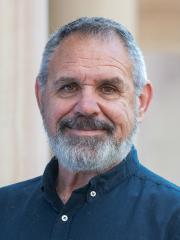 James Ward合作论文数Poche Centre for Indigenous Health, Faculty of Health and Behavioural Sciences, The University of Queensland4
 Carla Treloar合作论文数New South Wales National Centre in HIV Social Research4
 Rachel Reilly合作论文数4
 Brendan Quinn合作论文数3
 Rebecca Mcketin合作论文数3
 Nadine Ezard合作论文数The office of the United Nations High Commissioner for Refugees3Ike Fisher合作论文数2
 Leda Sivak合作论文数2Jack Nagle合作论文数2Julia Butt合作论文数2
 Yvette Roe合作论文数School of Health Sciences, University of South Australia2
 Adrian Dunlop合作论文数1
 Sandra Gendera合作论文数Social Policy Res Ctr, UNSW1
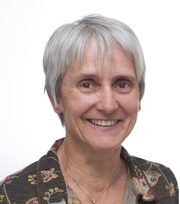 Kate Conigrave合作论文数School of Medicine, Faculty of Medicine and Health, The University of Sydney1Wilkes Edward合作论文数1
 Handan Wand合作论文数1
 Frank Deane合作论文数School of Psychology, University of Wollongong1Peter Caputi合作论文数1
 Mitchell Byrne合作论文数School of Psychology, University of Wollongong1
 Peter A. Meaney合作论文数Pediatrics Department, Stanford University1
 Dennis Gray合作论文数1




