5G networks have the potential for ultra-low latency communication, supporting a broad array of critical and delay-sensitive applications. However, end-to-end performance prediction in 5G scenarios is still a challenging problem, given the complexity of the system architecture and the interconnection of a multitude of interrelated parameters that contribute to delay. In this work, we report an experiment-driven investigation on the basis of an actual standalone 5G deployment to better understand how interdependent configuration parameters, such as TDD configuration and scheduling request (SR) settings, contribute to round-trip time (RTT). For instance, in a 2 ms TDD configuration, RTT was reduced by 30% after aligning SR periodicity with the frame structure, highlighting the decisive impact of scheduling configuration. Through the integration of fine-grained measurement and delay component analysis, we reveal the major contributors to latency and highlight the crucial role of empirical assessment and careful parameter tuning in realizing dependable low-latency operation in 5G networks.
Reconfigurable Intelligent Surfaces (RIS) leverage arrays of programmable elements to manipulate incident electromagnetic waves dynamically. In non-line-of-sight conditions between a 5G base station and user equipment, RIS can act as a passive relay, redirecting signals to get around obstacles. In this paper, we use the open-source Sionna library to assess the performance gains of RIS-assisted 5 G indoor communication. Specifically, we use Sionna's ray tracing module to reconstruct propagation paths and analyze coverage maps and received signal strength (RSS). The results show that while RIS can improve the received signal, an accurate estimation of the transmitter and receiver locations is required.
The design and development of new network protocols, architectures, and technologies requires an evaluation phase where the researcher must provide empirical evidence for the performance of their contributions, potentially in comparison to existing solutions. In this context, network emulation has proven to be an attractive approach as it offers more flexibility compared to traditional testing platforms, and more realism compared to simulation. Network emulators provide contained, customisable, and scalable testing environments both for researchers to evaluate their contributions and for the community to reproduce their results. However, two limitations to network emulation have been identified and well documented in the literature: its scalability limits and its accuracy issues. This paper1 documents our attempts to address these concerns. Our findings are distilled into Hifinet: a lightweight scalable and fidelity-aware distributed network emulator. We particularly show how Hifinet outperforms its state-of-the-art counterparts in terms of scalability and efficiency by working around the flaws of their design principles and the technological limitations of the tools they rely on. Hifinet is also fidelity-enhanced, in that it implements a well-theorised fidelity monitoring framework, which passively monitors emulated packet delays to evaluate realism of network emulation and accuracy of results. Another asset of Hifinet is its ability to infer underlying causes in case of erroneous emulation and guide the user through fixing them. This is achieved by using delay tomography algorithms and heuristics.
Distributed network emulators allow users to perform network evaluation by running large-scale virtual networks over a cluster of fewer machines. While they offer accessible testing environments for researchers to evaluate their contributions and for the community to reproduce its results, their use of limited physical network and compute resources can silently and negatively impact the emulation results. In this paper, we present a methodology that uses linear optimization to extract information about the physical infrastructure from emulation-level packet delay measurements, in order to pinpoint the root causes of emulation inaccuracy with minimal hypotheses. We evaluate the precision of our methodology using numerical simulations and then show how its implementation performs in a real network scenario.
Accurate estimation of the signal power received at a given location can be obtained through Ray Tracing (RT) propagation model. Nevertheless, processes involved in RT are extremely complex and not adapted for Radio Frequency (RF) mapping purposes. Particularly, the reception test process, responsible for validating received rays at given locations, contributes to over 98% of the overall RT complexity in large-scale scenarios. In this paper, we introduce a novel RT algorithm able to divide by a factor of 50 the RF map rendering time while limiting the difference in bitrate estimation to less than 1Mbps on average as compared to existing approaches. Our algorithm integrates hardware acceleration techniques for RT, proposes a new modeling of the terrain in the form of a triangular mesh, and introduces a new reception test able to efficiently calculate the signal power received per each triangle of the mesh. Our simulations show how these processes together can reduce the complexity of RF map generation, hence allowing the algorithm to scale to large-scale and precise scenarios.
—New cellular technologies combine complex software stacks and heterogeneous hardware. As a result, even if models and simulators are still essential to understand them, validation must go to the next level and rely on real software and hardware testbeds. Unfortunately, building comprehensive testbeds is expensive and this is why we propose the Sophia-node, a cloud-native cellular network testbed accessible to the community. In this demonstration, we show how to run arbitrary *G experiments in this testbed by following DevOps techniques.
Ray Tracing is an electromagnetic wave propagation modeling approach used for accurate generation of Quality of Service (QoS) maps in mobile networks. Due to its complexity, current implementation of Ray Tracing fails to generate such maps in wide areas. In this paper, we propose an optimization to Ray Tracing able to accurately generate QoS maps in a reasonable time. Using a site-specific ray launching technique and an alternative to the reception test process, we divide by almost 1200 the execution time of Ray Tracing with less than 2% of memory usage as compared to baseline solutions.
Ray Tracing is a propagation modeling approach that accurately estimates the signal power received by end users while considering the details of the environment in their vicinity. The accuracy of this estimation is at the cost of high computational load and high memory consumption due to the heavy computation performed by processes such as the Ray Generation. In this paper, we introduce a site-specific ray generation technique able to generate up to 1 million rays within 5 seconds and a root mean square error for bandwidth estimation within 2 Mbps. Depending on the location of the antenna, the coverage area, the type of the terrain and the computational resources available, our technique gives the minimum possible number of rays required to accurately estimate end-users' signal power received and their download bitrate.
Distributed Network emulators (e.g., Mininet Cluster Edition) have proven to be an attractive solution to perform extreme-scale network and systems evaluation on smaller-size testbeds and experiment platforms. They can provide contained, customisable, and scalable testing environments for researchers to evaluate their contributions and reproduce their results. The major drawback of this approach in network experimentation is the use of virtual components (hosts, network switches, etc.) that do not behave with perfect similarity to the physical components they emulate, mainly due to the concurrency in using the underlay network and computing resources. We thus present in this paper a methodology to monitor emulation fidelity by measuring the network delays of emulated packets, which relies on statistical metrics to evaluate their inaccuracy. We further dig into the possible sources of emulation inaccuracy and show how our system can detect them to avoid biased experiment results. We particularly show through a common experiment scenario how undetected network emulation errors can lead to biased results.
Evaluating exposure to radio frequencies (RF) at population-scale is important for conducting sound epidemiological studies about possible health impact of RF radiations. Numerous studies reported population exposure to RF radiations used in wireless telecommunication technologies, but used very small population samples. In this context, the real exposure of the population at scale remains poorly understood. Here, to the best of our knowledge, we report the largest crowd-based measurement of population exposure to RF produced by cellular antennas, Wi-Fi access points, and Bluetooth devices for 254,410 unique users in 13 countries from January 2017 to December 2020. First, we present methods to assess the population exposure to RF radiations using smartphone measurements obtained using the ElectroSmart Android app. Then, we use these methods to evaluate and characterize the evolution of RF exposure. We show that total exposure has been multiplied by 2.3 in the four-year period considered, with Wi-Fi as the largest contributor. The cellular exposure levels are orders of magnitude lower than regulation limits and are not correlated to national regulation policies. The population tends to be more exposed at home; for half of the study subjects, personal Wi-Fi routers and Bluetooth devices contributed to more than 50% of their total exposure. In this work, we showcase how crowdsource-based data allow large-scale and long-term assessment of population exposure to RF radiations.
5G enhanced Mobile broadband (eMBB) aims to provide users with a peak data rate of 20 Gbps in the Radio Access Network (RAN). However, since most Congestion Control Algorithms (CCAs) rely on startup and probe phases to discover the bottleneck bandwidth, they cannot quickly utilize the available RAN bandwidth and adapt to fast capacity changes without introducing large delay increase, especially when multiple flows are sharing the same Radio Link Control (RLC) buffer. To tackle this issue, we propose RAPID, a RAN-aware proxy-based flow control mechanism that prevents CCAs from overshooting more than the available RAN capacity while allowing near optimal link utilization. Based on analysis of up-to-date radio information using Multi-access Edge Computing (MEC) services and packet arrival rates, RAPID is able to differentiate slow interactive flows from fast download flows and allocate the available bandwidth accordingly. Our simulation and experimentation results with concurrent Cubic and BBR flows show that RAPID can reduce delay increase by a factor of 10 to 50 in both Line-of-Sight (LOS) and Non-LOS (NLOS) conditions while preserving high throughput in both 4G and 5G environments.
Emulation has become a popular approach for the validation and evaluation of network research. It provides researchers with a contained, customizable, and scalable testing environment, which can be easily packaged and published for potential readers to reproduce their results. However, as the network components are only virtual, emulation lacks the inherent realism of physical testbeds. In light of this, monitoring specific metrics of the emulated network has been proposed as a solution to mitigate to some degree inaccuracies caused by emulation. While this is not difficult to implement in a single-machine setting (e.g. with M ininet), monitoring is limited by the lack of time synchronization in scenarios where the emulation is distributed over multiple physical machines (e.g., D istrinet). In this paper we tackle the case of packet delay monitoring, to which we propose a methodology for passively measuring one-way delays with underlying assumptions about time synchronization, and round-trip delays otherwise. For an efficient implementation of our methodology, we propose an e BPF-based packet measurement tool that performs better than current packet sniffers under emulation-specific assumptions. We implement and evaluate our system in an open testbed and show that it can reach results within few microseconds of perfect accuracy and precision.
New cellular technologies combine complex software stacks and heterogeneous hardware. As a result, even if models and simulators are still essential to understand them, validation must go to the next level and rely on real software and hardware testbeds. Unfortunately, building comprehensive testbeds is expensive and this is why we propose the Sophia-node, a cloud-native cellular network testbed accessible to the community. In this demonstration, we show how to run arbitrary *G experiments in this testbed by following DevOps techniques.
The design and development of new network protocols, architectures, and technologies require an evaluation phase where the researcher must provide empirical evidence for the performance of their contributions. In this context, network emulation has proven to be an attractive approach as it offers more flexibility compared to traditional testing platforms, and more realism compared to simulation software. However, as emulation requires running multiple concurrent virtual network components on a limited amount of resources, it faces well-documented limitations in its scalability and accuracy. Our work is an attempt to address these issues by theorising the concept of emulation fidelity and developing a framework for its monitoring through passive measurement of emulated packet delays. The preliminary evaluation shows promising results and demonstrates the high potential of our approach.
Ray Tracing is a propagation modelling approach that accurately estimates the signal power received by end users while taking into account the details of the environment in their vicinity. This accuracy is at the cost of high computational load and high memory consumption due to the heavy computation performed by processes such as Ray Generation. In this paper, we introduce a site-specific ray generation technique able to generate up to 1 million rays within 5 seconds and a root mean square error for bandwidth estimation within 2 Mbps. Depending on the location of the antenna and the coverage area, our technique gives the minimum possible number of rays required in order to estimate end-users' signal power received and their download bitrate.
A science is defined by a set of encyclopedic knowledge related to facts or phenomena following rules or evidenced by experimentally-driven observations. Computer Science and in particular computer networks is a relatively new scientific domain maturing over years and adopting the best practices inherited from more fundamental disciplines. The design of past, present and future networking components and architectures have been assisted, among other methods, by experimentally-driven research and in particular by the deployment of test platforms, usually named as testbeds. However, often experimentally-driven networking research used scattered methodologies, based on ad-hoc, small-sized testbeds, producing hardly repeatable results. We believe that computer networks needs to adopt a more structured methodology, supported by appropriate instruments, to produce credible experimental results supporting radical and incremental innovations. This paper reports lessons learned from the design and operation of test platforms for the scientific community dealing with digital infrastructures. We introduce the SLICES initiative as the outcome of several years of evolution of the concept of a networking test platform transformed into a scientific instrument. We address the challenges, requirements and opportunities that our community is facing to manage the full research-life cycle necessary to support a scientific methodology.
5G enhanced Mobile broadband (eMBB) aims to provide users with a peak data rate of 20 Gbps in the Radio Access Network (RAN). However, since most Congestion Control Algorithms (CCAs) rely on startup and probe phases to discover the bottleneck bandwidth, they cannot quickly utilize the available RAN bandwidth and adapt to fast capacity changes without introducing large delay increase, especially when multiple flows are sharing the same Radio Link Control (RLC) buffer. To tackle this issue, we propose RAPID, a RAN-aware proxy-based flow control mechanism that prevents CCAs from overshooting more than the available RAN capacity while allowing near optimal link utilization. Based on analysis of up-to-date radio information using Multi-access Edge Computing (MEC) services and packet arrival rates, RAPID is able to differentiate slow interactive flows from fast download flows and allocate the available bandwidth accordingly. Our experiments with concurrent Cubic and BBR flows show that RAPID can reduce delay increase by a factor of 10 to 50 in both Line-of-Sight (LOS) and Non-LOS (NLOS) conditions while preserving high throughput.
Traditional loss-based Congestion Control Algorithms (CCAs) suffer from performance issues over wireless networks mostly due to their inability to distinguish wireless random losses from congestion losses. Different loss discrimination algorithms have been proposed to tackle this issue but they are not efficient for 4G networks since they do not consider the impact of various link layer mechanisms such as adaptive modulation and coding and retransmission techniques on congestion in LTE Radio Access Networks (RANs). We propose MELD (MEC-based Edge Loss Discrimination), a novel server-side loss discrimination mechanism that leverages recent advancements in Multi-access Edge Computing (MEC) services to discriminate packet losses based on real-time RAN statistics. Our approach collects the relevant radio information via MEC's Radio Network Information Service and uses it to correctly distinguish random losses from congestion losses. Our experimental study made with the QUIC transport protocol shows over 80% higher goodput when MELD is used with NewReno and 8% higher goodput when used with Cubic.
Peer-to-peer (P2P) locality has recently raised a lot of interest in the community. Indeed, whereas P2P content distribution enables financial savings for the content providers, it dramatically increases the traffic on inter-ISP links. To solve this issue, the idea to keep a fraction of the P2P traffic local to each ISP was introduced a few years ago. Since then, P2P solutions exploiting locality have been introduced. However, several fundamental issues on locality still need to be explored. In particular, how far can we push locality, and what is, at the scale of the Internet, the reduction of traffic that can be achieved with locality? In this paper, we perform extensive experiments on a controlled environment with up to 10 000 BitTorrent clients to evaluate the impact of high locality on inter-ISP links traffic and peers download completion time. We introduce two simple mechanisms that make high locality possible in challenging scenarios and we show that we save up to several orders of magnitude inter-ISP traffic compared to traditional locality without adversely impacting peers download completion time. In addition, we crawled 214 443 torrents representing 6 113 224 unique peers spread among 9 605 ASes. We show that whereas the torrents we crawled generated 11.6 petabytes of inter-ISP traffic, our locality policy implemented for all torrents would have reduced the global inter-ISP traffic by 40%.
 Thierry Turletti合作论文数INRIA88
 Chadi Barakat合作论文数DIANA Project-Team, Inria Centre, Universite Cote d’Azur37
 Arnaud Legout合作论文数INRIA - EPI DIANA22
 Thierry Parmentelat合作论文数18
 Dali Kaafar合作论文数Faculty of Science and Engineering, MQ school of Computing, Macquarie University16
 Fethi Filali合作论文数Qatar Mobility Innovations Center (QMIC)15
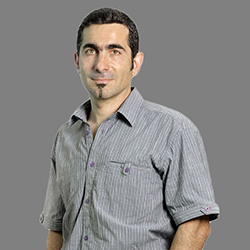 Claude Castelluccia合作论文数Inria13
 Mohamed Naoufal Mahfoudi合作论文数Université Côte d'Azur, Inria, France11Alina Quereilhac合作论文数11
 Daniel Câmara合作论文数EURECOM, Sophia-Antipolis, France11Stevens Le Blond合作论文数SWS, MPI9Emilio Mancini合作论文数8
 Mohammad Malli合作论文数Arab Open University8
 Diego Dujovne合作论文数8
 Laurent Mathy合作论文数University of Liège;Institute of Computing Technology, The Chinese Academy of Sciences8
 Mathieu Lacage合作论文数INRIA8
 Damien Saucez合作论文数INRIA Sophia Antipolis8
 Hajime Tazaki合作论文数University of Tokyo7
 Farouk Kamoun合作论文数CRISTAL Laboratory;University of Manouba;CRISTAL Laboratory, University of Manouba6Antoine Clerget合作论文数5Houssam ElBouanani合作论文数5
 Christophe Diot合作论文数Google5
 Frederic Urbani合作论文数5Rares Serban合作论文数5
 Ashwin Rao合作论文数Amar Nath and Shashi Khosla School of Information Technology, Indian Institute of Technology Delhi5Amine Ismail合作论文数4Bernard Tamba Sandouno合作论文数4
 Hardik Soni合作论文数4Shafqat Ur Rehman合作论文数Cheju National University4Julien Tribino合作论文数4
 Vincent Roca合作论文数4
 Kavé Salamatian合作论文数LISTIC, Universite de Savoie4
 Hahnsang Kim合作论文数4
 Hitoshi Asaeda合作论文数Graduate School of Media and Governance, Keio University4
 Christian Huitema合作论文数Microsoft4INRIA Sophia Antipolis合作论文数3Yamen Alsaba合作论文数3Nikos Makris合作论文数3
 Yanis Boussad合作论文数3
 Mamoutou Diarra合作论文数Ekinops Valbonne France3
 Leonardo Lizzi合作论文数university of trento3
 Thierry Ernst合作论文数3Hossam Afifi合作论文数Universite Paris-Saclay3
 Isabelle Chrisment合作论文数INRIA Sophia Antipolis3
 Fabien Ferrero合作论文数LEAT-UMR CNRS UNS 6071-250, rue Albert Einstein, 06560 Valbonne, FRANCE3
 Raymond Knopp合作论文数Communication Systems Department, Eurecom3
 Zainab Khallouf合作论文数ßINRIA Rhône Alpes3
 Sonia Mettali Gammar合作论文数CRISTAL LAB ENSI School of Engineering, Manouba, Tunisia3Pere Manils合作论文数3




