In this work, we present the design and evaluation of an immersive Cyber-Physical Control Room interface for remote mobile robots that provides users with both robot-egocentric and robot-exocentric 3D perspectives. We evaluate the Cyber-Physical Control room against a traditional robot interface in a mock disaster response scenario that features a mixed human-robot field team. In our evaluation, we found that the Cyber-Physical Control Room improved robot operator effectiveness by 28% while navigating a complex warehouse environment and performing a visual search. The Cyber-Physical Control Room also enhanced various aspects of human-robot teaming, including social engagement, the ability of a remote robot teleoperator to track their human partner in the field, and opinions of human teammate leadership qualities.
The 4th International Workshop on Virtual, Augmented, and Mixed Reality for Human-Robot Interaction (VAM-HRI) will bring together HRI, robotics, and mixed reality researchers to address challenges in mixed reality interactions between humans and robots. Topics relevant to the workshop include development of robots that can interact with humans in mixed reality, use of virtual reality for developing interactive robots, the design of augmented reality interfaces that mediate communication between humans and robots, the investigations of mixed reality interfaces for robot learning, comparisons of the capabilities and perceptions of robots and virtual agents, and best design practices. Special topics of interest this year include VAM-HRI research during the COVID-19 pandemic as well as the ethical implications of VAM-HRI research. VAM-HRI 2021 will follow on the success of VAM-HRI 2018-20 and advance the cause of this nascent research community.
Virtual, Augmented, and Mixed Reality for Human-Robot Interaction (VAM-HRI) has been gaining considerable attention in HRI research in recent years. However, the HRI community lacks a set of shared terminology and framework for characterizing aspects of mixed reality interfaces, presenting serious problems for future research. Therefore, it is important to have a common set of terms and concepts that can be used to precisely describe and organize the diverse array of work being done within the field. In this article, we present a novel taxonomic framework for different types of VAM-HRI interfaces, composed of four main categories of virtual design elements (VDEs). We present and justify our taxonomy and explain how its elements have been developed over the past 30 years as well as the current directions VAM-HRI is headed in the coming decade.
This paper describes TOBY, a visualization tool that helps a user explore the contents of an academic survey paper. The visualization consists of four components: a hierarchical view of taxonomic data in the survey, a document similarity view in the space of taxonomic classes, a network view of citations, and a new paper recommendation tool. In this paper, we will discuss these features in the context of three separate deployments of the tool.
We examined how human operator trust in navigational assistance differed when the assistance was human vs autonomous. As autonomy becomes ever more ubiquitous, it is critical to understand how trust in autonomous systems differs from that in another human. Benign navigational assistance was provided by either another human or an autonomous system and presented in an identical manner. Half of the subjects were deceived and told the assistance was provided by the opposite source. We quantified trust by how closely subjects' rover driving actions aligned with recommendations given by the navigational assistant. This metric of trust is objective, continuous, and unobtrusive. In addition, subjects self-reported their trust in the system after the experiment using a standard trust questionnaire. The presence of the navigational assistance changed subject behavior (p = 0.002) but there was not a significant difference between trust in the human and autonomous navigational assistance systems. This suggests that our subject pool was not more or less trusting in an autonomous system, as compared to assistance from another human, particularly when controlling for the system's efficacy. Self-reported trust on the post-experiment questionnaire correlated with objectively measured trust on difficult rover operating scenarios (p = 0.01, r = 0.45). Our findings inform future human-autonomy teaming design choices and provide a unique approach to quantify operator trust. Potential applications include crewed deep space missions where communication delays may require ground controllers to be replaced with onboard autonomous systems while maintaining and quantifying trust throughout.
Frameworks have begun to emerge to categorize Virtual, Augmented, and Mixed Reality (VAM) technologies that provide immersive, intuitive interfaces to facilitate Human-Robot Interaction. These frameworks, however, fail to capture key characteristics of the growing subfield of VAM-HRI and can be difficult to consistently apply due to continuous scales. This work builds upon these prior frameworks through the creation of a Tool for Organizing Key Characteristics of VAM-HRI Systems (TOKCS). TOKCS discretizes the continuous scales used within prior works for more consistent classification and adds additional characteristics related to a robot's internal model, anchor locations, manipulability, and the system's software and hardware. To showcase the tool's capability, TOKCS is applied to the ten papers from the fourth VAM-HRI workshop and examined for key trends and takeaways. These trends highlight the expressive capability of TOKCS while also helping frame newer trends and future work recommendations for VAM-HRI research.
The 5th International Workshop on Virtual, Augmented, and Mixed Reality for Human-Robot Interaction (VAM-HRI) will bring together HRI, robotics, and mixed reality researchers to address challenges in mixed reality interactions between humans and robots. Topics relevant to the workshop include development of robots that can interact with humans in mixed reality, use of virtual reality for developing interactive robots, the design of augmented reality interfaces that mediate communication between humans and robots, social applications for virtual and mixed reality in HRI, the investigations of mixed reality interfaces for robot learning, comparisons of the capabilities and perceptions of robots and virtual agents, and best design practices. Special topics of interest this year include VAM-HRI research during the ongoing COVID-19 pandemic as well as the ethical implications of VAM-HRI research. VAM-HRI 2022 will follow on the success of VAM-HRI 2018–21 and advance the cause of this nascent research community. Website: https://vam-hri.github.io
Test equating requires collecting data to link the scores from different forms of a test. Problems arise when equating samples are not equivalent and the test forms to be linked share no common items by which to measure or adjust for the group nonequivalence. Using data from five operational test forms, we created five pairs of research forms for each form, such that the equating relationship between each pair was known. Then we compared five approaches to adjusting for group nonequivalence in a situation where not only was group equivalence questionable, but the number of common items was small. We used a resampling approach to evaluate the linking accuracy of group adjustment using sample weights via minimum discriminant information adjustment (MDIA) using test takers' collateral (demographic) information, a weak anchor of only three items, or a mix of both. Overall, the use of both sample weights via MDIA and a weak anchor produced the most accurate result, while the direct (random groups) linking method assuming group equivalence produced the least accurate result due to nontrivial bias. For all five research forms, using both collateral information and anchor items only marginally improved linking accuracy compared to using the weak anchor alone.
Frameworks have begun to emerge to categorize Virtual, Augmented, and Mixed Reality (VAM) technologies that provide immersive, intuitive interfaces to facilitate Human-Robot Interaction. These frameworks, however, fail to capture key characteristics of the growing subfield of VAM-HRI and can be difficult to consistently apply. This work builds upon these prior frameworks through the creation of a Tool for Organizing Key Characteristics of VAM-HRI Systems (TOKCS). TOKCS discretizes the continuous scales used within prior works for more consistent classification and adds additional characteristics related to a robot's internal model, anchor locations, manipulability, and the system's software and hardware. To showcase the tool's capability, TOKCS is applied to find trends and takeaways from the fourth VAM-HRI workshop. These trends highlight the expressive capability of TOKCS while also helping frame newer trends and future work recommendations for VAM-HRI research.
Collaborative human-robot field operations rely on timely decision-making and coordination, which can be challenging for heterogeneous teams operating in large-scale deployments. In this work, we present the design of an immersive, mixed reality (MR) interface to support sense-making and situational awareness based on the data collection capabilities of both human and robotic team members. Our solution integrates state-of-the-art methods in environment mapping and MR so that users may gain rapid insights regarding the working environment, the current and previous locations of human and robot team members, and the environment data such team members have collected. We describe the implementation of our system, share lessons learned in collaborating with emergency responders throughout our design process, and offer a vision for the use of immersive displays for human-robot field team deployments in large-scale outdoor environments.
Equating the scores from different forms of a test requires collecting data that link the forms. Problems arise when the test forms to be linked are given to groups that are not equivalent and the forms share no common items by which to measure or adjust for this group nonequivalence. We compared three approaches to adjusting for group nonequivalence in a situation where not only is randomization questionable, but the number of common items is small. Group adjustment through either subgroup weighting, a weak anchor, or a mix of both was evaluated in terms of linking accuracy using a resampling approach. We used data from a single test form to create two research forms for which the equating relationship was known. The results showed that both subgroup weighting and weak anchor approaches produced nearly equivalent linking results when group equivalence was not met. Direct (random groups) linking methods produced the least accurate result due to nontrivial bias. Use of subgroup weighting and linking using the anchor test only marginally improved linking accuracy compared to using the weak anchor alone when the degree of group nonequivalence was small.
Educational Measurement: Issues and PracticeEarly View Commentary Commentary: Achieving Educational Equity Requires a Communal Effort Michael E. Walker, Educational Testing ServiceSearch for more papers by this author Michael E. Walker, Educational Testing ServiceSearch for more papers by this author First published: 16 September 2021 https://doi.org/10.1111/emip.12465Read the full textAboutPDF ToolsRequest permissionExport citationAdd to favoritesTrack citation ShareShare Give accessShare full text accessShare full-text accessPlease review our Terms and Conditions of Use and check box below to share full-text version of article.I have read and accept the Wiley Online Library Terms and Conditions of UseShareable LinkUse the link below to share a full-text version of this article with your friends and colleagues. Learn more.Copy URL Share a linkShare onEmailFacebookTwitterLinked InRedditWechat No abstract is available for this article. Early ViewOnline Version of Record before inclusion in an issue RelatedInformation
In this investigation, we used real data to assess potential differential effects associated with taking a test in a test center (TC) versus testing at home using remote proctoring (RP). We used a pseudo‐equivalent groups (PEG) approach to examine group equivalence at the item level and the total score level. If our assumption holds that the PEG approach removes between‐group ability differences (as measured by the test) reasonably well, then a plausible explanation for any systematic differences in performance between TC and RP groups that remain after applying the PEG approach would be the operation of test mode effects. At the item level, we compared item difficulties estimated using the PEG approach (i.e., adjusting only for ability differences between groups) to those estimated via delta equating (i.e., adjusting for any systematic differences between groups). All tests used in this investigation showed small, nonsystematic differences, providing evidence of trivial effects associated with at‐home testing. At the total score level, we linked the RP group scores to the TC group scores after adjusting for group differences using demographic covariates. We then compared the resulting RP group conversion to the original TC group conversion (the criterion in this study). The magnitude of differences between the RP conversion and the TC conversion was small, leading to the same pass/fail decision for most RP examinees. The present analyses seem to suggest little to no mode effects for the tests used in this investigation.
In this work, we explore how advances in augmented reality technologies are creating a new design space for long-distance telepresence communication through virtual avatars. Studies have shown that the relative size of a speaker has a significant impact on many aspects of human communication including perceived dominance and persuasiveness. Our system synchronizes the body pose of a remote user with a realistic, virtual human avatar visible to a local user wearing an augmented reality head-mounted display. We conducted a two-by-two (relative system size: equivalent vs. small; leader vs. follower), between participants study (N = 40) to investigate the effect of avatar size on the interactions between remote and local user. We found the equal-sized avatars to be significantly more influential than the small-sized avatars and that the small avatars commanded significantly less attention than the equal-sized avatars. Additionally, we found the assigned leadership role to significantly impact participant subjective satisfaction of the task outcome.
Teleoperation remains a dominant control paradigm for human interaction with robotic systems. However, teleoperation can be quite challenging, especially for novice users. Even experienced users may face difficulties or inefficiencies when operating a robot with unfamiliar and/or complex dynamics, such as industrial manipulators or aerial robots, as teleoperation forces users to focus on low-level aspects of robot control, rather than higher level goals regarding task completion, data analysis, and problem solving. We explore how advances in augmented reality (AR) may enable the design of novel teleoperation interfaces that increase operation effectiveness, support the user in conducting concurrent work, and decrease stress. Our key insight is that AR may be used in conjunction with prior work on predictive graphical interfaces such that a teleoperator controls a virtual robot surrogate, rather than directly operating the robot itself, providing the user with foresight regarding where the physical robot will end up and how it will get there. We present the design of two AR interfaces using such a surrogate: one focused on real-time control and one inspired by waypoint delegation. We compare these designs against a baseline teleoperation system in a laboratory experiment in which novice and expert users piloted an aerial robot to inspect an environment and analyze data. Our results revealed that the augmented reality prototypes provided several objective and subjective improvements, demonstrating the promise of leveraging AR to improve human-robot interactions.
Robots hold promise in many scenarios involving outdoor use, such as search-and-rescue, wildlife management, and collecting data to improve environment, climate, and weather forecasting. However, autonomous navigation of outdoor trails remains a challenging problem. Recent work has sought to address this issue using deep learning. Although this approach has achieved state-of-the-art results, the deep learning paradigm may be limited due to a reliance on large amounts of annotated training data. Collecting and curating training datasets may not be feasible or practical in many situations, especially as trail conditions may change due to seasonal weather variations, storms, and natural erosion. In this paper, we explore an approach to address this issue through virtual-to-real-world transfer learning using a variety of deep learning models trained to classify the direction of a trail in an image. Our approach utilizes synthetic data gathered from virtual environments for model training, bypassing the need to collect a large amount of real images of the outdoors. We validate our approach in three main ways. First, we demonstrate that our models achieve classification accuracies upwards of 95% on our synthetic data set. Next, we utilize our classification models in the control system of a simulated robot to demonstrate feasibility. Finally, we evaluate our models on real-world trail data and demonstrate the potential of virtual-to-real-world transfer learning.
Robot teleoperation can be a challenging task, often requiring a great deal of user training and expertise, especially for platforms with high degrees-of-freedom (e.g., industrial manipulators and aerial robots). Users often struggle to synthesize information robots collect (e.g., a camera stream) with contextual knowledge of how the robot is moving in the environment. We explore how advances in augmented reality (AR) technologies are creating a new design space for mediating robot teleoperation by enabling novel forms of intuitive, visual feedback. We prototype several aerial robot teleoperation interfaces using AR, which we evaluate in a 48-participant user study where participants completed an environmental inspection task. Our new interface designs provided several objective and subjective performance benefits over existing systems, which often force users into an undesirable paradigm that divides user attention between monitoring the robot and monitoring the robot's camera feed(s).
 Daniel J Szafir合作论文数Center for Neuroscience, College of Arts and Sciences, University of Colorado Boulder;ATLAS Institute, University of Colorado Boulder15
 Sooyeon Kim合作论文数College of Pharmacy, Chungbuk National University15
 Frederick Mchale合作论文数5
 Christine T. Chang合作论文数University of Colorado Boulder4
 Thomas R. Groechel合作论文数University of Southern California4
 Eric Rosen合作论文数Boston Dynamics AI Institue4
 Jessica Zosa Forde合作论文数Computer Science Department, Brown University3
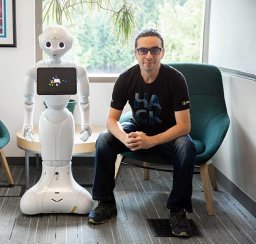 Hooman Hedayati合作论文数University of Colorado Boulder3Hongwen Guo合作论文数3
 Brent Bridgeman合作论文数Educational Testing Service, Princeton, NJ3J. O. Burns合作论文数2hyeonjoo j oh合作论文数2
 Jamison McGinley合作论文数2
 Nisar Ahmed合作论文数University of Colorado Boulder2
 Bryce Ikeda合作论文数University of Colorado at Boulder2
 Steve McGuire合作论文数2
 Tom Williams合作论文数2
 Jack O Burns合作论文数Center for Astrophysics and Space Astronomy, College of Arts and Sciences, University of Colorado Boulder;Department of Astrophysical and Planetary Sciences, College of Arts and Sciences, University of Colorado Boulder;Department of Physics, College of Arts and Sciences, University of Colorado Boulder2
 Tathagata Chakraborti合作论文数AI-Interaction Lab, IBM Research AI2
 Torin Clark合作论文数Mission Systems Division, The Charles Stark Draper Laboratory, Inc.2Gautam Puhan合作论文数2
 Irene Rae合作论文数Google1Jungkoo Kang合作论文数1Maitrey Gramopadhye合作论文数1
 Maciej K. Wozniak合作论文数Division of Robotics, Perception and Learning, KTH Royal Institute of Technology1
 Matthew B. Luebbers合作论文数Department of Computer Science, University of Colorado Boulder;Engineering Center, University of Colorado Boulder;Collaborative AI and Robotics Lab1Jennifer Lee合作论文数1Kevin Larkin合作论文数1
 Priyanka Karki合作论文数1
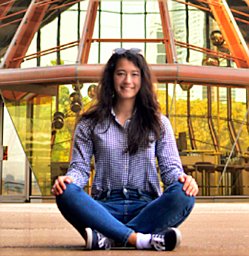 Jamie Voros合作论文数Bioastronautics Laboratory, University of Colorado-Boulder1Catherine Diaz合作论文数Univ Colorado Boulder, Dept Comp Sci, 1111 Engn Dr, Boulder, CO 80309 USA1
 Zhaozhong Chen合作论文数University of Colorado Boulder1
 Thao Phung合作论文数Colorado School of Mines, Golden, CO, USA1
 Usama S. Ali合作论文数Educational Testing Service, Princeton, NJ, USA1
 Matt Whitlock合作论文数University of Colorado1
 Sarath Sreedharan合作论文数Department of Computer Science, College of Natural Sciences, Colorado State University1
 Blair David合作论文数Fenner School of Environment and Society, The Australian National University1
 Jinghua Liu合作论文数1
 Mani Menon合作论文数Vattikuti Urology Institute, Henry Ford Hospital1
 Michael L. Iuzzolino合作论文数Meta1Daniel R. Eignor合作论文数1With Neil J. Dorans合作论文数1
 Christoffer Heckman合作论文数Field of Theoretical and Applied Mechanics;Cornell University;Field of Theoretical and Applied Mechanics, Cornell University1Angela M Ford合作论文数1Shelby J. Haberman合作论文数1
 Christian Muise合作论文数Model Understanding Lab, Queen's University1Gary G. Ford合作论文数1




