© Publications mathématiques de l’I.H.É.S., 1980, tous droits réservés. L’accès aux archives de la revue « Publications mathématiques de l’I.H.É.S. » (http:// www.ihes.fr/IHES/Publications/Publications.html) implique l’accord avec les conditions générales d’utilisation (http://www.numdam.org/conditions). Toute utilisation commerciale ou impression systématique est constitutive d’une infraction pénale. Toute copie ou impression de ce fichier doit contenir la présente mention de copyright.
Let p = a(2) + (2b)(2) be a prime. It is shown that each of the two Diophantine equations x(2) py(2) = a or 4b has integral solutions.
Let p = a 2 + ( 2 b ) 2 p = a^{2} + (2b)^{2} be a prime. It is shown that each of the two Diophantine equations x 2 − p y 2 = a x^{2}-py^{2} =a or 4 b 4b has integral solutions.
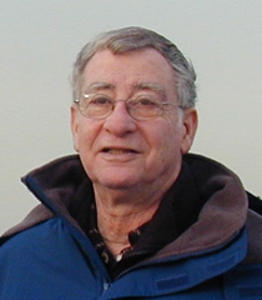
Michio Suzuki was one of the group of brilliant young Japanese mathematicians who entered college after World War II. He received his Ph.D. in 1952 from the University of Tokyo in absentia. Prior to that he came to the University of Illinois in 1952 as a research fellow. He joined the faculty of the University in 1953, a position he held until his sudden death. His thesis was in the theory of finite groups, and this subject was to occupy him for his whole career. His early work included a study of the lattice of all subgroups L(G) of a group G . He proved that if G is a noncyclic simple finite group and H is a finite group with L(G×G) = L(H ×H), then G is isomorphic to H. At the time it was not known whether L(G) determines G up to isomorphism. However, by using the classification of the finite simple groups, it is possible to prove the more natural result that if G and H are noncyclic finite simple groups with L(G) = L(H), then G is isomorphic to H. (Consideration of a cyclic group G of prime order indicates why L(G×G) should always be much richer than L(G).) During the summer of 1952 he came to Ann Arbor, attracted by the presence of Richard Brauer, who was on the faculty there. Brauer was one of the very few senior mathematicians in the USA who worked on questions concerning the structure of finite simple groups. He and Brauer ran a seminar that summer, which John Walter and I and others attended. I met him in that seminar while I was a graduate student at the University of Michigan. The theory of finite groups became a subject of intensive research during the next few years. One reason was John Thompson’s thesis, which introduced new methods and ideas to the subject; another was the progress in character theory sparked by Brauer and Suzuki. It is necessary here to make some definitions. By way of background, an important theorem due to Frobenius says that if H is a finite transitive permutation group such that the subgroup fixing a letter is nontrivial and no nonidentity element fixes two or more letters, then H contains a proper nontrivial normal subgroup M such that every nonidentity element x in M has centralizer CH (x) contained in M. All known proofs of this theorem use character theory. We use this theorem to make a definition: A finite group H is a Frobenius group Editor’s Note. Michio Suzuki, an early leader in the effort to classify finite simple groups, died May 31, 1998, in Tokyo at the age of seventy-one. Born October 2, 1926, in Japan, he obtained his Ph.D. from the University of Tokyo in 1952, with Shoukichi Iyanaga as official advisor. Suzuki’s teachers included also Yasuo Akizuki and Kenkichi Iwasawa. Suzuki assumed a faculty position at the University of Illinois, Urbana-Champaign, beginning the next year. In 1956–57 he took a leave of absence to work at Harvard University as research associate with Richard Brauer, with support from the National Science Foundation. He was a professor in the Center for Advanced Study at the University of Illinois from 1968 until his death. Suzuki held a postdoctoral fellowship in 1952–53 and a Guggenheim Fellowship in 1962–63, received the Academy Prize from the Japan Academy in 1974 for his work in group theory, and was awarded an honorary doctoral degree from the University of Kiel, Germany, in 1991. He had visiting appointments at the University of Chicago (1960–61); the Institute for Advanced Study in Princeton (1962–63, 1968–69, and spring 1981); the University of Tokyo (spring 1971); the Universities of Hokkaido, Osaka, and Tokyo (1981 and 1985); and the University of Padua, Italy (1994).
Let G be a finite sporadic simple group. Then there exist groups n.G, n.G.2 and, in case n is even, n.G.2i, the group isoclinic to but not isomorphic to n.G.2. The Schur indices of all irreducible characters of these groups are computed. In a previous paper this was done for the groups n.G (with one exception). The division algebra corresponding to a character is determined by all the local Schur indices. These are all listed in the tables in Section 6 using the notation from the ATLAS.
Efim Zelmanov has received a Fields Medal for the solution of the restricted Burnside problem. This problem in group theory had long been known to be related to the theory of Lie algebras. In fact, to a large extent it is the problem in Lie algebras. A precise statement of it can be found in Section 2 below.
Let K be a field and let G be a finite group. G is K-admissible if there exists a Galois extension L of K with G = Gal(L/K) such that L is a maximal subfield of a central K-division algebra. This paper contains a characterization of those number fields which are Q(16)-admissible. This is the same class of number fields which are 2A(6) = SL(2, 9) and 2A(7) admissible.
Let K be a field and let G be a finite group. G is K-admissible if there exists a Galois extension L of K with G=Gal(L/K) such that L is a maximal subfield of a central K-division algebra. We characterize those number fields K such that H is K-admissible where H is any subgroup of SL(2, 5) which contains a S2-group. The method also yields refinements and alternate proofs of some known results including the fact that A5 is K-admissible for every number field K.
Some conditions are stated which imply that certain finite groups are Galois groups over some number fields and related fields.
(1986). Finite Linear Groups, the Commodore 64, Euler and Sylvester. The American Mathematical Monthly: Vol. 93, No. 9, pp. 717-719.
Without Abstract
Let χ be an irreducible character of a finite groupG. Letp=∞ or a prime. Letm p (χ) denote the Schur index of χ overQ p , the completion ofQ atp. It is shown that ifx is ap′-element ofG such that\(X_u \left( x \right) \in Q_p \left( X \right)\) for all irreducible charactersX u ofG thenm p (χ)/vbχ(x). This result provides an effective tool in computing Schur indices of characters ofG from a knowledge of the character table ofG. For instance, one can read off Benard’s Theorem which states that every irreducible character of the Weyl groupsW(E n), n=6,7,8 is afforded by a rational representation. Several other applications are given including a complete list of all local Schur indices of all irreducible characters of all sporadic simple groups and their covering groups (there is still an open question concerning one character of the double cover of Suz).
I wish to thank the organizers of this symposium for inviting me to speak and enabling me to discuss some consequences of the classification of the finite simple groups.
 Gian‐Carlo Rota合作论文数2Norman Steenrod合作论文数2Kenneth Hoffman合作论文数2Arthur Mattuck合作论文数2
 Michio Suzuki合作论文数2
 Stephen Smale合作论文数David Geffen School of Medicine, University of California, Los Angeles2O. G. Harrold合作论文数2Leonard Chastkofsky合作论文数2Henry Helson合作论文数2
 David Buchsbaum合作论文数2R. Creighton Buck合作论文数2Everett Pitcher合作论文数2Irving Reiner合作论文数2George B. Seligman合作论文数2Paul T. Bateman合作论文数2
 Saunders Mac Lane合作论文数The University of Chicago2Bertram Yood合作论文数2Henry P Mckean合作论文数2George Daniel Mostow合作论文数2Murray Gerstenhaber合作论文数University of Pennsylvania2Herbert Federer合作论文数2Richard W. Pierce合作论文数1Morton L. Curtis合作论文数1A. W. Tucker合作论文数1Eldon Dyer合作论文数1George W. Mackey合作论文数1david benson合作论文数1Charles B. Morrey合作论文数1Samuel Eilenberg合作论文数1c b morrey合作论文数1J. G. Thompson合作论文数1
 Jonathan Green合作论文数Division of Neuroscience and Experimental Psychology, School of Biological Sciences, Faculty of Biology, Medicine and Health, The University of Manchester1
 Paul Emery合作论文数School of Medicine, Faculty of Medicine and Health, University of Leeds;Leeds Biomedical Research Centre1
 Felix Browder合作论文数Rutgers University1
 Simeon Reich合作论文数Department of Mathematics, Technion - Israel Institute of Technology1L Auslander合作论文数1
 Irving Kaplansky合作论文数Mathematical Sciences Research Institute1
 Luis A. Caffarelli合作论文数Department of Mathematics, University of Texas at Austin;Institute for Computational Engineering and Sciences, University of Texas at Austin1Marshall Hall合作论文数1
 Louis Nirenberg合作论文数New York University1Wolfgang Wasow合作论文数1
 Leonard Scott合作论文数1Israel Berstein合作论文数1Irving Glicksberg合作论文数1Roger Lyndon合作论文数1
 Richard S. Palais合作论文数Department of Mathematics, University of California, Irvine1Joseph J Kohn合作论文数1Sigurdur Helgason合作论文数1Ronald Solomon合作论文数1




