This narrative and conceptual review examines how irrigation management in Australian sugarcane can progress from practice-based efficiency improvement towards an integrated evidence system supporting productivity, water-quality improvement and nature-positive reporting. It reviews regional irrigation conditions, standard and best management practices, crop and water modelling, grower-facing scheduling, Internet of Things (IoT) monitoring and automation, remote sensing, forecast-informed irrigation and artificial intelligence. It then considers natural-capital, nature-positive and environmental-reporting frameworks relevant to reef-connected sugarcane landscapes. The review identifies a persistent gap between information generated by irrigation technologies and the credible, transparent and auditable indicators required for broader environmental reporting. A five-part integration pathway connects established components from farm monitoring and modelling, environmental-pressure estimation, supporting evidence, documented methods and defined reporting applications. Existing studies support individual components and several adjacent linkages; this review maps how they could operate as a whole system. Farm-scale technology outputs are treated as evidence of management actions or modelled pressure pathways rather than direct measurements of ecosystem condition. Smart irrigation is thereby positioned as an enabling component linking farm profitability, reduced pressure on soil and water assets, and more credible nature-positive water management in Australian sugarcane.
Accurate root zone soil moisture (RZSM) estimation is essential for precision irrigation (PI) systems that seek to optimize water use efficiency. Large-scale in-situ sensors for direct measurement are costly, while existing satellites lack depth resolution for direct RZSM data. Hence, in-direct RZSM estimation methods are required. Literature illustrates that RZSM at a location is related to changing soil-water-plant characteristics. Therefore, these characteristics can provide auxiliary information on RZSM changes. By leveraging auxiliary information derived from changing soil-water-plant characteristics, this paper enables indirect RZSM estimation at non-sensor locations, effectively addressing the limitations inherent in direct RZSM measurement techniques initially discussed. Compared to existing methods, deep learning (DL) is most suitable for such data associations as they are auto-tuned to extract relative relationships from diverse big data. Among DL models, sequential models are apt for finding these relationships as all these variables are time-series sequences. The transformer neural network (TNN) is the state-of-the-art DL model for analyzing sequences. However, for in-direct RZSM estimation, the data associations within a location and multiple sensor sites with the target need to be found. Conventional TNN cannot incorporate such simultaneous multi-associations, hence, we develop a new TNN model called the hybrid TNN model, which is able to facilitate the capturing of complicated dependencies through thoughtful feature selection and engineering. First, sensor locations exhibiting analogous downscaled 1-km satellite soil moisture (SM) are identified. Next, a dynamic multilayer perceptron (D-MLP) network discerns highly correlated auxiliary-RZSM data, utilizing both ground-based and downscaled satellite data. Following this, the dual attention module identifies essential multi-associations, leveraging selected sensor and target region information. Finally, the Bayesian layer averages multi-location RZSM using the conditional probability generated based on relative relationships to yield the target location RZSM estimate. Our proposed model shows 13.066% better RZSM estimation compared to popular sequential models. The hybrid TNN RZSM estimates are used to monitor root water depletion tolerance levels for optimal PI schedules, which shows 10.846% water and 10.339% cost-saving on our selected sites. Overall the proposed model effectively demonstrates that a more accurate PI predictive algorithm saves water, improves resource conservation, and reduces irrigation costs.
Grant-free random access is an effective solution to enable massive access for future Internet of Vehicles (IoV) scenarios based on massive machine-type communication (mMTC). Considering the uplink transmission of grant-free based vehicular networks, vehicular devices sporadically access the base station, the joint active device detection (ADD) and channel estimation (CE) problem can be addressed by compressive sensing (CS) recovery algorithms due to the sparsity of transmitted signals. However, traditional CS-based algorithms present high complexity and low recovery accuracy. In this manuscript, we propose a novel alternating direction method of multipliers (ADMM) algorithm with low complexity to solve this problem by minimizing the $\ell _{2,1}$ norm. Furthermore, we design a deep unfolded network with learnable parameters based on the proposed ADMM, which can simultaneously improve convergence rate and recovery accuracy. The experimental results demonstrate that the proposed unfolded network performs better performance than other traditional algorithms in terms of ADD and CE.
Soil moisture (SM) is a crucial parameter of hydrological processes as it affects the exchange of water and heat at the land/atmosphere interface. Regional hydrological applications (floods and modeling of small basins) and agricultural applications (irrigation and agricultural land mapping) require daily SM values having a spatial resolution of at least 1-km. This requirement is currently unmet by existing satellite missions. Notably, SM has variability over three dimensions. As such, accurate prediction of satellite SM requires multiple bidirectional spectra-spatiotemporal analyses. However, current state-of-the-art SM downscaling models cannot yet fulfill this requirement. This article proposes a new bidirectional long short-term memory (LSTM) model dubbed the 3-D bidirectional LSTM (3D-Bi-LSTM), which downscales the soil moisture active passive (SMAP) global daily 9-km SM to daily 1-km SM. In the proposed downscaling model, the region-specific soil moisture indices (SMIs) are first extracted using a covariance-adaptive convolutional neural network (CNN) to support the extraction of important distinctive information from multispectral data. Next, the CNN output is provided to the 3D-Bi-LSTM to perform the bidirectional analysis of spatial correlation within a feature and spectral correlation between features over multiple time instants. Experimental results demonstrate the proposed model outperforms the state-of-the-art networks. An ablation study, transferability assessment, and feature importance study further demonstrate the proposed 3D-Bi-LSTM’s efficiency.
The massive amount of data usage for light field (LF) information poses grand challenges for efficient compression designs. There have been several LF video compression methods focusing on exploring efficient prediction structures reported in the literature. However, the number of possible prediction structures is infinite, and these methods fail to fully exploit the intrinsic geometry between views of an LF video. In this paper, we propose a deep learning-based high-efficiency LF video compression framework by exploiting the inherent geometrical structure of LF videos. The proposed framework is composed of several crucial components, namely sparse coding based on a universal view sampling method (UVSM) and a CNN-based LF view synthesis algorithm (LF-CNN), a high-efficiency adaptive prediction structure (APS), and a synthesized candidate reference (SCR)-based inter-frame prediction strategy. Specifically, instead of encoding all the views in an LF video, only parts of views are compressed while the remaining views are reconstructed from the encoded views with LF-CNN. The prediction structure of the selected views is able to adapt itself to the similarity between views. Inspired by the effectiveness of view synthesis algorithms, synthesized results are served as additional candidate references to further reduce inter-frame redundancies. Experimental results show that the proposed LF video compression framework can achieve an average of over 34% bitrate savings against state-of-the-art LF video compression methods over multiple LF video datasets.
Capturing the directions of light by light field cameras powers next-generation immersive multimedia applications. A critical problem in taking advantage of the rich visual information in light field images is depth estimation. Conventional light field depth estimation methods build a cost volume that measures the photo-consistency of pixels refocused to a range of depths, and the highest consistency indicates the correct depth. This strategy works well in most regions but usually generates blurry edges in the estimated depth map due to occlusions. Recent work shows that integrating occlusion models to light field depth estimation can largely reduce blurry edges. However, existing occlusion handling methods rely on complex edge-aided processing and post-refinement, and this reliance limits the resultant depth accuracy and impacts on the computational performance. In this paper, we propose a novel occlusion-aware vote cost (OAVC) which is able to accurately preserve edges in the depth map. Instead of using photo-consistency as an indicator of the correct depth, we construct a novel cost from a new perspective that counts the number of refocused pixels whose deviations from the central-view pixel are less than a small threshold, and utilizes that number to select the correct depth. The pixels from occluders are thus excluded in determining the correct depth. Without the use of any explicit occlusion handling methods, the proposed method can inherently preserve edges and produces high-quality depth estimates. Experimental results show that the proposed OAVC outperforms state-of-the-art light field depth estimation methods in terms of depth estimation accuracy and computational complexity.
Rainfall event forecasting is prominently done using climate models (CMs) to produce multiple forecasts for the same rainfall event. The best forecast is complicated to find and hence has not yet been explored in the CMs. Recent advances in deep learning methods have provided an exceptional ability to investigate intricate weather patterns from big climate data. In this article, a hybrid climate learning model (HCLM) is proposed that utilizes both the CM and the deep learning models for improving the rainfall forecast. More specifically, a probabilistic multilayer perceptron (PMLP) network evaluates multiple forecasts from the CM-generated forecasts and selects the best one. The selected forecast is next passed onto a hybrid deep long short-term memory (HD-LSTM) network, which looks back and learns the relationship of the selected forecast with corresponding rainfall and temperature observations to produce the next-day rainfall forecast. The experimental results from various climate zones in Australia show that the HCLM outperforms existing state-of-the-art climate and deep learning models.
Better irrigation practices, through increased water use efficiency, can deliver economic, environmental and social benefits to agro-ecological systems. Increasingly, farmers world-wide are turning to automated irrigation systems to save them a significant amount of time by remotely turning on and off pumps and valves. Unfortunately, automated irrigation systems on their own do not provide insight on (i) the amount and timing of irrigation required by the crop or, (ii) how irrigation schedules should change with soil type, farm management and climate. To unravel these complex interactions, an irrigation decision support tool is needed. However, due to the high frequency of irrigations across dozens of irrigation blocks, and the need to irrigate almost all year-round, irrigation decision support tools can be very tedious and time-consuming for farmers to use daily. For these reasons, many farmers will not adopt these tools, and in doing so, fail to optimise irrigation use efficiency due to the multi-factorial nature of the farming system. This paper describes a cybernetic closed-loop solution that was piloted on a sugarcane farm in north-eastern Australia. The solution seeks to improve irrigation management by seamlessly integrating the WiSA automated irrigation system with the IrrigWeb irrigation decision support tool. Specifically, an Uplink program and a Downlink program were implemented in the pilot study. The Uplink program saved the farmer a significant amount of time. Instead of the farmer manually entering in records, Uplink uploaded irrigation and rainfall data directly to the irrigation decision support tool. The Downlink program calculated and applied irrigation schedules automatically using IrrigWeb, but also incorporated practical constraints, such as energy, pumping capability, irrigation priorities and farmer irrigation preference. The simulation results demonstrated that the developed closed-loop solution could effectively manage irrigation scheduling by incorporating irrigation decision support tools with practical constraints. Systems that increase water use efficiency can deliver practical, profitable and environmental benefits to irrigated agricultural systems worldwide.
Given the huge concerns regarding carbon emission from the coal-based fossil fuels, global warming, and electricity crisis, the renewable distributed energy resources (DERs) such as solar panels are going to be integrated into the smart grid. This grid can spread the intelligence of the energy distribution and control system from the central unit to the remote areas, hence enabling accurate state estimation and real-time monitoring of these intermittent energy resources. This chapter proposes a discrete-time linear quadratic Gaussian (LQG) controller to stabilize the microgrid states under fading channel condition. Extensive simulations have shown the validity of the scheme using a linear model of microgrid incorporating DERs. Simulations show that it is better to use the smaller number of step size and fading parameter to stabilize the DER states.
Light field videos provide a rich representation of real-world, thus the research of this technology is of urgency and interest for both the scientific community and industries. Light field applications such as virtual reality and post-production in the movie industry require a large number of viewpoints of the captured scene to achieve an immersive experience, and this creates a significant burden on light field compression and streaming. In this paper, we first present a light field video dataset captured with a plenoptic camera. Then a new region-of-interest (ROI)-based video compression method is designed for light field videos. In order to further improve the compression performance, a novel view synthesis algorithm is presented to generate arbitrary viewpoints at the receiver. The experimental evaluation of four light field video sequences demonstrates that the proposed ROI-based compression method can save 5%-7% in bitrates in comparison to conventional light field video compression methods. Furthermore, the proposed view synthesis-based compression method not only can achieve a reduction of about 50% in bitrates against conventional compression methods, but the synthesized views can exhibit identical visual quality as their ground truth.
This chapter proposes an H-infinity-based microgrid state estimation algorithm. First of all, the renewable microgrid is represented by the state-space framework. For doing this, the renewable distributed energy resource such as solar panel is connected to the IEEE-4 bus distribution power system. Then the internet things (IoT)-based smart sensors are used to obtain the system measurements. The energy management system adopts the H-infinity-based state estimation algorithm where it will no need to know the exact noise statistics. The simulation is conducted with and without sensor faults as well as large disturbance conditions. It demonstrates that the H-infinite can effectively estimate the system states under sensor fault and large disturbance conditions.
Better irrigation practices can lead to improved yields through less water stress and reduced water usage to deliver economic benefits for farmers. More and more sugarcane growers are transitioning to automated irrigation in the Burdekin and other regions. Automated irrigation systems can save farmers a significant amount of time by remotely turning on and off pumps and valves. However, the system could be improved if it could be integrated with tools that factor in the weather, crop growing conditions, water deficit, and crop stress, to improve irrigation use efficiency. IrrigWeb is a decision-support tool that is turned to as a solution to this problem. IrrigWeb uses CANEGRO to help farmers decide when to irrigate and how much to apply. Farmers can then use this information to plan their irrigation management. However, managing irrigation is a considerable time investment for Burdekin farmers. A tool is needed to integrate the auto-irrigation system (e.g. WiSA) and IrrigWeb to provide a smarter irrigation solution. An uplink program (WiSA to IrrigWeb) has been successfully developed and implemented as part of a pilot study. It saves farmers a significant amount of time by uploading irrigation and rainfall data automatically instead of the farmer having to input them manually. This paper focuses on developing a smarter irrigation-scheduling tool that connects IrrigWeb to WiSA. A downlink program was developed to download, calculate and apply irrigation schedules automatically. In this process, sugarcane irrigators will spend less time manually setting up irrigation schedules as it will happen automatically. The simulation results demonstrated that the downlink program could improve the scheduling by incorporating practical limitations, such as pumping capacity or pumping time constraints, that are found on the farm.
This paper derives a state-space model of wireless power transfer (WPT) systems to be used for the purpose of state estimation and controller design considering the internet of things (IoT) communication networks. After expressing the WPT systems into a state-space linear equation, the elements of IoT, such as sensors are deployed to obtain the state information. Then, an innovative IoT based communication infrastructure is proposed for sensing, actuating, and transmitting the information to the control center. In order to know the operating condition of the WPT systems, the Kalman filter based dynamic state estimation algorithm is proposed considering the IoT infrastructure. Afterwards, the optimal controller is designed to regulate the system states. Simulation results indicate that the proposed approaches can accurately estimate and stabilise the WPT states. Therefore, the developed frameworks are valuable in designing the IoT based smart control center for WPT systems.
In contrast to traditional centralized estimation methods, this letter proposes a distributed dynamic state estimation method for microgrids incorporating distributed energy resources. Specifically, distributed filter structure is designed in an interconnected way, where packet losses obviously occur between them. Then the error function is written in a compact form using the matrix property of the Kronecker product. Afterwards, it can be transformed into a linear matrix inequality. Finally, the local and neighboring gains for the distributed estimator are effectively computed after solving the convex optimization problem. Simulation result shows that the proposed method can well estimate the system state within 10 iterations.
Irrigation management is a considerable time investment for many sugarcane farmers. Better irrigation practices can lead to improved yields through less water stress and reduced water usage to deliver economic benefits for farmers. In some cases reduced runoff and deep drainage from excess irrigation can also deliver benefits to the environment. The Internet of Things (IoT) is about allowing things to sense, to communicate, and thus create opportunities for more direct integration between the physical world and computer-based systems. IoT has been transforming all spheres of life into smart homes, smart cities, and smart healthcare. Today's farms can leverage IoT to remotely monitor sensors, manage and control harvesters and irrigation equipment, and utilise artificial intelligence based analytics to quickly analyse operational data combined with third party information, to provide new insights and improve decision-making. This project focuses on improving irrigation management by integrating the auto-irrigation system (e.g., WiSA) and IrrigWeb (a sugarcane irrigation scheduling tool) to provide a smarter irrigation solution using IoT. The system generates a two-way communication channel between these two platforms, which allows them to share data. Specifically, the uplink program (WiSA to IrrigWeb) was developed and deployed on a Burdekin farm. It connects the farmer's WiSA to IrrigWeb, by uploading irrigation data automatically. The farmer's irrigation records are automatically loaded into IrrigWeb. This saves the farmer time and makes irrigation scheduling more efficient. Another benefit is that the farmer can now see the exact amount of water being applied to each field and make modifications to the irrigation management, if required. Moreover, automating the data transfer from WiSA to IrrigWeb will greatly improve the potential for uptake and use of technologies like IrrigWeb. On the other hand, the downlink program (IrrigWeb to WiSA) will be developed to automatically apply scheduling from IrrigWeb to WiSA. Combining the uplink and downlink programs, a smarter irrigation management system can automatically control sugarcane irrigation, and ultimately make sugarcane irrigation fully autonomous.
Due to the sheer size of Light Field (LF) video, the traffic of LF video is many times larger than traditional multimedia, which brings new challenges on how to efficiently store and transmit this huge amount of complex data. In this paper, we propose an interactive LF video streaming system with user-dependent view selection and coding scheme. The user trajectory prediction model proposed in this paper can be used to calculate the viewing area of the user in a limited consecutive number of time slots. With the projection model, the system can determine the interested views of the user for transmission. Furthermore, we construct a special LF video sequence with only the selected view at a consecutive number of time slots. By reducing the number of views for transmission, the system can significantly reduce the traffic load in transmission and realize a low-latency real-time LF video application.
In contrast to the traditional filtering approaches, this paper presents a message passing algorithm for multi-area interconnected power systems. The interconnected power system incorporating the thermal turbines and electrical vehicles is expressed as a state-space framework. The phasor measurement units are used to obtain the system state information. After receiving the sensing information at the energy management systems, the factor graph based message passing algorithm is developed. This algorithm can estimate the system states in a distributed way considering the Bayesian network. Simulation result shows that the developed scheme can be well estimated the system states.
In this paper, a novel no-reference (NR) Quality of Experience (QoE) assessment model for frame freezing of mobile video is proposed. Four source video sequences with smooth motion intensity which were extracted from LIVE mobile database have been used to create different types of test sequences. Two subjective experiments are conducted with these distorted sequences, and the Differential Mean Opinion Scores (DMOS) are obtained. Then a QoE model is proposed based on the experimental results. This model can quantitatively measure the perceptual quality of users' experience when they are watching the frame freezing videos. Due to the lack of publicly available datasets, we establish a new database of mobile videos with frame freezing distortion based on the LIVE mobile database. The proposed model is compared with three other QoE assessment metrics on the new database, and the result shows the proposed model has a better performance than others.
This paper explores the optimal filtering problem for microgrid state estimation considering packet losses in the internet of things (IoT) networks. The considered IoT networks collect microgrid information from smart sensors and send control messages to actuators where sensors and actuators are linked over a lossy network. Explicitly, the distribution power system incorporating renewable distributed energy resources such as wind turbine is represented as a state-space model where IoT element such as smart sensors are deployed to obtain measurements. This sensing information is transmitted to the fusion center through a lossy IoT communication network where measurements are lost. This paper proposes an optimal estimator based on the mean squared error between the actual states and its estimate. Afterwards, a state feedback controller is designed based on the semidefinite programming approach under the condition of packet dropouts in the IoT network. The efficacy of the proposed approaches are demonstrated by presenting an environment-friendly microgrid model incorporating distributed energy resources.
We investigate the relevance of medical and demographic information in predicting the presence of heart disease in an individual. We apply a variety of ensemble and deep learning techniques with hyperparameter tuning and feature selection, resulting in a maximum test accuracy of 78%. Model averaging does not signicantly improve prediction accuracy, and the same points tend to be misclassied by all the models that don’t overt. is suggests that the errors in our data can mainly be aributed to irreducible error in the problem.
 Wei Xiang合作论文数School of Computing, Engineering & Mathematical Sciences, La Trobe University;Cisco-La Trobe Centre for AI and Internet of Things, La Trobe University10
 yvette everingham合作论文数4
 Md. Masud Rana合作论文数4
 Neethu Madhukumar合作论文数College of Science and Engineering, James Cook University, Cairns, QLD, Australia3
 Qiang Peng (彭强)合作论文数School of Computing and Artificial Intelligence, Southwest Jiaotong University3
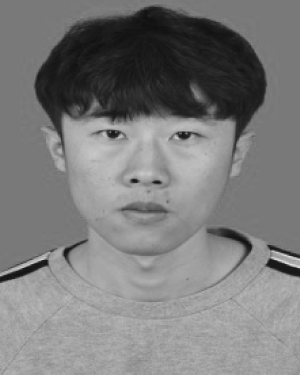 Tao Huang合作论文数2
 Kang Han合作论文数Cisco-La Trobe Centre for AI and Internet of Things, La Trobe University;School of Computing, Engineering & Mathematical Sciences, La Trobe University2
 Bronson Philippa合作论文数2
 Bing Wang (王兵)合作论文数College of Resources and Environmental Engineering, Guizhou University2
 Xuehua Li (李学华)合作论文数2Xiaobing Dang合作论文数1Yuan Yang (杨媛)合作论文数1
 Lei Yuan合作论文数1
 Pan Gao (高攀)合作论文数College of Computer Science and Technology, Nanjing University of Aeronautics and Astronautics1
 YiFan Zhang合作论文数The University of Queensland1
 Sagnik Majumder合作论文数University of Texas at Austin;Apple1
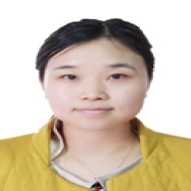 Min Jia (贾敏)合作论文数Communication Research Center, School of Electronics and Information Engineering, Harbin Institute of Technology1
 Clinton Fookes合作论文数School of Electrical Engineering & Robotics, Faculty of Engineering, Queensland University of Technology1
 Bong Jun Choi合作论文数Sch Comp Sci Engn, Soongsil Univ1




