Correction for ‘A new phosphotungstate-supported rhenium carbonyl derivative: synthesis, characterization and catalytic selective oxidation of thiophenes’ by Jingkun Lu et al., CrystEngComm, 2019, 21, 7322–7328.
POM-supported metal carbonyl derivatives (PMCDs) represent a family of tremendous potential catalysts owing to their peculiar physical and chemical properties. Yet low-valence transition metal-substituted Dawson-type PMCD catalysts are uncommon. Hence, we synthesized a tricobalt-substituted PMCDs by conventional aqueous solution method, [Na(H2O)5](NH4)7[P2W15O56Co3(H2O)3(OH)3Re(CO)3]·13H2O (1), and characterized by single crystal X-ray diffraction crystallography, IR, and thermogravimetric analyses (TGA), etc. The obtained compound 1 was employed as a catalyst for the oxidation of diphenylmethane (DPM) to benzophenone, giving 96.8% yield in the presence of tert-butyl hydroperoxide (TBHP) and pyridine. The control experiments indicate that Co metal ion plays an important role in the catalytic reactions. As a side note, the electrospray ionization mass spectrometry (ESI-MS) and UV spectroscopy showed that 1 can retain its integrity in solution, and magnetic measurements indicated that 1 exhibited a weaker ferromagnetic interaction at low temperature.
We synthesized a new phosphotungstate-supported rhenium carbonyl derivative, [N(CH3)4]6H4[P2W17O62{Re(CO)3}2]·25H2O, existing the first {Re2} fragment. Moreover, it also exhibits high efficiency for the selective oxidation of thiophenes.
A novel polyoxometalate cluster, i.e., Na1.5H4.5[(CH3)(4)N](2){[Mn(CO3](4)(Se2W11O43)}center dot 9H(2)O (1), has been successfully synthesized under moderately acidic conditions. Compound 1 contains four electron-donating {Mn(CO)(3)}(+) organometallic entities, which are grafted over an unprecedented heteropolytungstate electron-acceptor group. Compound 1 was further structurally characterized by various physicochemical techniques like elemental analyses, inductively coupled plasma (ICP) analyses, IR and UV-vis spectroscopy, electrochemistry, and single-crystal X-ray diffraction, and so on. The polyoxoanion of 1 comprises a novel {Se2W11} fragment, which is obtained from molecular assembly of rare {SeW3} and {SeW8} species. Evaluation of the data from solution-state IR spectrum showed excellent agreement with the solid state IR spectrum, indicating the intact clusters in the CH3CN/Na2SO4 solvent. Also, negative electrospray ionization mass spectrometry (ESI-MS) was an alternative tool to verify the stability of 1 in the mixed solvent. Additionally, the resulting hybrid can act as a catalyst for cyclic carbonate formation from the reactants epoxides and CO2 under modest reaction conditions in conjunction with a 1-ethyl-1-methylpyrrolidinium bromide (2). The good activity can be substantiated due to the cooperative influence of polyoxoanion and Br- ions. Complex 1 can also be easily recycled and reused three times without obvious decrease of catalytic activity.
A monomeric tellurotungstate(iv)-supported rhenium carbonyl derivative: Na2H2[(CH3)4N]6[Te2W20O70{Re(CO)3}2]·20H2O (1) has been successfully isolated and structurally characterized by single crystal X-ray diffraction crystallography, IR and UV-Vis spectroscopy, thermogravimetric analysis, etc. In particular, complex 1 could act as a efficient and reusable heterogeneous catalyst for selective epoxidation of various alkenes including different cycloalkenes, styrene derivatives, internal and long-chain alkenes. For example, cis-cyclooctene undergoes up to 98.2% conversion and >99% selectivity at 75 °C in acetonitrile with 30% H2O2 as an oxidant. Additionally, the electrocatalytic property of 1 for NO2- reduction was also investigated.
N-4- (4 - chloro- 3 -trifluoromethyl -phenyl) -7 - methoxy - quinazoline -4, 6-diamine (1) exhibited potential biological activities in medicine, 4-chloro-7-fluoro-6-nitro-quinazoline (2) is an important intermediate in compound 1. In this work, a rapid synthetic method for compound 1 was established. The compound 1 was synthesized from the commercially available 4-chloro-7-fluoro-6-nitro-quinazoline 2 through three steps including substitution with phenylamine, nucleophilic substitution reaction and reduction reaction. The structures were confirmed by (HNMR)-H-1. Furthermore, the synthetic method was optimized.
C23H25MnN9NiOS4, monoclinic, P2(1)/c (no. 14), a = 19.48(1) angstrom, b = 7.462(4) angstrom, c = 21.41(1) angstrom, beta = 109.824(8)degrees, V = 2928.6 angstrom(3), Z = 4, R-gt(F) = 0.0811, wR(ref)(F-2) = 0.2123, T = 293 K.[GRAPHICS].
Four isomorphous lanthanide complexes, [Ln2(L)6(H2O)2]·2H2O [Ln=Ce (1), Ln=Nd (2), Ln=Sm (3), Ln=Pr (4)] (HL=4-Hydroxy-6-methylnicotinic acid) were synthesized by the reaction of nitrate salts of LnIII and HL by hydrothermal method, which were characterized by single-crystal X-ray diffraction, elemental analysis, FT-IR spectra, UV–vis spectra, TG analyses and X-ray powder diffraction (XRPD). The crystal structures of 1–4 consist of homodinuclear species, which bridged by two oxygen atoms from two L ligands. The photoluminescence properties of compounds 3 and 4 in the solid state at room temperature were investigated. The complex 3 is demonstrated orange–red luminescence, while the luminescence spectrum of complex 4 is typical for the praseodymium complexes.
We investigated a possible association between CASP-10 gene polymorphisms and susceptibility to cancer through a meta-analysis.Eight studies with a total of 29,936 cancer cases and 34,041 healthy controls were included.Meta-analysis results showed that the rs13006529*T carrier was significantly associated with increased cancer risk (OR = 1.17, 95%CI = 1.01-1.36,P = 0.03).However, rs3900115 and rs13010627 showed no association with cancer susceptibility (all P > 0.05).In the subgroup analysis by cancer type, we found that the rs13006529*T carrier was a risk factor for breast cancer (OR = 1.17, 95%CI = 1.01-1.36,P = 0.03).Similarly, no association was found between CASP-10 polymorphisms and susceptibility to lymphoma, myeloma, melanoma, or lung cancer (all P > 0.05).This meta-analysis suggests that the rs13006529*T carrier in the CASP-10 gene might be a risk factor for cancer susceptibility, especially for breast cancer.
In the centrosymmetric binuclear title compound, [Cu2(C7H5O2)4(C7H9N)2], the CuII atom is coordinated by four O atoms from benzoate anions and one N atom from a dimethylpyridine ligand. A paddle-wheel-like dimer is formed by two CuII ions and four benzoate anions with two 3,5-dimethylpyridine ligands at the axial position of the CuII ions. The dihedral angle between the two unique benzene rings is 84.26 (16)°. The dihedral angles between the pyridine ring and the benzene rings are 61.67 (15) and 34.27 (14)°. There is π–π stacking of inversion-related pyridine rings, with a centroid–centroid distance of 3.833 (2) Å.
C16H15BrN2O2, monoclinic, P2(1)/n (no. 14), a = 13.839(3) angstrom, b = 11.322(2) angstrom, c = 9.776(2) angstrom, beta = 94.347(3)degrees, V = 1527.3 angstrom(3), Z = 4, R-gt(F) = 0.040, wR(ref)(F-2) = 0.094, T = 298 K.
C13H10Cl2N2O, monoclinic, P2/c (no. 13), a = 14.603(3) angstrom, b = 4.323(2) angstrom, c = 20.445(3) angstrom, beta = 102.234(2)degrees, V = 1261.4 angstrom(3), Z = 4, R-gt(F) = 0.042, wR(ref)(F-2) = 0.101, T = 298 K.
By microwave irradiation, the intermediates of imidazolium ionic liquids: 1-Butyl-3-methylimidazolium bromide ([bmim]Br), 1-propyl-3-methylimidazolium bromide ([pmim]Br), 1-hexyl-3-methylimidazolium bromide ([c6mim]Br) were synthesized, respectively from 1-methylimidazole and organic bromide(1-bromobutane, 1-bromopropane, 1-bromohexane). The optimal technological conditions were obtained by the crossed experiment, i.e., 1-methylimidazole/ organic halide (in mole): 1:1.1, temperature: 80 °C, time: 20 min. The product yield was 90 % and more. Each of them reacted with HPF 6 for 4 h at room temperature, respectively to get hydrophobic imidazolium ionic liquids, i.e., 1-butyl-3-methyl-imidazolium hexafluorophosphate ([bmim]PF 6), 1-propyl-3-methyl-imidazolium hexafluorophosphate ([pmim]PF 6), 1-hexane-3-methyl-imidazolium hexafluorophosphate ([c 6mim]PF 6). The product yield was about 50 %. Their structures were analyzed and identified by UV-vis, IR and H' NMR spectra, respectively.
A single crystal of energetic compound 4-amino-1,2,4-triazolium picrate(4-ATPA) was cultured from methanol solvent at 25 ℃.The compound crystallized in the orthorhombic system,is space group Pcnb with a=9.177(4),b=13.279(6),c=19.855(6) ,V=2419.5(16) 3,Dc=1.720 g·cm-3,Z=8,μ(MoKα)=0.152 mm-1 and F(000)=1280.Of the 2580 total reflections,2194 were unique(Rint=0.0048).The final R=0.0588 and wR=0.1370 for 2194 observed reflections with I2σ(I).Single X-ray diffraction reveals that the structure is composed of 4-amino-1,2,4-triazolium cation and picric anion.
The title compound, C18H15N3O2, was prepared by the reaction of 2-methoxynaphthaldehyde with nicotinic acid hydrazide in methanol. The dihedral angle between the naphthalene ring system and the pyridine ring is 9.2 (3)°. An intramolecular C—H...N hydrogen bond is observed. In the crystal structure, molecules are linked into chains running along the c axis by intermolecular N—H...O hydrogen bonds.
The title compound, C(14)H(13)N(3)O(2), was prepared by the reaction of 2-methoxy-benzyaldehyde with nicotinic acid hydrazide in methanol. The dihedral angle between the benzene and pyridine rings is 5.9 (3)°. In the crystal structure, mol-ecules are linked by inter-molecular N-H⋯O hydrogen bonds, leading to the formation of chains along the c axis; adjacent chains are linked via C-H⋯O and C-H⋯N hydrogen bonds.
The title compound, C14H13N3O2, was prepared by the reaction of 2-methoxybenzyaldehyde with nicotinic acid hydrazide in methanol. The dihedral angle between the benzene and pyridine rings is 5.9 (3)°. In the crystal structure, molecules are linked by intermolecular N—H...O hydrogen bonds, leading to the formation of chains along the c axis; adjacent chains are linked via C—H...O and C—H...N hydrogen bonds.
The title compound, C(18)H(15)N(3)O(2), was prepared by the reaction of 2-methoxy-naphthaldehyde with nicotinic acid hydrazide in methanol. The dihedral angle between the naphthalene ring system and the pyridine ring is 9.2 (3)°. An intra-molecular C-H⋯N hydrogen bond is observed. In the crystal structure, mol-ecules are linked into chains running along the c axis by inter-molecular N-H⋯O hydrogen bonds.
In the title Schiff base compound, C(13)H(9)Br(2)N(3)O(2), there is an intra-molecular O-H⋯N hydrogen bond involving the hydroxyl substituent and the adjacent hydrazine N atom. The mol-ecule is almost planar, the dihedral angle between the benzene ring and the pyridine ring being 5.7 (2)°. In the crystal structure, symmetry-related mol-ecules are linked via N-H⋯O hydrogen bonds, forming chains propagating in [001].
In the title compound, [Y-2(C4H4O4)(2)(C2O4)(H2O)(2)](n), the flexible succinate anion assumes a gauche conformation and bridges the eight-coordinated Y atoms, generating two-dimensional layers parallel to (010). The coordination polymer layers are linked into a three- dimensional framework by the rigid oxalate ligands. The oxalate ions are located on a center of inversion. Intermolecular O-H center dot center dot center dot O hydrogen bonds help to stabilize the crystal structure.
 Yong-Qing Su合作论文数10Chun-Xiang Wang合作论文数9Zhi-Feng Li合作论文数5Xinyi Ma合作论文数5Li Cong (李琮)合作论文数5
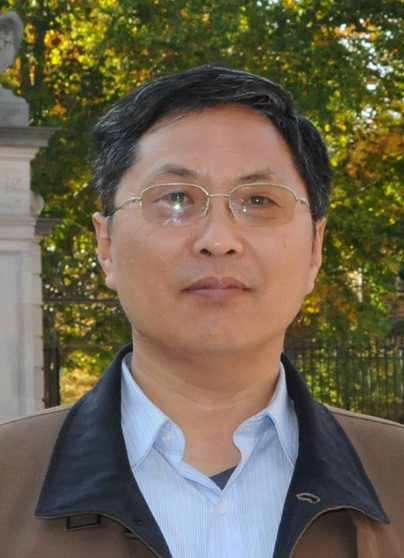 Jingyang Niu (牛景杨)合作论文数College of Chemistry and Molecular Sciences, Henan University;Department of Subject Construction, Henan University5
 Pengtao Ma (马鹏涛)合作论文数College of Chemistry and Molecular Sciences, Henan University5Jingkun Lu合作论文数4Junwei Feng合作论文数4
 Jingping Wang (王敬平)合作论文数College of Chemistry and Molecular Sciences, Henan University4Jia-Ge Jia合作论文数3Shuhua Xiong合作论文数3chunxiang wang合作论文数2Cx Wang合作论文数2Baijie Xu合作论文数2Qian Guo合作论文数2Qilin Li合作论文数2Peipei He合作论文数2YunZhi Tang (唐云志)合作论文数2Qiong Ruan (阮琼)合作论文数2L. P. Song合作论文数2Yuhui Tan合作论文数2Yong Xiao合作论文数2Limei Liu (刘利梅)合作论文数2
 Fuchen Liu合作论文数天津理工大学化学化工学院2Shao-Hu Chen合作论文数2Yongfu He (何永福)合作论文数2Qing-Hua Zhang合作论文数1Yan-Wen Chao合作论文数1Changhui Xin合作论文数1Zhihao Liu (刘智浩)合作论文数1DeQiang Han合作论文数1LI Zhi-feng合作论文数1S Yan合作论文数1Zhi-Hua Mao合作论文数1Qian Zhang合作论文数1Xianwen Wang合作论文数1Shao-ping YANG (杨韶平)合作论文数1Yun ZHONG (钟云)合作论文数1YangYiQiang Ou (欧阳轶强)合作论文数1LanFang Zheng (郑兰芳)合作论文数1
 Zhifeng Li (李志锋)合作论文数Tencent AI Lab1
 Ying Chen (陈颖)合作论文数Chinese Academy of Quality and Inspection & Testing1
 Xujie Yang (杨绪杰)合作论文数School of Chemistry and Chemical Engineering, Nanjing University of Science and Technology1
 Chao-Jun Li (李朝军)合作论文数Green Chemistry Laboratory, Department of Chemistry, McGill University1
 Vikram Singh合作论文数Faculty of Science, Banaras Hindu University1




