Cultural relics have their unique artistic, cultural and historical value, and the protection of important cultural relics is conducive to the inheritance of historical culture. As a kind of cementing agent and binder commonly seen in cultural relics protection, epoxy resin is widely used in the bonding and consolidation of various materials in cultural relics, which has important practical application value. In this review, a systematic classification of commonly used epoxy resins, including their molecular structures, synthesis reactions and properties are provided, the problems and solutions of epoxy resin in cultural relics protection are summarized. The solutions are classified into three aspects: functional epoxy resin, blending modification, and other modification. Representative application examples of epoxy resin are listed in the field of cultural relics protection, and the development direction of epoxy resin in cultural relics protection in the future is proposed, which provides useful guidance for the modification of epoxy resin and its application in cultural relics protection in the future.
In the present investigation, a novel fine inclusion removal technology due to the dispersed in-situ phase induced by composite ball burst reaction was put forward. A composite sphere with this function was designed and the composite sphere burst process at steelmaking temperature was analysed. The results indicate that the compact strength of the composite ball is so high that it will not break up as it intrudes into the molten steel. The composite sphere has a high thermal stability at steelmaking temperature. Usually, the composite sphere burst reaction takes place after it has intruded into the molten steel for a few seconds. The fine bubbles and slag droplets can be released due to the composite sphere burst reaction. Compared with the conventional technology, the bubbles and slag droplets induced by this novel technology are much finer. The size distribution of the bubble and the slag droplet is between 20 and 200 μm. The dispersion of these fine bubbles and slag droplets contributes to collision with inclusion.
Aqueous zinc-ion batteries (AZIBs) are increasingly regarded as promising candidates for large-scale energy storage, because of their advantageous features such as high safety, low cost, abundant resources, and environmental friendliness. However, challenges persist with zinc anodes, including issues such as low Coulombic efficiency (CE) and poor long-term cycle stability due to zinc dendrites, hydrogen evolution, and passivation reactions. These challenges are mainly attributed to the thermodynamic instability of zinc anodes in aqueous electrolytes, leading to a shorter battery cycle life. The optimization of the electrolyte structure has emerged as a straightforward and impactful strategy, making substantial advancements in addressing issues associated with zinc anodes in a systematic manner. This account undertakes a comprehensive analysis of the formation process of the interface structure between the electrolyte and the zinc anode. Strategies for optimization involve precise regulation of the Zn nucleation layer, the construction of in situ artificial anode interface optimization, and the design of the solid electrolyte interphase (SEI) protective layer. By delving into these critical aspects, the review aims to provide a concise synthesis and future outlook on electrolyte interface structure design strategies for aqueous zinc-ion batteries, offering valuable insights for enhancing overall battery performance.
Industrial trials have been carried out on the base of the former experimental research and the CaCO3 proportion in composite sphere, feeding amount, and composite sphere feeding mode have been investigated. The fine inclusion removal mechanism has been analyzed. The results indicate that feeding composite sphere in RH degasser is a novel process and small inclusion in the molten steel can be removed effectively. CaCO3/CaO ratio in composite sphere has a great effect on the inclusion removal efficiency. More feeding times and a little feeding amount can increase the composite sphere utilization efficiency. Compared with the conventional inclusion removal technology, the number density of the oxide inclusion can be decreased to a lower level and the inclusion size becomes much finer. Using this novel process, T.O. in the as-cast slab can approach to 6 ppm.
A novel desulphurisation process in a RH (Ruhstahl-Hausen Process) degasser (RH aside spray technique) has been proposed, plant trials have been carried out and the ruling factors have been analysed. The results indicate that the new desulphurisation process can not only obtain high desulphurisation degree of above 80% but also avoid unfavorable fluorite powder flux. The sulfur in the molten steel can be removed from 40 similar to 80 ppm to less than 10 similar to 20 ppm . The injection amount of the powder flux is about 5 kg per ton steel. The desulphurisation effect is perfect and stable, which is suitable for ultra-low-carbon electrical steel deep desulphurisation in RH degasser. Enlargement of the interfacial reaction area is considered to accelerate the desulphurisation process. Further study is recommended.
Polymer-based materials play a crucial role in progressive electronic devices and electric power systems due to their excellent ferroelectric and dielectric performances. High ferroelectricity of the polymers could be achieved even at a low electric field with ferroelectric nanofillers introduced. However, the origin of the extra ferroelectricity enhancements of these composites besides the intrinsic ferroelectricity of fillers are still ambiguous. Herein, the Ca2Nb3O10 (CNO) nanosheets were selected as ferroelectric nanofillers, which were embedded into the polyvinylidene fluoride (PVDF)-based polymer matrix. Numerous characterization results manifested that the surface of ferroelectric nanofillers could induce the formation of polar-oriented amorphous fractions (OAFs) in the composites. Experimental results indicated these formed OAFs are the origination of the enhanced ferroelectricity of the composites. In contrast, the aluminum oxide layer was constructed onto the CNO surface to cut off the interaction between the CNO nanosheets and the polymer matrix. These effects could be eliminated when the direct contact between the nanofiller and polymer matrix is interrupted, which facilitates the energy storage performance enhancements of the composites. This work reveals the origin of the extra ferroelectricity enhancements of polymer-based composites containing ferroelectric nanofillers. It may blaze new trails in realizing multifunctional applications of polymer-based composites via surface engineering.
The surface quality of interstitial free (IF) steel is determined by inclusion distribution in the slab. It is necessary to determine the optimal cleaning depth of the slab in different states when the surface of IF steel slab is cleaned automatically by on-line flame. Based on the equipment and production practice in ANSTEEL, slab samples have been taken from the inner and outer arc surfaces of each slab along the width direction to study the shape, quantity and maximum size of inclusions under different cleaning depths. The results indicate that with the increase of cleaning depth, the number of inclusions with size of 20–50 μm decreases in the second slab of the sequence. The number of inclusions with size > 50 μm increases slightly. The number of inclusions with size > 20 μm in the steady and transition slab decreases slightly. When the slab is not cleaned, the maximum size of inclusions in these three slabs is 500 μm, 200 μm and 200 μm, respectively. As the critical size of inclusions is 100 μm for the occurrence of the surface defects, the cleaning depth in the second slab should be 4–5 mm, and the cleaning depth of the steady slab and the transition slab should be 2 mm.
现有气雾化制粉设备所采用的分离器收集粉末的性能较差,同时其分级效率也较低,导致其无法满足金属增材制造的粉末粒度要求.为此,以两级串联旋风分离器为研究对象,对旋风分离器的连接管道直径及其他参数进行了数值模拟研究.首先,为了验证数值模拟计算模型及其边界条件的可靠性,进行了气雾化制粉试验;然后,采用计算流体力学(CFD)模拟技术,对旋风分离器进行了仿真分析,研究了连接管道直径的改变对旋风分离器流场,以及对压降、分离效率和切割粒径等分离器性能的影响;最后,在连接管道直径确定的情况下,对旋风分离器其他参数进行了模拟,分别研究了入口形状和锥体长度变化对旋风分离器流场及分离性能的影响.研究结果表明:当连接管道直径d =130 mm时,旋风分离器的分离效率最高,随着旋风分离器连接管道直径的增加,其切割粒径逐渐增加;当入口形状为圆形A时,旋风分离器的分离效率最高,随着矩形长宽比的增加,分离效率逐渐降低,切割粒径增加;锥体长度的增加使得旋风分离器的分离效率先升高后降低,采用方案3 时的分离效率最高,切割粒径逐渐降低.
The production of high purity steel is a major issue for iron and steel enterprises. Obtaining bubbles with controllable size and dispersed distribution in liquid steel is an important method for removing fine inclusions and producing high-quality steel. Microheterogeneous purification of molten steel technology is a carbonate decomposition reaction-based process that generates fine bubbles and slag droplets to eradicate small inclusions. On this basis, composite spheres (powders) with various metallurgical functions are designed, and industrial field tests are carried out at ANSTEEL. The results show that the microheterogeneous purification of molten steel is a low-cost, high-efficiency, simple, and easy molten steel purification technology. The carbonate composite sphere (powder) can cause dispersion, microbubbles, and slag droplets in the molten steel. Its size is 0.02–0.2 mm, and the size distribution and slag droplet composition can be controlled. Rapid dephosphorization and slag-forward movement can be achieved by feeding composite balls during converter tapping. For low phosphorus steel, the minimum phosphorus content can reach 0.002% (in mass, the same below) and the dephosphorization efficiency is >50%. The slag-forward movement process can reduce the temperature drop during molten steel transmission, promote rapid slag formation in ladle furnace (LF) refining, increase the LF heating rate by 2 °C·min–1, and shorten the refining LF treatment cycle by 3–5 min. The addition of composite spheres in the Rheinstahl–Heraeus (RH) refining process can remove fine inclusions and provide deep desulfurization. The inclusion of free molten steel in the interstitial can be effectively removed. Compared to conventional inclusion removal technology, the number of the oxide inclusions can be reduced, and the inclusion size becomes finer. The total oxygen (mass fraction) in the as-cast slab can approach 5×10⁻⁶ using this novel technology, and the steel production cost per ton can be reduced by 5–12 RMB. The sulfur content of ultralow carbon nonoriented silicon steel can be consistently controlled below 0.002%, and the desulfurization efficiency is >50%. Recently, the advancement of this process has piqued the attention of metallurgical workers, and some new technologies have emerged and matured. Based on the principle of microheterogeneous purification of molten steel process, this paper introduces the latest progress of microheterogeneous purification of molten steel technology in detail, summarizes the characteristics and mechanism of microheterogeneous removal of fine inclusions, desulfurization, dephosphorization, slag migration, and RH rapid decarbonization, and looks forward to the problems to be solved in the engineering field and the future developments.
 Fei Ding合作论文数3
 Xiaoxu Liu (刘晓旭)合作论文数3CHANG Gui-hua合作论文数2
 Jialong Li合作论文数2
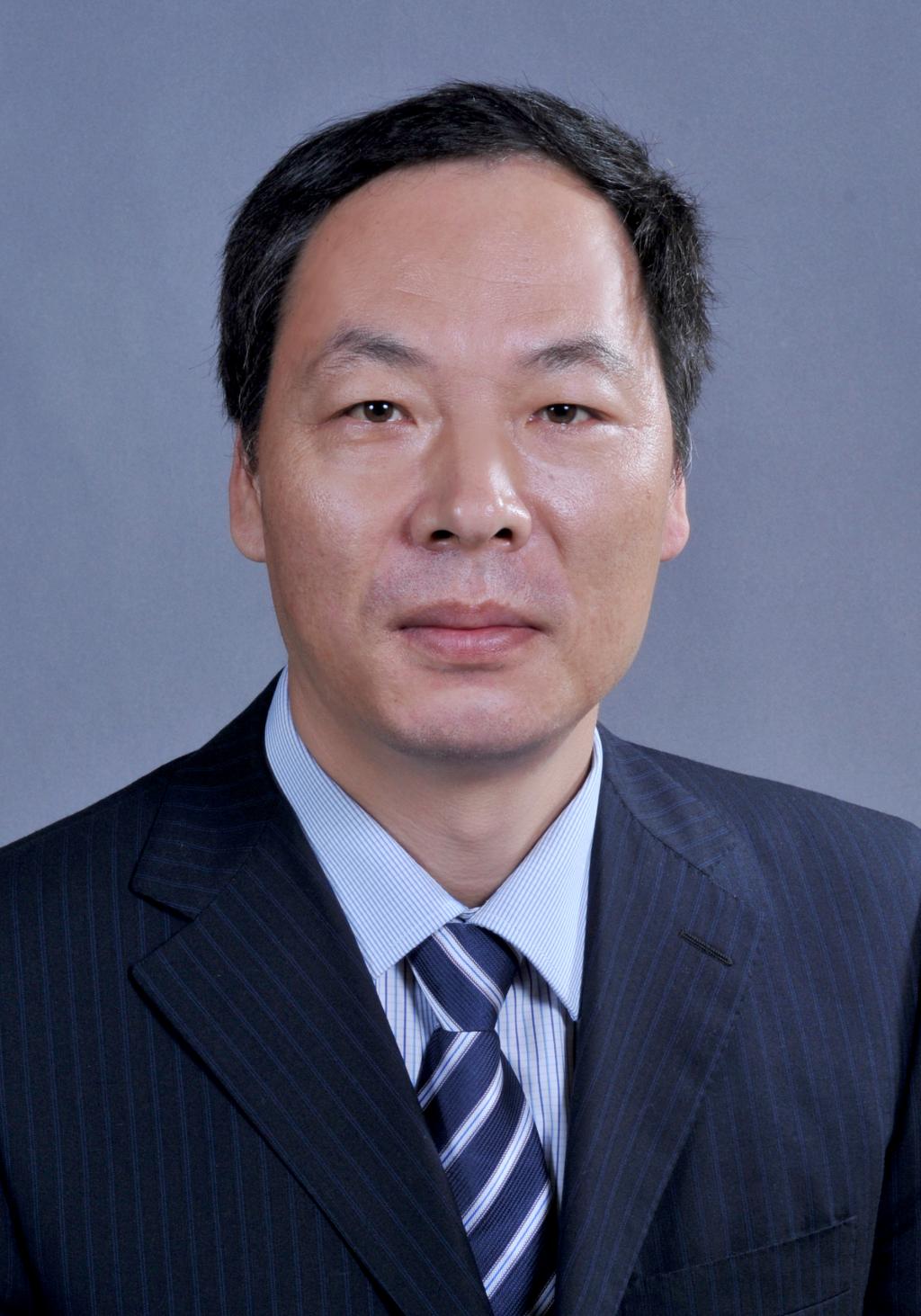 Jianfeng Zhu (朱建锋)合作论文数School of Material Science & Engineering, Shaanxi University of Science and Technology1Peipei Ren合作论文数1Man Zhang合作论文数1Zhaoru Chen合作论文数1Z. Y. Wang合作论文数1Siyu Yuan合作论文数1MA Jian-chao合作论文数1Dawei Sheng合作论文数1Jiangdong Gu合作论文数1Dongyang Chen合作论文数1Congcong Zhu合作论文数1
 Dong Yue合作论文数1Dong Cao (曹东)合作论文数1Wei Kang (康伟)合作论文数1
 Zexiang Shen合作论文数Division of Physics & Applied Physics, School of Physical & Mathematical Sciences, Nanyang Technological University1
 Wenchao Zhang (张文超)合作论文数School of Chemistry and Chemical Engineering, Nanjing University of Science and Technology1
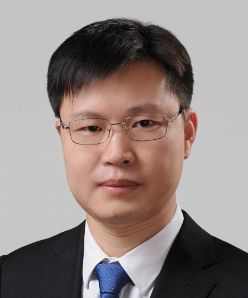 Zhiyin Deng (邓志银)合作论文数School of Metallurgy, Northeastern University1
 Haonan Chen合作论文数Colorado State Univ.;c;Colorado State Univ.1Lida Che合作论文数1
 Li Yang (杨利)合作论文数School of Mechatronics Engineering, Beijing Institute of Technology1Xu Wang合作论文数1
 Yu Feng (冯宇)合作论文数School of Mechanical Engineering and Automation, Harbin Institute of Technology, Shenzhen1
 Chao Gu (顾超)合作论文数Stated Key Laboratory of Advanced Metallurgy, University of Science and Technology Beijing1Li-Yan Peng合作论文数1




