The study investigated the association between Serum Uric Acid (SUA) levels and all-cause as well as cardiovascular mortality in patients with Obstructive Sleep Apnea (OSA). This prospective cohort study enrolled participants with OSA from four cycles of the National Health and Nutrition Examination Survey (NHANES) conducted between 2005 and 2008, and 2015-2018. A weighted Cox proportional hazards model was used to assess adjusted hazard ratios (aHRs) and their corresponding 95% confidence intervals (CI) for all-cause and cardiovascular mortality. Additionally, multivariable logistic regression and restricted cubic splines (RCS) models were employed to examine nonlinear relationships between SUA and all-cause and cardiovascular mortality. Among the 5,584 OSA participants included in the study, covering the four NHANES cycles and with a median follow-up of 4.333 years, a total of 537 deaths were observed, including 108 deaths attributed to cardiovascular disease. Comparing the fourth quartile (Q4) of uric acid levels, both the fifth quartile (Q5) (aHRs = 1.51, 95% CI [1.08, 2.12]) and the second quartile (Q2) (aHRs = 1.53, 95% CI [1.04, 2.25]) of uric acid levels were independently associated with an increased risk of all-cause mortality. Furthermore, comparing the fourth quartile (Q4) of uric acid levels, the second quartile (Q2) (aHRs = 2.40, 95% CI [1.08, 5.35]) of uric acid levels were independently associated with an increased risk of cardiovascular mortality. The RCS model demonstrated a U-shaped pattern in the association between SUA and all-cause mortality in OSA, with an inflection point observed at 5.83 mg/dl. The findings of this study suggest a U-shaped association between serum SUA levels and all-cause mortality and nonlinearity association between serum SUA levels and all-cause mortality. Further studies are warranted to determine the causal relationship between SUA levels and all-cause and cardiovascular mortality.
Cell cycle arrest, one of the main characteristics of cellular senescence, has been described as a crucial barrier that needs to be bypassed for cancer progression. Typically, cellular senescence can be induced by multiple stresses including telomere shortening, oncogenic activation as well as therapy treatment, and contributes to the inhibition of epithelial-mesenchymal transition (EMT), tumor suppression or progression depending on the senescence-associated secretory phenotype (SASP) components. However, the mechanisms underlying cancer cell senescence remain partially understood. Here, according to METABRIC database, we identified that patients with senescent-like breast tumors show better short-term survival, lower tendency of neoplasm histological grades, lower tumor stages, and negative status of estrogen receptor (ER) and progesterone receptor (PR) compared with non-senescent ones. Interestingly, Kyoto encyclopedia of genes and genomes (KEGG) analysis identified insulin signaling was significantly repressed in senescent breast tumors. Further verification in cultured breast cancer cells indicated that phosphoenolpyruvate carboxykinase 2 (PCK2) was significantly inhibited after therapy treatment. In addition, knockdown of PCK2 induced a senescent phenotype of breast cancer cells. Moreover, comparing with the non-senescent group, the senescent breast cancers displayed lower EMT capacity both in patients and breast cancer cell lines after knocking down PCK2. In conclusion, we described for the first time that low expression level of PCK2 may contribute to better prognosis via triggering senescent phenotype and thereby inhibiting EMT capacity in breast cancers.
The American Society of Clinical Oncology (ASCO)/College of American Pathologists (CAP) have recently issued updated guidelines on human epidermal growth factor receptor 2 (HER2) testing by fluorescence in situ hybridization (FISH) in invasive breast cancers. Cases with a HER2/chromosome enumeration probe 17 (CEP17) ratio of ≥2.0 but an average HER2 copy number of <4.0 signals per cell (ISH group 2) are no longer automatically classified as ISH positive. Herein, 30 cases in ISH group 2 were collected. Another 100 patients with a HER2/CEP17 ratio <2.0 and <4.0 HER2 signals per cell (ISH group 5) and 100 patients with a HER2/CEP17 ratio of ≥2.0 and an average HER2 copy number of ≥4.0 signals per cell (ISH group 1) were also recruited for comparison. According to the 2018 ASCO/CAP guidelines, all the cases in ISH group 2 were categorized as HER2 negative. The clinicopathological characteristics of the patients in ISH group 2 were intermediate between ISH group 1 and group 5. Survival analyses revealed that there was no significant disease-free survival (DFS) and overall survival (OS) difference between patients with or without targeted therapy in ISH group 2, as well as between patients with targeted therapy in ISH group 1 and patients in ISH group 2. Patients without targeted therapy in ISH group 2 had a significantly worse OS than patients with targeted therapy in ISH group 1 and patients in ISH group 5. In conclusion, patients in ISH group 2 represent a biologically heterogeneous subset, which are different from those in ISH group 1 and 5. A larger cohort of patients in ISH group 2 should be included for future researches to define the efficacy of HER2-targeted therapy.
Background Detection of programmed cell death ligand-1 (PD-L1) by immunohistochemistry (IHC) has been commonly used to predict the efficacy of treatment with PD-1/PD-L1 inhibitors. However, there is limited literature regarding the reliability of PD-L1 testing using malignant pleural effusion (MPE) cell blocks. Here, we assess PD-L1 expression in sections from MPE cell blocks and evaluate the value of IHC double staining in the interpretation of PD-L1 expression. Methods In all, 124 paired formalin-fixed tissues from advanced NSCLC patients, including MPE cell blocks and matched histology samples, were included. PD-L1 expression was assessed using the SP263 assay, and the tumor proportion score (TPS) and the staining intensity were evaluated. PD-L1 staining results were also compared between IHC double and single staining techniques. Results PD-L1 expression was concordant in most paired cases (86/101, 85.1%) among three TPS cut-offs (<1%, 1–49% and ≥ 50%), with a kappa value of 0.774. Moreover, a significant difference in PD-L1 expression between MPE cell blocks and biopsy samples was observed ( p = 0.005). For the 15 discordant pairs, 13 MPE cell block samples showed increased expression of PD-L1. Compared with the standard IHC single PD-L1 assay, double staining with anti-TTF-1 and anti-PD-L1 revealed a negative effect on PD-L1 expression testing and resulted in weaker staining intensity and a lower TPS ( p = 0.000). Conclusions MPE cell block samples are good candidates for PD-L1 expression detection in advanced NSCLC patients. The mechanism and clinical significance of the higher PD-L1 expression rate in MPE cell blocks compared with small biopsy samples remain to be evaluated prospectively.
Krukenberg tumor (KT) refers to a rare ovarian tumor that has metastasized from a primary site. Patients with KTs have a poorer prognosis and worse survival. Thus far, little is known about the frequency of receptor tyrosine kinase (RTK) gene amplification and the concordance of gene amplification between primary tumors, lymph-node metastases, and KTs. Herein, 50 paired samples, including primary cancers, metastatic lymph nodes, and KTs were collected, and RTK gene amplification was tested by fluorescence in situ hybridization (FISH). There were four cases positive for human epidermal growth factor receptor type 2 (HER2) amplification, all of which showed conversion of HER2 status between different lesions. Of the two cases with c-mesenchymal–epithelial transition (c-MET) amplification, the primary tumors and lymph nodes were negative while the right involved ovaries were positive. Inconsistent fibroblast growth factor receptor 2 (FGFR2) status in different lesions was observed in three of the six FGFR2-amplified cases. Co-amplification of RTK genes was identified in only one patient for primary cancer and two for KTs. Collectively, there were 46, 48, 50, and 44 cases negative for HER2, c-MET, EGFR, and FGFR2 amplification in all lesions, respectively. There was no significant difference in overall survival between KTs of gastric origin and colorectal origin. However, of all synchronous cancers, KTs of colorectal origin had a better prognosis than those of gastric origin. In conclusion, the positive rate of RTK gene amplification in KTs was low. Intratumoral heterogeneity was frequent in KTs with RTK gene amplification. A mutually exclusive pattern of RTK gene amplification was dominant in primary cancers, lymph-node metastases, and KTs. There was no survival difference between KTs of gastric origin and colorectal origin. However, of all synchronous cancers, KTs of colorectal origin had a better prognosis than those of gastric origin.
The American Society of Clinical Oncology (ASCO)/College of American Pathologists (CAP) recently issued updated guidelines on human epidermal growth factor receptor 2 (HER2) testing by fluorescence in situ hybridization (FISH) in invasive breast cancers. In this study, we aimed to investigate the impact of the new recommendations on HER2 FISH interpretation in invasive breast cancers with immunohistochemically (IHC) equivocal results. 1810 breast cancer cases with IHC equivocal results were enrolled in this study between January 2012 and May 2019. Concomitant IHC was performed on the same tissue blocks detected by FISH testing. According to the 2018 guidelines, all the cases in ISH group 2 were categorized as HER2 negative; three of four cases in ISH group 3 were considered as HER2 positive, while the one scored IHC 1+ was reclassified as HER2 negative; Fifty-three previously ISH equivocal cases were redistributed into ten HER2-positive cases and forty-three HER2-negative cases. In conclusion, the utility of 2018 ASCO/CAP guidelines resulted in a slight decrease in HER2 positive rate, due to the reclassification of cases in ISH group 2 and group 4. The implementation of the new guidelines can reduce reflex FISH test and make the diagnosis of HER2 gene status more definitive.
Alveolar adenoma is a rare benign tumor of the lung and is comprised of proliferative type II alveolar epithelium and septal mesenchyma. Up to date, there have been only few reports describing this disease. These tumors are normally found very incidentally during heath examination. In this study, one 40-year-old male patient was admitted to our hospital because of repeated cough and expectoration for one month. He was diagnosed with space-occupying lesion that seemed to be malignant. Later the microscopic analysis revealed an alveolar adenoma consisting of round-shaped mesenchymalcells. This patient was health after lobectomy and no recurrence was observed in the follow-up period of 26 months. To our best of knowledge, this is the first report mentioned about alveolar adenoma with round-shaped mesenchymal cells.
OBJECTIVE:To determine the frequency of HER2/neu amplification and the relationship between HER2/neu expression and clinicopathologic features in gastric cancers scored immunohistochemistry (IHC) 2+.METHODS:A total of 122 gastric cancer cases scored IHC 2+ were retrospectively analyzed for HER2 amplification by fluorescence in situ hybridization (FISH). The correlation between HER2/neu expression and clinicopathologic features was analyzed.RESULTS:HER2/neu gene was amplified in 17 out of the 122 gastric cancer samples. The concordance rate between IHC and FISH was 13.9%. HER2/neu status was correlated with the age of patients (P<0.05). Polysomy of CEP17 was demonstrated in 46 cases, 11 of which (23.91%) were amplified for HER2/neu. Within the subgroups, a correlation between CEP17 polysomy and the depth of invasion was observed (P<0.05).CONCLUSIONS:The results highlight the necessity of FISH test for further categorization when gastric cancer cases are scored 2+ by IHC. The value of HER2/neu for a potential role as a negative prognostic factor in the equivocal gastric cancer cases is limited.
Right detection of anaplastic lymphoma kinase (ALK) gene rearrangement is pivotal to selection of patients with lung adenocarcinoma for ALK-targeted therapy. We explored the potential of combination of immunohistochemistry (IHC) screening and fluorescence in situ hybridization (FISH) as an affordable practice. We analyzed 410 unselected lung adenocarcinomas by ALK IHC (D5F3 clone) and FISH. Some equivocal cases were further analyzed by RT-PCR. The EGFR mutation was detected by pyrosequencing assay. In total 368 cases which got all IHC, FISH, EGFR mutation results were eligible for analysis. Cases were evaluated as IHC score 3+ (n = 26), score 2+ (n = 9), score 1+ (n = 51), and score 0 (n = 282), respectively. 23 of 26 IHC 3+ and 5 of 9 IHC 2+ cases were FISH positive, whereas 3 of 26 IHC 3+, 4 of 9 IHC 2+ and all 333 IHC 1+/0 cases were FISH negative. If considering FISH as the standard, the sensitivity and specificity of ALK IHC 3+/2+ as ALK positive were 100% and 97.9%, respectively. Three IHC 3+ cases reported as FISH "negative" were actually ALK positive confirmed by ALK RT-PCR or re-detected. Based on the final classify, ALK IHC 3+/2+ was 100% sensitive and 98.8% specific. However, FISH was 90.3% sensitive and 100% specific. IHC 2+ was regarded as equivocal and need to be confirmed by FISH or RT-PCR. In the 368 cases, 8.4% cases had ALK positive, 52.2% cases had EGFR mutation, and only one case had a coexisting. Manually semiquantitative ALK IHC (primary antibody D5F3 coupled with secondary DAKO Envision system) used as the initial screening combined with auxiliary FISH confirmation is a reliable, economical approach to identify ALK positive lung adenocarcinoma. The IHC can find some ALK positive cases which would be missed by FISH only.
Alveolar adenoma, a rare benign pulmonary neoplasm, usually presents as asymptomatic. Since first described in 1986, no more than 35 cases have been reported in the English medical literature. Here we report a case of 48-year-old woman who suffered from this tumor, the patient is doing well 4 years after thoracoscopic lobectomy.
胰腺实性假乳头状肿瘤(solid pseudopapillary tumor of the pancreas,SPTP)是一种少见的具有低度恶性潜能的上皮性肿瘤,好发于年轻女性.该肿瘤手术切除具有非常好的效果,故术前的正确诊断对治疗方案的选择具有重要意义.我们介绍4例术前超声内镜引导下细针穿刺细胞学(EUS-FNA)诊断的SPTP并复习相关文献。
The concordance rate between fluorescence in situ hybridization (FISH) and immunohistochemistry (IHC) on evaluating HER-2/neu status is still controversial, especially for the IHC 2+/equivocal cases. In this study, we investigated the amplification of HER-2/neu gene by FISH in IHC (2+)/equivocal specimens to clarify the correlation between HER-2/neu and clinicopathologic features of breast cancers. HER-2/neu amplification was determined by FISH on 528 specimens of breast carcinomas with equivocal expression of HER-2/neu protein by IHC detection. 65.5 % of IHC 2+ patients were negative for HER-2/neu amplification, 29.0 % were positive and the remaining was equivocal. A statistically significant inverse association was found between hormone receptor expression and HER-2/neu amplification (P < 0.05). Furthermore, polysomy of CEP17 was detected in 60 % of breast carcinomas. The results highlight the necessity of FISH test for further categorization when breast carcinoma cases are scored 2+ by IHC.
 Bo Wang合作论文数8Ke Sun合作论文数4
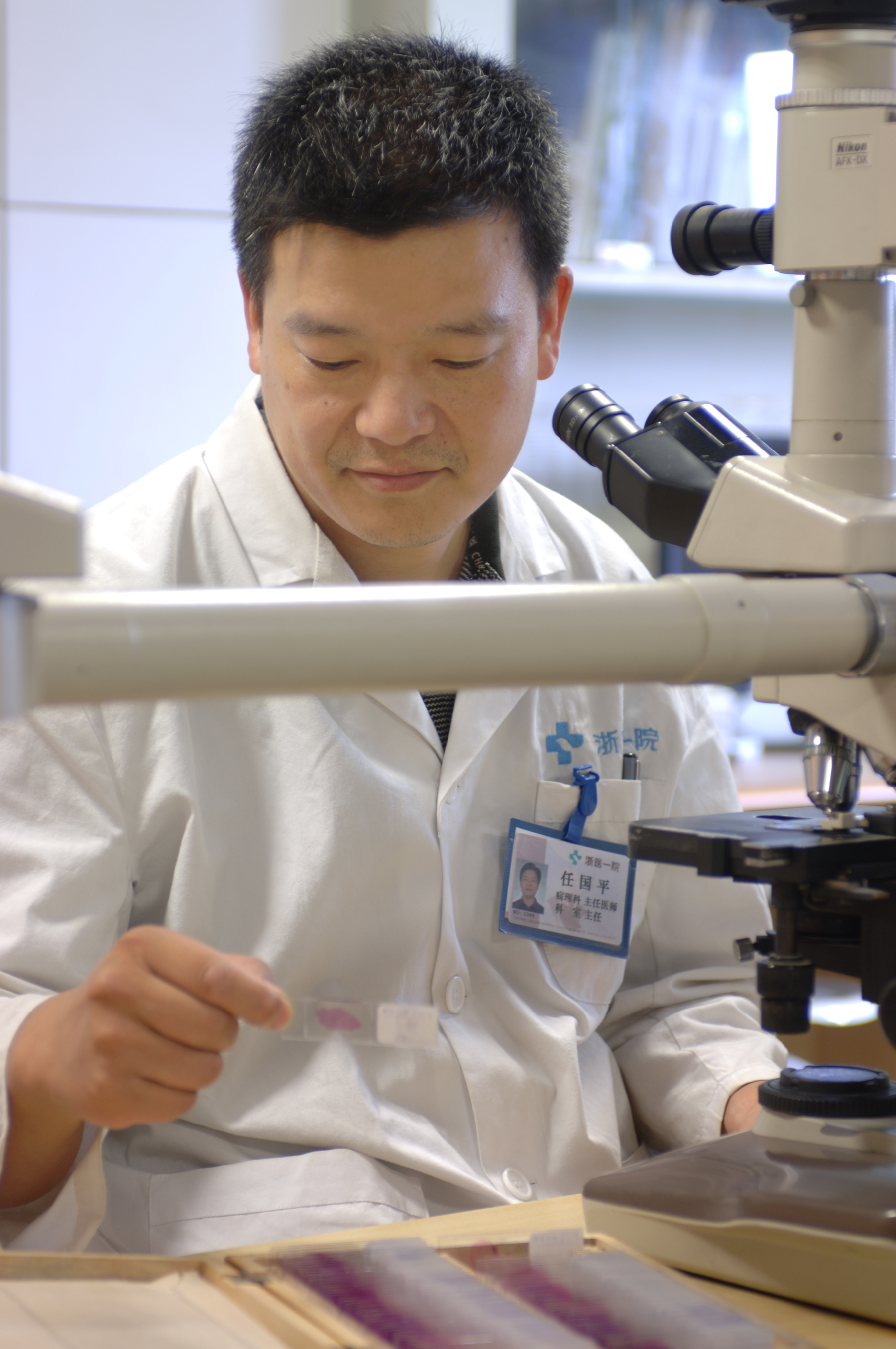 Guoping Ren (任国平)合作论文数The First Affiliated Hospital, Zhejiang University School of Medicine4
 Xiaodong Teng合作论文数4Liming Xu合作论文数3QiHan You (尤启汉)合作论文数3Qiusu Tang合作论文数2Yanfeng Bai (白燕峰)合作论文数2
 JianYa Zhou (周建娅)合作论文数The First Affiliated Hospital, School of Medicine, Zhejiang University2
 Jianying Zhou (周建英)合作论文数The First Affiliated Hospital, School of Medicine, Zhejiang University2
 Jing Zhao (赵静)合作论文数School of Mechatronics Engineering, Beijing Institute of Technology2Xiaoheng Lv (吕小恒)合作论文数1
 Xingjie Ma合作论文数1Weili Liu合作论文数1Wei Ding合作论文数1Xu Lei合作论文数1Ke Huang合作论文数1L. Wang合作论文数1Hong Zhou合作论文数1Xiaoyan Liu合作论文数1
 Lisan Zhang合作论文数1Fangyuan WAN (万方圆)合作论文数1yinying zou (邹尹影)合作论文数1Jianhua Liu合作论文数1
 Han Zhang合作论文数Information Management Services, Inc1
 Weijuan Gong (龚卫娟)合作论文数School of Nursing, Yangzhou University;Health Science Center, Yangzhou University1
 Huna Anda合作论文数Latvian Biomedical Research &amp;Study Centre;Latvian Biomedical Research &amp; Study Centre1Yao Hongtian合作论文数1
 Azmat Rustam合作论文数1Wang Luming合作论文数1
 Junli Wang (王俊利)合作论文数右江民族医学院1Jing Zheng (郑静)合作论文数1Yanli Wang (王艳丽)合作论文数1
 Xi Chen (陈曦)合作论文数Department of Systems Biology, School of Life Sciences, Southern University of Science and Technology1
 Jian Hu (胡坚)合作论文数The First Affiliated Hospital, School of Medicine, Zhejiang University1




