In order to fully understand the carbon emission from different fuels in rural villages of China, especially in the typical atmospheric pollution areas. The characteristics of carbonaceous aerosols and carbon dioxide (CO 2 ) with its stable carbon isotope ( 8 13 C) were investigated in six households, which two households used coal, two households used wood as well as two households used biogas and liquefied petroleum gas (LPG), from two rural villages in Fenwei Plain from March to April 2021. It showed that the fine particulate matter (PM 2.5 ) emitted from biogas and LPG couldn ' t be as lower as expected in this area. However, the clean fuels could relatively reduce the emissions of organic carbon (OC) and element carbon (EC) in PM 2.5 compare to the solid fuels. The pyrolyzed carbon (OP) accounted more total carbon (TC) in coal than the other fuels use households, indicating that more water-soluble OC existed, and it still had the highest secondary organic carbon (SOC) than the other fuels. Meantime, the coal combustions in the two villages had the highest CO 2 concentration of 527.6 ppm and 1120.6 ppm, respectively, while the clean fuels could effectively reduce it. The average 8 13 C values (- 26.9 parts per thousand) was much lighter than almost all the outdoor monitoring and similar to the 8 13 C values for coal combustion and vehicle emission, showing that they might be the main contributors of the regional atmospheric aerosol in this area. During the sandstorm, the indoor PM 2.5 mass and CO 2 were increasing obviously. The indoor cancer risk of PAHs for adults and children were greater than 1 x 10 -6 , exert a potential carcinogenic risk to human of solid fuels combustion in rural northern China. It is important to continue concern the solid fuel combustion and its health impact in rural areas.
Solid fuel combustion emitted abundant pollutants, especially polycyclic aromatic hydrocarbons (PAHs) which had significant minus impact on human health in rural China. PAHs in PM2.5 emitted from different fuels combustion and hydroxylated metabolites of PAHs (OH-PAHs) in urine samples of different fuel users were detected in this study. The indoor PAHs were higher than that in outdoors for solid fuel use households, and the concentration of PAHs in the indoor of liquefied petroleum gas (LPG) use household was not much lower than solid fuel use households. Biogas-use household produced the lowest PAHs, which significantly reduced 64-82% compared with those emitted by solid fuel combustion. The different combustion conditions influenced the gaseous PAHs in indoors between two sampling sites. The gas/particle partition indicated that PAHs tended to occur in the particle phase with increased molecular weight, and the absorption was the main mechanism. The relative higher contribution of high molecular weight PAHs (HMW-PAHs) in solid fuel use households than in clean fuel use households, induced more health risks of PAHs. The concentration of Σ10OH-PAHs in the urine samples for elders of different fuel-use households displayed the trend of coal (83.27 ng/mL) > wood (79.32 ng/mL) > LPG (51.61 ng/mL) > biogas (28.96 ng/mL), and OH-NaPs was the predominant metabolites, which accounted for more than 90% of the total concentration. The carcinogenic risk of PAHs based on internal exposure was greater than or close to 10-4, with serious carcinogenic risks. This was different with the incremental lifetime cancer risk based on the atmospheric concentrations. The exposure of PAHs from solid fuel combustion for human being especially for the elders in this region should be concerned, and more data should be done for the internal exposure of PAHs.
室内空气质量与人体健康息息相关,为了解新装修室内大气中醛酮类化合物的污染特征及健康效应,实验对西安市三个不同装修材料及不同装修风格房间的大气环境开展研究.使用2,4-二硝基苯肼硅胶提取小柱(DNPH)进行采样,并采用高效液相色谱(high performance liquid chromatography,HPLC)对18种醛酮类物质进行检测,研究其污染水平及特征,并根据物质的光化学反应活性,计算其臭氧生成潜势(ozone formation potential,OPF),评估其对不同年龄段人群的非致癌和致癌健康效应.研究表明:(1)18种醛酮类物质在三个新装修房间空气样品中的总含量为79.9-194.4p.g.m-3,高于普通室内环境中的含量.且在供暖期含量显著增加,升高了 23.9%-53.3%.其中丙酮、甲醛、乙醛、正壬醛是主要的污染物,其中丁酮在Room 2中显著高于其他两个房间.(2)甲醛和乙醛的光化学活性显著高于其他物质,因而对OPF贡献较大.丙酮虽然含量显著高于其他物质,但是由于光化学活性较低,对OPF贡献不显著.(3)乙醛超过了室内安全排放标准,且在Room 2和Room 3中的非致癌风险危险熵(hazard quotient,HQ)不容忽视.终身致癌风险评估(incremental lifetime cancer risks,ILCR)显示不同人群暴露甲醛的ILCR均大于1×10⁻⁶,存在潜在健康风险.人群暴露乙醛的ILCR值仅青少年和老年人在Room 1中低于1×10⁻⁶.由此可见新建住房室内空气中醛酮类物质的污染所产生的健康效应不能忽视.
As an important central city in western China, Xi'an has the worst atmospheric pollution record in China and many measures have been taken to improve the air quality in the past few years. In this study, PM2.5 samples were collected across four seasons from 2017 to 2018 in Xi'an. Organic carbon and elemental carbon, water soluble ions, and elements were monitored to assess the air quality. The average annual PM2.5 concentration was (134.9 ± 48.1 μg/m3), with the highest concentration in winter (188.8 ± 93.2 μg/m3), and lowest concentration in summer (71.2 ± 12.1 μg/m3). The secondary generation of sulfate (SO42-) and nitrate (NO3-) was strong in spring, and secondary organic carbon (SOC) was formed in all seasons. The compositions of PM2.5 changed greatly during a sandstorm occurred and the Spring Festival. The sandstorm played a positive role in removing local pollutant NO3-, but also increased the concentration of SO42-, however both the concentration of SO42- and NO3- greatly increased by secondary generation during Spring Festival. Potential source analysis showed that during the sandstorm, pollutants were transported over a long distance from the northwest of China, whereas it was mainly from the local and surrounded emissions during the Spring Festival. Except Ca2+ and geological dust (GM), the other components in PM2.5 increased significantly on the day of the Spring Festival. During sampling time in Xi'an, the positive matrix factorization (PMF) model analysis showed that PM2.5 mainly came from vehicle emission, coal combustion, and biomass burning.
Polycyclic aromatic hydrocarbons (PAHs) are widespread toxic pollutants in the atmosphere and have attracted much attention for decades. In this study, we compared the health risks of PAHs based on different toxic equivalent factors (TEFs) in a heavily polluted area during heating and non-heating periods. We also pay attention to occupancy probability (OP) in different polluted areas. The results showed that there were big differences for calculations by different TEFs, and also by OP or not. Age groups except adults were all lower calculated by OP than not. The sensitivity analysis results on the incremental lifetime cancer risks (ILCR) for population groups by Monte Carlo simulation identified that the cancer slope factor extremely affected the health risk assessment in heating periods, followed by daily inhalation exposure levels. However, daily inhalation exposure levels have dominated the effect on the inhalation ILCR and then followed by the cancer slope factor in non-heating periods. The big differences by different calculations investigated that it is important to set up the correlations between the pollution level and health risks, especially for the longtime health assessment.
Xi’an, as one of the serious air pollution cities in western of China, many researches about the ambient air have developed. Limited has about the indoor air quality. In this study, PM2.5 samples were collected from household, offices, and ambient air in one community during haze periods. The regular composition including organic carbon (OC), element carbon (EC), water soluble ions, element, and polycyclic aromatic hydrocarbons (PAHs) of PM2.5 were discussed here. During the sampling time, ambient PM2.5 was the highest dispersed, and then followed by the household and offices, and outdoor diffusion is one of the main sources for indoors. However, the cooking activities in household were also another source of PM2.5 for household, with almost all the ratios of Kitchen/Sitting room (K/S) for different fractions were higher than 1. Though it has different composition in different environments, like organic matter (OM) in indoors attributed more than in ambient air, OM and water soluble ions were main parts of PM2.5. NO3- was a bit higher than SO42-, which might because of the decrease of SO42- emission here. Meanwhile, the average ratio of NO3-/EC and SO42--/EC indicated secondary oxidations were the main reasons for SO42+ and NO3-. For the elements, S, K, Ca, Fe, and Cl were the abundant elements. As exceed the WHO guidelines limit and the cancer risks of As displayed possible health impact for people here. PAHs also showed high pollution levels, with an average of 166.6 ng/m3 in ambient air, and 108.0 ng/m3 in household. Coal combustion, biomass burning and vehicle emission were still the main sources. The ILCR for all age groups were higher than 1×10⁻⁶, displayed that possible risks of PAHs were existed here, and PAHs pollution in this community need to be concerned.
 Jingzhi Wang (王景芝)合作论文数School of Geography and Tourism, Shaanxi Normal University6
 Junji Cao (曹军骥)合作论文数Institute of Earth Environment, Chinese Academy of Sciences;University of Chinese Academy of Sciences5
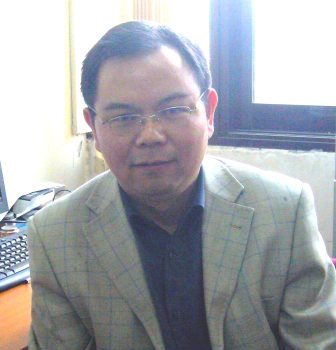 Yongming Han (韩永明)合作论文数中国科学院地球环境研究所5
 Zhibao Dong (董治宝)合作论文数School of Geography and Tourism, Shaanxi Normal University5
 Yumeng Wang合作论文数4Xiuqun Liu合作论文数3Runyu Wang合作论文数3
 Neil M. Donahue合作论文数Department of Chemistry, Mellon College of Science, Carnegie Mellon University;Department of Chemical Engineering, College of Engineering, Carnegie Mellon University3
 Shengtao Ma (马盛韬)合作论文数School of Public Health, Guangzhou Medical University2Ge Ma合作论文数2
 Jiayu Li合作论文数Department of Mechanical and Aerospace Engineering, College of Engineering, University of Miami2
 Minrui Li (李敏睿)合作论文数School of Geography and Tourism, Shaanxi Normal University2
 Lijun Wang (王利军)合作论文数School of Geography and Tourism, Shaanxi Normal University2
 Xiaoping Li (李小平)合作论文数School of Geography and Tourism, Shaanxi Normal University2Zhu Yuantong (朱元彤)合作论文数1Xinxin Ding合作论文数1
 Li Xing (邢莉)合作论文数School of Geography and Tourism, Shaanxi Normal University1
 Rongzhi Tang合作论文数1Meiqing Lin合作论文数1Wenting Dai合作论文数1




