This paper examines how colonial legacies, social identities, and positionalities intersect to shape the vulnerability and adaptation of Ghanaian women to climate change. Drawing on in-depth interviews (n = 49) with women farmers in Koraso, a flood-prone village in Berekum, Ghana, the study employs intersectionality and the matrix of domination from Black feminist thought to analyze how overlapping power structures - patriarchy, ethnicity, illiteracy, and neocolonialism - produce differentiated experiences of climate risk. Findings indicate that vulnerability arises not only from environmental exposure but also from historically embedded inequalities in land access, education, and decision-making. Polygamous hierarchies, ethnic discrimination, and foreign direct investment in cashew and timber industries further constrain women's adaptive capacity. Yet women exercise agency through livelihood diversification and labor migration, often navigating both resilience and constraints. The study advances intersectional climate justice by revealing how colonial and contemporary systems of domination sustain gendered and racialized climate vulnerabilities across the Global South.
We study the role of the state in small drinking water system governance in New Mexico, USA. Using interviews and demographic data, we develop a grounded theory of the political economy of public accountability in decentralized water governance. We find that the state decentralizes water governance by enforcing public accountability requirements in poor, non-white communities that do not meet its standards for drinking water provisioning. By doing so, it relieves itself of the burden of safe drinking water provisioning. We challenge the assumption that state authority is abated through decentralization and contribute to understandings of inequality in water governance.
Fluvial geomorphic risks are rarely incorporated into and mitigated by river flood management in the United States. Identifying where such risks exist is difficult and there is much scholarly debate on how best to do it. We incorporate this debate into a stakeholder-driven process to assess its viability in translational fluvial geomorphology. Focusing on Massachusetts, USA we describe a decade-long, stakeholder-driven project that sought to better manage flood risks across the state. We found that even if a diverse group of expert stakeholders agrees on the science, politics complicate the transfer of science into policy in highly participatory settings. Stakeholders agreed that fluvial geomorphic risk mapping should result in a "river corridor" that must be process-based, variable-width, and based on readily available, easily measured data sources. However, without an agreed-upon sense of how to resolve the geographic mismatch between an expansive scientifically defined corridor and one constrained by social and economic practicalities, stakeholders struggled to determine what a fluvial geomorphology-informed river corridor would be used for, and by whom.
This article explores recent water protests across northern Mexico which emanated from the Mexicali Valley in Baja California, Mexico. Beginning in 2015, communal farmers and industrial labourers, among other groups, aligned under the banner of Defense of Water to protest the construction of a United States-based beverage production facility. Through interviews, participant observation and archival research, we study this social movement through a class-based, historical lens to show how the meaning of water presupposes and represents a century of class politics that has allowed seemingly disparate groups to find meaning and build alliances within it. It is this history that has allowed protesters to achieve shared goals.
Despite dramatic changes in rural Latin America over the past century that often excluded rural smallholders, peasants, and indigenous peoples, these same populations continue to assert agency and initiate solutions to meet their own needs and goals. This special issue focuses on transformations in rural Latin America, examining how marginalized and rural populations both already are and can increasingly become key actors in generating emancipatory transformations within the context of a changing climate. Acknowledging that climate change is just part of a "tsunami of change" that rural people are facing, these papers explore how climate and other challenges are negotiated on the ground. In this introduction, we focus on transformation as a concept, suggesting that it provides an important conceptual tool with which to integrate emancipatory politics into these multiple processes of change. This introduction draws out some considerations for emancipatory transformation. We suggest that climate change is, in some ways, a red herring, drawing attention away from the ways in which vulnerabilities are produced in particular spatio-temporal contexts. In addition, we suggest that transformations should be considered as hybrid, multiple, and intersectional; a static or monolithic vision of transformation belies the messy realities that rural people face in their everyday lives.
As scores of climate change adaptation measures are implemented around the world, there have been growing calls among academics and practitioners to also address the processes that underpin human vulnerability to climate change. However, there is mounting evidence that adaptation and vulnerability are linked, such that ostensibly adaptive responses can have negative consequences and augment people's vulnerability. We analyzed several climate change responses at various scales and developed a typology of five discrete but related modes by which the vulnerability of already vulnerable populations is being [re]produced. Crucially, this work suggests that for at least one of these modes, the vulnerability of other groups is perversely inverted, such that relatively secure populations perceive themselves to be at risk. The cases we present illustrate that people's vulnerability is being used against them, or put another way, is being weaponized-exacerbating their precarity by excluding them from much needed and due assistance, while directing resources instead to bolstering the well-being of those already well-positioned to respond to climate threats. Our typology provides a theoretical intervention by illustrating how climate vulnerability and security are co-produced, as well as a practical tool to help decision makers to adopt more just and equitable climate policies.
Research into formation of environmental narratives can explain the process of political polarization in environmental governance, or perhaps more constructively, how to avoid it. To do so, we must broaden narrative analysis to include the evolution of relationships between environmental norms in a community and the changing positionality of the researcher. I show how this may be done, by focusing on river governance in post-Tropical Storm Irene New England, USA. The storm left residents in the region bitterly divided over how a river should be governed. Relying on interviews, newspaper articles, and judiciary and town hall proceedings, I show that two narratives coevolved from norms of vulnerability and stewardship as different groups vied for power in river governance. As they did so, the community became polarized as the newer, stewardship-based narrative gained legitimacy by problematizing traditional environmental norms. In response, community members who saw the river as dangerous and the town as vulnerable defended these norms by problematizing the new narrative. Through an iterative process, the different environmental narratives became increasingly relative as each attempted to dictate governance. Ultimately, the narratives became problematized reflections of one another. This process undermined the possibility of compromise or novel governance schemes that may have incorporated different environmental norms. To avoid polarization, researchers must at one time position themselves within the political process but take care to study how this position changes governance.
The varied effects of recent extreme weather events around the world exemplify the uneven impacts of climate change on populations, even within relatively small geographic regions. Differential human vulnerability to environmental hazards results from a range of social, economic, historical, and political factors, all of which operate at multiple scales. While adaptation to climate change has been the dominant focus of policy and research agendas, it is essential to ask as well why some communities and peoples are disproportionately exposed to and affected by climate threats. The cases and synthesis presented here are organized around four key themes (resource access, governance, culture, and knowledge), which we approach from four social science fields (cultural anthropology, archaeology, human geography, and sociology). Social scientific approaches to human vulnerability draw vital attention to the root causes of climate change threats and the reasons that people are forced to adapt to them. Because vulnerability is a multidimensional process rather than an unchanging state, a dynamic social approach to vulnerability is most likely to improve mitigation and adaptation planning efforts. This article is categorized under:Vulnerability and Adaptation to Climate Change > Values-Based Approach to Vulnerability and Adaptation.
Understanding landowner perspectives on flood mitigation is an essential step towards minimising conflict and ensuring public support and compliance. To illuminate landowner perspectives on flood mitigation and the drivers of those perspectives, we surveyed landowners in the Deerfield River Watershed, Massachusetts (USA). Confirmatory factor analysis shows landowners differentiate between the physical and the policy pathways through which flood mitigation strategies provide protection. Multiple regression analyses indicate landowner support or opposition for each of those pathways is related both to the risks a landowner faces and to their broad worldviews. Lastly, cluster analysis indicates variation in patterns landowner of support or opposition to the physical and policy pathways through which flood mitigation provides protection. Findings point to how issues beyond flood impacts, including understandings of riverine processes, assessments of responsibility, and interpretations of the relationship between government and private property drive landowner perspectives on flood mitigation policies.
ABSTRACTThis article advances theoretical understanding of exclusionary politics in rural locations through an institutional analysis of adaptation to climate change in Costa Rica's rice economy. It describes how crony capitalism evolved in state‐sponsored rural development as the national economy moved towards a new neoliberal model. Cronies reorganized rice production and re‐appropriated capital flows. As smallholder farmers were marginalized in the rice economy, their reliance on the state for irrigation water made them vulnerable to drought. As the state adapted its water allocation scheme to drought conditions, it determined who would profit and who would lose their livelihood. The authors use this analysis to argue that climate change adaptation is a normative process that may be used to justify coercion and control of specific classes of people. To understand this process, current adaptation frames must be broadened to include the organization of production and the appropriation and realization of capital flows. This broadening facilitates an understanding of how climate change adaptation strategies produce stratified class structures; some classes are made vulnerable to climate change while others profit. Breaking with the common refrain in much of the critical literature on neoliberal development, the authors argue that state responses to neoliberal change — not just neoliberal change itself — must be increasingly incorporated into critical development studies of rural transformations.
Riverine flooding is the most common and costly natural hazard. While there has been substantial research on the perception and management of flood risk among urban and agricultural landowners, we have little knowledge about the ways different groups of rural landowners are impacted by and manage floods. To address this gap, we investigate the impacts of flooding on rural landowners in Massachusetts, USA, the actions they have taken to protect their property, and the ways these concerns and actions vary by land use. We show that floods impact rural landowners in ways that are directly linked to the rural context of their land and livelihoods. Rural landowners face multiple flood risks that include damage to the land itself and rural infrastructure as well as to residential structures. The ways landowners use their land can influence the ways they experience floods and the specific concerns they hold about flood damages. Further, many of these landowners often utilize flood management strategies that involve physical manipulation of riparian areas. Our findings draw attention to the unique context of rural flooding. We argue that more research is needed to understand how these experiences and other factors drive landowners' perspectives on flood management and how these perspectives and management activities influence the practice of flood management at the basin-scale.
In New England (United States) climate change models forecast increasingly intense, frequent floods. Communities in this region are already experiencing these changes, along with the negative consequences associated with them, such as inundation, erosion, natural habitat destruction, and property damage. As it is in many places around the world, agriculture in New England is often in floodplains, which means that farmers are at greater risk due to where they farm. These farmers are already adapting to the increased risk of flooding; however, some of their actions may affect communities downstream, both human and ecological. This case study examines the competing perspectives of farmers and other community stakeholders in New England as farmers work to adapt to increasing flood impacts. Our premise is that, considering the intensified pressures of climate change on agriculture near rivers and streams, we must find ways to allow farmers to adapt to protect their farms and downstream communities.
We show how transformative adaptation research can reproduce existing political-economic structures and processes. We review research on transformative adaptation to illustrate the need for a systematic understanding of the role of political-economic structures and processes in transformative adaptation. We argue that it is necessary for two reasons. First, we must be cognizant of the relationship between economic hegemony and efforts to understand and initiate transformative adaptation. We show that transformative adaptation should consider this economic backdrop because it may undermine the normative goals of transformation. Second, transformative adaptation should be conceptualized as a challenge to specific social structures and processes that support economic hegemony. If the goal of this research is to allow groups to adapt and overcome systematic inequity and marginalization, we must incorporate human agency in transformative adaptation to allow people to determine their own transformations.
The role of geomorphic processes in flood risk is understudied in the management context. In the United States, only nine states have explored this role and only two – Vermont and Washington State – have developed and implemented legally binding geomorphic‐based flood risk management; both rely on the concept of geomorphic assessment, through which fluvial geomorphic processes are documented and river corridors are mapped. Massachusetts, having incurred substantial damages from landslides, bank failures, bed incision, and sedimentation in recent years, has initiated a programme to examine the inclusion of geomorphic processes into flood risk management. At its core, the programme relies on participation of flood risk management stakeholders representing government (local, state, and federal), non‐governmental organisations, consulting agencies, academia, and industry. A series of workshops with these stakeholders over 4 years has culminated in a needs assessment that articulates what must be included in the development of a Massachusetts fluvial geomorphic assessment programme. In this report, we share the results of this needs assessment. We do this in the hope that other jurisdictions incurring flood damages from geomorphic processes may find it to be a useful model as they work to mitigate these damages.
The goal of this case is for students to learn through the development of a sustainable river governance plan for Massachusetts focused on balancing needs and perspectives on local agriculture, flood resilience, and healthy ecosystems in the context of climate change. This will be challenging. Ideally, a river governance plan developed by the students would support local agriculture, increase flood resilience, and promote environmental stewardship. A role-playing exercise is included in this case that involves representatives of several stakeholders groups (personas assumed by a subset of students); these include a farmer, a fisher/recreationalist, a state river manager, an environmentalist, and a resident. The students will learn about the goals of a stakeholder to discuss with the others, negotiate with them, find ways to resolve conflicts and finally to create a governance plan.
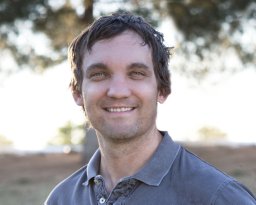 Kuzdas Christopher合作论文数School of Sustainability, Arizona State University11
 Arnim Wiek合作论文数Institut für Wirtschaftswissenschaften, Universität Freiburg;School of Sustainability, Arizona State University5
 Raffaele Vignola合作论文数CATIE Climate Change Program5
 Mariel Yglesias合作论文数4
 C. E. Hatch合作论文数4
 Dan Childers合作论文数Global Institute of Sustainability and Innovation, School of Sustainability, College of Global Futures, Arizona State University3
 Anita Milman合作论文数3
 j d gartner合作论文数Morrill Sci Ctr 233, Univ Massachusetts2Tucker Colvin合作论文数2
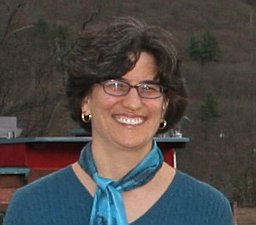 Eve Vogel合作论文数Dept Geosci, Univ Massachusetts2
 Kimberley Thomas合作论文数Dept Geog & Urban Studies, Temple Univ2
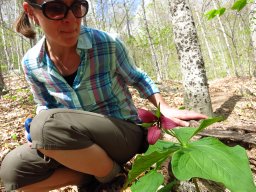 Anne G. Short Gianotti合作论文数Earth & Environm, Boston Univ2
 Rachel Schattman合作论文数George J Mitchell Ctr Sustainabil Solut, Univ Maine2
 Morataya Ricardo合作论文数2Ria Mukerji合作论文数1
 alonso ramirez cover合作论文数Int Inst Social Studies, Erasmus Univ1
 Isabel Rivera-Collazo合作论文数Department of Anthropology, University of California, San Diego1
 Marcy Rockman合作论文数Natl Pk Serv, Washington, DC 20372 USA1
 Jami Nelsonnunez合作论文数University of New Mexico1
 Dean Hardy合作论文数Sch Earth Ocean & Environm, Univ South Carolina1
 Ben Orlove合作论文数Department of Environmental Science and Policy, University of California, Davis;Lamont-Doherty Earth Observatory, Columbia University;International Research Institute for Climate Prediction, Columbia University1
 Lazrus Heather合作论文数Mesoscale and Microscale Meteorology Laboratory, National Center for Atmospheric Research1
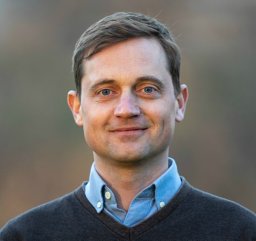 Daniel Chapman合作论文数The Centre for Ecology & Hydrology1
 Robert Winthrop合作论文数1
 Michael Mendez合作论文数Department of Thoracic and Cardkovascular Surgery, University of Southern California School of Medicine1
 Chris S Duvall合作论文数Department of Geography, University of Wisconsin1
 Nathan Gillett合作论文数Department of Geography, Simon Fraser University;University of Victoria1
 J. Timmons Roberts合作论文数Department of Sociology, Brown University1MM ELSER合作论文数1




