Halorhynchusremii Chamorro & Steiner, sp. nov. is described from Madagascar. This new species is the third known species of the genus and the first for Africa. Halorhynchusremii is compared to other psammophilous, anophthalmous onycholipine cossonines. Transoceanic dispersal between Australia and Madagascar and sand burrowing adaptation are briefly discussed. A key to the species is provided.
We were fortunate to have known Terry not only as an excellent professional coleopterist and an enthusiastic colleague, but also as a good friend. Entomological meetings for us came with an evening supper or two with Terry and the kind of laid-back personal catch-up that happens only among friends with long-term interest in each other’s lives. Through our connections with the University of Alberta and George Ball we were also happy members of Terry’s basal academic family. While we will join the rest of a broader scientific community in missing his presence in development of ideas about beetles, biodiversity and evolution, the kinds of work that Terry promoted will continue. We will, of course, be interested in following how the understanding of carabids and nature develops further from Terry’s contributions. This will most certainly continue to grow, partly through the efforts of those that he has influenced. Every practicing research scientist has some role to play in the great chain of discovery, and much of this volume is meant to celebrate Terry’s contributions and showcase how they have influenced the work of others. Our own more enduring sense of loss will flow from the personal interactions with Terry that were generally part of our timelines. Despite the sadness associated with such loss, our memories of interactions with Terry underscore a sense of joy and gratefulness for having connected with him interpersonally in life. Given Terry’s affable and social nature, many others will have such memories. Thus, when Lyubomir Penev asked us to coordinate a selection of ‘memories’ for this memorial volume, we were happy to undertake the task and gather together a selection of memories of our friend, Terry Erwin. What follows is a series of recollections by people who knew and worked with him from a number of perspectives during a broad range of his academic career. We are most grateful to those who have been willing to share their reflections. These are presented here as a way of reaching beyond Terry’s considerable scientific influence to also preserve some sense of his influence on the lives of people, and the ways in which he encouraged and inspired them. We thank all the contributors for their efforts and Diane Hollingdale for work to bring the included photographs to the best possible publication standard. John R. Spence Edmonton, Alberta David H. Kavanaugh San Francisco, California David R. Maddison Corvallis, Oregon
The new genus Doyenellus Nabozhenko and Steiner (Coleoptera: Tenebrionidae, Helopini) is recognised and described, and includes three North American species native to southeastern USA. The type-species, Doyenellus cisteloides (Germar), new combination, is diagnosed and two new species, Doyenellus worthleyorum Steiner, new species and Doyenellus theodorei Steiner and Nabozhenko, new species are described. A key to the species is provided. Distribution and life history information of each species is discussed.
Four new species of tumbling flower beetles (Coleoptera: Mordellidae) are described from the Commonwealth of Virginia, USA in eastern North America: Mordellina wimbledon Steury and Steiner, new species, Mordellina washingtonensis Steury and Steiner, new species, Mordellistena virginica Steury and Steiner, new species, and Pseudotolida syphaxi Steury and Steiner, new species. Images and descriptions are provided for each new species. Comparisons are made with morphologically similar species.
This paper summarizes currently available morphological data on larval stages of representatives of the ‘Opatrinoid’ clade (Tenebrionidae: Tenebrioninae). Literature research revealed that larval morphology of approximately 6% of described species representing this lineage is currently known (139 out of ~ 2325 spp.). Larvae of the five following species are described and illustrated: Zadenos mulsanti (Dendarini: Melambiina; South Africa), Blapstinus histricus, Blapstinus longulus, Trichoton sordidum (Opatrini: Blapstinina; North America), and Eurynotus rudebecki (Platynotini: Eurynotina; South Africa). The majority of studied larvae were associated with adults using molecular tools, resulting in an updated phylogeny of the ‘Opatrinoid’ clade. This revised phylogeny provides an evolutionary context for discussion of larval morphology. Based on the morphological and molecular evidence, the following synonym is proposed within Blapstinina: Trichoton Hope, 1841 (= Bycrea Pascoe, 1868 syn. nov.). Based on this decision, a new combination is introduced: Trichoton villosum Pascoe, 1868 comb. nov. The economic importance of the ‘Opatrinoid’ clade larvae is also briefly discussed, as well as potential future avenues of research.
This study describes the larva and pupa of the monotypic darkling beetle Idiobates castaneus (Knoch) (Coleoptera: Tenebrionidae) in the tribe Tenebrionini, from eastern North America. The species inhabits forested regions where adults and associated larvae have been discovered under dry loose bark of dead standing trees where cavities or pockets of frass have formed, apparently following infestations of other insects and rodents. Identity is confirmed by rearing of adults and pupae and preservation of associated exuvia. Distinctive characters of the larval abdominal apex and the armature of pupal 'gin-traps' are illustrated. A key to the larvae of North American genera currently placed in Tenebrionini is included.
This paper summarizes current morphological data on pupal stages of representatives of the 'Opatrinoid' Glade (Tenebrionidae: Tenebrioninae). Based on recovered knowledge gaps, directions for future research are provided. Additionally, pupae of three following Southern African species are described and illustrated: Gonapus tibialis (Platynotini: Platynotina), Parastizopus armaticeps (Opatrini: Stizopina) and Zadenos mulsanti (Dendarini: Melambiina).
A new species of Philhammus Fairmaire (Coleoptera: Tenebrionidae: Cnemeplatiini) is described from Djibouti, Horn of Africa, and compared to other known species of the genus. Members of this species were collected at ultraviolet lights in low, thorny, desert scrub vegetation and are presumed to inhabit loose, sandy soils. A key to the African and Arabian species of Philhammus and a review of literature are provided.
This catalogue includes all valid family-group (8 subfamilies, 52 tribes, 14 subtribes), genus-group (349 genera, 86 subgenera), and species-group names (2825 species, 215 subspecies) of darkling beetles (Coleoptera: Tenebrionidae) known to occur in North America(1) and their available synonyms. Data on extant, subfossil and fossil taxa are given. For each name the author and year and page number of the description are provided, with additional information (e.g., type species for genus-group names, author of synonymies for invalid taxa) depending on the taxon rank. Several new nomenclatural acts are included. One new genus, Lepidocnemeplatia Bousquet and Bouchard, is described. Spelaebiosis Bousquet and Bouchard [for Ardoinia Ozdikmen, 2004], Blapstinus marcuzzii Aalbu [for Blapstinus kulzeri Marcuzzi, 1977], and Hymenorus campbelli Bouchard [for Hymenorus oculatus Doyen and Poinar, 1994] are proposed as new replacement names. Supporting evidence is provided for the conservation of usage of Tarpela micans (Fabricius, 1798) nomen protectum over Tarpela vittata (Olivier, 1793) nomen oblitum. The generic names Psilomera Motschulsky, 1870 [= Stenomorpha Solier, 1836], Steneleodes Blaisdell, 1909 [= Xysta Eschscholtz, 1829], Ooconibius Casey, 1895 and Euconibius Casey, 1895 [= Conibius LeConte, 1851] are new synonyms (valid names in square brackets). The following 127 new synonymies of species-group names, listed in their original combination, are proposed (valid names, in their current combination, placed in square brackets): Bothrasida mucorea Wilke, 1922 [= Pelecyphorus guanajuatensis (Champion, 1884)]; Parasida zacualpanicola Wilke, 1922 [= Pelecyphorus asidoides Solier, 1836]; Stenosides kulzeri Pallister, 1954, Stenosides bisinuatus Pallister, 1954, and Parasida trisinuata Pallister, 1954 [= Pelecyphorus dispar (Champion, 1892)]; Asida favosa Champion, 1884 and Asida similata Champion, 1884 [= Pelecyphorus fallax (Champion, 1884)]; Ologlyptus bicarinatus Champion, 1884 [= Pelecyphorus indutus (Champion, 1884)]; Parasida laciniata Casey, 1912 and Parasida cristata Pallister, 1954 [= Pelecyphorus liratus (LeConte, 1854)]; Parasida esperanzae Wilke, 1922 and Parasida mixtecae Wilke, 1922 [= Pelecyphorus longipennis (Champion, 1884)]; Parasida tolucana Casey, 1912 [= Pelecyphorus scutellaris (Champion, 1884)]; Parasida purpusi Wilke, 1922 [= Pelecyphorus tristis (Champion, 1884)]; Astrotus nosodermoides Champion, 1892 [= Pelecyphorus erosus (Champion, 1892)]; Astrotus seticornis var. humeralis Champion, 1884 [= Pelecyphorus seticornis (Champion, 1884)]; Pactostoma breviuscula Casey, 1912, Pactostoma exoleta Casey, 1912, Pactostoma luteotecta Casey, 1912, Pactostoma monticola Casey, 1912, Pactostoma obtecta Casey, 1912, and Pactostoma sigillata Casey, 1912 [= Pelecyphorus anastomosis (Say, 1824)]; Ologlyptus canus Champion, 1884 and Ologlyptus sinuaticollis Champion, 1884 [= Pelecyphorus graciliformis (Solier, 1836)]; Gonasida elata reducta Casey, 1912, Gonasida elata prolixa Casey, 1912, and Gonasida aucta Casey, 1912 [= Philolithus elatus compar (Casey, 1912)]; Gonasida alaticollis Casey, 1912 [= Philolithus elatus difformis (LeConte, 1854)]; Gonasida gravida Casey, 1912 [= Philolithus elatus elatus (LeConte, 1853)]; Pelecyphorus aegrotus limbatus Casey, 1912 [= Philolithus aegrotus aegrotus (LeConte, 1861)]; Pelecyphorus corporalis Casey, 1912, Pelecyphorus reptans Casey, 1912, Pelecyphorus socer Casey, 1912, Pelecyphorus abscissus Casey, 1912, Pelecyphorus fumosus Casey, 1912, Pelecyphorus parvus Casey, 1912, Pelecyphorus morbillosus pacatus Casey, 1912, Pelecyphorus morbillosus sobrius Casey, 1912, Pelecyphorus piceus Casey, 1912, Pelecyphorus piceus crudelis Casey, 1912, Pelecyphorus snowi Casey, 1912, and Pelecyphorus subtenuis Casey, 1912 [= Philolithus morbillosus (LeConte, 1858)]; Bothrasida sanctae-agnae Wilke, 1922 [= Stenomorpha funesta (Champion, 1884)]; Asida flaccida Horn, 1896 [= Stenomorpha embaphionides (Horn, 1894)]; Asida angustula Casey, 1890, Stethasida stricta Casey, 1912, Stethasida muricatula languida Casey, 1912, Stethasida pertinax Casey, 1912, Stethasida socors Casey, 1912, Stethasida angustula inepta Casey, 1912, Stethasida tenax Casey, 1912, and Stethasida vegrandis Casey, 1912 [= Stenomorpha muricatula (LeConte, 1851)]; Stethasida obsoleta expansa Casey, 1912, Stethasida obsoleta opacella Casey, 1912, Stethasida brevipes Casey, 1912, Stethasida torpida Casey, 1912, Stethasida convergens Casey, 1912, Stethasida discreta Casey, 1912, Stethasida longula Casey, 1912, Stethasida adumbrata Casey, 1912, Stethasida occulta Casey, 1912, Stethasida tarsalis Casey, 1912, Stethasida unica Casey, 1912, and Pelecyphorus laevigatus Papp, 1961 [= Stenomorpha obsoleta (LeConte, 1851)]; Trichiasida eremica Wilke, 1922 [= Stenomorpha difficilis (Champion, 1884)]; Trichiasida lineatopilosa Casey, 1912 [= Stenomorpha hirsuta (LeConte, 1851)]; Trichiasida tenella Casey, 1912 [= Stenomorpha hispidula (LeConte, 1851)]; Trichiasida duplex Casey, 1912 [= Stenomorpha villosa (Champion, 1884)]; Alaudes squamosa Blaisdell, 1919, Alaudes testacea Blaisdell, 1919, and Alaudes fallax Fall, 1928 [= Alaudes singularis Horn, 1870]; Edrotes barrowsi Dajoz, 1999 [= Edrotes ventricosus LeConte, 1851]; Nyctoporis tetrica Casey, 1907 and Nyctoporis maura Casey, 1907 [= Nyctoporis aequicollis Eschscholtz, 1831]; Nyctoporis pullata Casey, 1907 [= Nyctoporis sponsa Casey, 1907]; Eleodes tibialis forma oblonga Blaisdell, 1909 [= Eleodes tibialis Blaisdell, 1909]; Eleodes (manni var.) variolosa Blaisdell, 1917 [= Eleodes constrictus LeConte, 1858]; Eleodes cordata forma sublaevis Blaisdell, 1909, Eleodes cordata forma intermedia Blaisdell, 1909, Eleodes cordata forma oblonga Blaisdell, 1909, Eleodes cordata forma elongata Blaisdell, 1909, and Eleodes (cordata var.) adulterina Blaisdell, 1917 [= Eleodes cordata Eschscholtz, 1829]; Eleodes hornii var. monticula Blaisdell, 1918 and Eleodes manni sierra Blaisdell, 1925 [= Eleodes fuchsii Blaisdell, 1909]; Eleodes parvicollis var. squalida Blaisdell, 1918 [= Eleodes parvicollis Eschscholtz, 1829]; Eleodes reflexicollis Mannerheim, 1843 and Eleodes parvicollis forma farallonica Blaisdell, 1909 [= Eleodes planata Eschscholtz, 1829]; Eleodes indentata Blaisdell, 1935 [= Eleodes rotundipennis LeConte, 1857]; Eleodes intricata Mannerheim, 1843 [= Eleodes scabrosa Eschscholtz, 1829]; Eleodes horni fenyesi Blaisdell, 1925 [= Eleodes tenebrosa Horn, 1870]; Eleodes cordata var. horrida Blaisdell, 1918 [= Eleodes tuberculata Eschscholtz, 1829]; Eleodes oblonga Blaisdell, 1933 [= Eleodes versatilis Blaisdell, 1921]; Eleodes dentipes marinae Blaisdell, 1921 [= Eleodes dentipes Eschscholtz, 1829]; Eleodes carbonaria forma glabra Blaisdell, 1909 [= Eleodes carbonaria carbonaria ( Say, 1824)]; Eleodes granosa forma fortis Blaisdell, 1909 [= Eleodes granosa LeConte, 1866]; Eleodes pilosa forma ordinata Blaisdell, 1909 [= Eleodes pilosa Horn, 1870]; Trogloderus costatus pappi Kulzer, 1960 [= Trogloderus tuberculatus Blaisdell, 1909]; Trogloderus costatus mayhewi Papp, 1961 [= Trogloderus vandykei La Rivers, 1946]; Bolitophagus cristatus Gosse, 1840 [= Bolitotherus cornutus (Fabricius, 1801)]; Eleates explanatus Casey, 1890 [= Eleates depressus (Randall, 1838)]; Blapstinus sonorae Casey, 1890 [= Blapstinus brevicollis LeConte, 1851]; Blapstinus falli Blaisdell, 1929 [= Blapstinus castaneus Casey, 1890]; Blapstinus brunneus Casey, 1890 and Blapstinus coronadensis Blaisdell, 1892 [= Blapstinus histricus Casey, 1890]; Blapstinus hesperius Casey, 1890 [= Blapstinus intermixtus Casey, 1890]; Blapstinus cinerascens Fall, 1929 [= Blapstinus lecontei Mulsant and Rey, 1859]; Blapstinus niger Casey, 1890 and Blapstinus cribricollis Casey, 1890 [= Blapstinus pimalis Casey, 1885]; Blapstinus arenarius Casey, 1890 [= Blapstinus pratensis LeConte, 1859]; Blapstinus gregalis Casey, 1890 [= Blapstinus substriatus Champion, 1885]; Blapstinus hydropicus Casey, 1890 [= Blapstinus sulcatus LeConte, 1851]; Blapstinus hospes Casey, 1890 [= Blapstinus vestitus LeConte, 1859]; Notibius reflexus Horn, 1894 [= Conibius opacus (LeConte, 1866)]; Notibius affinis Champion, 1885 [= Conibius rugipes (Champion, 1885)]; Conibius parallelus LeConte, 1851 [= Conibius seriatus LeConte, 1851]; Nocibiotes rubripes Casey, 1895 [= Nocibiotes caudatus Casey, 1895]; Nocibiotes gracilis Casey, 1895 and Nocibiotes acutus Casey, 1895 [= Nocibiotes granulatus (LeConte, 1851)]; Conibius alternatus Casey, 1890 [= Tonibius sulcatus (LeConte, 1851)]; Pedinus suturalis Say, 1824 [= Alaetrinus minimus (Palisot de Beauvois, 1817)]; Menedrio longipennis Motschulsky, 1872 [= Tenebrio obscurus Fabricius, 1792]; Hymenophorus megops Hatch, 1965 and Telesicles magnus Hatch, 1965 [= Hymenorus sinuatus Fall, 1931]; Andrimus concolor Casey, 1891 and Andrimus convergens Casey, 1891 [= Andrimus murrayi (LeConte, 1866)]; Mycetochara marshalli Campbell, 1978 [= Mycetochara perplexata Marshall, 1970]; Phaleria globosa LeConte, 1857 [= Phaleria picta Mannerheim, 1843]. The following subspecies of Trogloderus costatus LeConte, 1879 are given species rank: Trogloderus nevadus La Rivers, 1943, Trogloderus tuberculatus Blaisdell, 1909, and Trogloderus vandykei La Rivers, 1946. The following taxa, previously thought to be junior synonyms, are considered valid: Amphidora Eschscholtz, 1829; Xysta Eschscholtz, 1829; Helops confluens (Casey, 1924). Two new combinations are proposed: Stenomorpha spinimana (Champion, 1892) and Stenomorpha tenebrosa (Champion, 1892) [from the genus Parasida Casey, 1912]. The type species [placed in square brackets] of the following 12 genus-group taxa are designated for the first time: Lagriola Kirsch, 1874 [Lagriola operosa Kirsch, 1874]; Locrodes Casey, 1907 [Emmenastus piceus Casey, 1890]; Falacer Laporte, 1840 [Acanthopus cupreus Laporte, 1840 (= Helops contractus Palisot de Beauvois, 1812)]; Blapylis Horn, 1870 [Eleodes cordata Eschscholtz, 1829]; Discogenia LeConte, 1866 [Eleodes scabricula LeConte, 1858]; Metablapylis Blaisdell, 1909 [Eleodes nigrina LeConte, 1858]; Steneleodes Blaisdell, 1909 [Eleodes longicollis LeConte, 1851]; Scaptes Champion, 1886 [Scaptes squamulatus Champion, 1886 (= Asida tropica Kirsch, 1866)]; Aspidius Mulsant and Rey, 1859 [Blaps punctata Fabricius, 1792]; Cryptozoon Schaufuss, 1882 [Cryptozoon civile Schaufuss, 1882]; Halophalerus Crotch, 1874 [Phaleria rotundata LeConte, 1851]; Dignamptus LeConte, 1878 [Dignamptus stenochinus LeConte, 1878]. Two species previously known from South America [Nilio lebasi J. Thomson and Platydema erotyloides Chevrolat] are reported for the first time from North America.
The five species currently placed in the North American genus Haplandrus LeConte 1862 are examined, with new information on immature stages, distribution, and life history. The type-species, H. fulvipes (Herbst 1797) as a member of Stenochiinae/Cnodalonini is redescribed along with its larva and pupa; a closely related new species is proposed for specimens from peninsular Florida. Reassignments and new synonymies are proposed for the other species which belong in other genera and tribes of Tenebrioninae. Haplandrus ater (LeConte 1866) is transferred back to Metaclisa Jacquelin du Val 1861; H. collaris Casey 1924 and H. subangustus Casey 1924 are junior synonyms of that species. North American members of Metaclisa are reviewed, with a description of the larva and pupa of M. atra. Tharsus LeConte 1862 recognized as a new synonym of Metaclisa. With a discussion of morphology and placement of the genus, the new tribe Metaclisini is proposed. The new genus Bouchardandrus is proposed to include the boreal H. concolor LeConte 1866 which has characters that place it among genera of Tenebrionini.
Recent California collection records for three adventive species of soil-dwelling darkling beetles (Coleoptera: Tenebrionidae) are provided, with observational notes on habitats and spread. Gonocephalum sericeum (Baudi), a widespread, synanthropic species in northern Africa and Middle East, is reported from the Western Hemisphere for the first time. The species is illustrated and diagnosed, and the genus is incorporated into a key to North American Opatrini. Gondwanocrypticus platensis (Fairmaire), a South American species of Crypticini often associated with nest debris of imported fire ants, has spread widely in southern California. Opatroides punctulatus Brulle, first discovered in the Sacramento area in 2003-2008, has recently been found in abundance in and around Reno, Nevada and is spreading to new California counties. All three species are thought to be facultative opportunistic ant associates in disturbed habitats.
THIS STUDY DESCRIBES AND ILLUSTRATES THE LARVAE AND PUPAE OF TWO NORTH AMERICAN DARKLING BEETLES (COLEOPTERA: Tenebrionidae) in the subfamily Stenochiinae, Glyptotus cribratus LeConte from the southeastern United States, and Cibdelis blaschkei Mannerheim from California. Both species inhabit forested regions where adults and larvae occur in soft rotten dry wood of dead branches on living trees or in sections recently fallen from them. Species identity was confirmed by rearing of adults and pupae and the discovery of both in pupal cells with associated exuvia. Specimen label data and notes on habitats are provided. Antipredator defense structures and behaviour are noted for larvae and pupae of both species.
 John F. Lawrence合作论文数4Bouchard Patrice合作论文数3
 Matthew L. Gimmel合作论文数Department of Entomology;Louisiana State University;Life Sciences3
 Paul J. Spangler合作论文数Department of Entomology;National Museum of Natural History;Smithsonian Institution;Department of Entomology, Smithsonian Institution3Jil M. Swearingen合作论文数3
 Kathryn Nicole Riley合作论文数2Eric G. Matthews合作论文数2Hans Turin合作论文数2
 Olivia Boyd合作论文数Imperial College London2
 David Maddison合作论文数Department of Integrative Biology, College of Science, Oregon State University2
 John Spence合作论文数Department of Biological Sciences, University of Alberta;Department of Renewable Resources, Faculty of Agricultural, Life and Environmental Sciences, University of Alberta2Zamorano Laura合作论文数Inst Invest Sanitaria Palma, Univ Hosp Son Espases2
 Michael Balke合作论文数Department of Entomology, Zoologische Staatssammlung Munchen2
 Beulah H Garner合作论文数Department of life Sciences, Natural History Museum;Email: b.garner@nhm.ac.uk.;Department of life Sciences, Natural History Museum2
 Maria Lourdes Chamorro合作论文数National Museum of Natural History, Smithsonian National Museum of Natural History2
 Adam Slipinski合作论文数CSIRO, Commonwealth Scientific and Industrial Research Organization2
 Rolf Georg Beutel合作论文数Institut fur Zoologie und Evolutionsforschung, Friedrich-Schiller-Universitat Jena2
 Kelly Swing合作论文数2Kanda Kojun合作论文数2
 David H. Kavanaugh合作论文数Department of Entomology;California Academy of Sciences;Department of Entomology, California Academy of Sciences2
 Diego Mosquera合作论文数Estación Biodiversidad de Tiputini, Universidad San Francisco de Quito2Rolf Aalbu合作论文数2
 Wendy C. Moore合作论文数Sticht Center for Healthy Aging and Alzheimer’s Prevention, Wake Forest University;Department of Internal Medicine, Pulmonary, Critical Care, Allergy and Immunologic Diseases, School of Medicinem, Wake Forest University;Department of Epidemiology & Prevention, School of Medicinem, Wake Forest University2Dariusz Iwan合作论文数Museum and Institute of Zoology;Polish Academy of Sciences;Museum and Institute of Zoology, Polish Academy of Sciences2
 Lyubomir Penev合作论文数Central Laboratory for General Ecology 2 Gagarin Street 1113 Sofia Bulgaria2
 Pietro Brandmayr合作论文数Department of Biology, Ecology and Earth Science, University of Calabria2
 Marcin Kamiński合作论文数4colors Research2
 Brent W. Steury合作论文数2
 Aaron Douglas Smith合作论文数Department of Chemical Engineering, Texas A&M University2Chris Sargent合作论文数1Roland Grimm合作论文数1Magdalena Kubicz合作论文数1CHERYL WARD合作论文数1Franz Wachtel合作论文数1
 Donald Thomas合作论文数Hawai‘i Institute of Geophysics and Planetology, School of Ocean and Earth Science and Technology, University of Hawaii at Manoa1Yves Bousquet合作论文数1Ryan Lumen合作论文数Museum and Institute of Zoology, Polish Academy of Sciences1
 M. Andrew Johnston合作论文数Biodiversity Knowledge Integration Center, Arizona State University1a g wheeler合作论文数1wolfgang schawaller合作论文数1Maier Crystal A合作论文数Division of Entomology, Biodiversity Institute &Department of Ecology and Evolutionary Biology, University of Kansas;Biodiversity Institute & Department of Ecology and Evolutionary Biology, University of Kansas1Marcin Raś合作论文数1Sam Droege合作论文数1
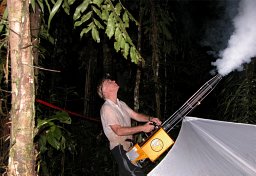 Terry L. Erwin合作论文数Department of Entomology;National Museum of Natural History;Smithsonian Institution;Department of Entomology, Smithsonian Institution1
 Chiara Zazzaro合作论文数Laboratorio di Archeologia, University of Naples “l’Orientale1Jonathan R. Mawdsley合作论文数1Jens Prena合作论文数1
 Vasily V. Grebennikov (Vasily Grebennikov)合作论文数Centre for Plant Quarantine Pests, Canadian Food Inspection Agency1Thomas J. Henry合作论文数1




