The genus Hivanuagen. nov. is established for the harmochirine jumping spiders of the Marquesas Islands, formerly placed in Habronattus F.O. Pickard-Cambridge, 1901 and Havaika Prószyński, 2002. The type species, Hivanua tekaosp. nov. is described, and five species described by Berland are re-illustrated and moved into the genus: Hivanua flavipes (Berland, 1933), comb. nov., Hivanua nigrescens (Berland, 1933), comb. nov., Hivanua nigrolineata (Berland, 1933), comb. nov., Hivanua rufescens (Berland, 1934), comb. nov., and Hivanua triangulifera (Berland, 1933), comb. nov. The female epigyne is much like that of Habronattus, Bianor Peckham & Peckham, 1896, and other harmochirines, with a centrally placed coupling pocket and two atria with crescent-shaped edges. The terminal apophysis of the male palp, which is variable throughout the pellenine subgroup of the Harmochirina, is absent in H. rufescens but present in H. tekaosp. nov., in which it is elbowed much as in Habronattus. These Pacific Island harmochirines, like the Havaika of Hawaii, appear to be largely foliage dwellers, unlike most of their continental relatives.
Biologists and philosophers of science have been unable to fully resolve the decades-long controversy as to what kind of unit of living biodiversity should receive the valued label “species”: reproductive communities (among sexual organisms), genealogical groups, or clusters of organisms that share traits. Among these choices, which represent a spectrum from process to history to observable outcome (respectively), the latter (more operationalist) concepts are not viable. Species of sexual organisms must embody or imply cohesive and integrating processes such as interbreeding and shared ecological pressures if they are to have sufficient power to bear the burden we give them: to predict or explain traits across the genome and among organisms. This commitment to cohesive process is needed whether biologists use species as taxonomic containers to synthesize data, as minimal phylogenetic units, or as actors in evolutionary diversification. These varied uses can be satisfied via a concept of reproductive community, but not the strict Biological Species Concept (BSC). Its two drawbacks are a focus on the contemporary and a restriction to intrinsic factors. Current reproductive compatibility may predict future matings, but it does not explain well the traits and genes that living organisms already have. The organisms alive today were shaped by isolating factors of the past, not those of the present, to whatever extent those differ. The most broadly-useful species concept must therefore see species retrospectively, as reproductive communities of the past. As well, the BSC’s exclusion of extrinsic factors renders each of its units incomplete in explanation and synthesis. Reproductive communities in nature were isolated not just by intrinsic (genetic) differences, but also by purely extrinsic (e.g., geographic) factors. Such reproductive communities were and are real, natural entities whose integrated and self-reinforcing cohesive processes constrained genealogical descent and aligned the distribution of many traits. This Retrospective Reproductive Community Concept (RRCC), formalized mathematically in multispecies coalescent models, justifies the traditional practice of taxonomists using morphological data to seek the echoes of past reproductive cohesion. However, which reproductive communities naturally deserve to be ranked as species, and which as demes or populations, is a vexing question. There is no natural, discrete and broadly informative species rank that applies universally, or perhaps even usually. To whatever extent species rank is justified, it is as justified for asexual organisms as for sexuals. The presence or absence of sex is just one example of the variability biologists confront. Because cohesive processes vary among clades, a useful and broadly-applicable species concept cannot specify detailed cohesive mechanisms. Nor can it perfectly align the named species of taxonomy with units of evolution, because the latter are not structured to match taxonomy’s partition of boxes. Taxonomic species should approximate, but can only approximate, evolutionary units. Settling on retrospection, letting go of a natural meaning for species rank, and accepting taxonomy as approximation allow biology to turn to the far more daunting task: listening to the natural world to understand the many interacting processes that built distinction and identity, that shaped the reproductive communities emerging out of the past into the present day.
The euophryine genus Charippus Thorell, 1895 is revised and eight new species are described: Charippus asper Yu, Maddison Zhang, sp. nov. ( ), C. bukittimah Yu, Maddison Zhang, sp. nov. ( ), C. callainus Yu, Maddison Zhang, sp. nov. ( ), C. denjii Yu, Maddison Zhang, sp. nov. ( ), C. heishiding Yu, Maddison Zhang, sp. nov. ( ), C. kubah Yu, Maddison Zhang, sp. nov. ( ), C. minotaurus Yu, Maddison Zhang, sp. nov. ( ) and C. wanlessi Yu, Maddison Zhang, sp. nov. ( ). A new combination for Charippus yunnanensis (Cao Li, 2016) comb. nov. (ex. Cytaea Keyserling, 1882) is proposed, and its female is described for the first time. Diagnostic illustrations and photographs are provided for all known species.
Intra-specific variation pattern is informative to understanding the evolution of morphological traits, but has been rarely studied in jumping spiders. Here we investigate the intra-specific variation of non-genitalic and genitalic traits in two euophryine jumping spider species that show considerable difference in sexual dimorphism: Chapoda recondita (Peckham & Peckham, 1896) and Antillattus cambridgei (Bryant, 1943). The results show the pre-copulatory sexually selected traits (e.g. male chelicerae) tend to have positive intra-specific allometry, and thus may have evolved under strong directional selection. The genitalic traits and some non-genitalic traits tend to show negative allometries. Unlike non-genitalic traits, the genitalic traits usually have high size-corrected intra-specific variation (CV'). Factors that may account for the negative allometry and high size-corrected intra-specific variation in genitalic traits are discussed. Pre- and post-copulatory sexual selection may coexist in species and whether there is a trade-off between these two selection mechanisms remains to be investigated.
Two new species of the currently monotypic thiratoscirtine genera Ajaraneola Wesołowska & Russell-Smith, 2011 and Nimbarus Rollard & Wesołowska, 2002 are described from Uganda and Cameroon: Ajaraneola pajakwandy sp. nov. (male) and Nimbarus nimbus sp. nov. (male), respectively. With the new species, previous diagnoses of the genera are re-evaluated and refined. The range of each genus is extended considerably: Ajaraneola is reported from Uganda and Nimbarus from Cameroon for the first time.
 Suresh P. Benjamin合作论文数13
 Nilani Kanesharatnam合作论文数Natl Inst Fundamental Studies13
 Kiran Marathe合作论文数Natl Ctr Biol Sci, Tata Inst Fundamental Res13
 Krushnamegh Kunte合作论文数National Centre for Biological Sciences, Tata lnstitute of Fundamental Research13
 JUNXIA ZHANG合作论文数11Imara Beattie合作论文数10Paul Y. C. Ng合作论文数10
 David Maddison合作论文数Department of Integrative Biology, College of Science, Oregon State University10
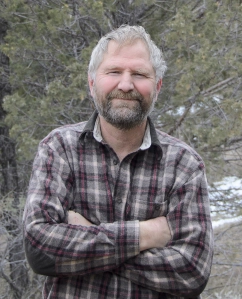 Marshal C. Hedin (Marshal Hedin)合作论文数Department of Biology, San Diego State University10
 Leticia Avilés合作论文数Department of Zoology, Faculty of Science, The University of British Columbia9Melissa R Bodner合作论文数5David R. Maddison合作论文数5
 Derkarabetian Shahan合作论文数Department of Biology, San Diego State University;Department of Biology, University of California Riverside;San Diego State University, University of California Riverside5
 Ingi Agnarsson合作论文数Faculty of Life and Environmental Sciences, University of Iceland5
 Montgomery Slatkin合作论文数Department of Integrative Biology, College of Letters & Science, University of California, Berkeley5
 Peter E Midford合作论文数Department of Zoology;University of Wisconsin;Department of Zoology, University of Wisconsin5GUSTAVO CAÑAS合作论文数3
 Andrew C. Mason合作论文数Department of Cell & Systems Biology, Faculty of Arts and Science, University of Toronto3
 Damian Octavio Elias合作论文数Department of Environmental Science, Policy and Management, College of Natural Resources, University of California, Berkeley3
 Michael Donoghue合作论文数Department of Ecology and Evolutionary Biology, Yale University3Tamas Szuts合作论文数3Paúl Tufiño合作论文数3
 Jeannette Whitton合作论文数Department of Botany, Faculty of Science, The University of British Columbia3
 Jonathan Coddington合作论文数Department of Entomology, National Museum of Natural History, Smithsonian Institution3
 Patricio Alejandro Salazar Carrion合作论文数Departamento de Biología;Pontificia Universidad Católica del Ecuador;Departamento de Biología, Pontificia Universidad Católica del Ecuador3Germania Estévez合作论文数3Karen M. Needham合作论文数2N. Morehouse合作论文数2J. X. Zhang合作论文数2GE STRATTON合作论文数2
 David Outomuro合作论文数2
 Jenny Yi-Ting Sung合作论文数Dept Biol Sci, Univ Cincinnati2Mireille Steck合作论文数2Martín J. Ramírez合作论文数2
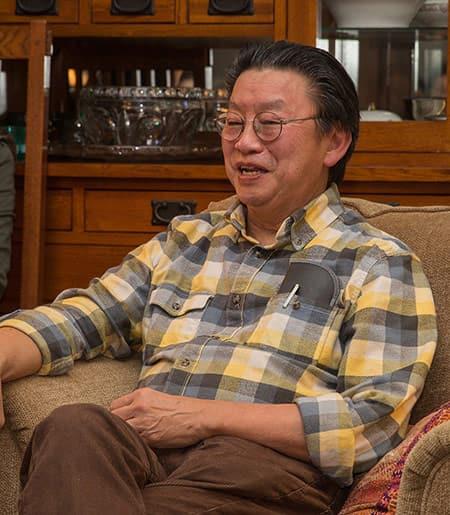 Ronald R. Hoy合作论文数Department of Neurobiology and Behavior, College of Arts & Sciences, Cornell University2
 Eileen Hebets合作论文数School of Biological Sciences, College of Arts and Sciences, University of Nebraska–Lincoln2
 Sarah P. Otto合作论文数Biodiversity Research Centre, University of British Columbia;Department of Zoology, Faculty of Science, University of British Columbia2
 Hilmar Lapp合作论文数Novartis Research Foundation Genomics Institute2
 Christopher J Sears合作论文数2
 David Swofford合作论文数Florida Museum of Natural History, University of Florida2
 Gustavo Hormiga合作论文数Department of Biological Sciences;George Washington University;Department of Biological Sciences, George Washington University2
 Megan Porter合作论文数Department of Microbiology and Molecular Biology;Brigham Young University;Department of Microbiology and Molecular Biology, Brigham Young University2AM Culbert合作论文数1EM Sellen合作论文数1m h charlton合作论文数1AJ Tucker合作论文数1M Sleightholm合作论文数1e marriot合作论文数1M Burden合作论文数1




