The various factors affecting the prognosis in 169 patients with malignant tumors of the tonsil have been reviewed. The clinical stage of the primary tumor and the presence of metastatic lymph nodes in the neck are the most important prognostic factors. Age of the patient, sex and histologic classification of the tumor did not affect the prognosis.Patients with small primary tumors or no evidence of metastatic neck lymph nodes exhibited cure rates in the range of 70-80 per cent, in contrast to about 40 per cent for patients with more advanced lesions or clinically palpable lymph nodes. Absence of viable tumor in the tonsil or in the neck lymph nodes of the surgical specimen indicated a good prognosis. However, patients with more than 2 positive lymph nodes in the neck dissection specimen carried a poor prognosis, regardless of the dose of radiation therapy given preoperatively.The mechanisms of failures for the various methods of treatment are reviewed, most of the radiation failures being local and those...
Since the beginning of the NASA/Mir missions, NASA has had astronauts in training at the Gagarin Cosmonaut Training Center (GCTC), also known as Star City, with crewmembers currently there to train for the International Space Station missions. Agreements have been reached with all International Partners that allow the crewmember's parent agency to provide a flight surgeon to oversee crewmember health and safety during training away from home. NASA Medical Operations through the Bioastronautics Contract employs flight surgeons to provide medical support for U.S. crewmembers and their support staff. This poster presentation reviews the aspects of NASA medical operations at Star City.
The experience at the Gershenson Radiation Oncology Center of 32 cases of metastases to the eye or orbit from breast cancer are presented with a review of the literature. The 32 patients were referred for radiation therapy in the period of 1980-1991. Eighteen patients had metastasis to the choroid, 2 patients had involvement of other parts of the eye (anterior chamber +/- choroid), and 11 patients had orbital metastasis. In one patient, the diffuse nature of the disease prevents subsite assignment. Ten of the patients with eye metastases also had brain or meningeal metastases (8 patients concurrent with eye metastases). Four of the 32 patients had bilateral choroidal metastases. A complete course of radiation therapy was delivered to 28 patients, one patient was not treated and 3 patients received only partial treatment because of general deterioration due to other widespread metastases from breast cancer. Of 21 evaluable patients, 15 had definite improvement. There was no progression of the eye metastases in the other 6 patients. The rest (7 patients) were lost to detailed follow-up of the response of the eye metastases. Four patients are still alive without any severe long-term side-effects. The diagnosis, treatment and outcome is presented with a review of the literature. The importance of emergency treatment for rapidly progressing lesions is stressed as well as the need for detailed treatment planning, careful delivery of daily treatments with a high degree of reproducibility and precision to prevent possible damage to sensitive normal structures.
The authors report on three medical accelerator projects at Michigan State University. One involves construction of a 100-MeV superconducting cyclotron for neutron therapy. In the second, a conceptual design has been prepared for a 250-MeV superconducting synchrocyclotron for proton therapy. The third consists of preliminary studies of a compact 1600-MeV superconducting cyclotron system for heavy ion therapy
1. The Cancer Problem Today.- 2. Present Status and Future Prospects for Treatment of Metastatic Cancer.- 3. A Critical Overview of the Metastatic Process.- 4. Experimental Models for Studying the Pathogenesis and Therapy of Metastatic Disease.- 5. Problems Posed for Cancer Treatment by Tumor Cell Heterogeneity.- 6. Multidrug Resistance and Metastasis.- 7. Polyamine Biosynthesis: A Target for Antimetastatic Therapy.- 8. Chemical Mechanisms of Modulation of Tumor Growth and Metastasis by Prostaglandins.- 9. Platelet-Tumor Cell Interactions as a Target for Antimetastatic Therapy.- 10. Mechanisms of Inhibition of Cancer Dissemination by Warfarin.- 11. Cancer Cell Procoagulants and Their Possible Role in Metastasis.- 12. Role of Growth Stimulatory Factors in Determining the Sites of Metastasis.- 13. Interleukins, Lymphokines and Lymphoid Neoplasia.- 14. The Use of Activated Macrophages for the Destruction of Heterogeneous Metastasis.- 15. Biological Response Modifiers as Activators of Natural Killer Cells: Potential Role in Treatment of Metastasis.- 16. Breast Cancer Diagnosis with Human Mammary Epithelial Antigens and the Prospective Use of Antibodies Against Them in Therapy.- 17. Chemotaxis in Tumor Cells: Possible Mechanisms and Their Implications for Therapy.- 18. Invasion of Vascular Endothelium and Organ Tissue in Vitro by B16 Melanoma Variants.- 19. Domains of Laminin and Basement Membrane Collagen which Play a Role in Metastases.- 20. Interaction of Malignant Cells with Substrata: Adhesion, Degradation and Migration.- 21. Proteolytic Enzymes in Tumor Invasion and Degradation of Host Extracellular Matrices.- 22. Cathepsin B-Like Cysteine Proteinases and Metastasis.- 23. Applications for Antimetastatic Therapies.
‘Hahnemann University, Dept. of Rad. Oncol. and Nuclear Med., Broad and Vine, Philadelphia, PA 19102; ‘Rad. Therapy, Thomas Jefferson University, 925 Chestnut Street, Philadelphia, PA 19 107; ‘Dept. of Ther. Radio., Box 494 University of MN Hospital, 420 Delaware St. SE., Minneapolis, MN 55455; 4Dept. of Rad. Oncol., Univ. of CA, LA, Los Angeles, CA 90024; ‘Div. of Rad. Oncol., Mallinckrodt Inst. of Radiology, 45 11 Forest Park Blvd., St. Louis, MO 63 108; 6Dept. of Rad. Therapy, The Harper Grace Hospital, 3990 John R. Street, Detroit, MI 48201
A compact superconducting cyclotron is being constructed for use as a neutron based cancer therapy facility in a major Detroit hospital . The project involves a number of novel design solutions which are described in the paper.
The PCS Process Survey analyzed radiation therapy facilities to evaluate procedures in work-up and treatment of patients with cancer of the larynx, tongue, and nasopharynx. Types of facilities are compared to establish bench marks in performance of work-up and treatment procedures that can be used as a foundation for upgrading care and for adjusting studies to follow this paper. A statistical method is demonstrated that provides a "signature" of relative performance over a standardized set of procedural criteria. Facilities with resident training programs perform nearly all of these procedures much more consistently than do nontraining facilities. Facilities with full-time head therapists perform most procedures more consistently than do facilities with part-time heads. A third comparison of large versus small facilities shows that among training facilities size has no effect and that among full-time facilities size has a slight effect. Among part-time facilities, however, smaller ones fail to perform most procedures more often than larger facilities. The size difference is confounded with the full-time/part-time difference because part-time facilities are on the average smaller than facilities with full-time head therapists.
Quality of medical care is fundamental; however, the recognition of quality is a complex task. The Patterns of Care Study is examining radiotherapeutic care in cancer throughout the United States, using a new methodology which can be applied to other medical disciplines. The system is described and illustrated as applied to the management of carcinoma of the cervix. Considerable variations in treatment have been identified. These variations can be studied and, where necessary, modified by appropriate educational programs; thus, the quality of medical care can be improved.
 Carlos A. Perez合作论文数Division of Radiation Oncology, Mallinckrodt Institute of Radiology, Washington University School of Medicine, St. Louis, MO, USA6
 S HOLTZ合作论文数5Lauren V. Ackerman合作论文数4
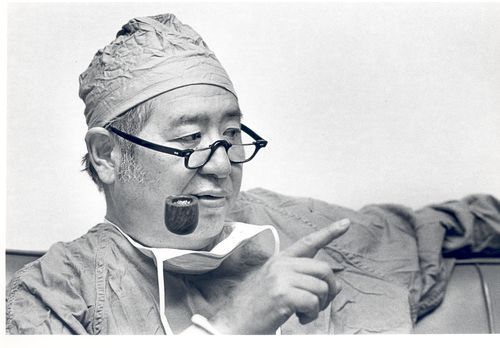 Joseph H. Ogura合作论文数department of Otolaryngology4Lawrence W. Davis合作论文数4William B. Mill合作论文数3David F. Herring合作论文数3S BREAUX合作论文数3C. H. Behre合作论文数2A. L. Howland合作论文数2J OGURA合作论文数2Johnson, D.合作论文数2
 Kenneth V. Honn合作论文数Cancer Biology Division, School of Medicine, Wayne State University;Department of Pathology, School of Medicine, Wayne State University2Simon Kramer合作论文数2Felix Marti合作论文数2J. T. Stark合作论文数2Richard L. Maughan合作论文数2H Marvin Camel合作论文数2H. Blosser合作论文数2Teresa J. Vietti合作论文数2James Purdy合作论文数University of California, Davis2Charles J. Maclean合作论文数2
 Vaneerat Ratanatharathorn合作论文数2
 John Vincent合作论文数2Gabe F. Blosser合作论文数2Hywel Madoc-Jones合作论文数2clyde f kohn合作论文数2L. R. Wackerling合作论文数1sean k roden合作论文数1fred g ocallaghan合作论文数1william r shiller合作论文数1J Newall合作论文数1J H Ogura合作论文数1G.Stephen Brown合作论文数1J. R. Dunlap合作论文数1K. G. Henize合作论文数1Subhash Sharma合作论文数1Ah Edelman合作论文数1marvin henick合作论文数1Donna Fanelli合作论文数1matilda cuomo合作论文数1brooke shields合作论文数1Malcolm H. McGavran合作论文数1N Steverson合作论文数1E Blosser合作论文数1A. Zeller合作论文数1J. Wagner合作论文数1Kuo, T.合作论文数1Burleigh, R.合作论文数1




