A visible-light-driven radical silylative cyclization of aza-1,6-dienes featuring an acrylonitrile or acrylate moiety and an electron-neutral olefin was developed, which allows for stereoselective synthesis of densely functionalized piperidines in a highly atom-economical manner. Depending on the substitution pattern of the electron-neutral olefin, poor-to-excellent diastereoselectivity was observed. It was suggested that the 6-exo-trig cyclization was initiated by a chemoselective addition of silyl radical toward electron-deficient olefin and the geometry of the remaining olefin is closely associated with the cis-stereoselectivity. DFT calculations supported that a transition state with a cyano group locating at the axial position of the forming piperidine ring might be involved, in which either the increase of 1,3-diaxial repulsion or the lack of hydrogen bonding interaction will diminish diastereoselectivity.
A visible light-promoted hydrosilylation of alkynes has been explored and achieved using 1 mol % organic dye Eosin Y as the photocatalyst and a catalytic amount of thiol as the radical quencher. The corresponding alkenylsilanes were provided with high regio- and stereoselectivites in the reactions of various terminal and internal alkynes. The experimental evidence shows that the reaction is preferentially initiated by a single electron transfer process, and a photoredox pathway is suggested.
A visible light-driven radical hydrosilylation of electron-neutral and -rich alkenes has been investigated on the basis of a newly developed catalytic reaction system composed of eosin Y, thiol, and base additives. A variety of linear and cyclic alkenes with different substitution patterns were found to undergo such metal-free hydrosilylation with tertiary and secondary hydrosilanes in a chemo-, regio-, and stereoselective manner. Comparison of the reactivity of diene compounds and late-stage hydrosilylation of steroid drugs were also explored. Deuterium labeling experiments reveal that a stepwise formation of C-Si and C-H bonds with a trans stereochemistry is preferred, in which the thiol may behave as a hydrogen atom transfer agent.
A gram-scale organocatalytic enantioselective Michael addition of α-nitrocyclohexanone to acrolein has been developed, and it was successfully applied to a concise two-step synthesis of (1S)-azaspiro[4.5]decan-6-one, a useful chiral building block for the synthesis of a variety of natural alkaloids.
The Bronsted acid-promoted dimerization of o-alkynylbenzaldehydes has been discovered and studied in the presence of 45% aq. HBF4 in acetic acid. The developed cascade methodology provides a convenient one-step synthesis of symmetrical 2,3,6,7-dibenzo-9-oxabicyclo[3.3.1]nona-2,6-diene (Kagan's ether) analogues bearing various functionalities.
AbstractDimerization of o‐alkynylbenzaldehydes towards Kagan′s ether analogues proceeds smoothly in the presence of aqueous HBF4 in acetic acid.
A target-oriented highly enantioselective multifunctional organocatalytic approach has been developed to construct the bicycle-[3.3.1]nona-2,6-dien-9-one core of (−)-huperzine A for the first time, with up to 95% ee in the gram-scale procedure. The newly established methodology is also eligible to synthesize a variety of bicyclo[3.3.1]nona-2,6-dien-9-ones in high enantiopurities, and thus is useful for the future development of novel huperzine A analogs with medicinal interests.
A Pd-catalyzed coupling reaction of ArBr/ArCl/ArOTf with sodium thiosulfate takes place in presence of Cs2CO3 at 80°C. The reaction mixture is directly treated with Zn/HCl to afford aryl thiols in good to excellent yields.
 Shaozhong Wang (王少仲)合作论文数School of Chemistry & Chemical Engineering, Nanjing University7
 Zhujun Yao (姚祝军)合作论文数School of Chemistry and Chemical Engineering, Nanjing University7
 Dan Liu (刘丹)合作论文数School of Chemical Engineering and Technology, Tiangong University2
 Ju Xuan合作论文数2XiaoHua Ding合作论文数2
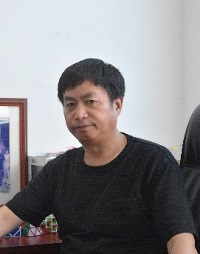 Shuyan Yu (于澍燕)合作论文数College of Environmental and Energy Engineering, Beijing University of Technology2Hu Zhilong合作论文数1J. Y. ZHU合作论文数1Xiang Li合作论文数1Jun Yi合作论文数1Wenxuan Zhao合作论文数State Key Laboratory of Coordination Chemistry, Jiangsu Key Laboratory of Advanced Organic Materials, School of Chemistry and Chemical EngineeringNanjing UniversityNanjing210023China1
 Bin Xiao (肖斌)合作论文数Department of Chemistry, School of Chemistry and Materials Science, University of Science and Technology of China1
 Yong Liang (梁勇)合作论文数School of Chemistry and Chemical Engineering, Nanjing University1
 Ming Gao (高鸣)合作论文数School of Chemistry & Chemical Engineering, Nanjing University1
 Yao Fu (傅尧)合作论文数Department of Chemistry, School of Chemistry and Materials Science, University of Science and Technology of China1
 Wei Liu合作论文数Coordination Chemistry Institute and the State Key Laboratory of Coordination Chemistry, Nanjing University1
 Qingxiang Guo (郭庆祥)合作论文数Department of Chemistry, School of Chemistry and Materials Science, University of Science and Technology of China1
 Jing Zhu (朱静)合作论文数School of Materials Science and Engineering, Tsinghua University1




