The extreme temperatures encountered in aerospace pose formidable challenges to the performance of elastic materials in spacecraft and related apparatus. Traditional organic insulation materials face hindrance due to inadequate fire resistance, while inorganic insulation materials are often brittle. Herein, we designed binarynetwork composite aerogels with dual-crosslinked PI nanofibers as the scaffold and uniformly distributed silica nanoparticles within the anisotropic aerogel matrix. Owing to the dual-crosslinked PI nanofiber network, the resulting PI@SiO 2 aerogel can withstand 1000 cycles of radial fatigue testing under 50 % compressive or buckling strains, maintaining structural stability across a wide angular frequency range of 0.1 -100 rad/s. DMA testing shows that PI@SiO 2 aerogel can endure 100,000 fatigue cycles from 25 to 300 degrees C, with storage modulus and loss modulus, and damping ratio, indicating robust long-term performance over a wide temperature spectrum. Even with liquid nitrogen (-196 degrees C) and butane torch flames (1100 degrees C), PI@SiO 2 aerogel preserves its superelasticity through repeated compressions. Moreover, the composite aerogel exhibits excellent thermal insulation, with low thermal conductivity (27.2 mW m -1 K -1 ), and reachs the top flame-retardant level (UL94V0). This work not only establishes a novel pathway for constructing polymer-based materials with temperatureinvariant superelasticity but also holds great promise for extensive applications in ongoing and near-future aerospace exploration.
电解铜箔作为负极集流体是锂电池的重要组成部分,决定了锂电池的内阻,并影响电池的循环寿命以及稳定性.随着对锂电池能量密度和循环寿命要求的提高,对电解铜箔的相关性能如比表面积、微观形貌等要求也越来越高.3D多孔铜箔因其不同形式的多孔结构,较现有的平面铜箔具有更大的比表面积,可以有效提升锂离子电池的稳定性和循环寿命.推进3D多孔铜箔的商业化应用已经成为现阶段锂离子电池负极材料研究的主要方向之一.本文综述了不同形式的多孔铜集流体制备的工艺以及其相关性能测试,通过总结表明多孔铜负极集流体对提升锂离子电池性能具有重要意义.本文旨在为铜箔生产与研发人员提供参考.
硅基负极材料是提升锂离子电池能量密度的重要材料基础,负极粘结剂性能的优劣是影响硅基负极材料推广应用的关键因素.本文全面综述了锂离子电池负极粘结剂材料的研究及应用进展,详细阐述了粘结剂对于硅基负极材料及锂离子电池电化学性能的影响,简要介绍了目前常用的羧甲基纤维素(CMC)、聚丙烯酸(PAA)、海藻酸盐(Alg)三种硅基负极粘结剂的特点,重点讨论了聚酰亚胺(PI)材料作为负极粘结剂的优势,其分子结构可设计、形变可逆、高强高模等优点有望抑制硅基负极体积膨胀并避免颗粒粉化,系统综述了目前PI在硅基负极粘结剂中的研究进展.在此基础上,为PI粘结剂后续研究提供了新的方法策略,为锂离子电池负极粘结剂的开发和应用提供了新的设计理念.
The preparation of spherical scandium oxide powders by ammonium bicarbonate precipitation was investigated. The carbonate containing scandium was prepared in the solution with ScCl (3)center dot XH2O as precursor. The effect of reaction temperature, amount of precipitant and stirring speed on the recovery of scandium was discussed. The effect of pH on the crystalline structure and particle size of carbonate containing scandium was characterized by the powder X-ray diffraction and laser particle sizer. Results demonstrate that the structure of carbonate containing scandium changes from non-crystalline structure to crystalline structure with increasing the reaction pH value. It indicates that when the initial change pH value is about 6, the crystalline structure of scandium oxide is cubic structure. Meanwhile, scandium sediment particles with 3.756.103.8 mu m in size can be obtained in a certain condition, depending on the pH value,. When the feasible pH value is 7, the D-50 of scandium sediment can be 6.634 mu m. The carbonate containing scandium is used as a precursor for the preparation of scandium oxide. The TG-DTA result indicates that the decomposition temperature of the carbonate tends to about 600 degrees C. Based on the XRD and IR analysis, it can be concluded that the appropriate calcination temperature for obtained relatively pure scandium oxide is 1000 degrees C. Meanwhile, the obtained scandium oxide powders were characterized by the laser particle size analyzer, BET and SEM-EDS. The crystallite size of spherical scandium oxide powders is less than 10 mu m with a surface area of about 373.952 m(2)/g. The microstructure is very homogeneous with spherical structure.
钒氧化还原液流电池是一种安全、环保、稳定、寿命长的电化学储能设备,对绿电储能和双碳政策实施具有重要意义.本文首先介绍了钒液流电池结构与特点;然后详细综述了钒电池的应用情况以及钒电池中钒电解液、电极和隔膜的研究进展情况;随后对钒资源、全钒液流电池国家相关政策进行了简述,并对当前钒液流电池市场规模根据现有数据进行了估算.最后,总结钒电池技术与产业发展现状,并展望了未来重点研究方向.
针对电炉冶炼钒钛矿渣中含有TiC导致渣金分离效果差的问题,本文提出碳热预还原-硅热还原熔分新方法,即在还原工艺后期,采用硅代替碳进行还原反应,以避免TiC的生成,并进行了条件试验及产物和炉渣检测分析.碳热预还原条件试验表明,通过控制反应时间和配碳量(1.6倍~1.9倍理论配碳)可在1 200℃下获得低碳(C=0.12%~0.22%)预还原产物.硅热还原熔分条件试验表明,V收率随着Si配比增加而增大,Fe收率随Si配比增加而增大;相同Si配比条件下,预还原阶段C配比越低,Fe收率越低,V收率越高;Si配比增加至1.8Si时,不同碳配比条件下V收率为77.71%~81.62%,Fe收率为97.23%~99.89%,而且渣金分离效果良好.炉渣X射线衍射图谱表明,炉渣中主要物相为钛酸铝镁(Mg4Al2Ti9O25)和镁铝尖晶石(MgAl2O4),不含TiC;根据图谱分析和能谱分析,推算得出随着Si配比的增加,渣中TiO2品位上升,1.8Si配比时渣中TiO2品位可以控制在27.28%~34.86%.该方法采用Si代替C进行深度还原,显著提升V收率,多回收的钒可弥补硅消耗带来的成本增加,且潜在经济效益显著.
当前,我国以煤炭为主的火力发电为主要的能源供应方式,但煤炭资源使用存在资源不可再生、二氧化碳排放量大、环境污染严重等问题.固体氧化物燃料电池(SOFC)具有一次发电效率高、产物环境友好等优点,被公认为21世纪的革命性绿色能源技术之一.本文围绕SOFC系统未来主要发展方向,对SOFC系统中氧化锆基、氧化铈基、钙钛矿基电解质材料性能进行综述,指出基于钪资源的氧化锆基电解质材料是当下电解质材料产业化的优选路径.我国钪资源储量优势明显,钪资源供给能够保障燃料电池新能源产业链持续安全发展,因此,建议从国家层面加强资源供给链、制造产业加工链、产品应用链和回收链各环节的政策引导,做好顶层设计,加速钪基SOFC产业孕育,牢牢把握新一代能源产业变革浪潮.
叙述了西北铅锌冶炼厂新建的152m2流态化焙烧锌冶炼项目从项目前期立项、环评至工程设计、施工、投产的整个过程.总结了该项目的创新点,介绍了工程投产后实际运行的各项技术指标.生产运行指标表明,152m2锌冶炼焙烧生产线实现了全球最先进、新一代锌冶炼工程示范性项目的目标.
海外EPC项目中的HSE管理是项目管理工作中重要的组成部分,一旦项目中发生职业健康、安全、环境事件、事故,对于项目本身、企业声誉及以后的国际市场开拓都会造成很大的影响.而且HSE管理是一个系统工程,控制点多,内容繁杂,如何做好海外项目的HSE管理,对各个工程公司都是一项挑战.本文结合中国恩菲工程技术有限公司在海外EPC项目管理中的经验,探讨如何做好有色行业海外EPC项目中的HSE管理.
EPC总承包模式是国际工程项目管理的主流模式,这种模式下承包商要独立承担项目的设计、采购、施工、调试等工作.国际项目中的进度管理与项目的成本、盈利密切相关,而有色行业的EPC总承包管理有其自身的特点.本文结合中国恩菲在海外EPC项目进度管理中的经验和教训,指出进度管理中需要重点关注和容易被忽视的事项,供同行借鉴.
通过自由基溶液聚合制备了聚丙烯酸,使其与1,1,3,3-四甲基胍中和反应制得聚丙烯酸四甲基胍(PTMGA),利用模拟的工业装置,研究了PTMGA水溶液在不同温度和烟气条件下吸收解吸SO2的性能.结果表明,PTMGA水溶液对SO2具有较好的吸收解吸性能及选择吸收性能.当吸收温度40℃、烟气中SO2浓度2%或4%(φ)时,PTMGA水溶液吸收SO2效率大于97%,解吸效率大于40%,且低温利于吸收,高温利于解吸.
The traditional zinc oxide desulfurization process was presented.The technological principle and characteristics of improved zinc oxide desulfurization process were introduced,which takes the zinc calcine or zinc roasting fume as absorbent.The possibility of using waste acid that produced in sulfate purification system in zinc oxide desulfurization system was discussed in this paper.
The running status of new 109m~2 fluidization roaster in northwest lead and zinc smelter after commissioning was introduced,and the technical-economic indexes between new and former roasters were compared.The results of theoretical calculation analysis and practical operation showed that the new roaster run steadily,residual sulphur rate and fume rate is low,calcine quality is high,economic and social benefits is obvious.
The more proven recovery technique of low-level heating energy of sulphuric acid applied in energy conservation and emission reduction,and the tail-gas desulfurization technology for sulphuric acid commonly applied in environmental protection were introduced.Based on it,the way to combine recovery technique of low-level heating energy with tail-gas desulfurization technology was discussed,and the new development direction of energy conservation and emission reduction for sulphuric acid was explored.
 Shi-mao DU (杜士帽)合作论文数3SongXuan Chen (陈宋璇)合作论文数3
 Nanxi Dong合作论文数2Jianzhou LI (李建舟)合作论文数2LI Xiao-yan (李晓艳)合作论文数2Qian XIE (谢谦)合作论文数2Li-juan QIN (秦丽娟)合作论文数2jun liu (刘君)合作论文数2ye xiao (肖野)合作论文数2WANG Weiwei (王玮玮)合作论文数2RuoGui Li (李若贵)合作论文数2
 Guofeng Tian (田国峰)合作论文数College of Materials Science and Engineering, Beijing University of Chemical Technology2
 Shengli Qi (齐胜利)合作论文数College of Materials Science and Engineering, Beijing University of Chemical Technology2Yunfeng Fu (付云枫)合作论文数2
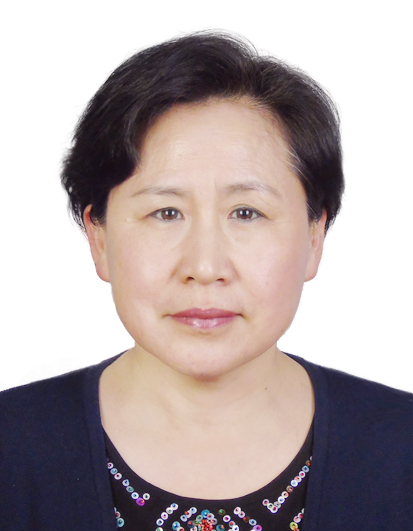 Dezhen Wu (武德珍)合作论文数School of Materials Science and Engineering, Beijing University of Chemical Technology2Zhaohua Meng (孟昭华)合作论文数2Daolei Lin (蔺道雷)合作论文数1Guoyan Fu合作论文数1Dazhou Yan合作论文数1
 Zhaobo Liu (刘召波)合作论文数1Jun Liu (刘俊)合作论文数1Bing-xue LIU (刘丙学)合作论文数1Dong LV (吕东)合作论文数1NingLei Sun (孙宁磊)合作论文数1SiLu Dong (董四禄)合作论文数1GuoShan Du (杜国山)合作论文数1YaGuang Guo (郭亚光)合作论文数1
 Shuxian Shi (石淑先)合作论文数College of Materials Science and Engineering, Beijing University of Chemical Technology1
 Dongbo Li (李东波)合作论文数China ENFI Engineering Co., Ltd., China Minmetals Corporation1Yongliang Gao (高永亮)合作论文数1Qian Xie (谢谦)合作论文数1Bo Xu (许波)合作论文数1LI Jian-zhou (李建舟)合作论文数1Bin Yang (杨斌)合作论文数1
 Yuzheng Xia (夏宇正)合作论文数College of Material Science and Engineering, Beijing University of Chemical Technology1




