Synthetic Aperture Radar (SAR) possesses all-weather, all-time observation capabilities, offering broad potential in disaster monitoring, topographic surveying, and marine management. For maritime moving target imaging, the coupling of target maneuverability with wave disturbance generates complex composite motion, posing significant challenges for imaging. Image defocusing caused by these motions can be compensated for by estimating motion parameters or phase errors. However, when dealing with multiple-ship scenarios, existing methods are limited to strategies that segment echoes or images and apply focusing processing on each target separately. This segmentation-based approach fails when dealing with targets in close proximity where their echoes or defocused side lobes overlap, and the targets cannot be focused simultaneously due to their distinct dynamic states. To address this challenge, a unified generative SAR imaging method for multiple moving targets with distinct dynamic states is proposed in this article. Under the constraint of the observed echoes, the method introduces the diffusion model to learn the data distribution of high-resolution SAR imaging results of multiple ship targets. Guided by constraints through iterative inverse process, high-quality, clean imaging results are reconstructed. Experiments validate the effectiveness of the proposed method and its adaptability to different systems, target types, and imaging scenarios.
Due to the variation of target electromagnetic characteristics with the bistatic synthetic aperture radar (BiSAR) observation angle and frequency, extended targets often appear as multiple discrete points in the imaging results, leading to a loss of structural information. Existing studies have not yet addressed this phenomenon, which can significantly impact the subsequent interpretation and analysis of BiSAR images. To clarify the imaging characteristics of BiSAR, this article analyzes the morphology and distribution of targets in BiSAR imaging results, considering the electromagnetic scattering characteristics of typical targets, such as linear targets, plates, and dihedrals. Initially, the 2-D wavenumber relationship of typical targets is applied to directly derive the imaging morphology and distribution of linear targets in the BiSAR configuration through the wavenumber mapping of the envelope and phase. Next, using the imaging results of the linear target and applying a first-order Taylor approximation for wavenumber inversion, the imaging morphology and distribution of plates and dihedrals are derived. To improve the accuracy of the model in describing dihedrals, we update the scattering model of dihedrals under the BiSAR configuration, building upon the existing model. In addition, by considering the coupling relationship between target size, BiSAR configuration, and imaging results, the variations in morphology and distribution of these three typical targets with configuration and target size are explored. Furthermore, based on the imaging characteristics of extended targets, the structural information of the targets is estimated, resulting in structured imaging outputs. Numerical simulations are conducted to validate the accuracy of the derived imaging results and characteristics. This article establishes the relationship between the BiSAR imaging principles and target scattering characteristics, and, for the first time, analyzes the morphology and distribution of extended targets in BiSAR imaging results. These insights enhance the interpretability of BiSAR images and lay the groundwork for more refined image interpretation.
Due to inherent electromechanical constraints, a monostatic radar system is fundamentally incapable of achieving forward-looking imaging capabilities, and its imaging geometry is intrinsically limited by the platform’s physical configuration. The bistatic imaging radar (BIR) system, with its spatially separated transmitter and receiver, provides greater flexibility in imaging configurations and enables forward-looking imaging. However, this platform separation also introduces inherent time-frequency synchronization errors, significantly degrading imaging performance. While direct waves can currently be used to compensate for synchronization errors, the inaccuracy of the platform navigation system and multipath effects introduced by structures around the transmit/receive antennas prevent direct waves from precisely compensating for synchronization errors, making high-resolution imaging challenging. To address this issue, a BIR synchronization error compensation network based on variational mode decomposition (VMD) is proposed to achieve synchronization error compensation. First, echoes are preprocessed to extract the phase of multiple strong scatter points. Second, a VMD network tailored for phase decomposition is constructed to separate high-frequency noise and errors. Then, considering the spatial invariant of synchronization errors, joint polynomial estimation is used to estimate and compensate for synchronization errors. Finally, the backward projection algorithm is used to image the error-compensated echoes, and the autofocus algorithm is used to achieve high-resolution BIR imaging. The efficacy of the proposed algorithm is validated through multiple sets of point-target simulations incorporating synchronization errors derived from real-world BIR systems. Furthermore, bistatic UAV-borne SAR experiments were conducted in Tianjin, China, demonstrating that the proposed algorithm achieves superior high-resolution imaging performance compared to conventional methods.
Ship automatic target recognition (ATR) in synthetic aperture radar (SAR) images plays a crucial role in maritime domain awareness. However, the sea clutter interference may make the model fail to focus on informative ship target regions for recognition. All existing SAR ship ATR models use the entire SAR ship image as input. But not all regions in SAR ship images contribute positively to recognition. However, the intraclass diversity and interclass similarity make the SAR ship ATR task more challenging. In this study, we propose a novel transformer-based architecture that addresses the two core challenges, named informative token selection former (ITS-ShipFormer). ITS-ShipFormer selects and guides the model’s attention to the informative token of the ship target regions. The ITS-ShipFormer consists of the multihead dynamic local convolution (MHDLC) block in the early stages, transformer blocks equipped with a sea clutter suppression module (SCSM) in the latter stages, and a discriminative hybrid loss. SCSM automatically distinguishes the informative ship tokens and useless sea clutter tokens by two carefully designed strategies. In response to the other challenge, MHDLC is designed to enhance the feature extraction ability, and the hybrid discriminative loss is proposed to add constraints on the CLS token and the informative tokens simultaneously. The experimental results on benchmark datasets OpenSARShip and FUSAR-Ship jointly verify the effectiveness of our design. Different from previous works introducing the transformer structure in ITS-ShipFormer utilizes the overlooked innate and unique advantages of the transformer structure to address our challenge.
Blind image separation (BIS) refers to the inverse problem of simultaneously estimating and restoring multiple independent source images from a single observation image under conditions of unknown mixing mode and without prior knowledge of the source images. Traditional methods relying on statistical independence assumptions or CNN/GAN variants struggle to characterize complex feature distributions in real scenes, leading to estimation bias, texture distortion, and artifact residue under strong noise and nonlinear mixing. This paper innovatively introduces diffusion models into dual-channel BIS, proposing an efficient Dual-Channel Diffusion Separation Model (DCDSM). DCDSM leverages diffusion models' powerful generative capability to learn source image feature distributions and reconstruct feature structures effectively. A novel Wavelet Suppression Module (WSM) is designed within the dual-branch reverse denoising process, forming an interactive separation network that enhances detail separation by exploiting the mutual coupling noise characteristic between source images. Extensive experiments on synthetic datasets containing rain/snow and complex mixtures demonstrate that DCDSM achieves state-of-the-art performance: 1) In image restoration tasks, it obtains PSNR/SSIM values of 35.0023 dB/0.9549 and 29.8108 dB/0.9243 for rain and snow removal respectively, outperforming Histoformer and LDRCNet by 1.2570 dB/0.9272 dB (PSNR) and 0.0262/0.0289 (SSIM) on average; 2) For complex mixture separation, the restored dual-source images achieve average PSNR and SSIM of 25.0049 dB and 0.7997, surpassing comparative methods by 4.1249 dB and 0.0926. Both subjective and objective evaluations confirm DCDSM's superiority in addressing rain/snow residue removal and detail preservation challenges.
With the increasing demand for high-precision imaging, synthetic aperture radar (SAR) has seen increasingly widespread applications in the field of remote sensing, and deep learning SAR imaging net has achieved fruitful developments. However, due to deviations in the trajectory, motion errors are present in the actual SAR echoes. Therefore, developing an integrated network for imaging and auto-focus to obtain high-precision SAR images holds meaningful importance. To address this issue, this paper proposes an integrated SAR imaging and autofocus strategy, i.e., (DIAI-net). The proposed DIAI-net is composed of two sub-networks, i.e., Image Reconstruction based on deep SAR imaging prior network (IrDIP) and Measurement matrix Estimation based on deep SAR imaging prior network (MeDIP). In both IrDIP and MeDIP, unrolled Alternating Direction Method of Multipliers (ADMM) network architecture is applied to exploit prior information. Testing results on both simulated and real SAR data demonstrate that the proposed DIAI-net leads to more accurate estimation of measurement matrix and better imaging results compared with the existing SAR auto-focus techniques.
This paper presents a radar imaging scheme based on programmable metasurfaces and sparse reconstruction. A $10 \times 10$ metasurface array is utilized to transmit pseudo-random phase-modulated signals. The scene is sparsely represented on a grid, and the target scene is reconstructed from the echo signals using the Iterative Soft Thresholding Algorithm (ISTA). Simulations demonstrate that increasing the number of pulse cycles enhances image clarity by reducing image entropy. To further address phase distortion caused by hardware imperfections, the Hippopotamus Optimization Algorithm (HOA) is introduced to optimize transmission parameters and phase configurations. The experimental setup involving two corner reflectors validates the effectiveness of the proposed imaging framework. The results show that this method can reconstruct target positions and distinguish them, thus confirming the potential of metasurface-based radar systems in realizing low-cost, reconfigurable, and intelligent sensing platforms.
With the increasing number of electromagnetic devices, radio frequency interference (RFI) suppression has gradually become an essential problem in synthetic aperture radar (SAR) imaging. Faced with complex RFI environments such as time-varying and multitype mixing that may occur, traditional approaches often result in inadequate suppression and loss of valuable echoes. Moreover, the representation ability of manually extracted features is limited, struggling to maintain consistent performance in complex electromagnetic environments. To tackle these challenges, this article proposes a feature-enhanced low-rank and sparse decomposition network (FELS-Net), which separates RFI and useful echoes in the time-frequency domain (TFD). We introduce two learnable invertible nonlinear transforms to enhance the representation of RFI and SAR echoes, and unfold the RFI suppression scheme based on low-rank and sparse decomposition into a parameter-learnable network structure. The strong interpretability of model-driven architecture offers a potential stability guarantee for RFI suppression performance, while deep learning (DL) contributes to more effective feature characterization and more efficient and robust parameter schemes. Experimental results demonstrate that the proposed method outperforms comparative approaches in both time-frequency (TF) and image domains, exhibiting robust performance across diverse experimental conditions.
Synthetic aperture radar (SAR) plays a crucial role in modern military reconnaissance. However, SAR often suffers from the loss of scene information in imaging results due to aiming frequency jamming. To enhance the active anti-jamming capability of SAR under varying jamming modes, this article proposes a cognitive frequency agile SAR (FASAR) anti-jamming strategy generation method based on action transfer and learning from demonstrations. The proposed method leverages interactive learning to enable the accurate and rapid generation of anti-jamming strategy across different jamming modes. First, the FASAR adversarial scenario is modeled as a Markov decision process, and reinforcement learning is used to solve the problem. A two-stage reward shaping method is introduced to guide FASAR in learning the optimal anti-jamming strategy. Furthermore, leveraging the concept of transfer learning, the interaction experience with a simulated jammer is used to pre-train the FASAR in the target adversarial environment. By utilizing the FASAR in the simulation environment to guide action selection during the initial phase of confrontation in the target environment, the proposed method further accelerates the generation of anti-jamming strategies. Numerical experiments demonstrate that the proposed method significantly improves the generation speed of anti-jamming strategies across jamming modes compared to existing methods. Moreover, it maintains stable anti-jamming performance throughout the entire confrontation cycle, effectively enhancing cognitive FASAR's initial battlefield environment reconnaissance capability and improving the anti-jamming efficiency of FASAR systems.
Reconfigurable Intelligent Surfaces (RIS) have the characteristics of modulating the incident signal and reflecting it. This characteristic makes it is more explored and applied in the field of radar imaging. This paper applies the phase modulation capability of RIS to modulate the 6.5GHz singlefrequency signal into a 1-bit random phase modulation signal. The transmission signal is transmitted in the form of a $10 * 10$ array, reflected by the target, and received by the receiver. Since the imaging target is naturally sparse in the scene, the staring imaging is realized through the sparse algorithm. The simulation experimental results of point targets and surface targets verify the feasibility of the imaging method in this paper. Then we process the real experimental measurement data of point targets and basically achieve the imaging effect.
The 3-D millimeter-wave imaging systems are known for their advantages, including compact size, low radiation, and excellent penetrability. In recent years, these systems have been widely used in public security inspection, nondestructive testing, and medical diagnosis. However, existing 3-D millimeter-wave radar imaging systems are typically reliant on multielement arrays or multibaseline scanning to achieve high 2-D resolution, which results in significantly increased computational complexity and hardware costs. To address this challenge, sparse sampling methods have been widely employed. Nevertheless, current approaches are predominantly based on uniform random sampling strategies, which restricts their feasibility and practicality in real-world engineering applications. As a result, the development of an efficient imaging system tailored to industrial imaging requirements has been identified as a pressing challenge. In this article, a dual-track scanning-based millimeter-wave radar 3-D imaging system is proposed to simplify the system architecture and reduce computational complexity. The proposed system is designed for direct application in industrial scenarios, such as pipeline workpiece detection. The system is controlled via a host message interface (HMI) and a Zynq UltraScale+ MPSoC platform, enabling operational processes to be significantly streamlined. In addition, to overcome the limitations of traditional methods, including long imaging times and poor practicality, a zigzag sparse scanning pattern is introduced, which enhances imaging efficiency and system practicality. Based on this sparse scanning framework, a matrix completion method called TTSPN that combines the Toeplitz transform with the truncated Schatten-p norm is further proposed, achieving robust and satisfactory recovery performance. In summary, the proposed system is demonstrated to significantly reduce time costs while millimeter-level synthetic aperture ultrahigh-resolution imaging is achieved for multiple targets and scenes. This advancement highlights the system's potential for practical industrial applications, offering a balance between high performance and operational efficiency.
Aircraft detection in Synthetic Aperture Radar imagery is of significant importance for enhancing airport management efficiency and safety, as well as augmenting military reconnaissance capabilities. Considering the discrete characteristics of aircraft targets in SAR images, which may lead to the impairment of the integrity of aircraft components, and the challenges posed by environmental noise and background clutter to target detection, this study proposes an aircraft detection network based on fuzzy loss function. The network initially designs a fuzzy loss function that constrains scattering points through fuzzy computation methods, thereby enhancing the correlation between scattering points. Furthermore, to address environmental noise and background interference, this paper innovatively introduces a differential suppression structure(DSS). The DSS effectively suppresses background interference and integrates features at different levels, thereby enhancing the representation capability of target features. Extensive experiments conducted on the SADD dataset demonstrate that our method achieves state-of-the-art performance levels, thereby validating the effectiveness of the proposed approach.
With azimuth multichannel receiving echoes, multichannel radar can realize forward-looking imaging, but its azimuth resolution is greatly restricted by the platform size. Although many superresolution algorithms have been developed in recent years, they always face problems such as difficulty in parameter tuning, high computational complexity, and noise sensitivity. In this article, a synthetic aperture processing assisted iterative shrinkage thresholding algorithm (ISTA) network, that is, the synthetic aperture processing assisted ISTA network (SAP-ISTA-Net), is proposed to achieve multichannel radar forward-looking superresolution imaging. In the network, the reconstruction process with ISTA is mapped into a deep unfolding network, and the real aperture superresolution imaging with ISTA-Net is achieved by processing the instantaneous data of multiple channels first. Then, the superresolution result is enhanced by the synthetic aperture processing of one-channel data with different time instants. At last, simulated and measured data experiments are presented to verify the effectiveness of the proposed method.
Synthetic aperture radar (SAR) has garnered increasing attention due to its capability for all-weather, all-day imaging of monitored areas. The imaging performance of SAR is inherently dependent on the precision of the platform trajectory and the quality of the received echo. However, limitations in the refresh rate and accuracy of positioning systems inevitably introduce motion errors during imaging, leading to degradation in image quality and significant inaccuracies in target structural parameter estimation. To achieve high-precision target parameter estimation under motion error conditions, this paper propose an adaptive structural parameters estimation net (ASPE-net). ASPE-net first employs phase gradient autofocus (PGA) to compensate for the spatially invariant errors in the echoes. Subsequently, an adaptive error compensation module is proposed to address spatially variant errors. The effectiveness and applicability of the proposed method are demonstrated through simulations and experimental data.
The multistatic three-dimensional (3D) synthetic aperture radar (SAR) system integrates the merits of traditional phased array radar's single-pass imaging capability with the flexible baseline of multi-pass tomographic SAR systems, positioning it as a pivotal direction for future advancements. Nonetheless, constrained by cost limitations and safety spacing requirements between platforms, multistatic SAR systems frequently grapple with challenges such as a limited number of baselines and wide baseline spacing, leading to inadequate signal-to-noise ratio (SNR) in data and compromised imaging quality, which in turn hinders the interpretation of 3D results. To tackle this issue, this paper introduces a missing baseline recovery method leveraging Hankel transform and matrix completion. Based on the stack of two-dimensional (2D) imaging results, this method first converts the data vectors into a Hankel matrix, laying the foundation for matrix completion. Subsequently, the low-rank property of the matrix is analyzed. Finally, the missing baseline data is recovered through the matrix completion algorithm. By adopting the above method, the 3D imaging effect is enhanced. The effectiveness of the method is demonstrated through experimental results and analysis.
Hyperspectral image (HSI) unmixing is a challenging research problem that tries to identify the constituent components, known as endmembers, and their corresponding proportions, known as abundances, in the scene by analysing images captured by hyperspectral cameras. Recently, many deep learning based unmixing approaches have been proposed with the surge of machine learning techniques, especially convolutional neural networks (CNN). However, these methods face two notable challenges: 1. They frequently yield results lacking physical significance, such as signatures corresponding to unknown or non-existent materials. 2. CNNs, as general-purpose network structures, are not explicitly tailored for unmixing tasks. In response to these concerns, our work draws inspiration from double deep image prior (DIP) techniques and algorithm unrolling, presenting a novel network structure that effectively addresses both issues. Specifically, we first propose a MatrixConv Unmixing (MCU) approach for endmember and abundance estimation, respectively, which can be solved via certain iterative solvers. We then unroll these solvers to build two sub-networks, endmember estimation DIP (UEDIP) and abundance estimation DIP (UADIP), to generate the estimation of endmember and abundance, respectively. The overall network is constructed by assembling these two sub-networks. In order to generate meaningful unmixing results, we also propose a composite loss function. To further improve the unmixing quality, we also add explicitly a regularizer for endmember and abundance estimation, respectively. The proposed methods are tested for effectiveness on both synthetic and real datasets.
The 3D millimeter-wave imaging systems are known for their advantages, including compact size, low radiation, and excellent penetrability. In recent years, these systems have been widely used in public security inspection, nondestructive testing, and medical diagnosis. However, existing 3D millimeter-wave radar imaging systems are typically reliant on multi-element arrays or multi-baseline scanning to achieve high two-dimensional resolution, which results in significantly increased computational complexity and hardware costs. To address this challenge, sparse sampling methods have been widely employed. Nevertheless, current approaches are predominantly based on uniform random sampling strategies, which restricts their feasibility and practicality in real-world engineering applications. As a result, the development of an efficient imaging system tailored to industrial imaging requirements has been identified as a pressing challenge. In this paper, a dual-track scanning-based millimeter-wave radar 3D imaging system is proposed to simplify the system architecture and reduce computational complexity. The proposed system is designed for direct application in industrial scenarios, such as pipeline workpiece detection. The system is controlled via a Host Message Interface (HMI) and a ZYNQ platform, enabling operational processes to be significantly streamlined. Additionally, to overcome the limitations of traditional methods, including long imaging times and poor practicality, a zigzag sparse scanning pattern is introduced, which enhances imaging efficiency and system practicality. Based on this sparse scanning framework, a matrix completion method called TTSPN that combines the Toeplitz transform with the Truncated Schatten-p Norm is further proposed, achieving robust and satisfactory recovery performance. In summary, the proposed system is demonstrated to significantly reduce time costs while millimeter-level synthetic aperture ultra-high-resolution imaging is achieved for multiple targets and scenes. This advancement highlights the system's potential for practical industrial applications, offering a balance between high performance and operational efficiency.
Bistatic synthetic aperture radar (BiSAR) enables a highly flexible configuration, offering broad application prospects. However, existing BiSAR imaging algorithms neglect the complex scattering characteristics of the target, resulting in the loss of target structural information in the imaging results. To enhance the target structural information in imaging results and improve the interpretability of BiSAR images, we first establish the BiSAR echo model based on the target scattering model and analyze the target's imaging characteristics by incorporating the imaging mechanisms. Subsequently, based on the imaging characteristics, we propose a structure-driven multistage BiSAR trajectory planning (SMTP) method. This method solves a multistage multiobjective optimization problem driven by target scattering characteristics, thereby fully presenting all discernible structural features in the imaging results. Numerical simulation experiments validate the proposed method, demonstrating its ability to recover target structural information. This approach addresses the gap where BiSAR mission planning has largely overlooked target-specific characteristics.
Obtaining the clear contours of ship targets via synthetic aperture radar (SAR) is extremely valuable for monitoring the sea. Now there are many deep learning imaging methods for ground scenes with good results, but they will face three main challenges when imaging ship targets: 1) the translational and rotational motions of ship targets during travel and due to waves, respectively, bring spatial invariant and variant errors that are tough to estimate and compensate, resulting in defocused SAR imaging results; 2) the varying motion of ships demands a high generalization ability of the imaging reconstruction network to adapt to the ship targets with sample-wise variant motion parameters; and 3) since ships are noncooperative targets, the accuracy of motion parameter estimation should be evaluated based on image quality, whereas the available SAR image quality assessment (IQA) functions exhibit limited robustness. To address these issues, this article proposes a deep learning-based SAR imaging framework for ship targets via deep unfolding. First, the motion model and characteristics of ship targets are analyzed, and the SAR imaging model for ship targets with complex translational and rotational motion is established. Second, an imaging network with high generalization ability is proposed to adapt echoes for imaging under different motion parameters. On this basis, an SAR ship IQA network is proposed to assess the imaging results of SAR ship targets with different focusing qualities. Then, the high-resolution imaging problem of ship targets is regarded as a motion parameter optimization problem, with the IQA results as the objective function. Finally, this problem is optimized to search for the most accurate translational and rotational motion parameter variables of the ship target, achieving error compensation and imaging. The validity of the method is verified through the simulation of point targets and real SAR scenario data.
 Junjie Wu (武俊杰)合作论文数School of Information and Communication Engineering, University of Electronic Science and Technology of China52
 Jianyu Yang (杨建宇)合作论文数School of Information and Communication Engineering, University of Electronic Science and Technology of China49
 Yulin Huang (黄钰林)合作论文数School of Information and Communication Engineering, University of Electronic Science and Technology of China36
 Haiguang Yang (杨海光)合作论文数School of Information and Communication Engineering, University of Electronic Science and Technology of China15
 Zhongyu Li (李中余)合作论文数School of Information and Communication Engineering, University of Electronic Science and Technology of China15
 Wenchao Li (李文超)合作论文数School of Information and Communication Engineering, University of Electronic Science and Technology of China11
 Yin Zhang (张寅)合作论文数School of Information and Communication Engineering, University of Electronic Science and Technology of China9
 Miguel Rodrigues合作论文数Department of Electronic & Electrical Engineering, University College London;Institute of Communications and Connected Systems, University College London;The Alan Turing Institute;University of Porto9
 Yu Hai合作论文数7
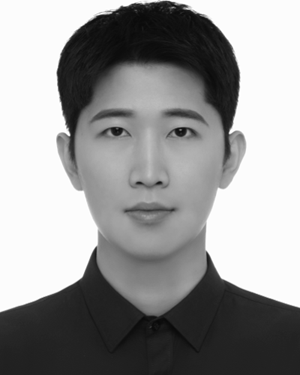 Yuanzhe Shang合作论文数6
 Nathan S. Daly合作论文数The National Gallery. Scientific Department5
 Anle Wang合作论文数5
 Barak Sober合作论文数Department of Statistics and Data Science and Digital Humanities at The Hebrew University of Jerusalem5
 Catherine L. Higgitt合作论文数5
 Chao Zhou合作论文数UCL, Dept Elect & Elect Engn, London WC1E 6BT, England4
 Ingrid Daubechies合作论文数Department of Mathematics, Trinity College of Arts & Sciences, Duke University;Department of Electrical and Computer Engineering, Pratt School of Engineering, Duke University4
 Yuebo Zha合作论文数4
 Yonina Eldar合作论文数Signal Acquisition Modeling Processing and Learning Lab, Department of Computer Science and Applied Mathematics, Faculty of Mathematics and Computer Science, Weizmann Nstitute of Science4Zhaoyi Shao合作论文数3jianqi wu合作论文数3
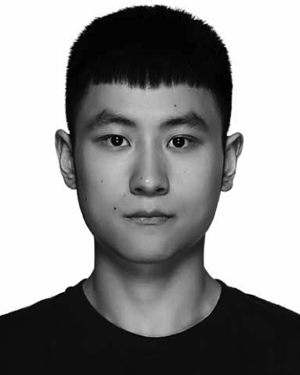 Hongyang An合作论文数Univ Elect Sci & Technol China, Sch Informat & Commun Engn, Chengdu 611731, Peoples R China3
 Xiaodong Wang合作论文数Department of Electrical Engineering, Columbia University3
 Jun-Jie Huang (黄俊杰)合作论文数College of Computer Science, National University of Defense Technology3
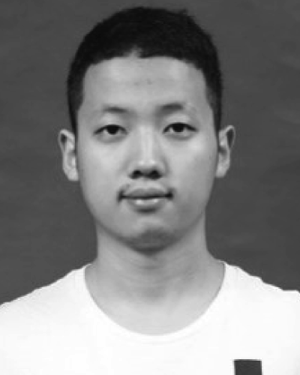 Yue Song合作论文数3
 Pier Luigi Dragotti合作论文数Department of Electrical and Electronic Engineering, Faculty of Engineering, Imperial College London3
 Dangwei Wang合作论文数3Congwen Wu合作论文数2
 Danling Liao合作论文数2Yunli Li合作论文数2Haoyu Wang合作论文数2
 Xinyu Mao合作论文数2
 Weibo Huo合作论文数2
 Youxin Lu (吕幼新)合作论文数School of Information and Communication Engineering, University of Electronic Science and Technology of China2Wei Yang (杨伟)合作论文数School of Electronic Science and Engineering(National Exemplary School of Microelectronics), University of Electronic Science and Technology of China2
 Kah Chan Teh合作论文数Division of Communication Engineering, School of Electrical & Electronic Engineering, Nanyang Technological University2
 Haowen Zuo合作论文数1Wanmin Wu合作论文数1Yanbo Wen合作论文数1
 Qiang Cheng (程强)合作论文数School of Information Science and Engineering, Southeast University1
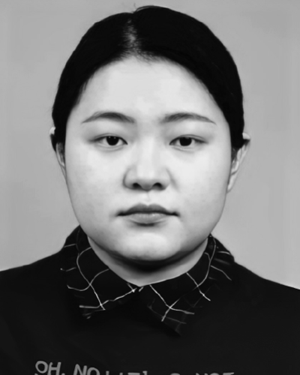 wang yuan yuan合作论文数1Ramunaidu Randhi合作论文数1JingZeng Wang合作论文数1
 Yuxin Ma合作论文数1
 Z Sabetsarvestani合作论文数1Kun Zhang合作论文数1HUO Jiawei (霍嘉玮)合作论文数1Zhengyang Su合作论文数1Pradyumna Pradhan合作论文数1
 Basheeruddin Shah Shaik合作论文数Department of Electrical Engineering, Shiv Nadar University1




