Clarifying the mechanisms of loss and recovery of consciousness in the brain is a major challenge in neuroscience, and research on the spatiotemporal organization of rhythms at the brain region scale at different levels of consciousness remains scarce. By applying computational neuroscience, an extended corticothalamic network model was developed in this study to simulate the altered states of consciousness induced by different concentration levels of propofol. The cortex area containing oscillation spread from posterior to anterior in four successive time stages, defining four groups of brain regions. A quantitative analysis showed that hierarchical rhythm propagation was mainly due to heterogeneity in the inter-brain region connections. These results indicate that the proposed model is an anatomically data-driven testbed and a simulation platform with millisecond resolution. It facilitates understanding of activity coordination across multiple areas of the conscious brain and the mechanisms of action of anesthetics in terms of brain regions.
Spiking neural networks (SNNs) serve as a promising computational framework for integrating insights from the brain into artificial intelligence (AI). Existing software infrastructures based on SNNs exclusively support brain simulation or brain-inspired AI, but not both simultaneously. To decode the nature of biological intelligence and create AI, we present the brain-inspired cognitive intelligence engine (BrainCog). This SNN-based platform provides essential infrastructure support for developing brain-inspired AI and brain simulation. BrainCog integrates different biological neurons, encoding strategies, learning rules, brain areas, and hardware-software co-design as essential components. Leveraging these user-friendly components, BrainCog incorporates various cognitive functions, including perception and learning, decision-making, knowledge representation and reasoning, motor control, social cognition, and brain structure and function simulations across multiple scales. BORN is an AI engine developed by BrainCog, showcasing seamless integration of BrainCog's components and cognitive functions to build advanced AI models and applications.
让人类的心智在计算系统中重现,对大脑的模拟是其中的关键.目前,脑与认知科学的进展虽然尚不足以支持对整个人脑及其连接进行精细计算模拟,但是受脑神经机制和认知机制启发,从微观、介观和宏观水平对大脑进行计算建模仍然对于推进从科学上理解脑的机制机理以及促进类脑人工智能意义深远.构建兼具生物合理性和计算高效性的神经网络模型是认知脑的计算模拟与类脑智能研究面临的重要挑战.本文将从回顾认知体系结构、计算神经科学和类脑人工智能的历史脉络、发展进程的视角切入,介绍大规模脑模拟的全球布局与进展以及类脑脉冲神经网络平台的研究,最后展望未来脑模拟与类脑智能研究的发展方向.
为了帮助学生了解图书馆,提高动手能力和协作精神,北京科技大学天津学院图书馆文献检索教研室开设了“探究实践式”的图书馆应用实践课程,经过四年的实践已经形成一套系统课程,通过对学生进行问卷调查,课程基本可以实现预期教学目标。
基于网上图书荐购对独立学院图书馆采访工作的补充作用,对教育部公布的275家独立学院图书馆网上荐购业务进行调查,从荐购业务的栏目设置、服务介绍、荐购方式三个方面对荐购开展情况进行调查,从响应时长、处理追踪、系统影响三个方面对荐购处理情况进行调查,发现独立学院图书馆网上荐购业务总体情况不容乐观,为提高荐购服务质量提出几点思考.
非物质文化遗产保护是一个复杂的系统工程,档案是一种特殊的有机体,将口述档案相关理念和方法引入到非物质文化遗产保护研究中,是一种双赢的行为.本文从建档过程中采访对象的确定,采访设备的选择,采访过程的实施三个环节入手,阐释了从传承人口中获得隐性知识并利用已获得的隐性知识获得新的知识的观点.
图书馆的未来走向由读者是否需要图书馆继续为其服务而决定,图书馆主动研究读者行为,把握读者心理显得尤为重要。该文从读者行为的一般规律入手,分析读者不满意图书馆服务的原因,围绕“重视读者意见反馈,以读者为中心来展开图书馆业务”的观点展开讨论,结合图书馆读者服务工作实际,探讨高校图书馆提高服务质量的策略。
阐述我国民营中小企业开展竞争情报的现状,利用马斯洛需求层次理论对我国民营中小企业的竞争情报需求进行分析.
Neuronal morphology modeling is one of the key steps for reverse engineering the brain at the micro level. It creates a realistic digital version of the neuron obtained by microscopy reconstruction in a visualized way so that the structure of the whole neuron (including soma, dendrite, axon, spin, etc.) is visible in different angles in a three dimensional space. Whether the modeled neuronal morphology matches the original neuron in vivo is closely related to the details captured by the manually sampled morphological points. Many data in public neuronal morphology data repositories (such as the NeuroMorpho project) focus more on the morphology of dendrites and axons, while there are only a few points to represent the neuron soma. The lack of enough details for neuron soma makes the modeling on the soma morphology a challenging task. In this paper, we provide a general method to neuronal morphology modeling (including the soma and its connections to surrounding dendrites, and axons, with a focus on how different components are connected) and handle the challenging task when there are not many detailed sample points for soma.
独立学院的档案事业起步较晚,但这并不影响独立学院走有自身特色的发展之路.只有适应时代的发展,积极地改进管理模式,才能在信息技术的变革中保持活力,为用户提供更加快速、高效的档案信息服务.
Event Abstract Back to Event Automatic Recovery of Z-Jumps for Neuronal Morphology Reconstruction Yi Zeng1*, Weida Bi1, Yun Wang2*, Xuan Tang1 and Bo Xu1 1 Institute of Automation, Chinese Academy of Sciences, China 2 Tufts University, Genesys Research Institute, United States Many researchers share neuronal morphology files along with their publications or contribute the files as independent raw data to public repositories such as the NeuroMorpho project. These morphology files not only serve as important supplements for the original scientific contributions, but also are considered to be extraordinary sources for realistic neuronal morphology simulation. Since reconstructed model neurons are mostly traced manually from brain slices under a light microscopy using a computer tracing system such as Neurolucida system, topological errors are often created during the time-consuming reconstruction. In most cases, the error is a big jump along Z coordinates called ‘Z-Jump’ [Brown et al. 2011], which always happens between the initial point of one branch and the node point that connects two or more branches (an example is given in Figure 1). For instance, the data file corresponding to Neuromorpho.org ID:NMO_01056 appears normal at the view of X and Y coordinates (Figure 1(a), but many Z-Jumps become visible (marked as the yellow lines in Figure 1(b).) at the view of Y and Z coordinates. Obviously, such kind of morphology files cannot accurately represent the morphological properties of original neurons, and hence cannot directly be used for realistic neuronal morphology simulation. A correction of the error is necessary to recover the reconstruction files to normal morphologies of original neurons. For this need, we developed an automatic Z-Jump recover tool. Since different researchers may be used to tracing neuronal branches with different distances between points in the morphology structure, a fixed threshold value to judge whether there is a Z-jump may not be appropriate. We proposed that the threshold value should be dynamic according to different reconstruction files. We rank the distances between two neighborhood sampled nodes. We assume 97.5% of the distances are in proper ranges (Let dn be the distance at the rank point of 97.5%). For the rest of the distances, if it equals to or is greater than 5 times of dn, then it is considered to be irregular distances (the red points in Figure 2(a) present the irregular distances in NMO_01056, and 14 distance values out of 3215 are irregular distances). For these irregular distances, we move the child node to the Z coordinate of the parent node, and the later connections along the same branch of the child node are moved accordingly. By using this method, the problem of Z-Jumps can be avoided (Figure 1(c) provides a neuronal morphology structure that is corrected from Figure 1(b) by the Z-Jumps recover tool developed in this study. Figure 2(b) and Figure 2(c) present the structure before and after recovery from another angle). We compare the identified Z-Jumps in NMO_01056 with the ones identified by the StdSwc tools developed by the NeuroMorpho project, 2 extra expert confirmed errors were identified (12 irregular distances were identified by StdSwc). If we further restrict the threshold to 3*dn, 10 extra Z-Jumps (with human judges) were identified. Through automatic detections using the standards proposed above, we found that around 26.14% of the 10004 neuronal morphology files in Neuromorpho.org present the problem of Z-Jumps to varying degrees (covering 18 out of 22 species, except for C. Elegans, Turtle, Drosophila and Frog). All of the identified 2615 files were improved and reproduced using our developed method. Figure 1 References Brown, K.M., Barrionuevo, G., Canty, A.J., De Paola, V., Hirsch, J.A., Jefferis, G.S., Lu, J., Snippe, M., Sugihara, I., Ascoli, G.A. (2011). The DIADEM Data Sets: Representative Light Microscopy Images of Neuronal Morphology to Advance Automation of Digital Reconstructions. Neuroinformatics 9(2-3):143–157. Keywords: Neuronal morphology reconstruction, Z-Jump, Simulations, neuroinformatics, recovery of morphology Conference: Neuroinformatics 2014, Leiden, Netherlands, 25 Aug - 27 Aug, 2014. Presentation Type: Demo, to be considered for oral presentation Topic: General neuroinformatics Citation: Zeng Y, Bi W, Wang Y, Tang X and Xu B (2014). Automatic Recovery of Z-Jumps for Neuronal Morphology Reconstruction. Front. Neuroinform. Conference Abstract: Neuroinformatics 2014. doi: 10.3389/conf.fninf.2014.18.00002 Copyright: The abstracts in this collection have not been subject to any Frontiers peer review or checks, and are not endorsed by Frontiers. They are made available through the Frontiers publishing platform as a service to conference organizers and presenters. The copyright in the individual abstracts is owned by the author of each abstract or his/her employer unless otherwise stated. Each abstract, as well as the collection of abstracts, are published under a Creative Commons CC-BY 4.0 (attribution) licence (https://creativecommons.org/licenses/by/4.0/) and may thus be reproduced, translated, adapted and be the subject of derivative works provided the authors and Frontiers are attributed. For Frontiers’ terms and conditions please see https://www.frontiersin.org/legal/terms-and-conditions. Received: 31 Mar 2014; Published Online: 04 Jun 2014. * Correspondence: Dr. Yi Zeng, Institute of Automation, Chinese Academy of Sciences, Beijing, China, yi.zeng@ia.ac.cn Dr. Yun Wang, Tufts University, Genesys Research Institute, Boston, United States, yun.wang@tufts.edu Login Required This action requires you to be registered with Frontiers and logged in. To register or login click here. Abstract Info Abstract The Authors in Frontiers Yi Zeng Weida Bi Yun Wang Xuan Tang Bo Xu Google Yi Zeng Weida Bi Yun Wang Xuan Tang Bo Xu Google Scholar Yi Zeng Weida Bi Yun Wang Xuan Tang Bo Xu PubMed Yi Zeng Weida Bi Yun Wang Xuan Tang Bo Xu Related Article in Frontiers Google Scholar PubMed Abstract Close Back to top Javascript is disabled. Please enable Javascript in your browser settings in order to see all the content on this page.
The dissertation is a positive analysis of subscription pattern,which based on previous questionnaire with the help of the SPSS17.0 software.We have sufficiently analyzed the impact of the subscription pattern on acquisition pattern and interview bibliography.It will be Conducive to the library make the right decisions,Conducive to the book supply and management system provide targeted service suppliers.
 Yi Zeng (曾毅)合作论文数Gaoling School of Artificial Intelligence, Renmin University of China3
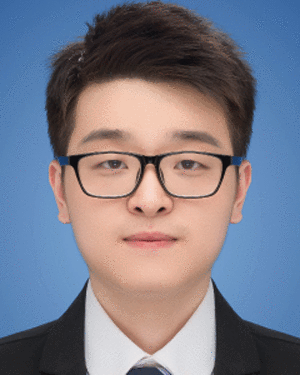 Guobin Shen (申国斌)合作论文数Institute of Automation, Chinese Academy of Sciences;Xiaohongshu Hi Lab2
 Dongcheng Zhao合作论文数Key Lab of Optical Fiber Sensing and Communications Ministry of Education, University of Electronic Science and Technology of China2
 SuFang Wu (吴素舫)合作论文数2Jing Ma (马静)合作论文数2
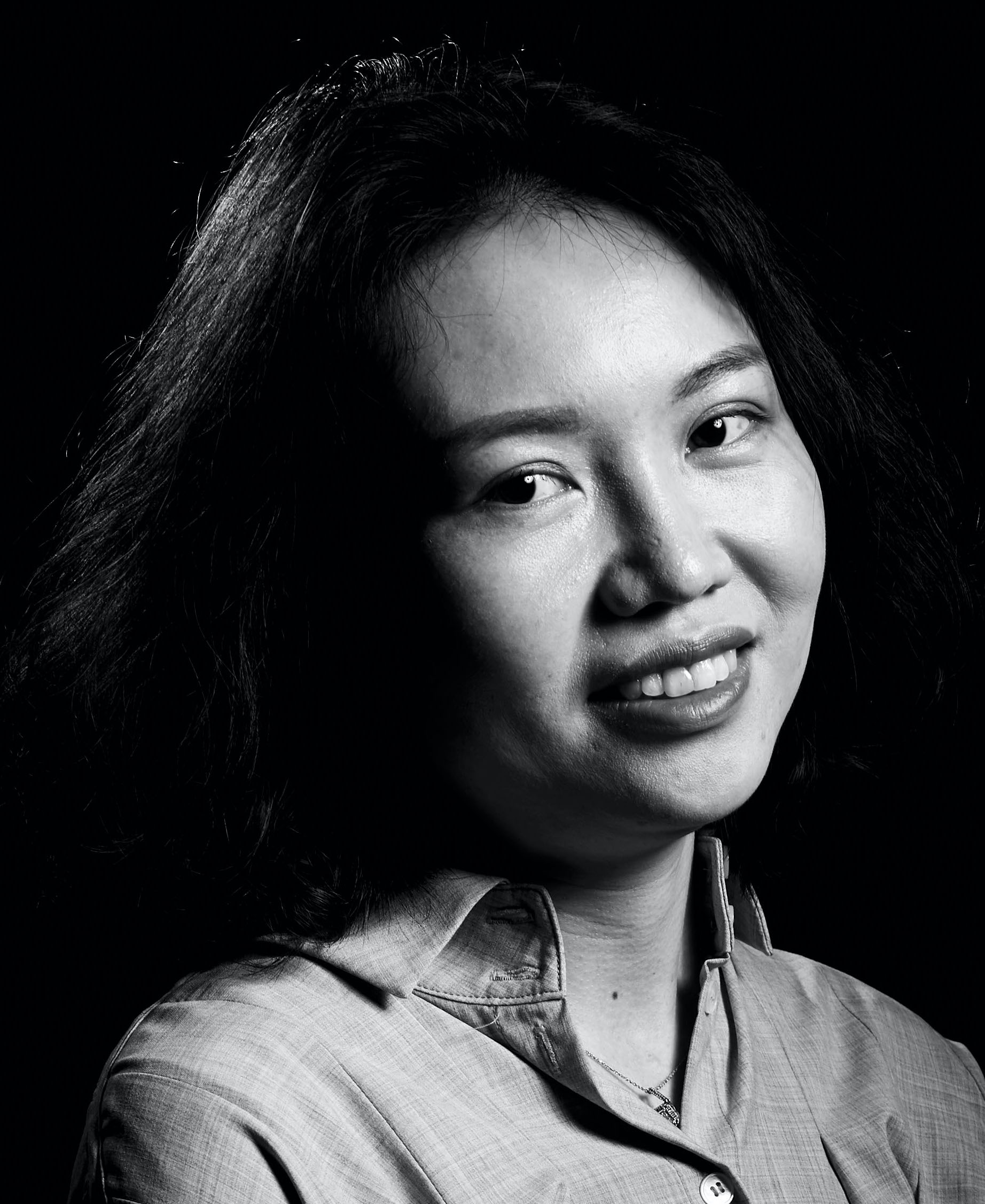 Qian Zhang (张倩)合作论文数Brain-inspired Cognitive Intelligence Lab, Institute of Automation, Chinese Academy of Sciences;School of Artificial Intelligence, University of Chinese Academy of Sciences1Yinqian Sun合作论文数1Taoyi Yang合作论文数1Hongjian Fang合作论文数1Zizhe Ruan合作论文数1Jihang Wang合作论文数1Qingqun Kong (孔庆群)合作论文数1Jindong Li合作论文数1Qian Liang合作论文数1Enmeng Lu合作论文数1
 Yiting Dong合作论文数1
 Yuxuan Zhao合作论文数Chinese Acad Sci, Inst Automat, Beijing, Peoples R China1
 Zhuoya Zhao合作论文数Res Ctr Brain Inspired Intelligence, Chinese Acad Sci, Inst Automat1Liang BAI (白亮)合作论文数1li L (李令)合作论文数1MiaoLi Wang (王妙丽)合作论文数1
 Yang Li合作论文数Institute of Automation, Chinese Academy of Sciences1Lu Han合作论文数1
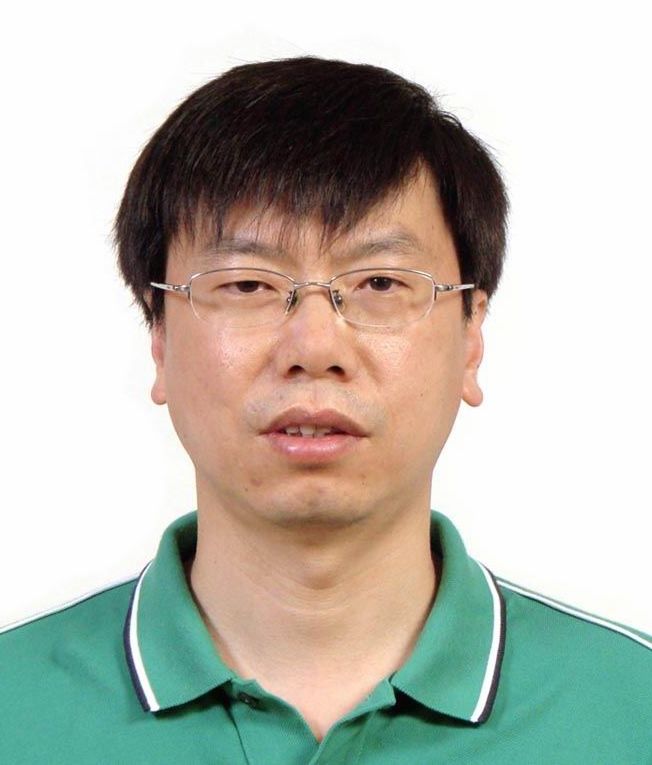 Bo Xu (徐波)合作论文数Institute of Automation, Chinese Academy of Sciences;School of Artificial Intelligence, University of Chinese Academy of Sciences1
 Feifei Zhao (赵菲菲)合作论文数Institute of Automation, Chinese Academy of Sciences;School of Artificial Intelligences, University of Chinese Academy of Sciences1Shue Liu (刘淑娥)合作论文数1
 Buwei Yu (于布为)合作论文数Ruijin Hospital, School of Medicine, Shanghai Jiao Tong University1
 Yuwei Wang (王煜炜)合作论文数Institute of Computing Technology, Chinese Academy Sciences1




