体感技术的发展将改变人和产品之间的交互方式,本文以体感设备对用户行为的感知和理解为切入点,在分析体感语境特征的基础上,以认知心理学、行为心理学理论为指导,从动作的可用性、动作的技术实现可行性、动作语义定义、动作实施的频度和疲劳度等方面研究体感语境下的交互行为设计。
Human body orientation is a fundamental preprocessing task in surface registration, motion analysis, and data driven animation for human body. Previous human body orientation determination methods suffer from pose dependence and non-robustness. In this study, we propose an automated pose-independent approach to human body orientation by combining geometric characteristics of human body based on principal component analysis (PCA). We first analyze the relations between the bones of lower limbs and the body orientation, and obtain a feature vector consisting of the angles between the bones and the body orientation. We then use PCA to analyze the training samples of the feature vector and construct a classifier based on the first principal component to determine the human body orientation. Our experimental results show that the linear separability of the feature vector is perfect, and the classifier trained by PCA can be used for orienting human body efficiently in a pose-independent manner. This method can also be easily integrated into existing approaches that extract skeleton from human body shape.
现有的动画生成方法存在手工操作繁琐、模型姿态受局限等问题.提出了一种新的人体模型动画自动生成方法,首先自动提取和识别位于人体四肢和头顶末端的5个特征点,以特征点为起点,计算模型等测地线的中心线.在中心线上根据人体测量学知识,确定关节点的近似位置,然后根据人体骨骼刚性运动特征和运动数据文件提供的骨骼信息,进行关节点精确定位,再通过热力学扩散方程计算顶点权重最后将提取的骨骼采用局部坐标架对齐的方法实现与运动数据匹配,并以运动数据驱动皮肤产生人体动画实验结果表明,与现有算法相比,具有与模型姿态无关、全自动、产生动画效果好等特点.
人体骨骼动画技术是虚拟人物建模中的研究重点。在现有人体骨骼动画的制作过程中,动画师必需手工标定人体各主要关节点位置及人体骨架每一关键帧的姿态,工作量巨大。因此提出一种自动提取人体任意姿态网格模型骨架结构的方法。该方法首先利用模型各顶点间测地距离的几何关系自动识别人体位于四肢和头顶末端的5个特征点,再以特征点为起点生成等测地距离曲线族,利用等测地距离曲线将人体四肢和躯干区分开来,将这些相邻等测地线中心连接起来生成5条骨骼中心线,最后在中心线上根据中心夹角极小值及等测地距离曲线似圆率来确定人体关节的确切位置。实验结果表明,该算法能适应不同姿态的人体模型,计算结果准确性高,能完全自动实现关节点定位和骨骼提取。
With the development in digital media technology,a virtual world corresponding to physical world is created.The natural interaction,a bridge linking the two worlds,decreases the cognitive load and reflects the design concept based on human by applying the cognitive experiences gotten from the physical world to the virtual world.The design of natural interaction is a cognitive activity on the basis of technology,taking requirement as its goal and creativity as its soul.The technology in digital media enriches human imagination and makes the design blossomed into a myriad of novel forms;while the design expands the scope of application of technology and boosts development of technology.The design of natural interaction realizes seamless linkage between technology and design.
Human body orientation recognition is a fundamental preprocessing task in registering two human body surfaces,analyzing motions of human bodies,and generating data-driven animations.The existing methods for human body orientation recognition are usually pose dependent and not very robust.To solve this problem,we propose an automatic pose-independent method for human body orientation recognition,which is based on SVM and geometric features.Specifically,the geometric features are constructed by using the relations between the joints of the lower limbs and body orientation.The SVM classifier is then trained to determine the body orientations.The experimental results show the effectiveness of the features(with good linear separability) and the SVM classifier can achieve very good performance in a pose-independent manner.Moreover,it is convenient to integrate this method into the existing approaches of extracting the skeleton from human body shapes.
Anthropometry is widely applied to the research in skeleton extraction from surface meshes of human body. Especially the anatomical proportion can be employed as a benchmark in model segmentation and joint extraction. Unfortunately, the anatomical proportion is usually measured with the Euclidean distance, which makes it difficult to correlate it with the surface mesh. To bridge this gap, we take advantage of the property of the geodesic metrics that is invariance to rotation, translation, scaling and model pose, and propose an original geodesic model in which the length of each part of human body is measured by geodesic metrics, by which the anatomic proportions can be directly mapped to the contours of the mesh surface of human body in arbitrary pose. Combining the geodesic model with automatic extraction of feature points, we can determine the candidate scopes of joint positions and boundaries between the parts on meshes, and then refine the joint positions in the scopes using existing methods. And finally, we illustrate the utility of the geodesic model with an application to joint extraction.
Based on the characteristics that indirect illumination distribution is in all directions and lack of variation with the change of its orientation,this paper uses an array of lights to calculate their direct illumination which is accelerated with GPU hardware implementation,and achieves rapid global illumination simulation.Experimental results show that this method is faster than physical rendering method and with good visual effect.
Logical classification of motion data is the precondition of motion editing and behaviour recognition. The typical distance metrics of sequences can not identify logical relation between motions well. Based on the traditional DTW distance metrics, this paper proposes strategies bidirectional DTW and segment DTW, both of which could improve the robustness of identifying logically related motions, and then proposes a DTW-Curve method which is used to compare the logical similarity between the motions. The generation of DTW-Curve includes three steps. Firstly, motions should be normalized to remove the global translation and align the global orientation. Secondly, motions are resampled to cluster local frames and remove redundant frames. Finally, DTW-Curve is generated under the control of different thresholds. DTW-Curve may produce many statistical properties, which could be used to unsupervised logical classification of motions. We propose two types of statistical properties, and classify motion data by using hierarchical clustering procedure. The experiment results demonstrate that the logical classification based on DTWCurve has better classification performance and robustness.
近年来对国内电脑动画市场及其发展趋势和动画教育现状的研究和实践,形成了一套在教育观念、培养目标、现代技术手段应用以及就业市场定位等几个方面与传统的动画教育相区别的、具有高职教育特征的应用型电脑动画人才培养模式。
<正>长期以来,技工学校同其他中专、职业高中一样实行学年制,中技要读完了3年才能毕业。随着市场经济的发展和经济全球化的来临,这种教育模式的弊端日渐显露出来,不利于技能人才的脱颖而出,更不利于劳动力市场与国际接轨,因此必
 Aimin Hao (郝爱民)合作论文数School of Computer Science & Engineering, Beihang University7
 Yongtao Zhao (赵永涛)合作论文数4QiaoHui Wan (万巧慧)合作论文数2WenTao Wang (王文涛)合作论文数2
 Zhi Li (李智)合作论文数College of Art and Design, Beijing University of Technology2
 Wentao WANG (王文涛)合作论文数深圳职业技术学院,学生处(含团委)1
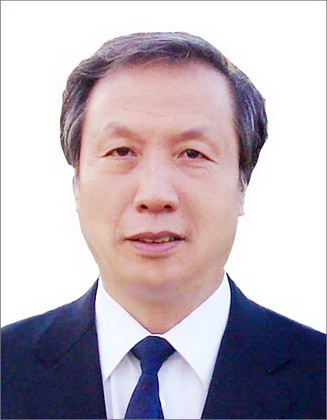 Qinping Zhao (赵沁平)合作论文数School of Computer Science and Engineering, Beihang University;School of Information and Electronic Engineering, Zhejiang Gongshang University1Shiwu Zhu (朱诗武)合作论文数1Lijun Wang (王立君)合作论文数1Chunrao Zhang (张春娆)合作论文数1Yiqiang Wang (王毅强)合作论文数1Meijuan Chen (陈美娟)合作论文数1
 Wentao Wang合作论文数Department of Computer Science and Engineering, Michigan State University1




