A significant challenge in exoskeleton robotics is the need to dynamically adapt control profiles to individual motion preferences, thereby ensuring both efficient and comfortable assistance. Currently, since user experience can serve as a comprehensive metric for evaluating the effectiveness of assistance, user preference-based optimization methods have been widely studied for parameter tuning. However, the existing methods rely heavily on extensive human-robot online interactions and suffer from slow optimization speed, which not only induces user fatigue but also compromises optimization effectiveness. Therefore, this paper aims to explore an efficient preference-based optimization framework for personalized exoskeleton assistance that can learn optimal parameters with minimal interaction. We propose a preference-based Bayesian optimization (PbBO) approach that can improve sample efficiency by leveraging knowledge about the sampling distribution of candidate sets. For optimizing six control parameters, PbBO can converge to user-preferred parameters with 90.7
The fusion of electroencephalography (EEG) and electromyography (EMG) holds significant potential for clinical motor intention decoding. However, existing methods are constrained by the dual challenges of data scarcity and high physiological heterogeneity across patient populations. To address these limitations, this article proposes the brain-muscle-based motor planning to execution network (BM-MP2E), a framework leveraging brain-muscle complementarity to ensure reliable decoding across the full impairment spectrum. We introduce a physiologically informed architecture that explicitly mirrors the neuromuscular transmission pathway. In particular, movement-related cortical potentials (MRCPs) for motor planning, $\alpha \beta $ bands for activation, and EMG for execution are extracted to constrain the model's solution space. Furthermore, a subject-adaptive fusion module is designed to dynamically modulate modality contributions based on individual functional status. Experimental validation on 21 patients (ranging from disorders of consciousness (DoCs) to stroke) in a unimanual five-class task demonstrates that BM-MP2E achieves an average accuracy of 60.81%, yielding a 6.94% improvement over single-modality EMG. The average learned weights were 0.265 (MRCP), 0.323 (alpha,beta), and 0.412 (EMG). Quantitative analysis reveals a strong positive correlation between adaptive EMG weights and motor function scores (r = 0.884 and p < 0.0001). This confirms a compensatory measurement logic: the system automatically prioritizes stable cortical features in severe cases while progressively leveraging high-fidelity peripheral signals as function recovers. These findings validate BM-MP2E as an adaptive clinical solution capable of facilitating motor assistance across the entire recovery spectrum.
Existing methods for electroencephalography (EEG)-based brain decoding mainly emphasize decoding accuracy, whereas decoding efficiency has been rarely considered, restricting their practical deployment in resource-constrained applications. Crucial channel selection-based data compression can improve decoding efficiency, but the number and distribution of selected channels are typically fixed across trials, which limits flexibility. Similarly, previous studies usually employ fixed-size models for all samples, leading to redundant computations, especially for simple trials. In this paper, in contrast to the commonly used one-size-fits-all scheme, we propose FasterEEG, a novel and differentiable framework that adaptively adjusts both the input channel number and model size according to each sample. First, an event-related desynchronization/synchronization (ERD/ERS)-based channel transformation strategy is designed to compress full-channel EEG signals into fewer channels. Then, to improve both decoding accuracy and efficiency, a lightweight policy network is introduced to determine the optimal number of input channels and decoding model size for final classification. Moreover, to overcome the non-differentiability of channel and model size selection, a Gumbel-Estimator-based collaborative optimization method is developed to jointly train the policy and classification networks. Extensive experiments on multiple baseline models and datasets were conducted to validate the superiority of FasterEEG in brain decoding acceleration. Results showed that FasterEEG consistently improved decoding efficiency while maintaining classification accuracy. In particular, compared with the lightweight ShallowConvNet, our method achieved 1.89% higher decoding accuracy while requiring only 28% of the computational cost, thereby demonstrating the feasibility and generalization ability of the proposed framework for efficient brain decoding.
Motor imagery based brain-computer interface (MI-BCI) has been extensively researched for neurorehabilitation and motor assistance, while the performance of previous MI-BCI systems for online decoding motor intentions is still not satisfactory. Therefore, a game theory-based adaptive human-machine joint (AHMJ) learning method integrating subject learning and decoder updating was proposed for MI-BCI decoding, by which multi-class MI for unilateral upper limb can be successfully decoded online. On the one hand, a novel MI training method was proposed to facilitate subjects' learning to generate separable electroencephalogram (EEG) data, where the MI training process was modeled as a two-player zero-sum minimax game and the task difficulty was adaptively regulated according to each subject's performance by solving the minimax problem. On the other hand, a new online adaptive algorithm was designed to ensure stable updating of the decoding model, integrating knowledge distillation and prototype-guided domain adaptation for different MI training intervals. Online MI-BCI experiment on a total of fourteen healthy subjects and online simulation experiment on a public dataset from twenty-five healthy subjects were conducted. Compared with the traditional method that relies solely on subject learning and the previous human-machine joint learning method, the average decoding accuracy was significantly improved by 9.7% and 5.6% (paired t-test, both $p < 0.01$), respectively. The online adaptive algorithm also outperformed previous updating approaches in both accuracy and stability. The proposed AHMJ learning method can be applied to improve the online MI-BCI decoding accuracy for neurorehabilitation and motor assistance.
Tactile perception is a fundamental sensory dimension for human–environment interaction. To reproduce this sense in human–machine interfaces (HMIs), electrotactile systems are widely deployed. However, conventional electrotactile interfaces are predominantly limited to passively reproducing natural touch sensations, failing to leverage the inherent tunability of electrical stimulation to enhance the acuity and resolution of tactile perception. To address this limitation, this work introduces SenTac, a sensing-feedback integrated electrotactile interface designed to actively enhance human force perception. Structurally, the system utilizes an ultrathin (300 $\boldsymbol{\mu}$ m), flexible, skin-conformal 25-pixel sensors and electrodes array that intuitively collocates force sensing and electrotactile feedback. Algorithmically, a personalized dual-parameter modulation strategy is developed to hierarchically map macroscopic force-mode variations to pulse frequencies and microscopic force increments to nonlinear current intensities. SenTac effectively magnifies the resolution of force information, enabling users to project a limited physical force range onto a broader, multidimensional perceptual spectrum, thereby transcending natural physiological limits. Experiments including personalized threshold calibration, frequency modulation (FM) validation, and evaluation of electrotactile-augmented force perception were systematically conducted on ten participants. In addition, functional grasping control experiments were performed specifically for three stroke patients. The experimental results demonstrate that SenTac significantly improves users’ force discrimination ability, yielding an average improvement of 10.09% in force classification accuracy among healthy subjects. Furthermore, clinical validation with tactile-impaired stroke patients reveals that the system effectively reconstructs their force perception capabilities, yielding a substantial increase in recognition accuracy from 43.78% to 76.67% and a 50.4% reduction in excessive grasp force during functional grasping tasks. These findings demonstrate the efficacy of SenTac in force perception enhancement, providing a practical framework for sensory-augmented human–machine interaction.
Hand exoskeleton robots with integrated rehabilitation and sensing capabilities are the basis for achieving efficient rehabilitation and personalized assessment. However, existing hand exoskeleton robots mostly focus on a single goal and struggle to achieve both rehabilitation training and accurate sensing. On the one hand, the hand exoskeletons need to be portable, compliant, and provide sufficient assistive force to achieve rehabilitation training. On the other hand, we need to achieve proper integration of sensors and structural components in hand exoskeletons to realize multimodal sensing. Integrating the rehabilitation training and sensing capabilities of hand exoskeletons remains a challenging task. To address this issue, this paper first proposes a novel, portable, kinematically compatible flexible hand exoskeleton with multiple embedded sensors. Second, a multi-task temporal convolutional network (MTTCN) is proposed for the simultaneous sensing of joint angles and torques using multimodal sensor data. Third, the experiments and analysis demonstrate that the triple-modal sensing method achieves the optimal accuracy among all seven possible single-, dual-, and triple-modal sensing methods. Finally, extensive experiments are conducted to validate the proposed flexible hand exoskeleton’s rehabilitation training and sensing capabilities.
Active physical human-exoskeleton interaction has been widely studied. However, the challenges of human motion intention recognition and synchronous tracking have not been well-addressed. In this article, a motion intention recognition method based on biophysical information fusion and adaptive learning was proposed to overcome the limitations of existing approaches. First, a lower-limb joint angle prediction model was developed by integrating surface electromyography (sEMG), historical joint angles and centers of gravity. The convolutional neural network, Mamba network, and multilayer perceptron network were used respectively for feature extraction, information fusion, and joint angle prediction. Second, an online adaptive method for the angle prediction model was designed based on a style transfer mapping technique to address the issue of recognition accuracy decline. In this method, the new sEMG features were mapped into the initial feature space, by which the prediction model can maintain the predictive performance during long-term implementation. Furthermore, a real-time control method for the exoskeleton synchronous tracking was given based on the predicted angles. Finally, the feasibility of the proposed methods was validated through the offline and online experiments.
Lower limb exoskeletons have been used in clinic to alleviate the drop foot symptom, where the joint torques for exoskeleton control significantly affect the systematic performance. However, how to design suitable assistive torques have not been well addressed. In this study, methods for joint torque generation and real-time regulation have been proposed. Firstly, a collaborative optimization method was proposed to generate torque curves. By optimizing simultaneously the muscle activations of the designed patient model and output torques of the exoskeleton model, the patient model can walk naturally with assistance. The optimized torques were used as the initial curve for further optimization during real implements. Secondly, comprehensive gait symmetry indices were designed, and a human-in-the-loop optimization algorithm was developed to online regulate the torque curve, by which individual assistance can be realized and optimized torque curves can be obtained rapidly. Thirdly, simulation and actual experiments were implemented utilizing an ankle exoskeleton. Seven hemiplegic patients were recruited in the actual experiment to sequentially execute walking in no exoskeleton, default torque, optimized torque, and zero torque modes. Experiment results showed that, gait symmetry and muscle activations can be significantly improved using optimized torque curves, and more symmetrical and coordinated walking can be achieved in five minutes. Note to Practitioners-In this study, the challenge of providing effective gait assistance for hemiplegic patients has been addressed through personalized ankle exoskeleton control. Traditional approaches, which rely on generic torque profiles designed for healthy individuals, often inadequately address muscle weakness or gait asymmetry in patients. A collaborative optimization method was introduced to generate initial torque curves through musculoskeletal simulations so that natural walking patterns can be achieved. These curves were dynamically refined in real time via human-in-the-loop optimization, where adjustments were guided using plantar pressure based gait symmetry metrics. The system was implemented on a lightweight, portable exoskeleton, where adaptations to individual walking needs can be achieved within approximately five minutes. It is revealed by clinical trials that gait symmetry was enhanced and compensatory muscle effort was reduced, which promotes safer and more efficient rehabilitation. The framework is scalable and can be extended to multi-joint exoskeletons or integrated into clinical protocols. By merging simulation-based design with adaptive real-time adjustments, this strategy offers a practical solution to improve patient-specific rehabilitation outcomes while maintaining usability and operational efficiency.
Implementation of the autonomous walk training plays an important role for patients with lower limb paralysis, which however is still an open question presently due to the extreme difficulty of accurately recognizing the patients' motor intentions in a natural way. In this study, a brain-controlled robot system, mainly consisting of a noninvasive brain-computer interface (BCI) and an elaborately designed lower limb rehabilitation robot, was developed to enable the paralyzed patients to implement the autonomous multimode walk training. First, an enhanced motor imagery based BCI paradigm was designed to improve the subjects' imagination abilities to generate more separable electroencephalogram (EEG) data. Then, a concept of reaction time was introduced to select the valid EEG samples, and a rhythm combination, consisting of the most complete related sensorimotor rhythms to date, was designed to fully consider their influence. The reaction time, the rhythm combination, and the key parameters of the EEG decoder were collaboratively optimized to realize accurate and robust recognition of the subjects' motor intentions. Moreover, a human-computer mutual learning based coevolution strategy was proposed, by which the subject and the decoder can be regulated to suit each other to obtain the satisfactory online performance. Finally, the proposed methods were deployed on the brain-controlled robot system, by which multimode walk training can be implemented autonomously. 18 subjects including 9 paraplegic patients were recruited in the experiments, and all of them successfully implemented the autonomous walk training after only about 25 minutes in total for EEG data recording and model training.
OBJECTIVE:Motor imagery-based brain-computer interfaces (MI-BCIs) have been playing an increasingly vital role in neural rehabilitation. However, the long-term task-based calibration required for enhanced model performance leads to an unfriendly user experience, while the inadequacy of EEG data hinders the performance of deep learning models. To address these challenges, a task-free transfer learning strategy (TFTL) for EEG-based cross-subject & cross-dataset MI-BCI is proposed for calibration time reduction and multi-center data co-modeling. METHODS:TFTL strategy consists of data alignment, shared feature extractor, and specific classifiers, in which the label predictor for MI tasks classification, as well as domain and dataset discriminator for inter-subject variability reduction are concurrently optimized for knowledge transfer from subjects across different datasets to the target subject. Moreover, only resting data of the target subject is used for subject-specific model construction to achieve task-free. RESULTS:We employed three deep learning methods (ShallowConvNet, EEGNet, and TCNet-Fusion) as baseline approaches to evaluate the effectiveness of the proposed strategy on five datasets (BCIC IV Dataset 2a, Dataset 1, Physionet MI, Dreyer 2023, and OpenBMI). The results demonstrate a significant improvement with the inclusion of the TFTL strategy compared to the baseline methods, reaching a maximum enhancement of 15.67% with a statistical significance (p = 2.4e-5 < 0.05). Moreover, task-free resulted in MI trials needed for calibration being 0 for all datasets, which significantly alleviated the calibration burden for patients before usage. CONCLUSION/SIGNIFICANCE:The proposed TFTL strategy effectively addresses challenges posed by prolonged calibration periods and insufficient EEG data, thus promoting MI-BCI from laboratory to clinical application.
Electroencephalography (EEG) and functional near-infrared spectroscopy (fNIRS) are two widely used modalities in brain-computer interface (BCI) systems. However, decoding performance based on a single modality remains limited. Integrating both modalities and leveraging their complementary strengths offers a promising approach to enhance neural signal decoding. In this paper, we propose a dual-branch multimodal neural network for EEG-fNIRS hybrid decoding. Convolutional neural networks (CNNs) and Transformer architectures are employed to extract rich temporal and spatial features from each modality. EEG and fNIRS signals are processed through separate branches, and their extracted temporal-spatial features are subsequently fused for hybrid decoding. Extensive experiments on three public datasets demonstrate the superiority of the proposed method and its potential for practical BCI applications.
Tactile feedback is crucial for precise hand manipulation in human-machine interaction, which can improve task performance and enhance user immersion. However, due to the high impedance of the stratum corneum and the spatial variability of tactile sensitivity, how to provide vivid and consistent electrical tactile feedback for the whole hand within a low and safe voltage range remains a challenge. This study developed a flexible and low-voltage electrotactile feedback system to induce precise and personalized tactile sensations. First, to achieve safe tactile stimulation under low-voltage conditions, the system used a high-frequency biphasic square wave modulated by a sine signal to penetrate the skin and stimulate nerves. Second, considering the dexterity and complexity of the hand, a high-density flexible electrode patch was designed to fit the hand contour, ensuring stable contact and localized stimulation. Finally, to provide personalized and realistic tactile sensation, the system applied stimulation with tailored parameters to different hand regions based on sensitivity characteristics. Thresholds of four sensation levels were measured in nine participants across different frequencies, with a minimum average detectable voltage as low as 10.7 V. Moreover, virtual tactile sensations associated with grasping objects of different shapes could be simulated, and participants achieved 97.2% accuracy in identifying six fine gestures using tactile cues alone. The system could also be integrated with virtual reality (VR) to provide a more immersive experience through dynamic and real-time tactile feedback. These phenomena demonstrated the potential of the proposed tactile system for applications in wearable and interactive systems.
A major challenge for robust motor imagery electroencephalogram (MI-EEG) decoding is posed by nonstationarity. Current cross-subject/session algorithms are primarily focused on feature engineering rather than data preprocessing, while variations of user's mental and physical state is often undefined. An inter-state difference pattern subtraction framework was proposed to improve MI-EEG decoding under user state transitions. Three distinct user states were described and a pattern subtraction method based on common spatial pattern (CSP) was developed to alleviate state-related nonstationarity. The regularized CSP followed by support vector machine algorithm (RCSP-SVM) was then applied for feature extraction and classification. Experiments were conducted on four participants' MI-EEG data, and significant improvement in transfer learning performance was achieved by the proposed method. Copyright (c) 2025 The Authors. This is an open access article under the CC BY-NC-ND license (https://creativecommons.org/licenses/by-nc-nd/4.0/)
Accurate acquisition of interactive information is crucial for the effective execution of rehabilitation training. However, due to model and sensor errors, it is difficult to obtain interactive information accurately and quickly. To overcome these challenges, a novel accurate and fast estimation method for the human-robot interaction torques (HRITs) is proposed in this article. First, the HRIT model with order adaptive adjustment ability (HMOAA) is constructed. The polynomial order of HMOAA can be adaptively adjusted based on the partial state estimation, which is more consistent with the dynamic time-varying characteristics of HRIT. Second, the Sage-Husa adaptive strong tracking Kalman filter (SHASTKF) is designed based on the modified Sage-Husa adaptive Kalman filter (SHAKF) and strong tracking Kalman filter (STKF). The SHASTKF can quickly track the abrupt HRIT changes when the subject suddenly exerts active torques in rehabilitation training. Moreover, it also has the ability to recursively estimate the noise characteristics, and can stably complete the HRIT estimation task when the noise characteristics are unknown. Finally, simulations and experiments are conducted to validate the proposed method, and the comparison results demonstrate that the proposed method has good torque estimation precision and fast tracking ability of abrupt changes in HRITs.
Objective. In recent years, the robot assisted (RA) rehabilitation training has been widely used to counteract defects of the manual one provided by physiotherapists. However, since the proprioception feedback provided by the robotic assistance or the manual methods is relatively weak for the paralyzed patients, their rehabilitation efficiency is still limited. In this study, a dynamic electrical stimulation (DES) based proprioception enhancement and the associated quantitative analysis methods have been proposed to overcome the limitation mentioned above. Approach. Firstly, the DES based proprioception enhancement method was proposed for the RA neural rehabilitation. In the method, the relationship between the surface electromyogram (sEMG) envelope of the specified muscle and the associated joint angles was constructed, and the electrical stimulation (ES) pulses for the certain joint angles were designed by consideration of the corresponding sEMG envelope, based on which the ES can be dynamically regulated during the rehabilitation training. Secondly, power spectral density, source estimation, and event-related desynchronization of electroencephalogram, were combinedly used to quantitatively analyze the proprioception from multiple perspectives, based on which more comprehensive and reliable analysis results can be obtained. Thirdly, four modes of rehabilitation training tasks, namely active, RA, DES-RA, and ES-only training, were designed for the comparison experiment and validation of the proposed DES based proprioception enhancement method. Main results. The results indicated that the activation of the sensorimotor cortex was significantly enhanced when the DES was added, and the cortex activation for the DES-RA training was similar to that for the active training. Meanwhile, relatively consistent results from the multiple perspectives were obtained, which validates the effectiveness and robustness of the proposed proprioception analysis method. Significance. The proposed methods have the potential to be applied in the practical rehabilitation training to improve the rehabilitation efficiency.
Motor imagery-based brain-computer interface (MI-BCI) has shown promising potential for improving motor function in neurorehabilitation and motor assistance among patients. However, the decoding accuracy of MI-BCI is limited by the nonstationarity and high intersubject variability of electroencephalogram (EEG) signals. Moreover, decoding MI intention based on fixed-length EEG signals will not only increase the risk of misclassification but also diminish the information transfer rate (ITR) of the BCI system. To overcome these limitations, an adaptive decoding method based on the synchronous adaptation of stimulus paradigm and classification model is proposed to realize a fast and robust MI-BCI. First, an attention-driven dynamic stopping (DS) strategy, which is designed based on the theta-to-beta ratio of EEG signals, is proposed to control the MI-related EEG acquisition time. It can adaptively minimize the data length used for classification under the ensurance of getting a credible classification result, thus improving brain-computer interaction efficiency. Then, the minimum distance to the Riemannian mean algorithm is introduced for the four-class EEG classification. To improve the classification accuracy, the classification model is adapted online based on the error-related potential (Errp) to process the nonstationary characteristics of EEG signals. The feasibility of the proposed online collaborative optimization method in fast and accurate interaction was validated on ten healthy subjects. The results show that the proposed method can significantly improve the EEG classification accuracy by 2.73% with 9.04 ITR improvement compared with that without adaptation (paired t-test, p < p 0.05). Moreover, the MI duration of 2.57 s is recommended for stimulus paradigm design to achieve a better tradeoff between accuracy and efficiency of brain-computer interaction. These phenomena further demonstrate the feasibility of the proposed method in advancing the development of MI-BCI with high efficiency, robustness, and flexibility.
Previous rehabilitation robots were usually designed for certain stages, which causes relatively low rehabilitation efficiency. In this study, a multiposture robot was designed for full cycle rehabilitation training for the patients with lower limb disfunctions. Functions of the typical rehabilitation equipments, including the rehabilitation bicycles, the standing beds for the orthostatic hypotension, and the gait trainers, were realized on the robot. Firstly, in order to implement training in the sitting, lying, and standing postures, a slider-pulley-chute mechanism was designed to obtain zero displacement deviation during the backrest adjustment. Then, the biomimetic gait trajectories were designed based on cooperative control of the leg mechanisms, the center of gravity (CoG), and the body weight supporting system; meanwhile, the key points of CoG trajectories for ascending or descending steps were deliberately designed and the suitable CoG trajectories were regenerated using a fifth-order polynomial, based on which continuously implement of ascending or descending steps on the robot was realized. Moreover, sEMG based motion intention recognition paradigms for variable velocity cycling and multi-mode walking were designed and the associated decoders were developed by combined using the support vector machine and stepwise linear regression algorithms and the minimal redundancy maximal relevance criterion. Finally, the autonomous cycling and multi-mode walking training was successfully realized based on recognizing in real time the subjects' intentions for adjustment of cycling velocities or walking modes. The feasibility of the proposed methods was validated based on simulation and real implement of the sEMG based autonomous cycling and multi-mode walking.
Motor imagery-based brain-computer interfaces (MI-BCIs) have been extensively researched. However, how to accurately recognize lower limb motion intentions, especially those of the left and right feet/legs, has not been well addressed. In this study, an efficient MI-BCI online decoding method, based on the deliberately designed functional electrical stimulation (FES) guidance and algorithms for feature extraction and model adaptation, was proposed. First, a method for designing the FES current curve based on muscle activation was proposed, by which an enhanced MI-BCI for gait training was designed and applied to improve the subjects' motor imagery abilities and the separability of the associated electroencephalogram (EEG) signals. Then, a random filter bank-based common spatial pattern (CSP) algorithm was developed for feature extraction, by which the subject-specific optimal filter bank can be obtained and the EEG separability can be further improved. Moreover, an online adaptation algorithm based on data augmentation and model retraining was proposed to rapidly regulate the decoder to suit the subject's status. Finally, extensive experiments were carried out, and it was shown by the results that the performance of online decoding can be significantly raised by the proposed methods.
Motor imagery (MI) based brain computer interface (BCI) has been extensively studied to improve motor recovery for stroke patients by inducing neuroplasticity. However, due to the lower spatial resolution and signal-to-noise ratio (SNR) of electroencephalograph (EEG), MI based BCI system that involves decoding hand movements within the same limb remains lower classification accuracy and poorer practicality. To overcome the limitations, an adaptive hybrid BCI system combining MI and steady-state visually evoked potential (SSVEP) is developed to improve decoding accuracy while enhancing neural engagement. On the one hand, the SSVEP evoked by visual stimuli based on action-state flickering coding approach significantly improves the recognition accuracy compared to the pure MI based BCI. On the other hand, to reduce the impact of SSVEP on MI due to the dual-task interference effect, the event-related desynchronization (ERD) based neural engagement is monitored and employed for feedback in real-time to ensure the effective execution of MI tasks. Eight healthy subjects and six post-stroke patients were recruited to verify the effectiveness of the system. The results showed that the four-class gesture recognition accuracies of healthy individuals and patients could be improved to 94.37 ± 4.77 % and 79.38 ± 6.26 %, respectively. Moreover, the designed hybrid BCI could maintain the same degree of neural engagement as observed when subjects solely performed MI tasks. These phenomena demonstrated the interactivity and clinical utility of the developed system for the rehabilitation of hand function in stroke patients.
Motor imagery based brain-computer interface (MI-BCI) has been extensively researched as a potential intervention to enhance motor function for post-stroke patients. However, the difficulties in performing imagery tasks and the constrained spatial resolution of electroencephalography complicate the decoding of fine motor imagery (MI). To overcome the limitation, an enhanced MI-BCI rehabilitation system based on vibration stimulation and robotic glove is proposed in this paper. First, a virtual scene involving object-oriented palmar grasping and pinching actions, is designed to enhance subjects’ engagement in performing MI tasks by providing straightforward and specific goals. Then, vibration stimulation, which can offer proprioceptive feedback, is introduced to help subjects better switch their attention to the corresponding MI limbs. Finally, the self-designed pneumatic manipulator control module is developed for motion execution based on the MI classification results. Seven healthy individuals were recruited to validate the feasibility of the system in improving subjects’ MI abilities. The results show that the classification accuracy of three-class fine MI can be improved to 65.67
 Zeng-Guang Hou (侯增广)合作论文数State Key Laboratory of Management and Control for Complex Systems, Institute of Automation, Chinese Academy of Sciences;University of Chinese Academy of Sciences85
 Long Peng (彭亮)合作论文数Institute of Automation, Chinese Academy of Sciences44Jiaxing Wang合作论文数JD.com42
 Shixin Ren合作论文数27
 Xu Liang (梁旭)合作论文数School of Automation and Intelligence, Beijing Jiaotong University26Weiguo Shi合作论文数University of Chinese Academy of Sciences, Beijing, China25
 Lincong Luo合作论文数Chinese Acad Sci, Inst Automat, State Key Lab Management & Control Complex Syst, Beijing 100190, Peoples R China16
 Tingting Su (苏婷婷)合作论文数Faculty of Information Technology, Beijing University of Technology8
 Chen Wang合作论文数8Yuze Jiao合作论文数7
 Lina Tong (佟丽娜)合作论文数School of Mechanical Electronic & Information Engineer, China University of Mining And Technology-Beijing6Jin Hu合作论文数6
 Yixiong Chen合作论文数6
 Badong Chen (陈霸东)合作论文数Institute of Artificial Intelligence and Robotics, Xi'an Jiaotong University;College of Artificial Intelligence, Xi'an Jiaotong University6
 Min Tan (谭民)合作论文数Institute of Automation, Chinese Academy of Sciences;University of Chinese Academy of Sciences5
 Sheng Chen合作论文数5Tianyu Lin合作论文数4
 Guotao Li合作论文数4Zhijie Fang合作论文数University of Chinese Academy of Sciences4Guangping He (何广平)合作论文数School of Mechanical and Electrical Engineering, North China University of Technology4Kexin Xiang合作论文数3
 Chengkun Cui合作论文数3
 Shengda Liu合作论文数3
 Long Cheng (程龙)合作论文数Institute of Automation, Chinese Academy of Sciences;University of Chinese Academy of Sciences3
 Feng Zhang (张峰)合作论文数Institute of Automation, Chinese Academy of Sciences;School of Artificial Intelligence, University of Chinese Academy of Sciences3Zihao Xu合作论文数2
 Pu Zhang合作论文数2Chayut Bunterngchit合作论文数Division of Industrial and Logistics Engineering Technology, King Mongkut's University of Technology2YangYu Luo (罗杨宇)合作论文数2
 Shiyuan Wang (王世元)合作论文数College of Electronic and information Engineering, Southwest University2
 Jian Gong (宫剑)合作论文数Beijing Tiantan Hospital, Capital Medical University2
 Bin Hu (胡斌)合作论文数School of Information Science & Engineering, Lanzhou University;School of Computer Science & Technology, Beijing Institute of Technology2
 Liang Peng合作论文数2
 Gui-Bin Bian (边桂彬)合作论文数State Key Laboratory of Multimodal Artificial Intelligence Systems, Institute of Automation, Chinese Academy of Sciences;College of Integrated Circuits, Taiyuan University of Technology2
 Nikola Kassabov合作论文数School of Engineering, Computing and Mathematical Sciences, Auckland University of Technology2Pengfeng Li合作论文数2
 Yunfei Zheng (郑云飞)合作论文数College of Electronic and Information Engineering, Southwest University2
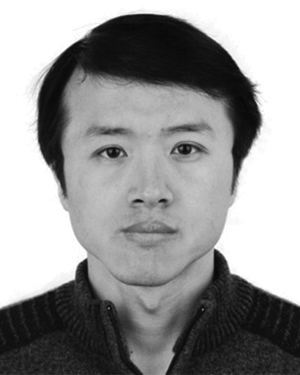 Quan-Liang Zhao合作论文数2
 Xiao-Yin Liu (刘效银)合作论文数State Key Laboratory of Multimodal Artificial Intelligence Systems, Institute of Automation, Chinese Academy of Sciences;The School of Artificial Intelligence, University of Chinese Academy of Sciences1Xiru Wang合作论文数1Shenyu Lu合作论文数1Dongxu Zhang合作论文数1
 Dongsheng Xie合作论文数School of Medical Technology, Beijing Institute of Technology1
 Yaokai Xue合作论文数1Jingyue Li合作论文数1
 Hao Zhou合作论文数1Jin HU (胡进)合作论文数1




