This research explores disability, gender, and leadership identities of a cohort of sport disability inclusion facilitators and the salience of identities in their interactions with program participants and community sport managers. Employed in the Building Inclusive Sports Clubs Program, the women were provided training in facilitation and leadership and assumed a relational leadership approach to support the activation of their inclusion and diversity work with sport organisations. Interview analysis identified that disability and leadership identities were embraced, and notably gender was not identified as an identity construct, they explicitly drew upon in this context. The program's community of practice sessions supported and developed the facilitators' leadership capabilities and reinforced the importance of relational leadership to move between frames, position oneself, and resonate with others. These movements resonated with the facilitators in ways that enabled them to create new dialogues around inclusion and further develop their identities as leaders of change.
The recent growth in career opportunities for women athletes to be considered as 'professionals', provides a fertile research environment to ascertain their employment conditions. Our research aims to scrutinise employers' gendered organisation practices and how/if these act to position women in contested, recognised or denied states of legitimacy. Using a feminist post-structural approach and an application of legitimacy theory, we interrogate the employment practices of four team sports that have recently introduced women's professional leagues. Drawing on grey literature, media reports and strategy documents, we analyse the power/knowledge relations present within each sport's strategies and discursive practices for these leagues. We posit that women's legitimacy positionality is evidenced through: teams and length of season; salary and employment contract inclusions; and health and welfare benefits. Our findings illustrate how the alignment with men's Collective Bargaining Agreements and/or Players Associations has provided a degree of legitimacy for women's claims. Our research expands legitimacy theory through a feminist poststructural approach, that frames legitimacy as a continuum with discursive and dynamic shifts, and conflicting narratives moving organisations towards or away from legitimacy.
Within the dynamic landscape of women's semi-professional and professional leagues, athletes and their employers are negotiating their employment relationship parameters. Positioning our research in a postfeminist sensibility, we explore both parties' expectations and obligations through psychological contract (PC) theory. We conducted interviews across two semi-professional sports leagues, with 30 athletes, 20 coaches and managers and two league-level representatives. The data analysis identified three themes: 1. Obligations, commitment, and choice; 2. Expectations of conformity and power relations; 3. Fulfilling organisational goals. Many athletes spoke about power imbalances in the PC with employers "exploiting" athletes' desire to be play in the league at almost any cost. Athletes felt they had little choice but to accept the current state of employment, endure sacrifices and hope for a better future where they could reach their potential through viable career pathways and a living wage. Our research provides a better understanding of the PC employment relationship and associated implications. Greater knowledge about PCs could be used to develop work practices and relations that enhance and benefit athletes and employers.
In this chapter, we explore the relations of care that are entangled with the material-discursive relations of motherhood, women, and sport. Through our feminist new materialist approach, we explore how motherhood is valorised, and entangled with infrastructures of care, such as mentoring, or other gendered roles in clubs that are tied up with motherhood. Drawing on Barad's notion of diffraction as a methodology, along with post-qualitative inquiry, we explore these relations of care, through our writings as two sportswomen, one a mother (Adele) and one a non-mother (Wendy). Diffracting our stories through popular tropes we ask, what do notions of sacrifice, guilt, privilege, and criticism do in relation to non-mothers and mothers in their sporting experience? We argue that if we hold onto the notion of sacrifice, for example, mothers putting their participation on hold, then we risk perpetuating sport inequalities. Our research also highlights that there are many women athletes, who are not mothers, either by choice or not, and we need to be sensitive to these differences when researching mothers in sport. Womanhood and motherhood are often conflated, but are not the same.
Professional team male-dominated sports have been built on masculine values; however, these values are challenged by the increasing number of women athletes entering this workplace. In this research, we explore the suitability and gender appropriateness of existing management processes and practices through three women’s professional and semiprofessional leagues. Drawing on a feminist perspective of continuum of care, players ( n = 36) and organizational representatives ( n = 28) were interviewed to gain insights into how athletes and organizations contend with their rapidly evolving workplaces. Framed around the values of affirmation, empowerment, and belonging, the continuum of care contrasts players’ everyday experiences of care with how organizations administer care. The research contributes through application of the feminist continuum of care. We present considerations for the management of female professional athletes in ways that are careful and an alternative value system that is affirmative, inclusive, and empowering.
In this paper, the authors explore how athletes from the Global South interact with the material environment of an international training camp program in the lead up to a major event. Set within the context of Pasifika nations with colonial and missionary legacies, they examine the material, affective, sensory, and rhythmic forces at work to produce enabling or constraining capacities for emplaced physical capital in athletes. Driven by a desire to improve their performance, athletes resisted, appropriated, and adopted various high-performance practices to develop their emplaced physical capital capacities.
The performance and embodiment of inter and intra-personal skills, or as we have conceptualised in this paper as Affective Abilities (AA), is often considered central to the fulfilment of outdoor leader roles. This article examines Australian outdoor recreation and education higher education curricula to identify what AA training opportunities are provided and prioritised. We performed a content analysis on 47 university subjects/units and all vocational outdoor leadership materials. Our findings suggest that the AA described in curricula can be grouped into five common themes; leadership, facilitation, interpersonal, intrapersonal, and judgement. Reflection was an additional theme within university curricula. We observed that AA are included in curricula but are not always made explicit. Consequently, students may not be aware of what AA they are developing or how to draw on these once in the field. This paper seeks to better understand the AA instructional landscape to aid the development of training programs.
In Australia and other OECD countries women who are recovering from depression in rural areas find that access to professional care is fraught with difficulties. Despite the emphasis on the social determinants shaping mental ill health and recovery, Australian rural support has been largely defined by biomedical and psy-expertise focused on correcting biochemistry and cognition through different models of formal medical care. Addressing the limitations of individualised biomedical models, this article offers a relational understanding of how recovery from depression is produced through rural and gendered emplacement (Pink, 2011). Theorising recovery through the notion of emplacement shifts attention from an individualised notion of embodied distress (symptoms, emotions, cognition) towards a social understanding of the dynamics of human and non-human relations that are afforded by different care practices (from medical treatment to social support). To date there has been little critical analysis of how women's distress and recovery experiences are gendered in relation to both formal and informal care in rural places. Extending the insights of geographers, social anthropologists and feminist scholars we analyse the recovery stories of women living in rural and regional Australia. We focus specifically on how rural women experienced uncertainty and stigma that emerged through formal care spaces and impeded their recovery -the gendered dynamics of em(dis)placement were identified. In contrast, we identify how particular informal care spaces enabled women's recovery through multiple relations with human and non-human others. Our research aims to contribute a critical understanding of how everyday professional care and self-care practices are intertwined with the complex gendered negotiations of emplacement and displacement that shape rural mental (ill) health.
Multi-owned properties (MOPs) continue to proliferate as governments seek to reduce urban sprawl, revitalize inner cities and meet the housing need of a growing population. Yet limited research has focused on the privatization of urban governance and liveability implications arising in these developments. The way power mechanisms are exercised in strata title communities and the resultant effects on unit residents and owners is a key issue. With owner committees playing a central role in governing and regulating common property, as well as resident conduct, the pervasive power relations found in strata titled complexes have the potential to trigger multiple strands of conflict. The way that governance plays out in MOPs is key to understanding their embedded power relations. This study explores the exercise of power in MOPs and how community is evoked as a way to govern relations. We also consider what occurs when notions of community are subverted, and the expected "lifestyle" is held hostage to ongoing conflicts and issues of exclusion.
The spread of contemporary roller derby presents an opportunity to examine the ways sport can act as a form of feminist intervention. This article draws on a qualitative case study of a roller derby league in China, made up predominantly of expatriate workers, to explore some of the possibilities roller derby presents in activating glocal forms of feminist participatory action. The globalization of sport has often been associated with colonialism and the loss of local physical cultures, together with commercialization. Roller derby provides a very different case, where, together with the spread of the game, comes a focus on gender diversity, female strength and a particular derby style of DIY (do-it-yourself) governance that may support forms of participatory action. As an exploratory study, this article points towards the potential of roller derby, and possibly other sport cultures, to support human rights activism in the Asia Pacific.
Vertical communities are increasing as cities adopt compact planning approaches. However, the neoliberal urban development approach is often male dominated and reflective of male values and interests [Fainstein, S.2001. The City Builders: Property Development in New York and London 1980-2000. 2nd ed. Lawrence: University Press of Kansas]. For women, changing demographic and societal trends linked to marriage, family and household composition, have led to increasing rates of female residential investment in and occupation of, high-density developments. Little research has focused on this growing owner/occupier market. A qualitative approach framed with a material-discursive lens was used to explore women's perceptions of liveability and consumption of space within vertical communities. In-depth, semi-structured interviews with 25 females in South-East Queensland described experiences of liveability that were influenced by the materiality of apartments and buildings that created unsafe and inappropriate spaces for children as well as affective relations of distance rather than sociality. To avoid the problems plagued by high-rise projects overseas and in Australia in earlier decades, a greater focus on women's needs should be considered in urban research and planning. Planners, developers and other professionals need to look beyond the investor driven stock currently provided to ensure sustainable and liveable housing options for this important emerging market.
Many women experience the transition to motherhood as a disconnection from the embodied and emotional self due to the demands articulated through contemporary discourses of motherhood. Using a qualitative approach, this paper explores the everyday emotional geographies of leisure time physical activity (LTPA), the emotions experienced, the physical and metaphorical spaces created, and the connections to embodied selves of mothers with young children. The findings indicate that despite discourses of intensive mothering, immobilising emotions and overwhelming tiredness, some women not only created a space for LTPA in their busy lives but were able to create connections between body, space and emotions. These connections and the emotions evoked were largely associated with spaces outside of the home. Understanding how women define and use these spaces, and negotiate and transform the self, can allow us to explore the diversity of women's experiences of physical activity and their concepts of LTPA as 'personal space'.
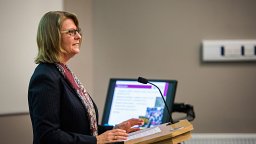 Simone P. Fullagar合作论文数Charles Sturt University;Griffith University;Charles Sturt University, Charles Sturt University13
 Adele Pavlidis合作论文数Griffith Ctr Social & Cultural Res, Griffith Univ8
 Kathy Lloyd合作论文数4
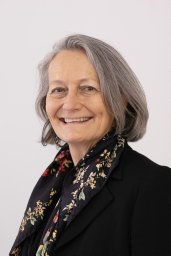 Tracy Taylor合作论文数university of technology sydney4
 Clare Hanlon合作论文数4
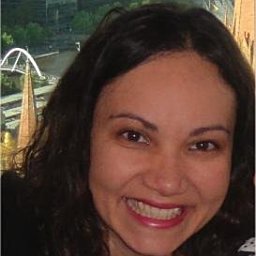 Caroline Riot合作论文数Dept Tourism Sport & Hotel Management, Griffith Univ3Kristine Toohey合作论文数3Paul Bates合作论文数2
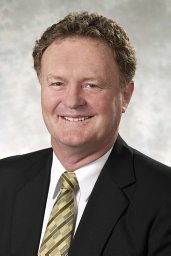 Graham Cuskelly合作论文数griffith university2
 Sacha Reid合作论文数School of Tourism and Leisure Management;University of Queensland2
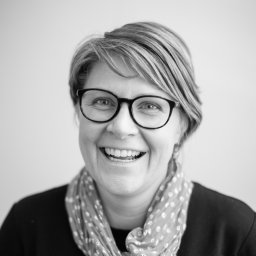 Mandi Baker合作论文数Business & Hospitality Vert, Torrens Univ1
 Clare Minahan合作论文数School of Physiotherapy and Exercise Science, Griffith University1
 Chris Guilding合作论文数1
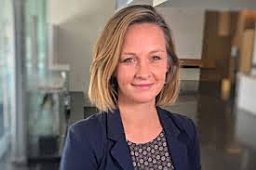 Alana Thomson合作论文数1




