The Rule of Thirds is a well known heuristic in photo composition. The professional photography community both uses it and derides it. We report on an experiment to test the validity of the Rule of Thirds in the simplest case: composition of a single object. Our results show that our participants overwhelmingly preferred a centered object in the image to one positioned according to the Rule of Thirds. We speculate why this is so and point to other research that addresses how we can take advantage of this “salient centeredness”.
Augmented telepresence provides rich communication for people at a distance with interactive blended information between the virtual and real world [Rhee et al. 2017, 2020; Young et al. 2022]. We push the boundaries of augmented telepresence with a novel live media technology, including live capturing, modeling, blending, and interactive effects (IFX) to augment telepresence. Using our technology, people at a distance can connect and communicate with creative storytelling, augmented with novel IFX. We achieve this with the following breakthroughs: 1) digitizing remote spaces and people in real-time, 2) transmitting digitized information across a network, 3) augmenting remote telepresence using real-time visual effects and interactive storytelling with live-blending of 3D virtual assets into the digitized real-world. In this presentation, we will unveil several new technologies and novel IFX that can enrich telepresence, including: • Real-time 360° RGBD video capturing: we will demonstrate capturing 360° RGBD videos using a 360° RGB camera and LiDAR sensor, including synchronization between the RGB and depth streams as well as depth map generation. • IFX with live RGBD videos: we will demonstrate real-time blending of 3D virtual objects into the live 360° RGBD videos, showcasing real-time occlusion and collision handling. • 6-degrees of freedom (DoF) tele-movement: we introduce our recent research [Chen et al. 2022] for volumetric environment capturing and 6-DoF navigation. We will demonstrate real-time navigation (movement and rotation) in captured real surroundings (beyond room scales). We will showcase applications (Figure 1) where we can virtually teleport to and explore within a live stream of the augmented real world and communicate remotely with live IFX.
We developed the Motion-Simulation Platform, a platform running within a game engine that is able to extract both RGB imagery and the corresponding intrinsic motion data (i.e., motion field). This is useful for motion-related computer vision tasks where large amounts of intrinsic motion data are required to train a model. We describe the implementation and design details of the Motion-Simulation Platform. The platform is extendable, such that any scene developed within the game engine is able to take advantage of the motion data extraction tools. We also provide both user and AI-bot controlled navigation, enabling user-driven input and mass automation of motion data collection.
We investigate the optimal aesthetic location and size of a single dominant salient region in a photographic image. Existing algorithms for photographic composition do not take full account of the spatial positioning or sizes of these salient regions. We present a set of experiments to assess aesthetic preferences, inspired by theories of centeredness, principal lines, and Rule-of-Thirds. Our experimental results show a clear preference for the salient region to be centered in the image and that there is a preferred size of non-salient border around this salient region. We thus propose a novel image cropping mechanism for images containing a single salient region to achieve the best aesthetic balance. Our results show that the Rule-of-Thirds guideline is not generally valid but also allow us to hypothesize in which situations it is useful and in which it is inappropriate.
This paper presents a novel solution for estimating simulator sickness in HMDs using machine learning and 3D motion data, informed by user-labeled simulator sickness data and user analysis. We conducted a novel VR user study, which decomposed motion data and used an instant dial-based sickness scoring mechanism. We were able to emulate typical VR usage and collect user simulator sickness scores. Our user analysis shows that translation and rotation differently impact user simulator sickness in HMDs. In addition, users' demographic information and self-assessed simulator sickness susceptibility data are collected and show some indication of potential simulator sickness. Guided by the findings from the user study, we developed a novel deep learning-based solution to better estimate simulator sickness with decomposed 3D motion features and user profile information. The model was trained and tested using the 3D motion dataset with user-labeled simulator sickness and profiles collected from the user study. The results show higher estimation accuracy when using the 3D motion data compared with methods based on optical flow extracted from the recorded video, as well as improved accuracy when decomposing the motion data and incorporating user profile information.
 Andrew Chalmers合作论文数Engineering and Computer Science, Victoria University of Wellington3
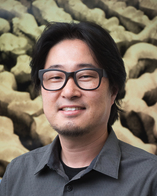 Taehyun Rhee合作论文数School of Computing and Information Systems, University of Melbourne3James Wilmott合作论文数2Richard Yao合作论文数2
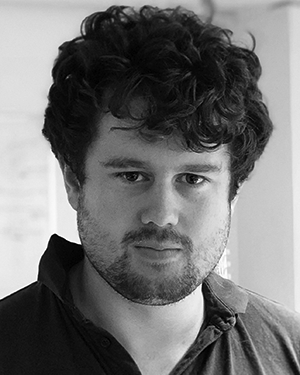 Simon Finnie合作论文数2
 JunHong Zhao合作论文数Zhengzhou University, Zhengzhou University2
 Mark Billinghurst合作论文数Australian Research Centre for Interactive and Virtual Environments, Adelaide University;College of Engineering and Information Technology, Adelaide University2
 Neil Dodgson合作论文数School of Engineering and Computer Science, Victoria University of Wellington;Faculty of Graduate Research, Victoria University of Wellington2
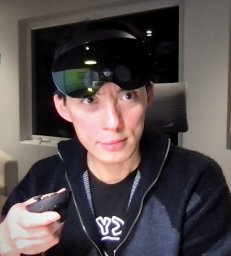 James Jeng-Weei Lin合作论文数Siemens Corporate Research, Princeton, New Jersey2
 Arindam Dey合作论文数School of Electrical Engineering and Computer Science, Faculty of Engineering, Architecture and Information Technology, The University of Queensland2
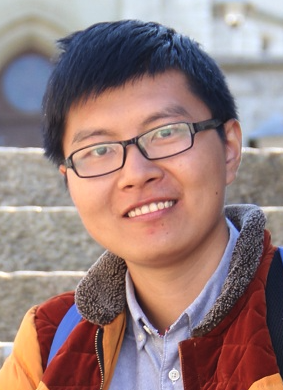 Fang-Lue Zhang (张方略)合作论文数School of Engineering and Computer Science, Victoria University of Wellington2Kien Tran Pham Thai合作论文数1
 Richard Roberts合作论文数New England Biolabs Inc1
 Robert Lindeman合作论文数Human Interface Technology Laboratory, Faculty of Engineering, University of Canterbury1




