Unified multi-modal understanding/generative models have shown improved image editing performance by incorporating fine-grained understanding into their Chain-of-Thought (CoT) process. However, a critical question remains underexplored: what forms of CoT and training strategy can jointly enhance both the understanding granularity and generalization? To address this, we propose Meta-CoT, a paradigm that performs a two-level decomposition of any single-image editing operation with two key properties: (1) Decomposability. We observe that any editing intention can be represented as a triplet — (task, target, required understanding ability). Inspired by this, Meta-CoT decomposes both the editing task and the target, generating task-specific CoT and traversing editing operations on all targets. This decomposition enhances the model's understanding granularity of editing operations and guides it to learn each element of the triplet during training, substantially improving the editing capability.(2) Generalizability. In the second decomposition level, we further break down editing tasks into five fundamental meta-tasks. We find that training on these five meta-tasks, together with the other two elements of the triplet, is sufficient to achieve strong generalization across diverse, unseen editing tasks.To further align the model's editing behavior with its CoT reasoning, we introduce the CoT–Editing Consistency Reward, which encourages more accurate and effective utilization of CoT information during editing. Experiments demonstrate that our method achieves an overall 15.8\% improvement across 21 editing tasks, and generalizes effectively to unseen editing tasks when trained on only a small set of meta-tasks. Our code, benchmark, and model will be released publicly.
Unified multimodal models (UMMs) have achieved remarkable progress yet remain constrained by a single-turn interaction paradigm, effectively functioning as solvers for independent requests rather than assistants in continuous dialogue. To bridge this gap, we present ChatUMM. As a conversational unified model, it excels at robust context tracking to sustain interleaved multimodal generation. ChatUMM derives its capabilities from two key innovations: an interleaved multi-turn training strategy that models serialized text-image streams as a continuous conversational flow, and a systematic conversational data synthesis pipeline. This pipeline transforms a diverse set of standard single-turn datasets into fluid dialogues through three progressive stages: constructing basic stateful dialogues, enforcing long-range dependency resolution via “distractor” turns with history-dependent query rewriting, and synthesizing naturally interleaved multimodal responses. Extensive evaluations demonstrate that ChatUMM achieves state-of-the-art performance among open-source unified models on visual understanding and instruction-guided editing benchmarks, while maintaining competitive fidelity in text-to-image generation. Notably, ChatUMM exhibits superior robustness in complex multi-turn scenarios, ensuring fluid, context-aware dialogues.
The scaling law has been validated in various domains, such as natural language processing (NLP) and massive computer vision tasks; however, its application to motion generation remains largely unexplored. In this paper, we introduce a scalable motion generation framework that includes the motion tokenizer Motion FSQ-VAE and a text-prefix autoregressive transformer. Through comprehensive experiments, we observe the scaling behavior of this system. For the first time, we confirm the existence of scaling laws within the context of motion generation. Specifically, our results demonstrate that the normalized test loss of our prefix autoregressive models adheres to a logarithmic law in relation to compute budgets. Furthermore, we also confirm the power law between Non-Vocabulary Parameters, Vocabulary Parameters, and Data Tokens with respect to compute budgets respectively. Leveraging the scaling law, we predict the optimal transformer size, vocabulary size, and data requirements for a compute budget of 1e18. The test loss of the system, when trained with the optimal model size, vocabulary size, and required data, aligns precisely with the predicted test loss, thereby validating the scaling law. Project page: https://shunlinlu.github.io/ScaMo/
Recent years have witnessed the rapid development of general human action understanding. However, when applied to real-world applications such as sports analysis, most existing datasets are still unsatisfactory, because of the limitations in rich labels on multiple tasks, language instructions, high-quality 3D data, and diverse environments. In this paper, we present FLAG3D++, a large-scale benchmark for 3D fitness activity comprehension, which contains 180 K sequences of 60 activity categories with language instruction. FLAG3D++ features the following four aspects: 1) fine-grained annotations of the temporal intervals of actions in the untrimmed long sequences and how well these actions are performed, 2) detailed and professional language instruction to describe how to perform a specific activity, 3) accurate and dense 3D human pose captured from advanced MoCap system to handle the complex activity and large movement, 4) versatile video resources from a high-tech MoCap system, rendering software, and cost-effective smartphones in natural environments. In light of the specified features, we present two new practical applications as language-guided repetition action counting (L-RAC) and language-guided action quality assessment (L-AQA), which aim to take the language descriptions as references to count the repetitive times of an action and assess the quality of action respectively. Furthermore, we propose a Hierarchical Language-Guided Graph Convolutional Network (HL-GCN) model to better fuse the language information and skeleton sequences for L-RAC and L-AQA. To be specific, the HL-GCN performs cross-modal alignments by the early fusion of the linguistic feature and the hierarchical node features of the skeleton-based sequences encoded by the multiple intermediate graph convolutional layers. Extensive experiments show the superiority of our HL-GCN on both L-RAC and L-AQA, as well as the great research value of FLAG3D++ for various challenges, such as dynamic human mesh recovery and cross-domain human action recognition. Our dataset, source code, and trained models are made publicly available at FLAG3D++.
Diffusion models have been verified to be effective in generating complex distributions from natural images to motion trajectories. Recent diffusion-based methods show impressive performance in 3D robotic manipulation tasks, whereas they suffer from severe runtime inefficiency due to multiple denoising steps, especially with high-dimensional observations. To this end, we propose a real-time robotic manipulation model named ManiCM that imposes the consistency constraint to the diffusion process, so that the model can generate robot actions in only one-step inference. Specifically, we formulate a consistent diffusion process in the robot action space conditioned on the point cloud input, where the original action is required to be directly denoised from any point along the ODE trajectory. To model this process, we design a consistency distillation technique to predict the action sample directly instead of predicting the noise within the vision community for fast convergence in the low-dimensional action manifold. We evaluate ManiCM on 31 robotic manipulation tasks from Adroit and Metaworld, and the results demonstrate that our approach accelerates the state-of-the-art method by 10 times in average inference speed while maintaining competitive average success rate.
This work introduces MotionLCM, extending controllable motion generation to a real-time level. Existing methods for spatial-temporal control in text-conditioned motion generation suffer from significant runtime inefficiency. To address this issue, we first propose the motion latent consistency model (MotionLCM) for motion generation, building upon the latent diffusion model [9]. By adopting one-step (or few-step) inference, we further improve the runtime efficiency of the motion latent diffusion model for motion generation. To ensure effective controllability, we incorporate a motion ControlNet within the latent space of MotionLCM and enable explicit control signals (e.g., initial poses) in the vanilla motion space to control the generation process directly, similar to controlling other latent-free diffusion models [29,73] for motion generation. By employing these techniques, our approach can generate human motions with text and control signals in real-time. Experimental results demonstrate the remarkable generation and controlling capabilities of MotionLCM while maintaining real-time runtime efficiency.
This research delves into the problem of interactive editing of human motion generation. Previous motion diffusion models lack explicit modeling of the word-level text-motion correspondence and good explainability, hence restricting their fine-grained editing ability. To address this issue, we propose an attention-based motion diffusion model, namely MotionCLR, with CLeaR modeling of attention mechanisms. Technically, MotionCLR models the in-modality and cross-modality interactions with self-attention and cross-attention, respectively. More specifically, the self-attention mechanism aims to measure the sequential similarity between frames and impacts the order of motion features. By contrast, the cross-attention mechanism works to find the fine-grained word-sequence correspondence and activate the corresponding timesteps in the motion sequence. Based on these key properties, we develop a versatile set of simple yet effective motion editing methods via manipulating attention maps, such as motion (de-)emphasizing, in-place motion replacement, and example-based motion generation, etc. For further verification of the explainability of the attention mechanism, we additionally explore the potential of action-counting and grounded motion generation ability via attention maps. Our experimental results show that our method enjoys good generation and editing ability with good explainability.
Conventional text-to-motion generation methods are usually trained on limited text-motion pairs, making them hard to generalize to open-vocabulary scenarios. Some works use the CLIP model to align the motion space and the text space, aiming to enable motion generation from natural language motion descriptions. However, they are still constrained to generate limited and unrealistic in-place motions. To address these issues, we present a divide-and-conquer framework named PRO-Motion ^1 PRO-Motion: Plan, postuRe and gO for text-to-Motion generation, which consists of three modules as motion planner, posture-denoiser and go-denoiser. The motion planner instructs Large Language Models (LLMs) to generate a sequence of scripts describing the key postures in the target motion. Differing from natural languages, the scripts can describe all possible postures following very simple text templates. This significantly reduces the complexity of posture-denoiser, which transforms a script to a posture, paving the way for open-vocabulary text-to-motion generation. Finally, the go-denoiser, implemented as another diffusion model, not only increases the motion frames but also estimates the whole-body translations and rotations for all postures, resulting in more dynamic motions. Experimental results have shown the superiority of our method with other counterparts, and demonstrated its capability of generating diverse and realistic motions from complex open-vocabulary prompts such as “Feel free to dance”.
Action quality assessment (AQA) has become an emerging topic since it can be extensively applied in numerous scenarios. However, most existing methods and datasets focus on single-person short-sequence scenes, hindering the application of AQA in more complex situations. To address this issue, we construct a new multi-person long-form video dataset for action quality assessment named LOGO. Distinguished in scenario complexity, our dataset contains 200 videos from 26 artistic swimming events with 8 athletes in each sample along with an average duration of 204.2 seconds. As for richness in annotations, LOGO includes formation labels to depict group information of multiple athletes and detailed annotations on action procedures. Furthermore, we propose a simple yet effective method to model relations among athletes and reason about the potential temporal logic in long-form videos. Specifically, we design a group-aware attention module, which can be easily plugged into existing AQA methods, to enrich the clip-wise representations based on contextual group information. To benchmark LOGO, we systematically conduct investigations on the performance of several popular methods in AQA and action segmentation. The results reveal the challenges our dataset brings. Extensive experiments also show that our approach achieves state-of-the-art on the LOGO dataset. The dataset and code will be released at https://github.com/shiyi-zh0408/LOGO.
With the continuously thriving popularity around the world, fitness activity analytic has become an emerging research topic in computer vision. While a variety of new tasks and algorithms have been proposed recently, there are growing hunger for data resources involved in high-quality data, fine-grained labels, and diverse environments. In this paper, we present FLAG3D, a large-scale 3D fitness activity dataset with language instruction containing 180K sequences of 60 categories. FLAG3D features the following three aspects: 1) accurate and dense 3D human pose captured from advanced MoCap system to handle the complex activity and large movement, 2) detailed and professional language instruction to describe how to perform a specific activity, 3) versatile video resources from a high-tech MoCap system, rendering software, and cost-effective smartphones in natural environments. Extensive experiments and in-depth analysis show that FLAG3D contributes great research value for various challenges, such as cross-domain human action recognition, dynamic human mesh recovery, and language-guided human action generation. Our dataset and source code are publicly available at https://andytang15.github.io/FLAG3D.
To facilitate research on text generation, this paper presents a comprehensive and unified library, TextBox 2.0, focusing on the use of pre-trained language models (PLMs). To be comprehensive, our library covers 13 common text generation tasks and their corresponding 83 datasets and further incorporates 45 PLMs covering general, translation, Chinese, dialogue, controllable, distilled, prompting, and lightweight PLMs. We also implement 4 efficient training strategies and provide 4 generation objectives for pre-training new PLMs from scratch. To be unified, we design the interfaces to support the entire research pipeline (from data loading to training and evaluation), ensuring that each step can be fulfilled in a unified way. Despite the rich functionality, it is easy to use our library, either through the friendly Python API or command line. To validate the effectiveness of our library, we conduct extensive experiments and exemplify four types of research scenarios. The project is released at the link: https://github.com/RUCAIBox/TextBox.
通过对我厂35t/h KKG热风冲天炉结构的改造,优化了冲天炉的熔炼工艺,提高了增碳系数,使铁液出炉温度稳定在1500~1550℃,显著提高了铸件性能.同时减少修炉次数和修炉材料用量,节约了生产成本.
 Yansong Tang (唐彦嵩)合作论文数8
 Jinpeng Liu合作论文数4Shiyi Zhang合作论文数3
 Ling-Hao Chen (陈凌灏)合作论文数Shenzhen International Graduate School, Tsinghua University3
 YiJi Cheng (程义吉)合作论文数3
 Jingbo Wang合作论文数The Chinese University of Hong Kong3
 Jiwen Lu (鲁继文)合作论文数Department of Automation, Tsinghua University3
 Chunyu Wang (王春雨)合作论文数Intelligent Multimedia Group, Microsoft Research Asia3
 Jie Zhou (周杰)合作论文数Department of Automation, Tsinghua University3
 Shunlin Lu合作论文数School of Data Science, The Chinese University of Hong Kong, Shenzhen;Shanghai Artificial Intelligence Laboratory2
 Zhiyang (Frank) Dou合作论文数The University of Hong Kong;Department of Computer and Information Science, University of Pennsylvania;AnySyn3D2
 Bo Dai (戴勃)合作论文数University of Hong Kong;FeelingAI2
 Xiu Li (李秀)合作论文数Tsinghua Shenzhen International Graduate School2Zeyu Lu合作论文数1Xiangwei Shen合作论文数1
 Haoji Zhang (张颢继)合作论文数Shenzhen International Graduate School, Tsinghua University1Yiwen Hu合作论文数1
 Zhipeng Chen合作论文数Gaoling School of Artificial Intelligence, Renmin University of China1
 Xiaoxue Cheng (成晓雪)合作论文数Gaoling School of Artificial Intelligence, Renmin University of China1
 Guanxing Lu (卢冠行)合作论文数Shenzhen International Graduate School, Tsinghua University;Tsinghua-Berkeley Shenzhen Institute, Tsinghua University1
 Tianyi Tang (唐天一)合作论文数Gaoling School of Artificial Intelligence, Renmin University of China;Natural Language Computing Group, Microsoft Research Asia1Sujia Wang合作论文数1Zijin Yin合作论文数School of Artificial Intelligence, Beijing University of Posts and Telecommunications1
 Zhiyuan (Leo) Zhao合作论文数Department of Computational Science and Engineering, Georgia Institute of Technology1
 Tiankai Hang合作论文数Southeast University;Microsoft Research Asia1LIN Xianhui (林献辉)合作论文数1
 Ao-yang LIU (刘傲洋)合作论文数1
 Zican Dong合作论文数Gaoling School of Artificial Intelligence, Renmin University of China1
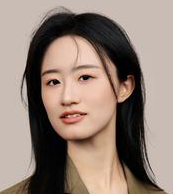 Xuan Ju (鞠璇)合作论文数Department of Computer Science and Engineering, The Chinese University of Hong Kong;CURE Lab, The Chinese University of Hong Kong;Microsoft AI1
 Haoyu Wang合作论文数University at Albany1Zhanjiao WANG (王占蛟)合作论文数1JunMin Bao (鲍俊敏)合作论文数1JinGuo Qiao (乔进国)合作论文数1
 Jian-Yun Nie合作论文数Département D'informatique Et De Recherche Opérationnelle, Faculté Des Arts Et Des Sciences, Universite de Montreal1
 Yong Liu (刘勇)合作论文数Institute of Cyber-Systems and Control, College of Control Science and Engineering, Zhejiang University;Advanced Perception on Robotics and Intelligent Learning Lab, Zhejiang University1
 Junyi Li (李军毅)合作论文数School of Computing, National University of Singapore;Department of Computer Science, National University of Singapore1
 Ruimao Zhang (张瑞茂)合作论文数Spatial Artificial Intelligence Lab, School of Electronics and Communication Engineering, Sun Yat-Sen University1
 Wenbo Ding (丁文伯)合作论文数1
 Junting Dong合作论文数Shanghai Artificial Intelligence Laboratory1Xu Yu合作论文数Tencent1
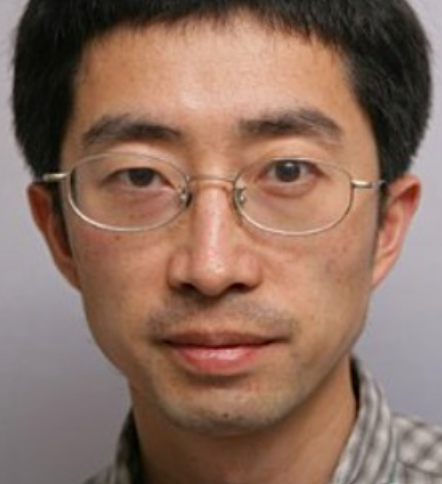 Xin Tong (童欣)合作论文数Anuttacon1
 Zhuohao Yu (于倬浩)合作论文数Peking University1
 Ziwei Wang (王子为)合作论文数School of Electrical and Electronic Engineering, Nanyang Technological University1
 Yongming Rao合作论文数1
 Ji-Rong Wen (文继荣)合作论文数Gaoling School of Artificial Intelligence, Renmin University of China1
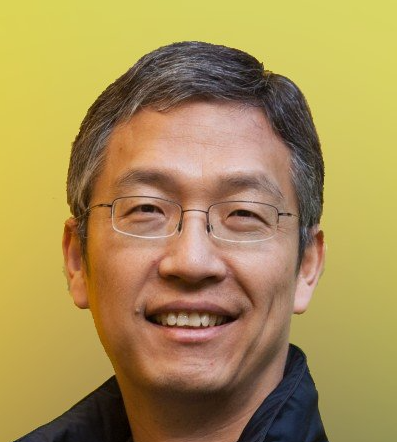 Lei Zhang (张磊)合作论文数International Digital Economy Academy1
 Bin Yang (杨斌)合作论文数MiniMax1
 Wayne Xin Zhao (赵鑫)合作论文数Gaoling School of Artificial Intelligence, Renmin University of China1




