Sponge spicule sea-bed cover was analysed and related to the mega- and macro-epibenthos along one video-recorded and one still image sea-bed transect in the southeastern Weddell Sea, Antarctica. The origin of the patterns of spicule mats and their associated fauna was conceptually reconstructed and interpreted to be a result of iceberg scouring as the main driver. Spicule beds were not necessarily correlated with a diverse fauna, which was shown by a comparison of sponge spicule cover and macrobenthic and megabenthic abundance and biodiversity. On the one hand, this result might reflect slow recolonisation processes, especially by the megabenthos. On the other hand, local maximum densities of adult sponges were found where spicule cover was highest. A simple numerical model revealed that biogenic silicon converted from living to dead material by iceberg scouring accounts for 0.69% of the global silicon flux to the deep sea, which originates from primary production. However, the sponge-derived silicon sequestration occurs over only 2.4 parts per thousand area of the global ocean. On the Antarctic continental shelf, flux rates of silicon that originated from primary production are similar to or twice as high as silicon sequestration due to iceberg-induced sponge mass mortality.
The aim of this study was to contribute to a general understanding of the response of the Antarctic macrobenthos to environmental variability and climate-induced changes. The change in population size of selected macrobenthic organisms was investigated in the Larsen A area east of the Antarctic Peninsula in 2007 and 2011 using ROV-based imaging methods. The results were complemented by data from the Larsen B collected in 2007 to allow a conceptual reconstruction of the environment-driven changes before the period of investigation. Both Larsen areas are characterised by ice-shelf disintegration in 1995 and 2002, respectively, as well as high inter-annual variability in sea-ice cover and oceanographic conditions. In 2007 one ascidian species, Molgula pedunculata, was abundant north and south of the stripe of remaining ice shelf between Larsen A and B. Population densities decreased drastically in the Larsen A between 2007 and 2011, coincident with the decrease in Corella eumyota, another ascidian. Among the ophiuroids, the population of deposit feeders increased, while suspension feeders halved their abundance. Current measurements indicated a northward flow between the Larsen B and Larsen A, suggesting that a major physical forcing on benthic population development comes from the South. The results demonstrate that Antarctic macrobenthic populations can exhibit dramatic population dynamics. Analyses of sea-ice dynamics, salinity, temperature and surprisingly ice-shelf disintegration history, however, did not provide any clear evidence for environmental drivers underlying the apparent changes.
The marine ecosystem on the eastern shelf of the Antarctic Peninsula was surveyed 5 and 12 years after the climate-induced collapse of the Larsen A and B ice shelves. An impoverished benthic fauna was discovered, that included deep-sea species presumed to be remnants from ice-covered conditions. The current structure of various ecosystem components appears to result from extremely different response rates to the change from an oligotrophic sub-ice-shelf ecosystem to a productive shelf ecosystem. Meiobenthic communities remained impoverished only inside the embayments. On local scales, macro- and mega-epibenthic diversity was generally low, with pioneer species and typical Antarctic megabenthic shelf species interspersed. Antarctic Minke whales and seals utilised the Larsen A/B area to feed on presumably newly established krill and pelagic fish biomass. Ecosystem impacts also extended well beyond the zone of ice-shelf collapse, with areas of high benthic disturbance resulting from scour by icebergs discharged from the Larsen embayments.
 Julian Gutt合作论文数Helmholtz Centre for Polar and Marine Research, Alfred Wegener Institute22
 Américo Montiel合作论文数19
 Armin Rose合作论文数18Enrique Isla合作论文数18elisabet sane schepisi合作论文数17hans werner schenke合作论文数17
 Meike Meissner合作论文数17Robert Henri合作论文数17Maria Eugenia Manjóncabeza合作论文数17
 Olaf Heilmayer合作论文数Institute for Polar and Marine Research17
 Eugene Domack合作论文数17Stephanie Langner合作论文数17Iain Barratt合作论文数17
 Antoine Gremare合作论文数17Linn Sophia Lehnert合作论文数Research and Technology Centre, University of Kiel17
 Thomas Saucede合作论文数Laboratoire de Géologie des Chaînes Alpines, Université de Grenoble-I17Karl-Hermann Kock合作论文数17
 Dorte Janussen合作论文数17Jan Seiler合作论文数17
 Katrin Linse合作论文数Natural Environmental Research Council British Antarctic Survey High Cross17Maarten Raes合作论文数17
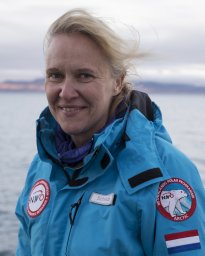 Meike Scheidat合作论文数Department of Ecosystems, IMARES (Institute for Marine Resources and Ecosystem Studies), 1790 AB Den Burg, The Netherlands17Pablo José López-Gonzáles合作论文数16
 Craig Smith合作论文数Department of Oceanography, School of Ocean and Earth Science and Technology, University of Hawaii at Manoa16Erik M Jorgensen合作论文数16
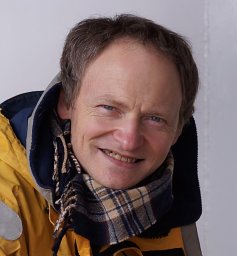 Cédric D'Udekem D'Acoz合作论文数14cedric dudekem dacoz合作论文数3dieter gerdes合作论文数3patrizia geprags合作论文数3
 Leah Maria Schroedter合作论文数3
 Christian dos Santos Ferreira合作论文数3Boelmann, J.合作论文数Marine Technol. Lab., Univ. of Appl. Sci. Bremerhaven;c;Marine Technol. Lab., Univ. of Appl. Sci. Bremerhaven3
 Thomas Pape合作论文数Natural History Museum of Denmark, University of Copenhagen3Miriam Römer合作论文数3
 Rainer Knust合作论文数3
 Michael Glockzin合作论文数3Heiko Sahling合作论文数3
 Katja Mintenbeck合作论文数3inken suck合作论文数2b j p berges合作论文数2m tomczyk合作论文数2n nowald合作论文数2m boche合作论文数2
 Alexander Schroeder合作论文数2Michael Potthoff合作论文数2Wolf E. Arntz合作论文数2
 Gerhard Bohrmann合作论文数Research Centre Ocean Margins, University of Bremen2
 Thomas Brey合作论文数Alfred Wegener Institute for Polar and Marine Research;Helmholtz Institute for Functional Marine Biodiversity, University Oldenburg2Andreas Starmans合作论文数Alfred Wegener Institute for Polar and Marine Research2




